
A Michelin Plate recipient in both 2024 and 2025, Chao Ji Claypot Rice in Guangzhou's Yuexiu District represents the kind of everyday Cantonese cooking that Michelin inspectors increasingly take seriously. The menu centres on claypot rice, a format that demands precise heat control and quality ingredients rather than culinary spectacle. Priced at the lowest tier on Guangzhou's dining scale, it operates in a category where reputation travels by word of mouth rather than marketing.
Pearl is the En Primeur Club membership app — saves, bookings, and concierge access live there. Same editors, same standards.
- Address
- 188 Zhuguang Rd, Yuexiu District, Guangzhou, Guangdong Province, China, 510115
- Phone
- +86 186 1735 2623
- Directions
- Get directions
 Saves & bookings on Pearl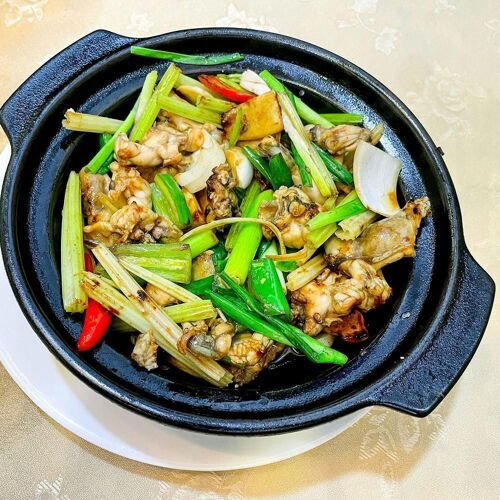
Clay, Heat, and the Cantonese Patience for Getting It Right
The smell reaches you before the dish does. Claypot rice, cooked over charcoal or a concentrated gas flame until the bottom layer of grains crisps into a golden crust, produces an aroma that is part caramel, part smoke, part soy. In Guangzhou's older residential quarters, particularly around Liwan and the edges of Yuexiu, this smell drifting from a ground-floor kitchen in the early evening is as much a marker of place as the banyan trees and tram routes. Chao Ji Claypot Rice (Liwan), at 188 Zhuguang Rd in Yuexiu District, Guangzhou, serves Cantonese claypot rice.
A Format That Punishes Shortcuts
Claypot rice is a technically demanding format that Cantonese cooks have refined over generations. The clay vessel distributes heat unevenly by design: the base scorches, the sides hold steady warmth, and the leading steams gently from the liquid absorbed during cooking. Ingredients layered over the rice, typically cured meats, preserved sausage, salted fish, or seasonal vegetables, finish cooking in that residual heat. Timing is everything. A minute too long and the crust moves from desirable crunch to char; too short and the characteristic socarrat-equivalent, known locally as guoba, never forms. The skill required to execute this consistently at volume is the reason that even casual claypot rice shops earn serious reputations in Guangzhou, where diners eat this format with the same critical eye applied elsewhere to dim sum or roast goose.
Chao Ji has received the Michelin Plate in both 2024 and 2025. At the single-¥ price tier, it is firmly in the casual dining bracket. The Plate at this price point signals something specific: Michelin inspectors found the cooking consistent and the product quality above what the price might suggest.
The Freshness Standard That Defines Cantonese Cooking
The freshness principle that animates live-seafood dining runs through all serious Cantonese cooking. In Guangzhou's older neighbourhoods, the sourcing logic for claypot rice follows the same priority: preserved meats must come from producers with traceable recipes, sausage fat content and cure levels matter to flavour balance, and fresh seasonal produce layered over the rice should reflect what the market offered that morning rather than what is convenient to hold in a walk-in. The Cantonese appetite for provenance and immediacy applies whether the ingredient is a live garoupa weighed at the table or a link of lap cheong procured from a maker in Foshan. Both are expressions of the same culinary instinct.
Guangzhou's Michelin-listed restaurants span a wide range of ambition and price. At the formal end, Lai Heen and Jade River serve Cantonese cuisine in hotel settings with the full complement of private dining rooms and wine lists. BingSheng Mansion sits in the high-volume, premium-seafood tier. Chao Ji operates at the opposite end of this range, where the kitchen's credibility rests on the quality of the rice, the sourcing of the toppings, and the management of the flame. There is no tasting menu to distract from a weak ingredient and no elaborate plating to compensate for imprecise cooking. The format is its own form of transparency.
Guangzhou as a Context for This Kind of Eating
Guangzhou has one of the highest concentrations of Michelin-recognised restaurants in mainland China. This reflects the city's relationship with food as a daily practice rather than an occasional event. Cantonese cooking in Guangzhou is not primarily a restaurant phenomenon; it is a domestic and street-level one, which means that a venue operating at the single-¥ tier can earn Michelin recognition by meeting the standard of a city that already has a high baseline. The same principle applies to comparable Cantonese formats across the region. Forum in Hong Kong and Jade Dragon in Macau represent the white-tablecloth end of that tradition. Chao Ji is its neighbourhood expression.
Planning a Visit
Chao Ji Claypot Rice sits at 188 Zhuguang Rd in Yuexiu District, a central and historically dense part of Guangzhou. The single-¥ price tier and walk-in-friendly policy make planning simple, though peak dinner hours can create queues at popular claypot rice shops. Arriving slightly ahead of the evening rush remains the practical approach for any high-reputation venue in this format.
Cuisine-First Comparison
Comparable venues nearby, for context on price, style, and recognition.
| Venue | Cuisine | Price | Awards | Notes |
|---|---|---|---|---|
| Chao Ji Claypot Rice (Liwan)This venue — the venue you are viewing | Cantonese Claypot Rice | $ | Michelin Plate | Not listed |
| Sing Wan Loi Noodle | Modern Cantonese Wonton Noodles | $ | Michelin Plate | Guangzhoushi |
| Sing Wan Loi Noodle (Yuexiu) | Premium Cantonese Noodles | $ | Michelin Plate | Guangzhoushi |
| Famous Cuisine (Tianhe North Road) | Traditional Cantonese | $$ | Michelin Plate | Guangzhoushi |
| Hua Ge Si Chu | Traditional Hakkanese Cantonese | $ | Bib Gourmand | Guangzhoushi |
| Dai Yong Town | Chao Zhou (Chaoshan) | $$ | Bib Gourmand | Guangzhoushi |
Recognition history
Dated appearances from independent guides and award organizations, with the underlying list record or original source where available.
Michelin Plate
Michelin
Michelin Plate
Michelin
Continue exploring
More in Guangzhou
Restaurants in Guangzhou
Browse all →
Bars in Guangzhou
Browse all →




At a Glance
- Rustic
- Cozy
- Casual Hangout
- Family
- Open Kitchen