
Michelin Plate
Our verdict
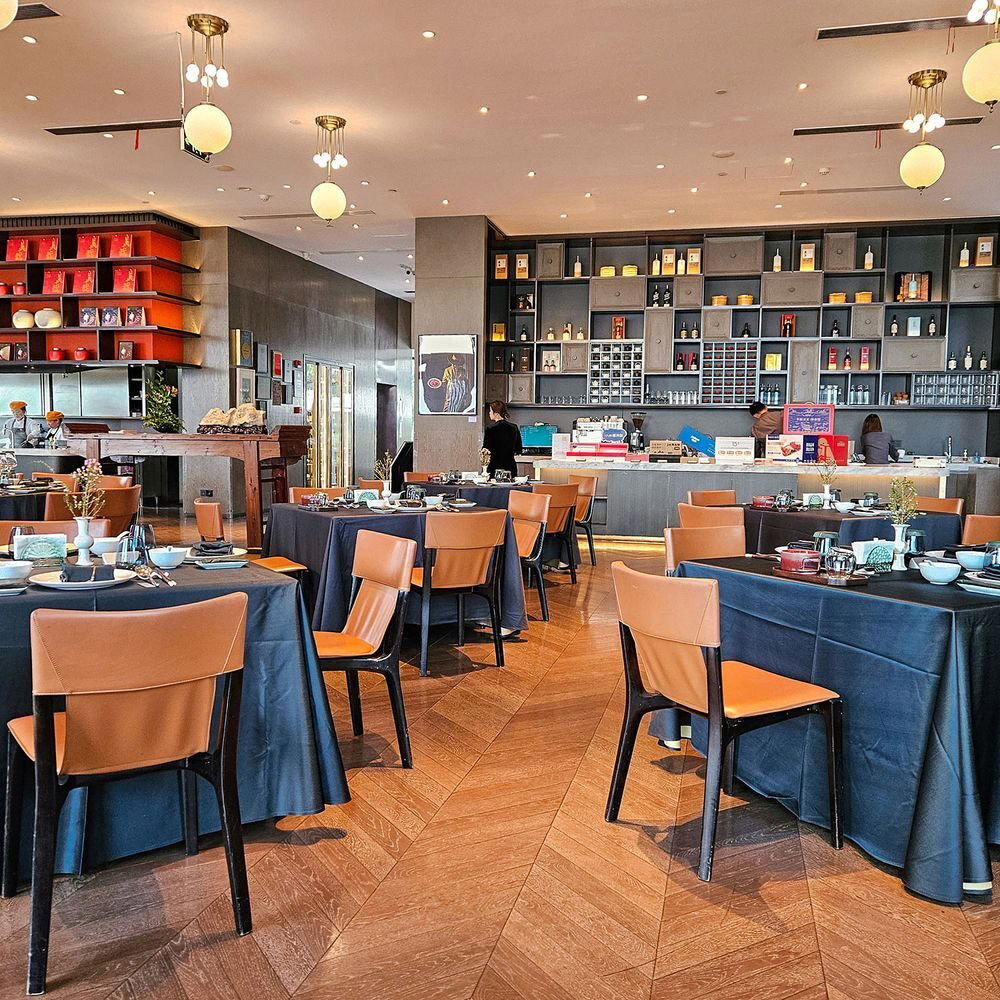
Chao 27 carries a 2025 Michelin Plate for Chao Zhou cuisine in Suzhou's Gusu district, operating from the upper floor of a shophouse lane off Shaomozhen Alley. At ¥¥¥ pricing, it sits at the mid-premium tier for the city, positioning Teochew cooking as a considered alternative to the Jiangsu cuisine that dominates Suzhou's recognition circuit.

Pearl is the En Primeur Club membership app, where members save venues, book tables and use the concierge.
The menu
What to order
- Braised Goose Webs
- Beef Soup with Aged Dried Radish
- Duck Broth with Salted Lemon
- Conch Soup with Green Olives
A Teochew Counter in a Suzhou Lane
Suzhou's dining recognition circuit runs heavily toward Jiangsu cuisine. The city's Michelin-starred restaurants Dingshan·Jiangyan (Xiangcheng) and Pingjiangsong both carry stars and both anchor their menus in the su-style tradition of sweet-leaning, seasonally calibrated Jiangnan cooking. Against that backdrop, Chao 27 occupies a distinct position: a second-floor room off Shaomozhen Alley in the Gusu district, serving Chao Zhou cuisine, which belongs to a different culinary lineage entirely.
The address, 21-27 Shaomozhen Alley, places the restaurant inside one of the older residential-commercial lanes of central Suzhou. The approach is through a low-key streetfront, the dining room above. That spatial compression is common to serious specialist restaurants in Chinese cities that choose neighbourhood embeddedness over hotel-lobby grandeur, and it tends to signal a kitchen that relies on repeat custom and word-of-mouth rather than tourist foot traffic.
What Chao Zhou Cuisine Actually Is
Chao Zhou (Teochew) cooking originates from the eastern Guangdong coast, in and around the cities of Chaozhou and Shantou. It is one of China's most technically demanding regional cuisines, built around seafood, fermented condiments, cold-marinated proteins, and a restraint with oil and spice that sets it apart from both the boldness of Cantonese banquet cooking and the richness of northern Chinese traditions.
The cuisine's signature registers include braised goose marinated in master stock, cold crab, oyster omelette, and a dessert culture centred on taro and glutinous rice preparations. Congee, served at a consistency closer to rice broth than the thick porridges of other regional traditions, functions as both a meal opener and a measure of kitchen discipline: it takes time and precise heat management to get right. The preference for light seasoning means that ingredient quality is difficult to mask, which raises the cost floor for any kitchen operating at the mid-premium tier.
Chao Zhou restaurants have historically clustered in Guangdong, Hong Kong, and among overseas Teochew diaspora communities in Southeast Asia. Encountering one in Suzhou is a function of the broader migration of regional Chinese cuisines into non-native cities over the past decade, a trend particularly visible in first- and second-tier cities where a cosmopolitan dining public has created demand for alternatives to local cuisine. In this context, Chao 27's presence in the Gusu district reflects a wider pattern, even as the specific execution here sits at a mid-premium price point rather than the ultra-high-end tier where Teochew restaurants often operate in cities like Shanghai or Beijing.
Where It Sits in Suzhou's Price Tier
At ¥¥¥, Chao 27 prices in the same bracket as Dingshan·Jiangyan (Xiangcheng) and Ban Lan (Huqiu), the latter a Fujian specialist also operating at that mid-premium level. It prices above Bai Sheng Ren Jia (Wuzhong), which operates at ¥¥ for Jiangsu cuisine, and well below Pingjiangsong's ¥¥¥¥ position. The value argument for Chao 27 is that a 2025 Michelin Plate at ¥¥¥ is a relatively accessible entry point into recognised cooking: the Michelin Plate designation, awarded to restaurants where inspectors find good cooking, does not carry the prestige of a star but it does represent an independent quality signal, and ¥¥¥ in Suzhou's current market means the kitchen is working at a level above casual dining without requiring the outlay of a starred-venue evening.
For diners whose primary frame of reference for Teochew cooking is the ultra-premium end, where restaurants like Chef Tam's Seasons in Macau or the Teochew rooms at high-end hotels in major Chinese cities operate, Chao 27 occupies a different register: neighbourhood-scale, lane-accessed, priced for repeat visits rather than once-a-year occasions.
Chao Zhou in the Broader Context of Chinese Regional Dining
The spread of Teochew cuisine into cities outside its home region tracks a larger shift in how China's urban dining public engages with regional food. A decade ago, serious Chao Zhou cooking in a city like Suzhou would have been rare. Now, specialist restaurants serving Fujian, Teochew, and other southeastern Chinese cuisines compete directly with local cuisine specialists in Gusu-district lanes and new commercial developments alike.
In Beijing, Chao Shang Chao (Chaoyang) represents how the tradition has taken hold in northern China. In Xiamen, which sits geographically closer to the cuisine's origins, Fleurs Et Festin operates as a Chao Zhou specialist with a different tonal register. Suzhou's version, at Chao 27, sits within this expanding network of Teochew addresses outside Guangdong, each inflected by its local context.
For comparison, the Jiangsu cuisine specialists in Suzhou also face competition from within their own tradition: Oriental Chao and the broader category of su cuisine restaurants in the city represent a dense local field. Chao 27 sidesteps that competition by operating in a different register entirely.
Planning a Visit
Chao 27 is located on the second floor at 21-27 Shaomozhen Alley (邵磨针巷 21-27号2楼), Gusu district, Suzhou, postal code 215005. The Gusu district covers the historic canal city centre, and the lane is accessible from the main tourist and transport corridors of central Suzhou without being on them directly. For broader planning context, our full Suzhou restaurants guide covers the wider dining field, and those travelling for multiple nights will find supporting context in our Suzhou hotels guide, bars guide, wineries guide, and experiences guide.
Frequently asked questions
Is Chao 27 more mid-range or high-end?
Pricing at Chao 27 is listed as ¥¥¥.
Is Chao 27 award-winning?
Chao 27 has received recognition including: Michelin Plate (2025).
What's the signature dish at Chao 27?
Chao 27 holds a 2025 Michelin Plate for Chao Zhou (Teochew) cooking, a tradition built on cold-marinated proteins, long-braised preparations, and seafood-forward menus, techniques that define the cuisine rather than any single dish. Teochew cooking prizes restraint and clarity of flavour over richness, so expect preparations where the quality of the primary ingredient carries most of the weight. For the full range of what the kitchen does, visiting the restaurant at 21-27 Shaomozhen Alley, second floor, Gusu district, is the clearest route to an answer.
How do I find Chao 27?
Chao 27 is located at China, CN 江苏省 苏州市 姑苏区 邵磨针巷 21 21~27号2楼 邮政编码: 215005, Suzhou.
Recognition Snapshot
Comparable venues nearby, for context on price, style, and recognition.
| Venue | Cuisine | Price | Awards | Notes |
|---|---|---|---|---|
| Chao 27This venue (the venue you are viewing) | Refined Chaozhou Cuisine | $100–150 | Michelin Plate | Not listed |
| Gu Su Qiao (Diyi Tianmen) | Modern Jiangnan Noodles | Not listed | Michelin Plate | Gusu |
| Su Mian Fang | Suzhou-style Noodles | Not listed | Michelin Plate | Suzhou Industrial Park |
| Zhuo Yan·Zhuo Mian | Jiangzhe, Cantonese & Suzhou Fusion | Not listed | Michelin Plate | Suzhou Industrial Park |
| Xin Jun Feng Cai Guan (Taijianlane) | Traditional Suzhou Cuisine | $20–30 | Michelin Plate | Gusu |
| Jinhai Huayue Food Oriental CHAO27 | Teochew fine dining | $50–100 | Black Pearl 1 Diamond | Not listed |
Recognition history
Dated appearances from independent guides and award organizations, with the underlying list record or original source where available.
Michelin Plate
Michelin
Continue exploring
More in Suzhou
Details
- Elegant
- Intimate
- Scenic
- Sophisticated
- Date Night
- Business Dinner
- Special Occasion
- Hotel Restaurant
- Waterfront
- Panoramic View
- Extensive Wine List
- Sommelier Led
- Local Sourcing
- Organic
- Waterfront
- A La Carte
- Family Style
- Wine
- Allergy Accommodating
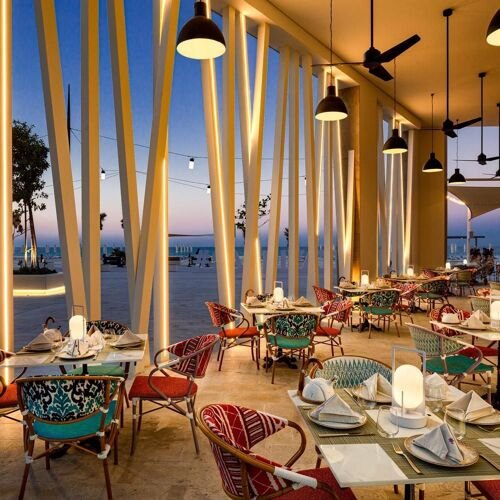
Airy and contemplative during daylight, evolving to warmly intimate as twilight softens the silvered glow from expansive windows framing the lake.