
Xin Jun Feng Cai Guan at Taijianlane holds a 2025 Michelin Plate recognition, placing it in Suzhou's mid-to-upper tier of Jiangsu cuisine. The restaurant operates from the Wuzhong District, where classical Su-style cooking traditions remain the dominant reference point. For visitors tracking the city's Michelin-recognised dining circuit, it represents a grounded entry into the canon.
Pearl is the En Primeur Club membership app — saves, bookings, and concierge access live there. Same editors, same standards.
- Address
- China, Jiangsu, Suzhou, Wuzhong District, 绿庭宾馆 邮政编码: 215101
- Phone
- +86 199 5157 5384
- Directions
- Get directions
 Saves & bookings on Pearl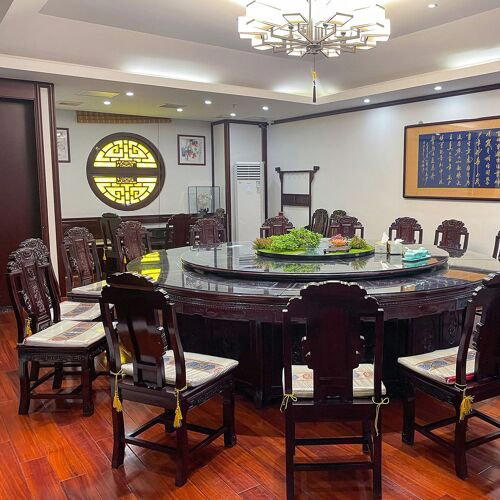
Where Suzhou's Dining Tradition Meets Michelin Recognition
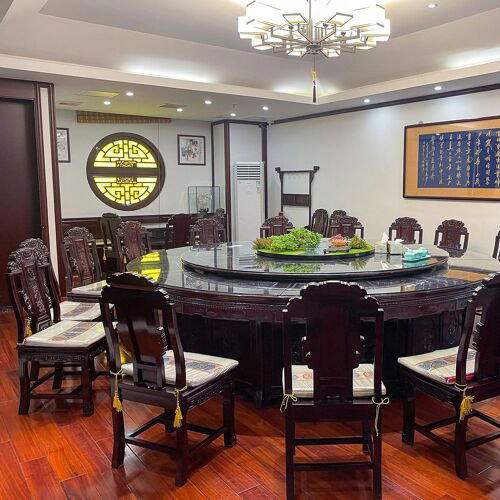
The Wuzhong District sits at a particular remove from Suzhou's more tourist-saturated historic core. Arriving at the Lüting Hotel compound, where Xin Jun Feng Cai Guan occupies its address along Taijianlane, the atmosphere is quieter and more residential than the waterfront lanes closer to Pingjiang Road. That distance is deliberate in a sense: the restaurants that have built reputations in this part of the city tend to draw a local clientele rather than walk-in visitors, and the dining rooms reflect that orientation. The context matters because it shapes what you find inside: cooking calibrated for people who eat this cuisine regularly, not a version softened for unfamiliarity.
Jiangsu Cuisine and the Weight of Suzhou's Cooking Tradition
Jiangsu cuisine, one of China's eight classical culinary traditions, encompasses several distinct regional sub-styles. Suzhou's contribution to that tradition centres on freshwater ingredients, precise knife work, and a preference for subtle sweetness that distinguishes Su-style cooking from the saltier profiles of Huaiyang further north. The kitchen vocabulary here draws on centuries of practice around Taihu Lake produce: braised river fish, slow-cooked pork preparations, seasonal vegetables treated with restraint rather than transformation. This is not a cuisine that announces itself loudly. Its markers are texture, balance, and the quality of the primary ingredient.
Within Suzhou's current dining scene, Michelin recognition functions as a tier signal rather than a guarantee of any particular format. Locally, that places the restaurant in a cluster of recognised addresses that includes Dingshan·Jiangyan (Xiangcheng) and Pingjiangsong, both also operating in the Jiangsu cuisine category at comparable or higher price points. The Michelin Plate tier, across Chinese cities, has expanded significantly in recent years, but for Suzhou specifically it still covers a relatively short list of addresses, which lends the recognition more weight than it might carry in a denser market.
The Service Architecture of a Formal Chinese Table
The editorial angle most relevant to understanding Xin Jun Feng Cai Guan is the way formal Jiangsu dining distributes authority across a room. At this price tier in Suzhou, the dining experience depends on coordination between kitchen output, table service pacing, and the host's ability to read a table's preferences and adjust the order of dishes accordingly. Jiangsu cuisine in a banquet or set-meal context is sequential and deliberate: cold appetisers establish the register, warm dishes follow in a progression that moves from lighter to richer, and the structural logic of a well-run service is as much front-of-house intelligence as it is kitchen craft.
This collaborative dynamic is what separates a restaurant operating at the Michelin Plate standard from a neighbourhood canteen serving the same regional recipes. The front-of-house at this level is expected to translate the kitchen's intentions to the table, manage the pace, and occasionally steer a party toward dishes that reflect current seasonal availability. For the diner, that interaction is a significant part of what the price point is paying for. At a mid-tier Jiangsu restaurant like Bai Sheng Ren Jia (Wuzhong), the approach is more casual and the service lighter. At Pingjiangsong, which operates at a higher price tier, the ceremony is more pronounced. Xin Jun Feng Cai Guan sits in the register between those two reference points.
Suzhou in the Broader Chinese Fine Dining Map
Suzhou's position in Chinese dining is sometimes underestimated relative to Shanghai, which sits roughly 100 kilometres to the east and draws the bulk of international food media attention. But the city's classical cuisine infrastructure is substantive. Compared to the Jiangsu tradition as practised in Nanjing, where addresses like Guang Ying Ju • Lao Zheng Xing maintain a more metropolitan scale, Suzhou's recognised restaurants tend to operate in smaller, more contained formats. The leading point of comparison within the regional tradition is not a restaurant but a set of ingredient principles: proximity to Taihu, seasonal discipline, and an unwillingness to let technique overwhelm material.
For diners arriving from elsewhere in China or from abroad, the context of where Jiangsu cuisine sits nationally is useful. It is a tradition that shares a geographical and historical tier with Shanghainese and Zhejiang cooking, and restaurants practising it at a formal level compete for a different guest than the hotpot circuits of Chengdu or the roast-duck tourism of Beijing. Venues like Xin Rong Ji in Beijing or Ru Yuan in Hangzhou operate in adjacent culinary territory, and those familiar with either will find the register of Suzhou's mid-to-upper tier Jiangsu tables intelligible from the first course.
Planning a Visit: Logistics and Practical Orientation
Xin Jun Feng Cai Guan sits in the Wuzhong District, which requires some commitment to reach from Suzhou's historic centre or from the high-speed rail station. The ¥¥¥ price designation puts it in the mid-upper range for the city: comparable to Dingshan·Jiangyan (Xiangcheng) and below the upper bracket occupied by Pingjiangsong. At this tier in Suzhou, private dining rooms are common and advance reservations for groups are advisable, particularly on weekends when local family dining traffic peaks. Reservations are recommended.
Those building a fuller Suzhou itinerary should consult our full Suzhou restaurants guide for the complete picture of the city's recognised dining addresses, alongside our Suzhou hotels guide, bars guide, wineries guide, and experiences guide. For those connecting Suzhou to a wider east China circuit, the Shanghai table 102 House and Ge Jia Wu Farmer's House within Suzhou itself offer useful comparative reference points at different price tiers. Visitors interested in how classical Chinese fine dining translates to international settings might also look at Chef Tam's Seasons in Macau, Imperial Treasure Fine Chinese Cuisine in Guangzhou, or, as a point of contrast from a Western formal dining register, Le Bernardin in New York City.
What to Order: A Practical Steer
For a first visit, follow the kitchen's seasonal direction. The cuisine's classical canon includes braised pork belly preparations, sweetwater crab in autumn, and cold-dressed seasonal greens. At this level, the kitchen's current strengths are most reliably accessed by asking front-of-house which dishes are receiving one attention at the moment. The Ban Ting Jia Yan comparison is worth making here: at similar price points within the city, the expectation is that staff can speak to provenance and preparation, and a kitchen that cannot support that conversation is operating below tier.
Where the Accolades Land
Comparable venues nearby, for context on price, style, and recognition.
| Venue | Cuisine | Price | Awards | Notes |
|---|---|---|---|---|
| Xin Jun Feng Cai Guan (Taijianlane)This venue — the venue you are viewing | Traditional Suzhou Cuisine | $$ | Michelin Plate | Not listed |
| Zhuo Yan·Zhuo Mian | Jiangzhe, Cantonese & Suzhou Fusion | $$ | Michelin Plate | Suzhou Industrial Park |
| Tong De Xing (Jiayu Fang) | Traditional Suzhou Noodles | $$ | Bib Gourmand | Gusu |
| Chai Court | Authentic Cantonese | $$$ | Michelin Plate | Huqiu |
| Hui Lao Tang | Traditional Jiangnan Seasonal Cuisine | $$$$ | Michelin Plate | Luxiang Ancient Village |
| Jin Jing Ge | Modern Jiangnan Cuisine | $$$$ | Michelin Plate | Suzhou Industrial Park |
Recognition history
Dated appearances from independent guides and award organizations, with the underlying list record or original source where available.
Michelin Plate
Michelin
At a Glance
- Classic
- Family
- Casual Hangout
- Special Occasion
- Historic Building
- Local Sourcing
Current opening hours
- Monday
- 9 AM–10 PM
- Tuesday
- 9 AM–10 PM
- Wednesday
- 9 AM–10 PM
- Thursday
- 9 AM–10 PM
- Friday
- 9 AM–10 PM
- Saturday
- 9 AM–10 PM
- Sunday
- 9 AM–10 PM
Hours can change for holidays and private events. Last verified .
Old-fashioned dining environment with a historic feel, not precise but authentic and focused on food.