Skip to Main Content
← Collection
ServiceCasual
NoiseQuiet
CapacitySmall
Star Wine List

Celine brings a Montréal-inspired, French-Canadian-meets-American sensibility to Boston's dining scene, occupying a niche that few local restaurants seriously pursue. Where much of the city's French-leaning fine dining tracks conventional Parisian templates, Celine draws from Quebec's distinct culinary grammar — a proposition that has quietly earned it a loyal following and a clear identity in a crowded market.

Pearl is the En Primeur Club membership app — saves, bookings, and concierge access live there. Same editors, same standards.

Celine restaurant in Boston, United States
About

Where Montréal Meets Boston

Boston's French-influenced dining has long defaulted to the Parisian template: classical technique, formal service, wine lists anchored to Bordeaux and Burgundy. Celine moves off that axis. The restaurant draws its culinary reference points from Montréal — a city whose food culture sits at a genuinely different intersection of French, North American Indigenous, and immigrant influences than anything metropolitan France produces. That positioning is not a gimmick; it reflects a culinary tradition with its own grammar, one that Boston has rarely taken seriously as a source category. In a city whose restaurant scene tends to sort cleanly into steakhouses (see Abe & Louie's), raw bars, and European fine dining, a Montréal-inspired kitchen occupies genuinely distinct territory.

The Neighbourhood Anchor

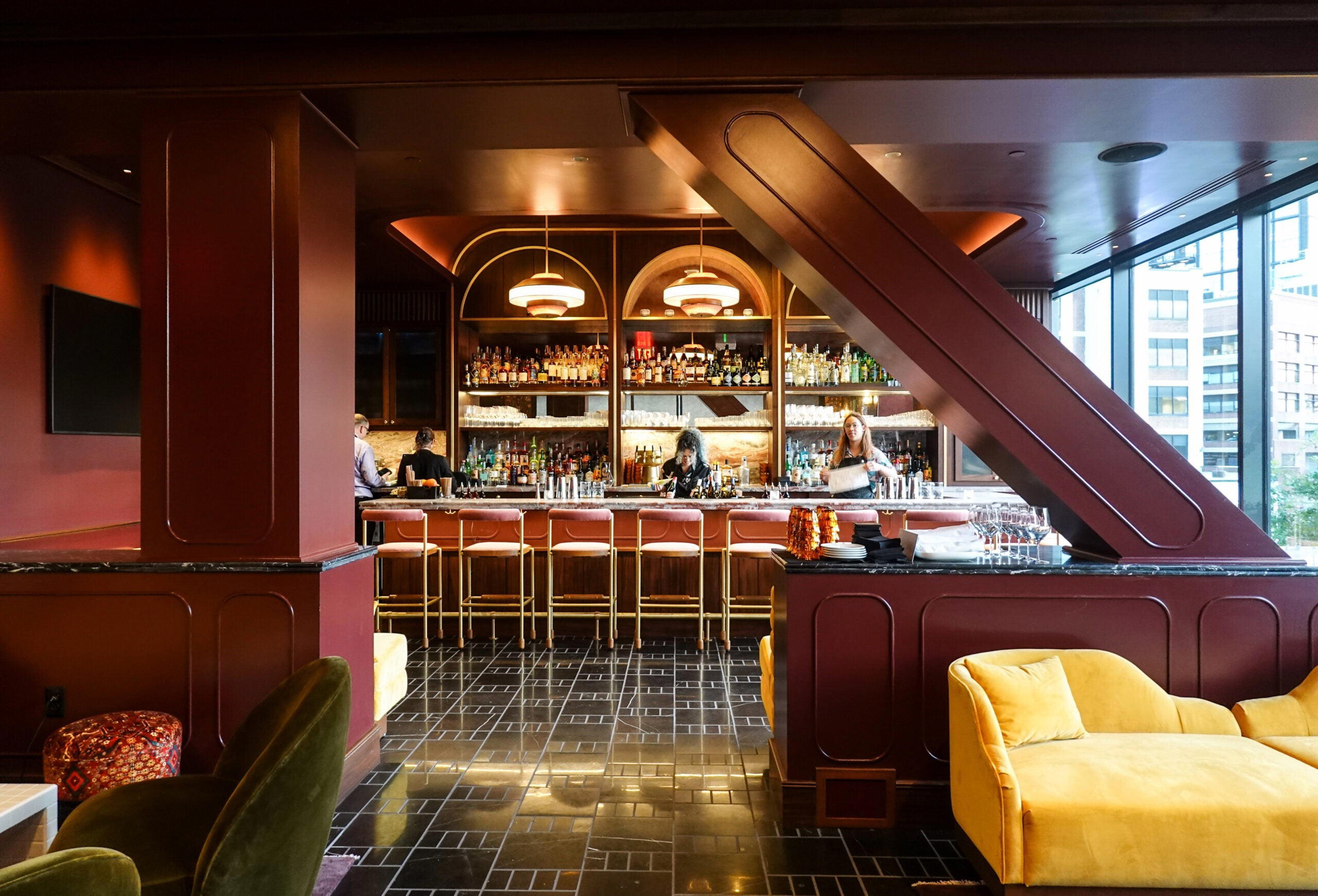
Restaurants earn community status slowly, through consistency and a sense that they belong somewhere specific rather than anywhere convenient. Celine has built that kind of gravity in Boston. The French-Canadian-meets-American framework it operates within allows for a menu range broad enough to serve as a regular's restaurant — not just a special-occasion destination , which is a harder distinction to hold than it appears. In Boston's dining culture, where places like Alcove and Ama at the Atlas have found footing by speaking to a local rather than tourist audience, Celine's approach mirrors that priority. The restaurant reads as a place its neighbourhood returns to, not just discovers once.

That quality of repeat patronage shapes everything about how a restaurant operates over time. Regulars make different demands than first-time guests: they want the menu to develop without abandoning what brought them in, they expect the room to feel like theirs, and they notice when the kitchen loses focus. Maintaining that relationship over multiple years in a competitive urban market is its own form of discipline, and it tends to produce restaurants with clearer identities than those chasing the opening-week press cycle.

The Montréal Framework in an American Kitchen

Montréal's food culture has international standing that Boston's broader dining scene has been slow to engage with. The city's French-Canadian tradition , cassoulet-adjacent braises, poutine variations, smoked meats, and a relationship with dairy fat that predates most American comfort-food revivals , has recently attracted serious attention from American food writers in the same way that regional Italian and regional Mexican cuisines did a decade earlier. Celine's positioning ahead of that curve gives it a point of difference that is harder to manufacture than it might appear.

The French-Canadian-meets-American framing also creates productive tension in the kitchen. Quebec cooking and American cooking share an appetite for generosity and directness, but Quebec's French inheritance introduces technique and patience that shifts the register. The result, when executed with consistency, produces food that feels familiar and considered simultaneously , a combination that works particularly well for a restaurant aiming at regulars rather than event diners. For comparison, the way Lazy Bear in San Francisco synthesises American and European sensibilities into a coherent and locally specific voice illustrates how much mileage that kind of cross-cultural framing can generate when it is handled with conviction.

Boston has the reference restaurants to anchor that conversation at the high end. Agosto, with its Portuguese-inspired tasting-menu chef's counter format, shows how a European culinary tradition can be made specific and rigorous in a Boston context. 311 Omakase demonstrates what a tightly focused culinary identity delivers in terms of reputation and demand. Celine's Montréal framework positions it differently from either, but the underlying principle , commit to a source tradition and develop it rather than sampling from many , is the same.

Boston's French-Leaning Dining Tier

At the level of international comparison, Boston's French-influenced fine dining does not yet produce the peer references that cities like New York or Chicago generate. Le Bernardin in New York City, Alinea in Chicago, and The French Laundry in Napa each hold positions in a globally recognised tier that Boston's restaurants are still building toward. Internationally, restaurants such as Alain Ducasse at Louis XV in Monte Carlo and 8½ Otto e Mezzo Bombana in Hong Kong illustrate the ceiling of French-technique fine dining at its most decorated. Celine is not competing in that tier, nor does its Montréal-American framework suggest it wants to. What it offers instead is something those rooms rarely provide: a legible neighbourhood presence and a cuisine with specific regional roots rather than aspirational internationalism.

Within Boston's French-adjacent category, the competition is thinner than it might appear. Most restaurants that cite French influence in this city are drawing on broad, technique-level references rather than a specific regional culinary tradition. Celine's Montréal specificity is a differentiator in that context. It is the kind of positioning that tends to look clearer in retrospect than it did at opening, when the category it was building into was not yet fully legible to local diners.

Planning Your Visit

Celine's reputation as a neighbourhood anchor rather than a destination import means the dining room tends to fill with a mix of local regulars and deliberate visitors rather than walk-in tourist traffic. For first-time visitors to Boston, it sits within a broader dining itinerary that rewards planning: the city's raw bar tradition at places like Neptune Oyster, the Japanese precision at 311 Omakase, and the seafood-grill sector anchored by restaurants like Ostra each represent distinct track options. Celine provides the French-Canadian angle none of those cover. For a broader view of what Boston's dining, drinking, and hospitality scene currently offers, our full Boston restaurants guide maps the city's categories in detail, alongside our Boston bars guide, hotels guide, wineries guide, and experiences guide for those building a longer stay. Specific booking details, hours, and current pricing are leading confirmed directly with the restaurant, as operational details shift with the seasons and the room's evolving format.

Frequently asked questions

The Short List

A quick peer check to anchor this venue’s price and recognition.

At a Glance
Noise LevelQuiet
CapacitySmall
Service StyleCasual