

1 Michelin Star · Guía Repsol 1 Sol
Our verdict
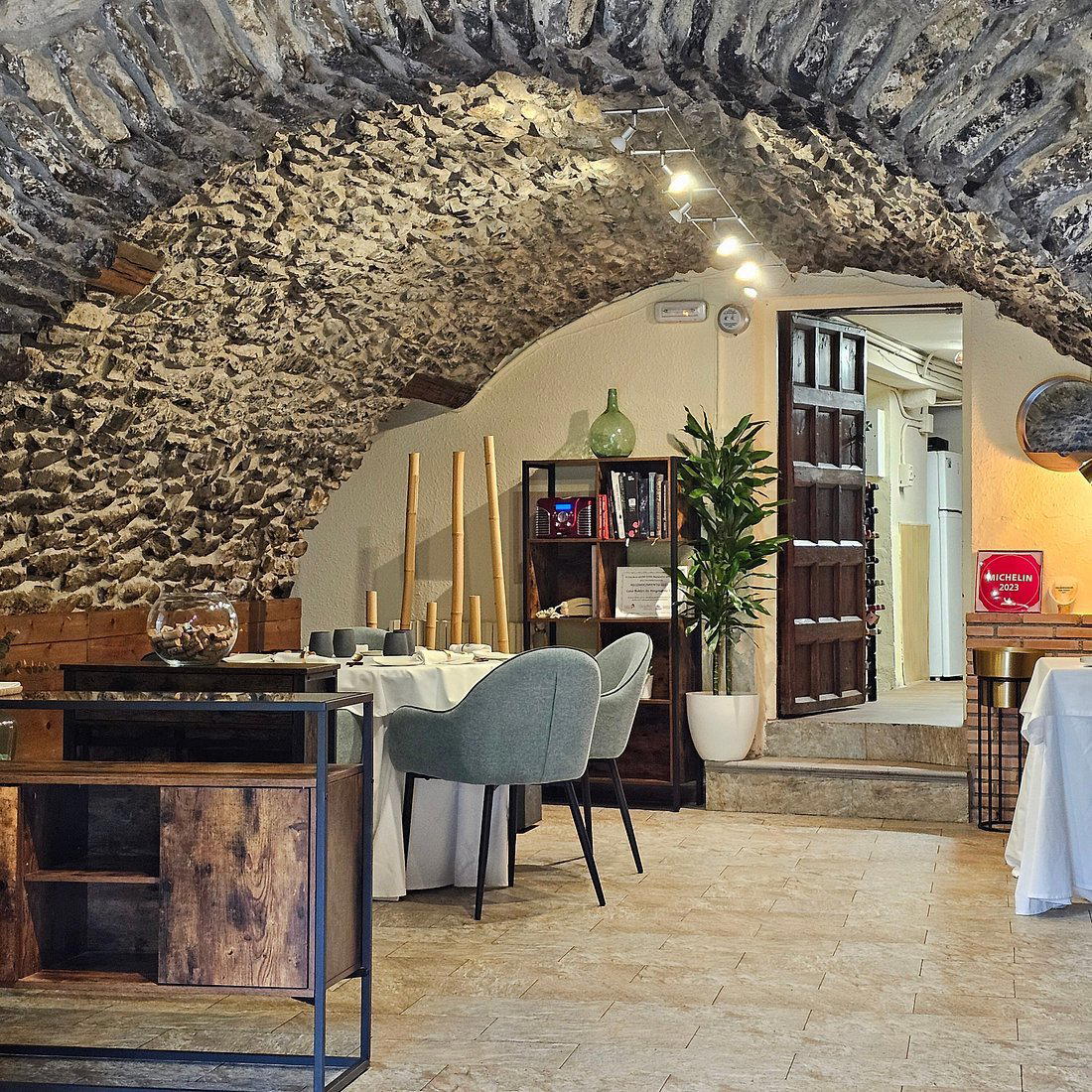
A three-table contemporary restaurant inside a 1593 stone-vaulted building on the edge of Parque Nacional de Ordesa y Monte Perdido, Casa Rubén serves a single tasting menu drawing directly from the rivers and terrain of the Aragonese Pyrenees. Holding a Michelin Plate in 2024 and 2025, it occupies a rare position: serious technique and local sourcing in a setting that most fine-dining travelers will never think to look for.

Pearl is the En Primeur Club membership app, where members save venues, book tables and use the concierge.
The menu
What to order
- Sturgeon royale from the Cinca river
Stone, River, and a Single Menu
The road into the Aragonese Pyrenees along Avenida Bielsa does not prepare you for a fine-dining experience. The landscape here belongs to the Parque Nacional de Ordesa y Monte Perdido, one of Spain's oldest and most protected natural parks, and the valley towns along it are built for walkers and climbers, not tasting menus. Casa Rubén sits at kilometre 63 of that road, where the Cinca and Yaga rivers converge, inside a stone building whose vaulted dining room ceiling dates to 1593. The architecture sets the register immediately: this is not an urban restaurant that has relocated to the countryside for aesthetic effect. The room is the building, and the building is part of a place that has existed in continuous relationship with this river system for centuries.
That physical context is not incidental to what gets served. The sourcing decisions at Casa Rubén are shaped directly by what the surrounding watershed and highland terrain can produce, and the most discussed dish on the tasting menu, Sueño, makes this explicit: sturgeon from the Cinca river itself, prepared as a royale with a demi-glaze of toasted onion. Sturgeon in this part of Aragon is not a fashionable import or a chef's novelty sourcing decision. The Cinca has historically supported sturgeon populations, and bringing the fish to the table as the menu's centerpiece is a statement about where the cooking is anchored.
What Sourcing Looks Like at Altitude
Spain's serious contemporary kitchens have long articulated a philosophy of regional sourcing, but the conditions differ sharply between the coastal operations and those working at altitude in landlocked mountain provinces. Kitchens like Aponiente in El Puerto de Santa María or Ricard Camarena in València draw from extraordinarily biodiverse coastal and estuarine systems. The Pyrenean kitchen works with a shorter seasonal window, more constrained animal and plant diversity, and an altitude that changes what ripens and when. The result, when handled with the seriousness Casa Rubén brings to it, tends toward a different kind of intensity: fewer ingredients, more pressure on each one to carry meaning.
The tasting menu format, a single option called Sueño, is the right structural choice for this kind of sourcing-led cooking. There is no à la carte hedge, no concession to the guest who wants to avoid the chef's point of view. What is available is what the region and the season are producing. Michelin's recognition, a Plate in both 2024 and 2025, signals that the technical execution meets a credible European benchmark, even if the location keeps the restaurant outside the circuits that generate the larger Michelin star conversation in Spain. For context, the Spanish restaurants currently operating at three Michelin stars, including Arzak, Azurmendi, El Celler de Can Roca in Girona, Martin Berasategui, DiverXO in Madrid, Cocina Hermanos Torres in Barcelona, Mugaritz in Errenteria, Quique Dacosta in Dénia, and Atrio in Cáceres, all operate from cities or well-established gastronomic destinations with international visitor infrastructure around them. Casa Rubén is working in a different condition entirely.
The Duo Behind the Room
Fine-dining operations in rural Spain frequently collapse under the weight of the logistical challenge: supply chains are harder, staffing is harder, and the audience is thinner. The two-person operation here, Rubén Coronas in the kitchen and Cristina Romero managing front of house, reflects a model that several of Europe's most credible small rural restaurants have found to be the only viable one. With three tables in the dining room, the numbers only work if the quality is high enough to justify destination travel, and if the service model is built around direct, personal engagement rather than a brigade structure the space and the economics cannot support. That score, across a meaningful sample for a restaurant of this scale in a location this remote, implies consistent execution rather than occasional brilliance.
Planning the Visit
Casa Rubén operates with three tables, which means availability is genuinely limited and advance booking is not optional in any casual sense. The restaurant sits on the Avenida Bielsa road at kilometre 63, near Hospital de Tella in the province of Huesca, making it a natural stop or base point for anyone already planning time in the Ordesa y Monte Perdido national park. The €€€ price positioning places it well below Spain's three-star tier but in the bracket where you should expect a full tasting menu experience, not a simplified rural menu. Those combining the meal with a hiking or mountain stay will find the location adds context rather than inconvenience: the terrain you walk through during the day is, in some direct sense, the sourcing environment for what arrives at dinner. For a fuller picture of what else the area has available, see our full Tella restaurants guide, and for accommodation planning, our Tella hotels guide covers the options near the park. If you want to extend beyond dining, our Tella experiences guide, bars guide, and wineries guide round out what the region offers. For those comparing against contemporary restaurants operating at a similar technical register in other international cities, César in New York City and Jungsik in Seoul represent the format in urban contexts where the sourcing logic is necessarily different.
Frequently asked questions
Can I bring kids to Casa Rubén?
Casa Rubén runs a single tasting menu called Sueño across just three tables, which sets the pace and format for every sitting. That structure works best for guests who are willing to follow the full menu from start to finish. Families with young children should check the venue's official channels to discuss whether the format suits their group before booking.
How would you describe the vibe at Casa Rubén?
Three tables beneath a stone vaulted ceiling dated to 1593, on the banks of the Cinca and Yaga rivers at the edge of Parque Nacional de Ordesa y Monte Perdido, the setting does most of the work before the food arrives. Rubén Coronas cooks and Cristina Romero runs the room, and Michelin's 2025 Plate recognition singles out their direct engagement with guests as a defining quality. It reads as a personal project rather than a formal restaurant, closer to a private dinner than a conventional service.
What kind of recognition has Casa Rubén received?
Casa Rubén has received recognition including: If the idea of a fine-dining break appeals to you, this restaurant in the Aragonese Pyrenees is a interesting and surprising option, despite its somewhat remote location on the edge of the spectacular Parque Nacional de Ordesa y Monte Perdi….
What's the best thing to order at Casa Rubén?
There is no ordering at Casa Rubén: the kitchen runs one menu, Sueño, for every table. Michelin's write-up calls out the sturgeon royale sourced from the Cinca river, finished with a demi-glaze of toasted onion, as a standout expression of the kitchen's approach, local product treated with contemporary technique. The full menu is the only format available, priced in the €€€ range.
What price level is Casa Rubén?
Pricing at Casa Rubén is listed as €€€.
Fast Comparison
| Venue | Cuisine | Price | Awards | Notes |
|---|---|---|---|---|
| Casa RubénThis venue (the venue you are viewing) | Contemporary Creative Spanish Fine Dining | Not listed | 1 Michelin Star · Guía Repsol 1 Sol | Not listed |
| Aponiente | Avant-Garde Marine Seafood | $200–300 | 3 Michelin Stars · World's 50 Best #84 | Progressive - Seafood, Creative |
| Arzak | Contemporary Basque Fine Dining | $300–500 | 3 Michelin Stars · World's 50 Best #31 | Modern Basque, Creative |
| DiverXO | Avant-Garde Spanish Tasting Menu | $300–500 | 3 Michelin Stars · World's 50 Best #4 | Progressive - Asian, Creative |
| El Celler de Can Roca | Creative Catalan Fine Dining | $300–500 | 3 Michelin Stars · World's 50 Best #2 | Progressive Spanish, Creative |
| Quique Dacosta | Avant-Garde Spanish Fine Dining | $300–500 | 3 Michelin Stars · World's 50 Best #65 | Creative |
Recognition history
Dated appearances from independent guides and award organizations, with the underlying list record or original source where available.
Michelin 1 Star
Michelin
Guía Repsol 1 Sol
Guía Repsol
Full recognition history (4 entries)
Michelin Plate
Michelin
Michelin Plate
Michelin
Continue exploring
More in Tella
Restaurants in Tella
All restaurants in Tella →
Hotels in Tella
Browse all →
Details
- Rustic
- Elegant
- Intimate
- Scenic
- Special Occasion
- Historic Building
- Local Sourcing
- Mountain
- Tasting Menu
- Vegetarian Friendly
Current opening hours
- Monday
- 2–4 PM
- Tuesday
- Closed
- Wednesday
- Closed
- Thursday
- 2–4 PM
- Friday
- 2–4 PM
- Saturday
- 2–4 PM
- Sunday
- 2–4 PM
Hours can change for holidays and private events. Hours as of .
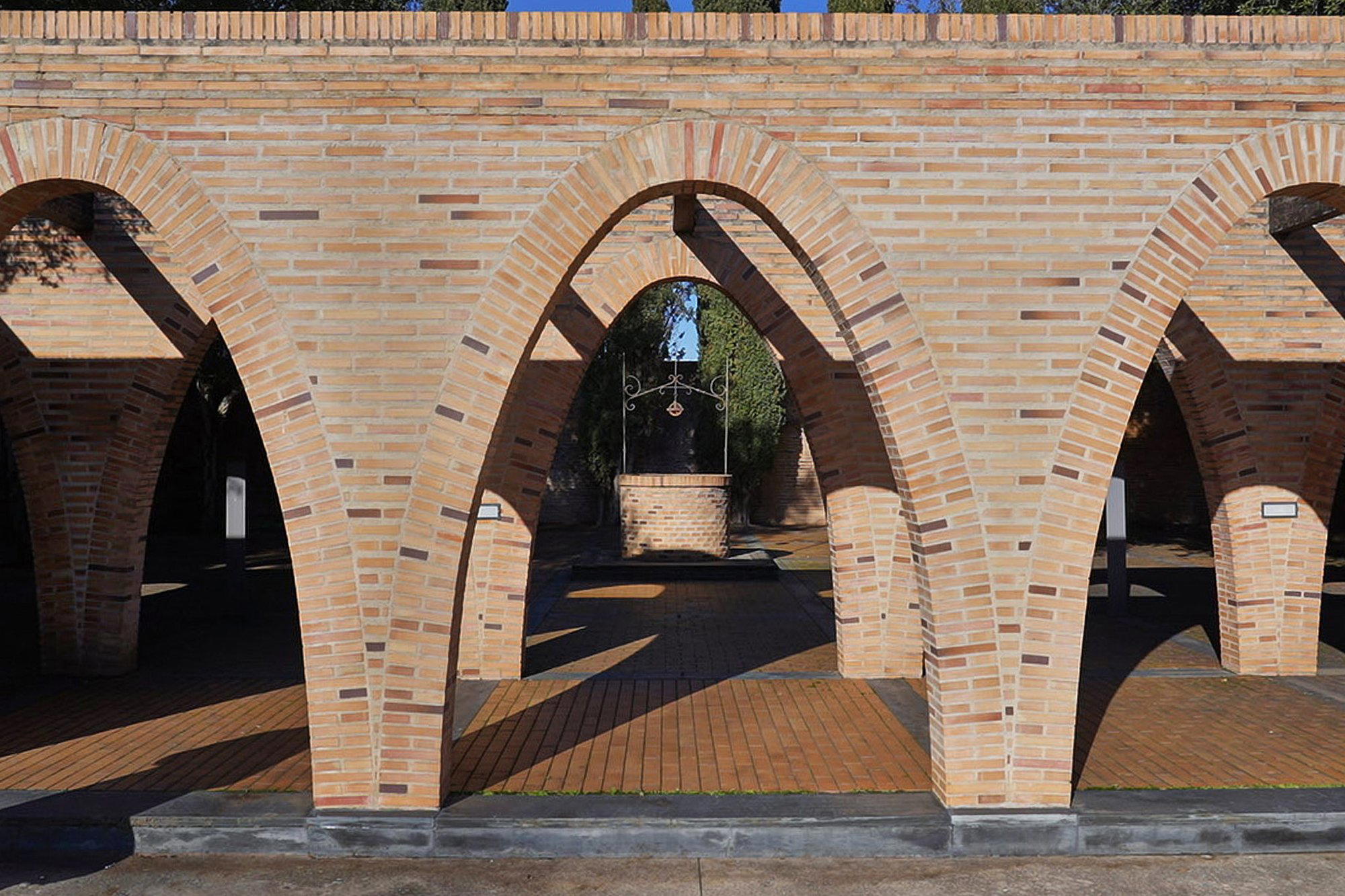
Historic dining room with large stone vaulted ceiling from 1593, along the banks of Cinca and Yaga rivers, creating an intimate and scenic atmosphere.