Casa Bella
Mulberry Street and the Grammar of the Regular At 127 Mulberry Street, a block into the heart of Little Italy, the clientele at Casa Bella sorts itself into two recognizable groups: those who arrived for the first time because someone told them...
Pearl is the En Primeur Club membership app — saves, bookings, and concierge access live there. Same editors, same standards.
- Address
- 127 Mulberry St, New York, NY 10013
- Phone
- +12124314080
- Website
- casabellarestaurant.com
- Directions
- Get directions
 Saves & bookings on Pearl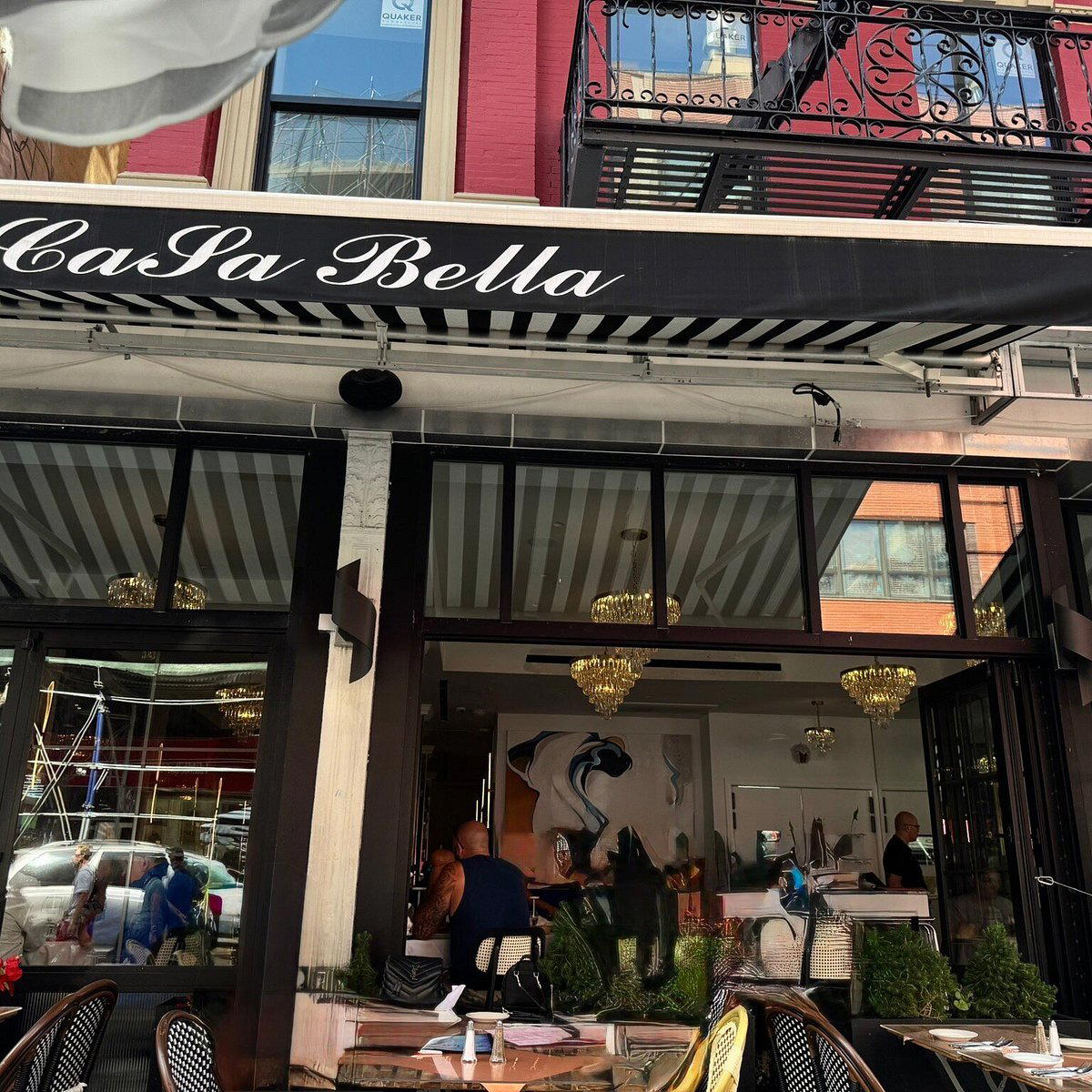
Mulberry Street and the Grammar of the Regular
Casa Bella is a Classic Italian restaurant at 127 Mulberry Street in New York City, with. At 127 Mulberry Street, a block into the heart of Little Italy, the clientele at Casa Bella sorts itself into two recognizable groups: those who arrived for the first time because someone told them to, and those who no longer need to look at the menu. The second group is larger than it appears, and it tells you more about the restaurant than any awards column could. In a neighborhood that has spent decades fending off accusations of tourist-trap status, the presence of committed regulars is one reliable editorial signal available.
Little Italy's dining corridor on Mulberry has thinned considerably since its mid-century peak. The blocks between Canal and Broome now mix genuine neighborhood institutions with restaurants that exist primarily to service the lunch traffic from nearby Chinatown and the weekend foot flow off Canal Street. Casa Bella sits on the quieter northern stretch of that corridor, which already signals something about the kind of meal on offer: less theater, more repetition of a formula that works.
What Keeps People Coming Back
The returning guest at a restaurant like this is not chasing novelty. The Italian-American dining tradition that defined Lower Manhattan's immigrant communities in the late nineteenth and early twentieth centuries was built on consistency, on the pasta that tastes the same on the fourth visit as on the first. That standard of replicability is harder to maintain than it sounds, and regulars at places like Casa Bella are essentially voting, with their reservation habits, that the kitchen is meeting it.
In New York's current high-end Italian tier, the conversation tends to center on downtown newcomers with natural wine lists and fermented-grain pastas. The higher-end conversation in New York often centers on tasting-menu formats at addresses like Le Bernardin, Per Se, and Eleven Madison Park, all of which require advance planning and a different kind of commitment from the diner. The restaurant operates in a different register, one where the commitment runs in the other direction: the kitchen commits to you returning, rather than asking you to commit to a multi-hour sequence of courses decided entirely by the house.
That distinction matters to a specific kind of New York diner. The regulars at Mulberry Street trattorias are not necessarily the same people booking counters at Masa or Atomix. They are, more often, people who want a table they can linger at, a wine list that does not require a seminar to read, and a room where the staff recognizes them. Those conditions are more difficult to engineer than they appear, and restaurants that achieve them reliably tend to accumulate a loyalty that outlasts trends.
The Neighborhood Frame
Little Italy as a dining destination requires some honest accounting. The neighborhood's Italian-American population has dispersed substantially since the postwar decades, and many of the restaurants along Mulberry now serve a clientele that is visiting the idea of the neighborhood as much as the food itself. That is not automatically a criticism: the Italian-American canon, red sauce and all, is a legitimate and historically significant culinary tradition, not a consolation prize for diners who could not get into something more fashionable.
The strongest case for restaurants in this corridor is precisely the one regulars make implicitly by returning: that the food is doing what it is supposed to do, that the room functions as a room should, and that the whole arrangement holds together across multiple visits. Those are not small things. Across the wider American restaurant landscape, the trattoria format has proven durable enough to sustain serious critical attention, from Frasca Food and Wine in Boulder, which applies an Italian-Alpine sensibility to a different geography, to Dal Pescatore in Runate, the multi-generational Italian benchmark against which family-run formats are sometimes measured.
On Mulberry Street, the comparison set is more local. The restaurant sits among a cluster of restaurants that compete on familiarity and consistency rather than innovation. In that context, longevity is its own credential: a restaurant that has held its position in a neighborhood this contested has, by definition, been doing something right for long enough to matter.
Planning a Visit
The restaurant is located at 127 Mulberry Street in Manhattan's Little Italy, accessible via the Canal Street station on the N, Q, R, W, 6, J, and Z lines, a short walk north along Mulberry. Weekends on Mulberry carry significant foot traffic, and the dining room fills accordingly; weeknight visits tend to run at a calmer pace and give more opportunity for the kind of unhurried meal the regular clientele prefers. Dress is casual to smart casual, consistent with the neighborhood's approach to the dining room.
Those interested in the wider spectrum of Italian and Italian-influenced cooking in American fine dining should also consider Blue Hill at Stone Barns in Tarrytown, which draws on Hudson Valley agriculture in a format with some thematic overlap in its commitment to place, and Single Thread Farm in Healdsburg, where the kaiseki-influenced format applies a similar multi-generational precision to Northern California produce. Further afield, The French Laundry in Napa, Providence in Los Angeles, Smyth in Chicago, Addison in San Diego, Emeril's in New Orleans, Lazy Bear in San Francisco, The Inn at Little Washington, and Atelier Moessmer Norbert Niederkofler in Brunico each represent different approaches to the question of what a committed, place-rooted restaurant can achieve.
Side-by-Side Snapshot
Comparable venues nearby, for context on price, style, and recognition.
| Venue | Cuisine | Price | Notes |
|---|---|---|---|
| Casa BellaThis venue — the venue you are viewing | Classic Italian | $$ | Not listed |
| La Nonna | Classic Italian Trattoria | $$ | SoHo-Little Italy-Hudson Square |
| Tre | Napoli-Inspired Italian | $$ | East Village |
| Maestro Pasta | Emilian Italian Pasta | $$ | Greenwich Village |
| Osteria Nonnino | Italian Osteria with Sicilian Influences | $$ | West Village |
| River Deli | Sardinian Italian | $$ | Brooklyn Heights |
Continue exploring
More in New York City
Restaurants in New York City
Browse all →
Bars in New York City
Browse all →
Hotels in New York City
Browse all →





At a Glance
- Classic
- Cozy
- Intimate
- Date Night
- Family
- Casual Hangout
- Historic Building
Current opening hours
- Monday
- 11:30 AM–11 PM
- Tuesday
- 11:30 AM–11 PM
- Wednesday
- 11:30 AM–11 PM
- Thursday
- 11:30 AM–11 PM
- Friday
- 11:30 AM–12 AM
- Saturday
- 11:30 AM–12 AM
- Sunday
- 11:30 AM–11 PM
Hours can change for holidays and private events. Last verified .
Warm and inviting atmosphere with a festive vibe in a historic neighborhood setting.