Osteria Nonnino
On Hudson Street in the West Village, Osteria Nonnino occupies a corner of New York's most settled Italian dining tradition: the neighbourhood trattoria where regulars eat without a menu in hand. The address at 637 Hudson places it squarely in a stretch where locals have sustained Italian kitchens for decades, and the name signals a domestic register that stands apart from the city's more formal Italian fine-dining tier.
Pearl is the En Primeur Club membership app — saves, bookings, and concierge access live there. Same editors, same standards.
- Address
- 637 Hudson St, New York, NY 10014
- Phone
- +12126253333
- Website
- osterianonnino.com
- Directions
- Get directions
 Saves & bookings on Pearl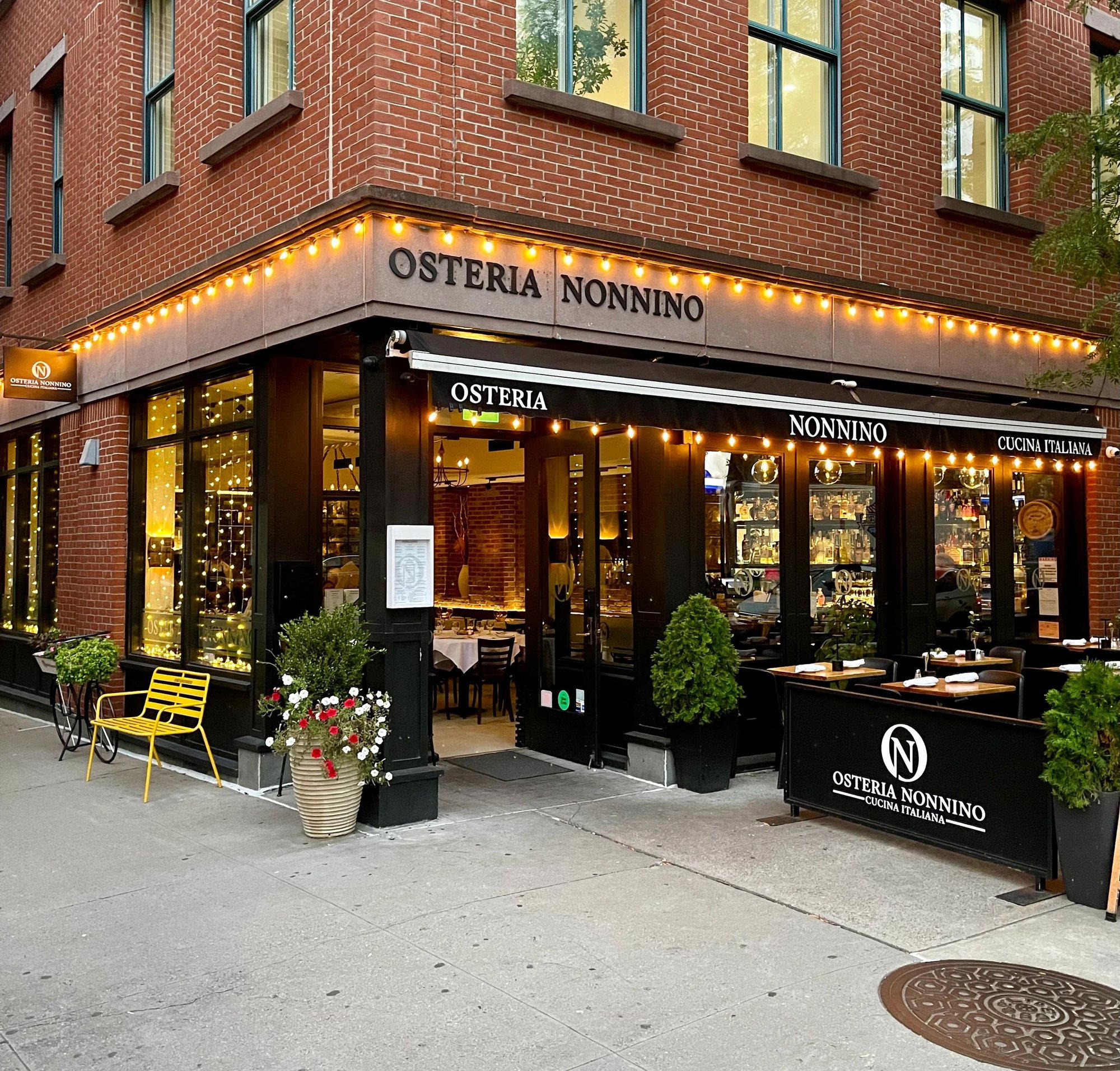
The West Village and the Italian Neighbourhood Table
New York's Italian dining scene runs a wide range from the white-tablecloth formality of Midtown institutions to the stripped-back neighbourhood osterie of Greenwich Village and the West Village, where the expectation is comfort over ceremony. Hudson Street, where Osteria Nonnino sits at number 637, has long been part of that second tradition. The blocks between Christopher Street and Horatio Street have sustained the kind of Italian kitchen where locals return weekly rather than annually, where the front-of-house recognises faces before orders, and where the measure of a good dinner is repetition rather than novelty.
That dynamic, the restaurant as regular's habit rather than destination occasion, defines the osteria format in Italy and has found its most durable American expression in pockets of lower Manhattan. In a city where the fine-dining bracket draws coverage from Le Bernardin, Per Se, and Masa, the neighbourhood osteria operates on entirely different logic: it wins through the loyalty of a local clientele who can walk there.
What Keeps Regulars Coming Back
The osteria tradition is built around dishes that reward familiarity rather than surprise. Regulars at a well-run Italian neighbourhood kitchen develop a working knowledge of what the kitchen does well on which nights, which items never leave the menu because the room would protest, and when to trust the daily special over the printed list. This is the opposite of the tasting-menu philosophy that drives places like Atomix or Jungsik New York, where the format is designed for a single high-attention visit rather than a weekly return.
At Osteria Nonnino, the name itself encodes this positioning. Nonnino, the diminutive of the Italian word for grandfather, signals a domestic register: home cooking as reference point, grandmother's kitchen as aspiration. That framing is a deliberate departure from the restaurant-as-performance mode, and it aligns the room with a specific kind of diner who is more interested in a well-made bowl of pasta than in a chef's conceptual statement.
For the regulars who anchor this kind of place, the unwritten menu matters as much as the printed one. It is the knowledge of which pasta the kitchen executes with particular confidence, which wine the floor staff will open without ceremony for a known face, which table in the corner is worth waiting for. These are not details that appear in reviews; they accumulate through visits.
Hudson Street's Culinary Character
The West Village is one of Manhattan's few neighbourhoods where the dining scene is shaped more by residential density and pedestrian habit than by destination foot traffic. The blocks around Hudson Street function as a genuine local dining corridor, where the competition for repeat business sharpens kitchens in ways that tourist-heavy areas do not. An osteria here is competing with the home kitchen as much as with neighbouring restaurants, which is a more demanding standard in some respects than competing for a Michelin star.
This neighbourhood context distinguishes the West Village Italian table from the more formal Italian fine-dining tier operating elsewhere in Manhattan. The comparison is instructive: where the upper bracket of New York Italian dining pursues refinement and credential, the Hudson Street osteria pursues reliability and belonging. Both are legitimate culinary positions; they serve entirely different needs and different moments in a diner's week.
For reference on how the broader New York dining scene maps across these registers, the EP Club New York City restaurants guide covers the full range from neighbourhood staples to the city's most formally recognised tables.
The Osteria Format in an American Context
The Italian osteria has been translated to American cities with varying degrees of fidelity. At its most authentic, the format means a short menu, honest pricing, and a wine list that does not require a sommelier to interpret. The emphasis is on the cooking rather than the production, and the room is designed for conversation rather than spectacle. Across the United States, a handful of cities have sustained this model convincingly: San Francisco's neighbourhood Italian kitchens, the trattoria cluster in Chicago's Lincoln Park, and certain corners of New Orleans, where Emeril's sits at the opposite, more theatrical end of the hospitality register.
In the tasting-menu era, the neighbourhood osteria has actually gained a kind of counter-cultural credibility. As format-driven restaurants like Alinea in Chicago, Lazy Bear in San Francisco, and Single Thread Farm in Healdsburg have pushed the high-concept end of American dining further, the Italian trattoria has positioned itself as an antidote, a place where the diner controls the pace and the kitchen does not impose a narrative. That positioning has real commercial value in neighbourhoods like the West Village, where residents dine out frequently and do not want every meal to be an event.
The same observation applies internationally: the trattoria register finds parallels in the bistro tradition in France, the izakaya in Japan, and the tapas bar in Spain. What connects them is the primacy of the regular over the tourist, the return visit over the first impression. Italian-American expressions of this tradition can also be found resonating outward from New York to tables like Bacchanalia in Atlanta and Providence in Los Angeles, which operate in different registers but share a commitment to a defined local clientele.
For context on how the Italian fine-dining tradition translates globally at the highest formal level, 8½ Otto e Mezzo Bombana in Hong Kong and Alain Ducasse at Louis XV in Monte Carlo represent the opposite pole of the same culinary heritage.
Planning Your Visit
Know Before You Go
- Address: 637 Hudson St, New York, NY 10014
- Neighbourhood: West Village, Manhattan
- Getting There: The 1 train to Christopher Street-Sheridan Square is the closest subway stop; the A, C, E trains at 14th Street are a short walk south along Hudson.
- For a neighbourhood osteria on a sought-after West Village block, booking ahead for weekend evenings is a reasonable precaution.
- Dress Code: No confirmed dress code; the osteria format across comparable West Village addresses runs casual to smart-casual.
- Price Range: Not confirmed. Italian neighbourhood restaurants in this part of Manhattan typically occupy the $$-$$$ range, though this is not verified for Osteria Nonnino specifically.
Fast Comparison
Comparable venues nearby, for context on price, style, and recognition.
| Venue | Cuisine | Price | Notes |
|---|---|---|---|
| Osteria NonninoThis venue — the venue you are viewing | Italian Osteria with Sicilian Influences | $$ | Not listed |
| Daddies | Neapolitan-Inspired Italian Pizza and Pasta | $$ | West Village |
| Song' E Napule | Authentic Neapolitan Pizza | $$ | Greenwich Village |
| Naples 45 Ristorante e Pizzeria | Neapolitan Pizza and Italian Ristorante | $$ | East Midtown-Turtle Bay |
| Antonucci | Northern Italian Trattoria | $$ | Upper East Side-Carnegie Hill |
| Campania | Coal-Fired Italian Pizza | $$ | Bay Ridge |
Continue exploring
More in New York City
Restaurants in New York City
Browse all →
Bars in New York City
Browse all →

Hotels in New York City
Browse all →






At a Glance
- Cozy
- Rustic
- Intimate
- Date Night
- Casual Hangout
- Craft Cocktails
Current opening hours
- Monday
- 4–10 PM
- Tuesday
- 4–10 PM
- Wednesday
- 4–10 PM
- Thursday
- 4–10 PM
- Friday
- 4–11 PM
- Saturday
- 12–11 PM
- Sunday
- 12–10 PM
Hours can change for holidays and private events. Last verified .
Cozy and inviting atmosphere with a charming outdoor area evoking Italian charm.