Capitale Pizzeria
On Capitol Hill's Broadway strip, Capitale Pizzeria occupies a corner of Seattle's increasingly serious pizza conversation. The address at 426 Broadway E places it in one of the city's most restaurant-dense corridors, where daytime and evening crowds move through with distinct rhythms and expectations. For a neighbourhood that rewards repeat visits, it earns its place on the rotation.
Pearl is the En Primeur Club membership app — saves, bookings, and concierge access live there. Same editors, same standards.
- Address
- 426 Broadway E, Seattle, WA 98102
- Phone
- +12064721105
- Website
- capitalepizzeria.com
- Directions
- Get directions
 Saves & bookings on Pearl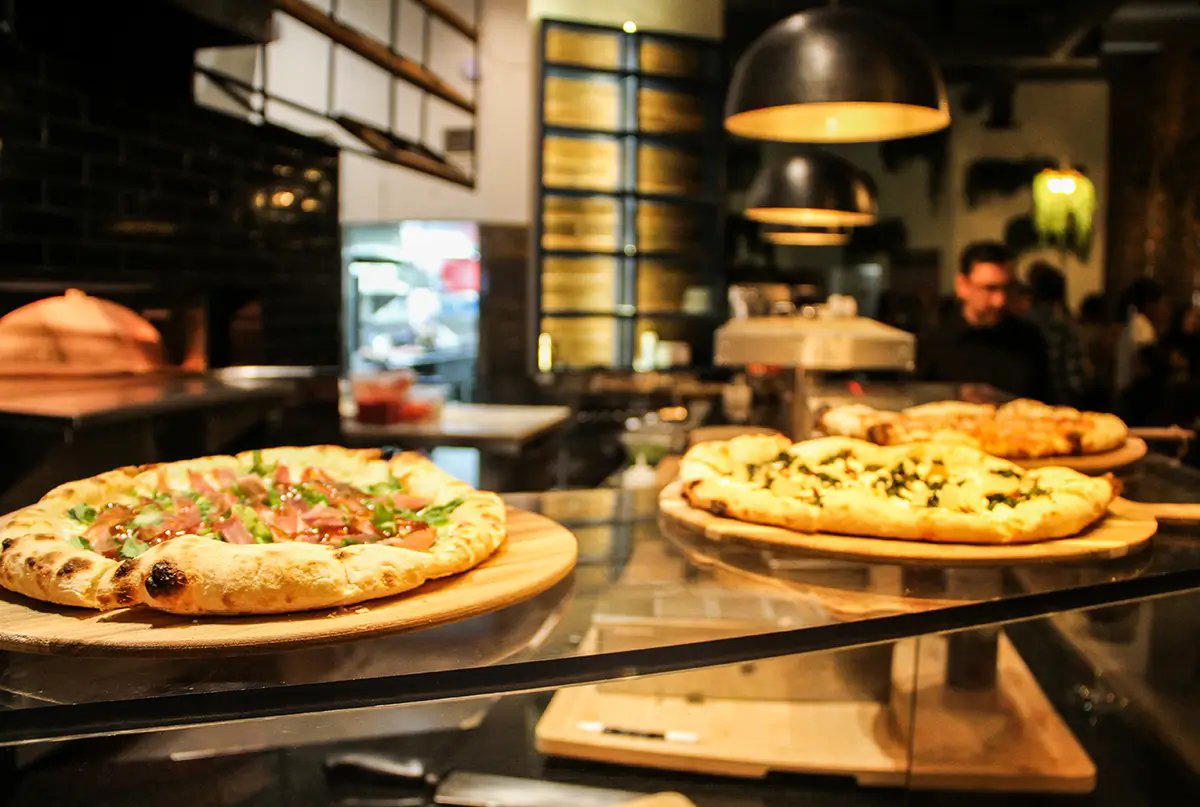
Broadway's Pizza Counter, Read by the Hour
Capitol Hill is one of the few Seattle neighbourhoods where the street feels genuinely different at noon than it does at nine in the evening. Broadway E runs a concentrated strip of independent restaurants, coffee shops, and bars that shift registers as the day progresses, and the pizza category sits interestingly inside that rhythm. Lunch on Broadway tends toward the functional: counter service, fast turnover, tables shared without ceremony. Evening service on the same block tilts toward something more deliberate, with longer tables, bottle orders, and the kind of group energy that makes a pizza format read as communal rather than transactional. Capitale Pizzeria is a restaurant in Seattle's Capitol Hill neighborhood, known for Modern Neapolitan Pizza with Global Twists, at about $25 per person. Capitale Pizzeria at 426 Broadway E occupies that address-specific tension.
The broader Seattle pizza conversation has matured considerably over the past decade. The city long defaulted to New York-style slices and chain delivery, but a cohort of independent operators has pushed toward wood-fired Neapolitan technique, Detroit-style pan formats, and Roman al taglio, each with their own production logic and price positioning. Capitol Hill, with its density of food-literate regulars and high foot traffic from the light rail station at John Street, has become a reasonable proving ground for operators who want both lunch volume and dinner retention. Capitale fits that geographic logic.
The Lunch-to-Dinner Shift in a Pizza Context
Pizza, more than most formats, rewards understanding the service window you are booking into. At lunch, the transaction is typically faster, the room less curated, and the value proposition stronger on a per-plate basis. A midday pizza visit on Broadway benefits from shorter waits and a crowd that tends to be local rather than destination-driven. The daytime regulars at a neighbourhood spot like this are often one reliable signal of consistency: they are not there for a special occasion, and repeat patronage in a price-conscious daypart is a reasonable proxy for kitchen reliability.
Evening service recalibrates the value equation. In a neighbourhood where dinner at Canlis or Joule sets a high bar for what a considered Seattle dinner can be, a pizza counter participates in a different conversation: approachability, conviviality, the logic of splitting something at a table with friends rather than committing to a tasting-menu pace. The evening version of a Capitol Hill pizza spot tends to draw groups, pre-concert visits (the Paramount and Moore both pull evening foot traffic through the Hill), and the kind of mid-week dinner that does not need to be an occasion to justify itself.
For visitors mapping a Seattle itinerary around the city's stronger fine-dining anchors, knowing which restaurants absorb which meal slot matters. The destination-level rooms covered in the Seattle dining guide tend to anchor dinner, leaving lunch as the window where neighbourhood operators like Capitale earn their place in the day's structure.
Capitol Hill as a Dining Address
The Broadway corridor has a particular competitive character. It is not the Pike Place-adjacent dining district that absorbs out-of-town visitors, nor the SoDo corridor around 2963 4th Ave S that pulls a more industry-adjacent crowd. Broadway is neighbourhood-first, with enough foot traffic to support casual formats that would struggle in lower-density Seattle districts. That foot traffic dynamic is directly relevant to how a pizza operator structures its service: lunch relies on it, and evening service competes against the full Broadway dining roster rather than a destination draw.
Capitol Hill's restaurant density also means that within a few blocks of Capitale's address, a diner can access soba, Japanese izakaya, modern American, and a range of bar-forward formats. The pizza category, positioned correctly, does not compete directly with those formats. It occupies a different occasion and a different price point, which gives a well-run independent operator room to build regulars without being crowded out by category adjacency. The addresses at 1415 1st Ave and 1744 NW Market St illustrate how different Seattle corridors handle the same format diversity at different price registers.
Pizza in the American Context
The serious pizza movement in American cities has largely bypassed the fine-dining tier. The restaurants that have defined the past two decades of American cooking at the high end, from Le Bernardin in New York City to The French Laundry in Napa to Providence in Los Angeles, operate in a different category register entirely. The value of understanding where a neighbourhood pizza counter sits is precisely in not conflating those tiers. A Capitol Hill pizzeria is not competing with Smyth in Chicago or Addison in San Diego; it is competing with the other three or four pizza formats within walking distance and the full casual dining set on its own block.
That is not a diminishment. Particularly consistent dining in American cities happens at the neighbourhood-anchor tier, where the absence of destination pressure allows operators to focus on repetition and reliability. The lunch trade, in particular, punishes inconsistency more than evening service does, because the time-constrained midday diner has less patience and fewer alternatives to comparison. A pizza operator that holds its quality across both service periods on a high-traffic corridor like Broadway is doing something operationally specific, regardless of whether it carries awards or critical recognition.
For comparison, the farm-to-table precision of Blue Hill at Stone Barns or the sourcing discipline at Single Thread Farm in Healdsburg represents a different set of production values, but the underlying logic, that consistent ingredient quality and kitchen repetition produce better food, applies at every price point. The same holds for the seasonal coherence visible at Lazy Bear in San Francisco or the product focus at Atomix in New York City: technique and intention matter at whatever scale they are applied.
The Minimal Set
Comparable venues nearby, for context on price, style, and recognition.
| Venue | Cuisine | Price | Notes |
|---|---|---|---|
| Capitale PizzeriaThis venue — the venue you are viewing | Not listed | $$ | Not listed |
| Andare Kitchen & Bar | Belltown, Italian Trattoria | $$ | Not listed |
| Johnny Mo's Pizzeria | Not listed | $$ | Portage Bay, New York & Chicago Style Pizza |
| Pasta Casalinga | Not listed | $$ | Pike Place Market, Handmade Italian Pasta with Northwest Flavors |
| Tutta Bella - Columbia City | Columbia City, Neapolitan Pizza | $$ | Not listed |
| STELLA. | First Hill, Coastal Italian | $$$ | Not listed |
Continue exploring
More in Seattle
Restaurants in Seattle
Browse all →
Bars in Seattle
Browse all →
Hotels in Seattle
Browse all →
At a Glance
- Modern
- Trendy
- Casual Hangout
- Date Night
- Open Kitchen
Current opening hours
- Monday
- Closed
- Tuesday
- 5–9 PM
- Wednesday
- 5–9 PM
- Thursday
- 5–9 PM
- Friday
- 4–10:30 PM
- Saturday
- 4–10:30 PM
- Sunday
- 4–9 PM
Hours can change for holidays and private events. Last verified .
Welcoming modern Italian atmosphere with moderate noise levels.