
Ca´n Boqueta holds back-to-back Michelin Bib Gourmand recognition (2024 and 2025) for its updated take on Mallorcan regional cuisine, served across three evolving tasting menus inside a traditional stone house in central Sóller. The rear patio overlooks the valley's orange groves, framing among the more composed dining settings in the Serra de Tramuntana. Price range is mid-tier (€€), making it one of the more accessible entries into serious Balearic cooking.
Pearl is the En Primeur Club membership app — saves, bookings, and concierge access live there. Same editors, same standards.
- Address
- Gran Via, 43, 07100 Sóller, Illes Balears, Spain
- Phone
- +34 971 63 83 98
- Website
- canboqueta.com
- Directions
- Get directions
 Saves & bookings on Pearl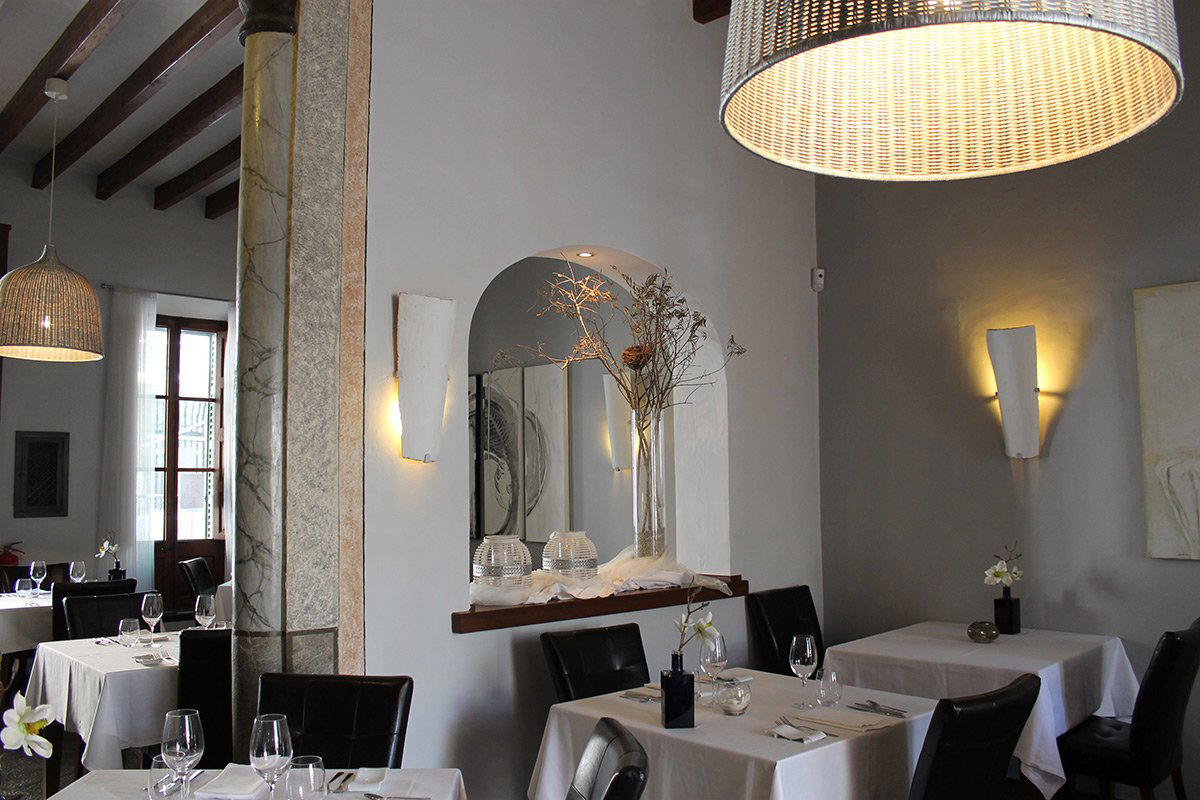
A Traditional House, a Valley of Orange Groves, and the Weight of Mallorcan Cooking
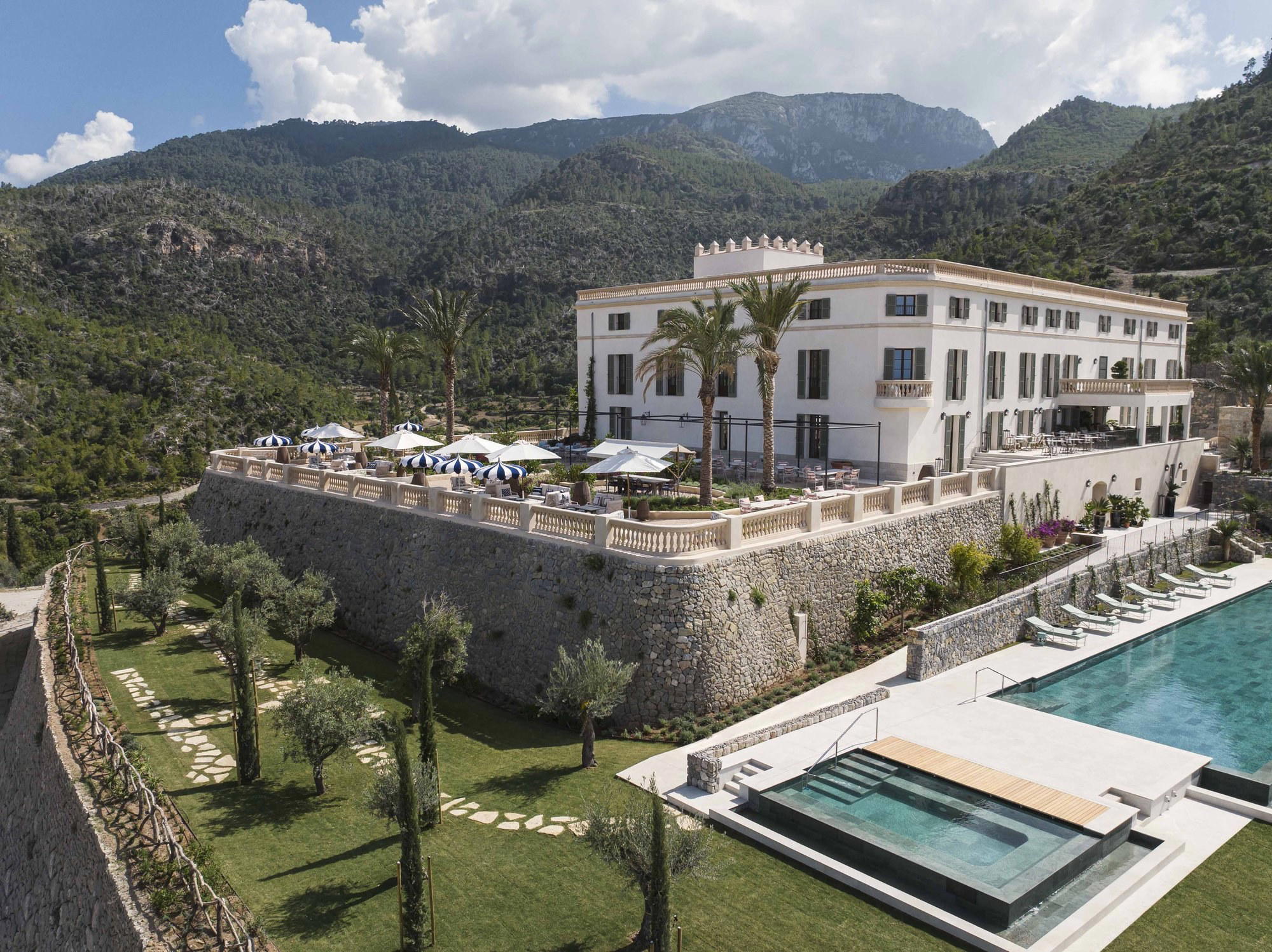
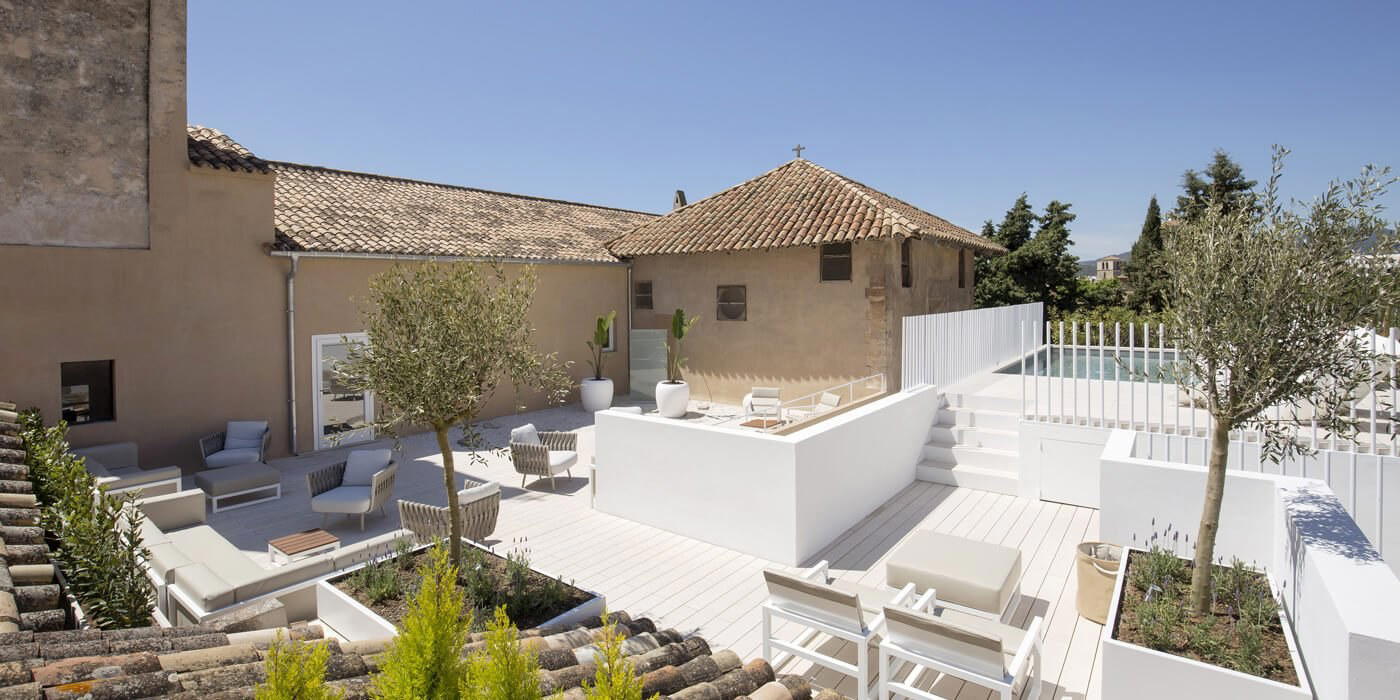
Approaching Gran Via in the centre of Sóller, the streetscape does much of the framing before you step inside. The town sits in a bowl formed by the Serra de Tramuntana mountains, and the citrus groves that made it prosperous for centuries are visible from almost every refined vantage point. Ca´n Boqueta occupies a typical Mallorcan stone house on that central artery, its interior carrying the rustic architectural grammar common to the island's older domestic buildings: thick walls, earthy materials, and a spatial logic built around a courtyard. The rear patio, which opens onto views of the valley and its orange groves, is not an add-on; it is the room that makes the proposition complete.
That physical context matters because it is inseparable from what Mallorcan regional cuisine is doing at its most considered end. The island's cooking tradition draws on centuries of relative isolation, Arab agricultural influence (which introduced many of those citrus and almond crops), and a larder defined by pork, pulses, foraged herbs, and coastal fish. Restaurants that work seriously within this tradition are not simply reproducing old recipes; they are making arguments about which elements of that heritage are worth carrying forward, and how. Ca´n Boqueta sits inside that conversation.
Three Menus, One Kitchen, and Why the Format Signals Ambition
Spain's most discussed restaurant formats over the past two decades have clustered at the summit of the price tier: the multi-course creative tasting menus at houses like El Celler de Can Roca in Girona, Arzak in San Sebastián, and Azurmendi in Larrabetzu operate at €€€€ price points and carry multiple Michelin stars. The Bib Gourmand tier, by contrast, is Michelin's explicit signal of quality-to-value ratio: cooking that merits attention at a price most diners can access without special-occasion arithmetic. Ca´n Boqueta has no Michelin star, which places it in a meaningfully different register from the €€€€ creative houses without diminishing the seriousness of its kitchen.
What the kitchen runs across three menus reflects an understanding of how different diners approach the same room. A simpler format is available at lunchtime only, making it the logical entry point for visitors arriving on the historic train from Palma. Two more elaborate options extend the experience: a four-course menu with appetisers and a nine-course tasting menu that represents the fullest expression of the kitchen's current thinking. All three menus evolve continuously, which in practical terms means the kitchen is not running on a fixed seasonal card but updating its offer with enough regularity to reward repeat visits and to keep the cooking honest against whatever the market and season actually provide.
Mallorcan Cuisine as a Regional Argument
The Balearic Islands have not historically occupied the same position in Spain's fine-dining conversation as the Basque Country or Catalonia. That asymmetry is partly a function of where culinary investment and media attention concentrated during the country's restaurant boom of the 1990s and 2000s, and partly because island food traditions tend to be slower to translate into the tasting-menu format that attracts international recognition. What has emerged more recently on Mallorca is a cohort of kitchens working to reframe the island's larder as something worth sustained critical attention, rather than a backdrop for tourist-facing simplicity.
Ca´n Boqueta's approach, described in its Michelin recognition as an updated and innovative take on Mallorcan cuisine, positions it within that reframing effort. The word 'innovative' here carries specific weight: it suggests the kitchen is not in the preservation business, but it is also not importing foreign techniques for their own sake. Particularly coherent versions of this approach treat regional identity as a starting constraint rather than a marketing label, finding the tension between old recipes and contemporary cooking logic as the generative space where interesting food happens. Elsewhere in Spain, kitchens like Quique Dacosta in Dénia and Ricard Camarena in València have done something comparable for Valencian and Levantine traditions. The regional specificity is the point, not the problem.
For a parallel model of regionally rooted tasting menus at the €€€€ level and three Michelin stars, Aponiente in El Puerto de Santa María offers a useful comparison of how deep specialisation within a single coastal tradition can carry a kitchen to stronger examples from the Spanish critical hierarchy. The restaurant operates far below that price register, but the underlying logic of committing to a place and its ingredients runs through both.
Regional cuisine specialists working at the Bib Gourmand level outside Spain also provide useful framing: Fahr in Künten-Sulz and Gannerhof in Innervillgraten each demonstrate how deeply localised cooking can earn sustained Michelin recognition without gravitating toward the creative abstraction that defines the starred tier.
Sóller as Context: Why the Town Shapes the Restaurant
Sóller is one of the more self-contained towns on Mallorca, and its relative isolation for most of the twentieth century was structural: the mountain road connecting it to Palma was not built until the 1910s, and the town's primary link to the capital remained the narrow-gauge wooden-carriage train that opened in 1912. That train still runs, making the journey from Palma part of the Sóller experience rather than a logistical obstacle. Arriving by rail and walking to Gran Via puts the restaurant in its correct sequence: the town first, then the table.
For broader context on dining across the valley, our full Sóller restaurants guide covers the range from casual to committed. Béns d'Avall, a contemporary kitchen above the sea near Sóller, operates at a different price point and format but shares the commitment to Mallorcan ingredients in a setting shaped by the landscape. The two restaurants are not competitors in any meaningful sense; they occupy different positions in how a visitor might structure time in the valley.
For planning beyond the table, our Sóller hotels guide, bars guide, wineries guide, and experiences guide map the wider offer across the town and valley.
Planning a Visit
The restaurant sits at Gran Via, 43 in the centre of Sóller, reachable on foot from the main square and from the train station without significant distance. The price tier is €€, which for a consecutively Bib Gourmand-recognised kitchen offering a nine-course tasting menu represents a meaningful cost-to-quality ratio by the standards of comparable European regional cooking. The lunchtime-only simpler menu is the practical choice for day visitors arriving by train from Palma; the nine-course format suits those with the evening available and a reason to stay. Given that all three menus evolve continuously, checking the current offer before booking is worth the step.
What is the signature dish at Ca´n Boqueta?
The restaurant does not publish a fixed signature dish, and given that all three of its menus evolve continuously, specific preparations are not reliably current across booking windows. What the kitchen is consistently identified with, through its Michelin Bib Gourmand recognition in both 2024 and 2025, is an updated approach to Mallorcan regional cuisine: working within the island's larder of pork, citrus, pulses, and coastal fish, then applying contemporary technique to that material. For the current menu composition, checking directly with the restaurant ahead of your visit is one reliable approach. The kitchen is led by owner-chef Xisco Martorell, and the consecutive Bib Gourmand recognition points to consistent quality rather than a single dish as the draw.
Booking and Cost Snapshot
Comparable venues nearby, for context on price, style, and recognition.
| Venue | Cuisine | Price | Awards | Notes |
|---|---|---|---|---|
| Ca´n Boqueta | Not listed | $$$ | Bib Gourmand | Sóller centre, Contemporary Mallorcan Mediterranean |
| Béns d'Avall | Soller, Modern Balearic Fine Dining | $$$$ | Michelin 1 Star | Not listed |
| L'Eixida | Not listed | $$$ | Michelin Plate | Peratallada, Mediterranean Fusion with Asian & South American Influences |
| Laudat | Not listed | $$$ | Michelin Plate | Santanyí, Modern Mediterranean with Farm-to-Table Focus |
| El Olivo | Deià, Modern Mediterranean Fine Dining | $$$$ | Michelin Plate | Not listed |
| Bàrbar | old quarter, Modern Mediterranean Tapas | $$$ | Michelin Plate | Not listed |
Recognition history
Dated appearances from independent guides and award organizations, with the underlying list record or original source where available.
Michelin Bib Gourmand
Michelin
Michelin Bib Gourmand
Michelin
Michelin Bib Gourmand
Michelin
Continue exploring
More in Soller
Restaurants in Soller
Browse all →
Bars in Soller
Browse all →
Hotels in Soller
Browse all →

At a Glance
- Elegant
- Rustic
- Romantic
- Quiet
- Scenic
- Date Night
- Special Occasion
- Celebration
- Group Dining
- Terrace
- Garden
- Courtyard
- Historic Building
- Standalone
- Sommelier Led
- Local Sourcing
- Farm To Table
- Garden
- Mountain
Current opening hours
- Monday
- Closed
- Tuesday
- 1–5 PM
- Wednesday
- 1–5 PM
- Thursday
- 1–5 PM, 7:45 PM–12 AM
- Friday
- 1–5 PM, 7:45 PM–12 AM
- Saturday
- 1–5 PM, 7:45 PM–12 AM
- Sunday
- 1–5 PM
Hours can change for holidays and private events. Last verified .
Refined yet welcoming atmosphere with stone floors, high ceilings, and a peaceful interior patio; elegant garden setting with warm, attentive service creating a calm, sophisticated dining experience.