

Michelin Plate · Star Wine List
Our verdict
At Adrián Quetglas on Palma's Passeig de Mallorca, a Buenos Aires-born chef distils stints in London, Paris, and Moscow into a Mediterranean-led tasting menu that Michelin has recognised for two consecutive years. The bistro-set room, with its vertical garden and jazz backdrop, keeps the mood approachable while the cooking operates at a different register. A five- or eight-course format, with optional wine pairings, delivers one of Spain's stronger quality-to-price propositions at this level.

Pearl is the En Primeur Club membership app — saves, bookings, and concierge access live there. Same editors, same standards.
- Address
- Pg. de Mallorca, 20, Centre, 07012 Palma, Illes Balears, Spain
- Phone
- +34 971 78 11 19
- Hours
- Mon ClosedTue–Thu 1–3 PM, 8–9 PMFri–Sat 1–2 PM, 8–9 PMSun Closed
- Website
- adrianquetglas.es
- Directions
- Get directions
- Booking
- Book on the venue's website
The menu
What to order
- Turbot with peas and Tramuntana lemon
- Gazpacho with prawn carpaccio
- Borsch with beetroot ravioli
- Mallorcan lamb with apricot puree
- Beef with Mallorcan truffles
Where the Room Sets the Terms
The approach along Passeig de Mallorca already suggests a certain Palma: wide pavements, the dry bed of the Torrent de Sa Riera canal running alongside, the kind of address that local professionals and curious visitors share without friction. Inside Adrián Quetglas, the register softens further. Jazz plays at a volume that allows conversation. A vertical garden anchors the room visually without demanding attention. The ambience reads as bistro in the leading European sense: informal enough to be comfortable, considered enough to signal that the kitchen is operating seriously. In a city where the upper end of dining often chooses between austere modernism and Mallorcan-heritage theatrics, this middle register is its own editorial statement.
A Curriculum in the Cooking
The culinary traditions that converge in this kitchen reflect a career assembled across several cities and cultural registers. Buenos Aires, where Quetglas grew up, contributes a directness and a certain generosity of spirit that resists the preciousness that sometimes afflicts tasting-menu formats. London and Paris added technical discipline and exposure to classical European frameworks. Moscow, less obvious on a Mediterranean island, appears in a comfort with bold flavour pairings and an appetite for the theatrical in individual courses without letting spectacle overwhelm substance.
What the menu ultimately produces is a Mediterranean identity with a multinational accent. This is not unusual in contemporary Spanish cooking: the country's most acclaimed kitchens, from Arzak in San Sebastián to El Celler de Can Roca in Girona, have long treated international influence as raw material rather than contamination. What distinguishes Quetglas's approach is how legibly those influences surface. A course might pivot from a Balearic ingredient base to a technique or a flavour logic drawn from somewhere else entirely, and the seam shows — but it shows as craft rather than confusion. The stated goal of democratising haute cuisine is visible in the menu structure: the entry point is genuinely accessible at the €€€ tier, which at Palma's current premium end places it a bracket below Marc Fosh and Zaranda, both carrying Michelin stars and priced at €€€€.
The Tasting Menu Format and What It Signals
Palma's serious dining scene has largely converged on the tasting menu as its primary format at the upper end. Aromata runs a comparable contemporary format at the same price tier. The logic is consistent with broader Spanish dining culture, where multi-course menus allow a kitchen to demonstrate range and control without the uneven quality that can characterise long à la carte operations at similar price points.
At Adrián Quetglas, guests choose between five and eight courses, with wine pairing available as an add-on at both lengths. Supplements allow for pigeon, caviar, and a cheese course — a structure common in French-influenced tasting operations, where the base menu establishes value and supplements allow the table to self-select into a higher tier. The five-course option is a reasonable introduction for visitors who find the full eight-course commitment either time-prohibitive or too rich at a single sitting. The pairing option makes sense here given the menu's stylistic range: matching a wine program to cooking that moves between Mediterranean idioms and influences from colder kitchens requires a list with real breadth.
Michelin awarded a Plate recognition in both 2024 and 2025, a signal that the cooking meets the guide's quality threshold consistently without yet reaching star candidacy. In Michelin's own framing, the Plate denotes good cooking; at this price level and format, it places Adrián Quetglas in a similar band to Stagier Bar and other Palma kitchens operating at serious technical levels without the full critical apparatus of starred recognition. Within the Balearic context, and measured against the scale of Spain's broader fine-dining offer, from Aponiente in El Puerto de Santa María to DiverXO in Madrid or Azurmendi in Larrabetzu, it occupies a recognisable middle tier: technically accomplished, clearly positioned, not yet part of the conversation that fills reservation queues internationally.
The Quality-to-Price Argument
The most consistent claim made about this restaurant is also its most useful: the quality-to-price ratio is among the strongest in Spain for a kitchen operating at this register. That claim is not difficult to contextualise. Tasting menus at starred Palma venues, or at comparably ambitious kitchens in Barcelona (see Cocina Hermanos Torres) or Stockholm's Frantzén, sit in a substantially higher bracket. The restaurant consistently runs full, which confirms that local and visiting diners have absorbed the value proposition.
Getting There and Planning Your Visit
The restaurant sits at Passeig de Mallorca, 20, in Palma's Centre district, close enough to the old town to walk from most central hotels, and on a boulevard with its own quiet character in the evenings. The location is practical for visitors staying along Palma's main hotel corridors; consult our full Palma hotels guide for accommodation context relative to the Centre district. Given that the room runs full consistently, booking ahead is advisable, particularly in summer months when Palma's dining scene operates under significant demand pressure from island visitors. For a broader view of where this kitchen sits in Palma's dining geography, our full Palma restaurants guide maps the scene across price tiers and cuisines. If the evening calls for a drink before or after, our Palma bars guide covers the relevant options nearby, and the Palma wineries guide and experiences guide round out the wider picture for those building a longer stay around the island's food and drink offer. For visitors comparing Dubai's modern cuisine scene, FZN by Björn Frantzén offers a useful international reference point for what this price tier can deliver at the global level. The Bàrbar is worth noting for those who want to extend the evening in a lower-key register after dinner.
Frequently asked questions
Is Adrián Quetglas a family-friendly restaurant?
The bistro-style room on Passeig de Mallorca and the jazz-backed atmosphere keep things relaxed rather than ceremonial, which makes it more approachable than many Michelin-recognised kitchens. That said, the format is a structured 5- or 8-course tasting menu, which suits guests who are ready to commit to a full sit-down progression. Families with younger children may find the pacing a better fit for a special occasion than a casual dinner out.
What's the overall feel of Adrián Quetglas?
The room is bistro in register rather than grand, with a vertical garden, canal views over the Torrent de Sa Riera, and jazz playing throughout. The mood is convivial and usually full, which the Michelin assessors noted as part of its consistent appeal. Quetglas's stated goal — democratising haute cuisine — shapes the atmosphere: the cooking carries serious technique without the formality that often accompanies it at this level.
What distinctions does Adrián Quetglas have?
Adrián Quetglas has received recognition including: For this restaurant, it is evident that the most important thing is the guest, and they have one of the best quality/price ratio menus in Spain – or even the world – for this restaurant level. The cu...; A restaurant that is as original as ….
What do regulars order at Adrián Quetglas?
The structured menu format means most guests work through either the 5- or 8-course sequence, but the supplement options — pigeon, caviar, and a cheese course — are where returning diners tend to personalise the meal. The wine pairing is available alongside both menu lengths. Michelin reviewers have highlighted the quality-to-price ratio as one of the kitchen's most consistent strengths, which points to the full tasting format as the intended way to eat here.
Is Adrián Quetglas expensive?
Pricing at Adrián Quetglas is listed as €€€.
How It Stacks Up
| Venue | Cuisine | Price | Awards | Notes |
|---|---|---|---|---|
| Adrián QuetglasThis venue — the venue you are viewing | Modern Mediterranean with Argentinian and International Influences | $50–100 | Michelin Plate · Star Wine List | Not listed |
| Zaranda | Balearic Spanish Fine Dining | Not listed | 1 Michelin Star · Star Wine List | Mallorcan, Creative |
| DINS Santi Taura | Modern Mallorcan Fine Dining | $100–150 | 1 Michelin Star · Star Wine List | Mallorcan, Modern Cuisine |
| La Bodeguilla | Spanish Tapas & Mallorcan | $50–100 | Michelin Plate · Star Wine List | Wine Bar, Traditional Cuisine |
| Marc Fosh | Contemporary Mediterranean | Not listed | 1 Michelin Star · Star Wine List | Modern Cuisine |
| Aromata | Modern Mediterranean / Mallorcan | Not listed | Michelin Plate · Guía Repsol 1 Sol | Contemporary |
Recognition history
Dated appearances from independent guides and award organizations, with the underlying list record or original source where available.
Michelin Plate
Michelin
Star Wine List
Star Wine List
Full recognition history (4 entries)
Michelin Plate
Michelin
Michelin Plate
Michelin
Continue exploring
More in Palma
Restaurants in Palma
Browse all →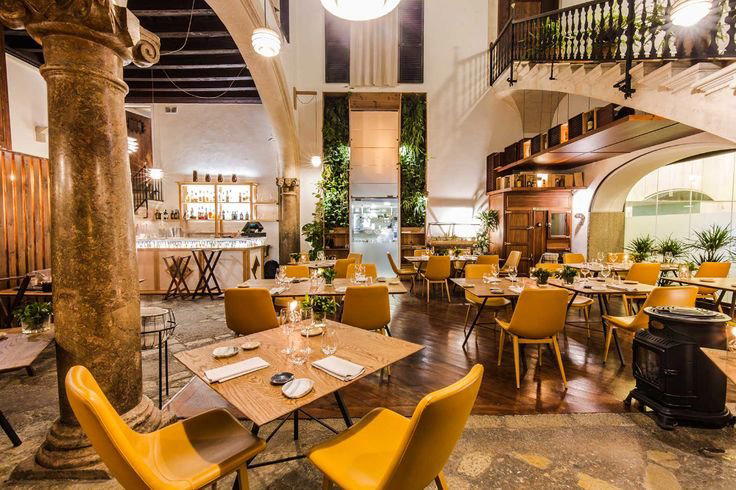
Bars in Palma
Browse all →
Hotels in Palma
Browse all →
Details
- Elegant
- Modern
- Intimate
- Sophisticated
- Date Night
- Special Occasion
- Celebration
- Business Dinner
- Terrace
- Open Kitchen
- Design Destination
- Standalone
- Sommelier Led
- Local Sourcing
- Farm To Table
- Street Scene
- Tasting Menu
- Set Menu
- Wine Pairing
- Vegetarian Friendly
- Gluten Free Options
- Allergy Accommodating
Current opening hours
- Monday
- Closed
- Tuesday
- 1–3 PM, 8–9 PM
- Wednesday
- 1–3 PM, 8–9 PM
- Thursday
- 1–3 PM, 8–9 PM
- Friday
- 1–2 PM, 8–9 PM
- Saturday
- 1–2 PM, 8–9 PM
- Sunday
- Closed
Hours can change for holidays and private events. Last verified .
Bright, modern, and calm bistro-style setting with vertical gardens and natural light; welcoming yet refined atmosphere enhanced by soft jazz music in the background.