


1 Michelin Key · Virtuoso Luxury Hotel Partner · Preferred Hotels Member
Twenty-seven rooms and three private villas occupy an estate of olive groves, vineyards, and three miles of Mediterranean coastline views. Pricing is available on request.

Pearl is the En Primeur Club membership app, where members save venues, book tables and use the concierge.
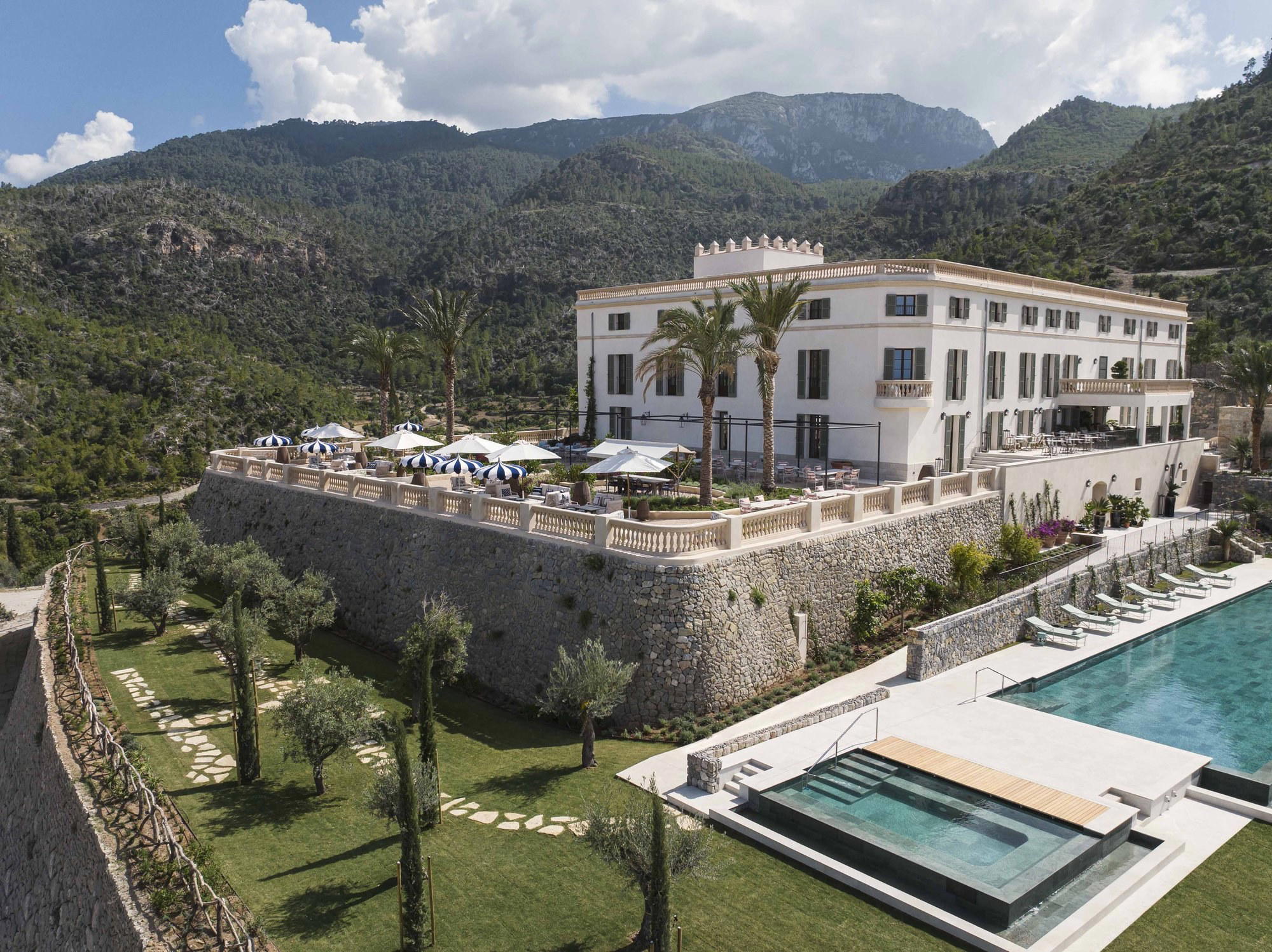
What makes this corner of Mallorca distinct from the resort-heavy south and east of the island is the absence of managed amenity. Luxury here reads differently than it does at Jumeirah Mallorca or Cap Vermell Grand Hotel on the island's northeastern coast. The emphasis is on depth of place over polish of finish.
An Estate Built on Deep Roots
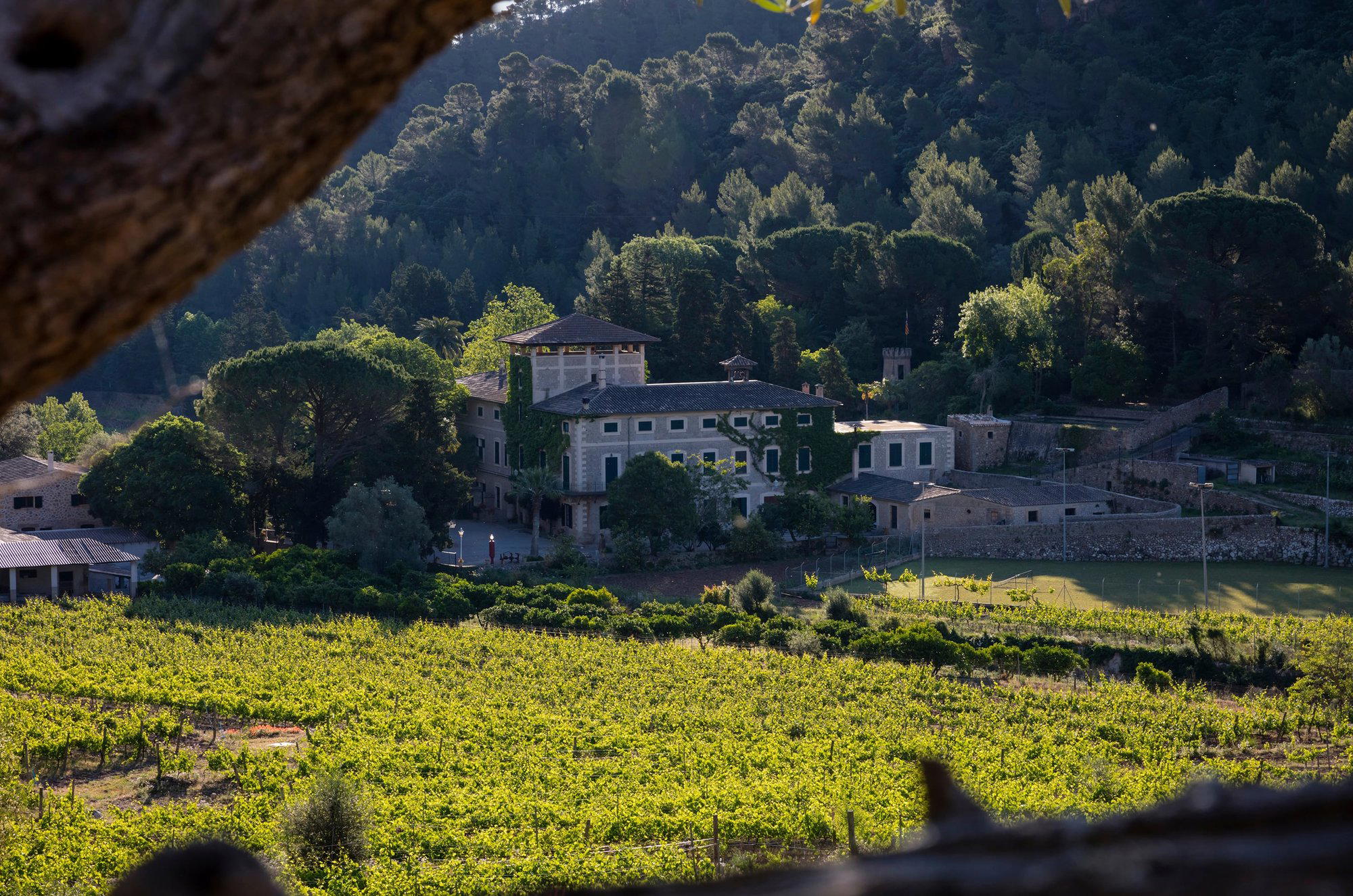
The finca at the heart of the property dates to around the 16th century. A 13th-century watchtower predates even that, a remnant of coastal defence systems built against pirate raids on villages below the mountains. Son Bunyola's history is therefore not a decorative layer applied to a modern hotel; it is the structural fact around which the accommodation is arranged. Richard Branson acquired the estate in the 1990s, sold it, and eventually returned it to operation in 2023 after a substantial restoration. That three-decade arc, from purchase to opening, gives some indication of how seriously the project was approached.
The 27 rooms in the main hotel occupy the historic finca building, shaped by local craftsmanship and materials drawn from the island's vernacular tradition. The approach is deliberate restraint rather than decorative abundance: calm proportions, understated finishes, Mallorcan character rather than Mediterranean-generic styling. Rooms are spacious without the kind of specification sheet that some hotels use as a substitute for atmosphere. Three villas extend the property's offering into larger-format accommodation: Sa Terra Rotja sleeps eight across four bedrooms, Sa Punta de S'Aguila provides five bedrooms, and Son Balagueret offers four. Each villa operates with a dedicated chef, an arrangement that moves dining from a hotel service into something closer to private household hospitality.
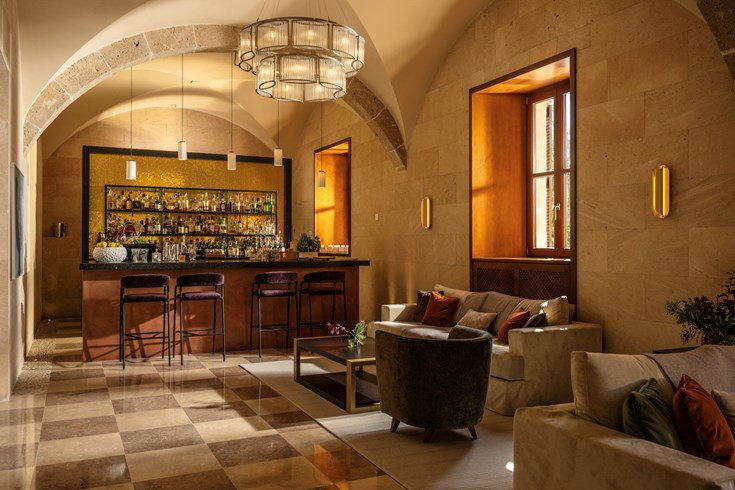
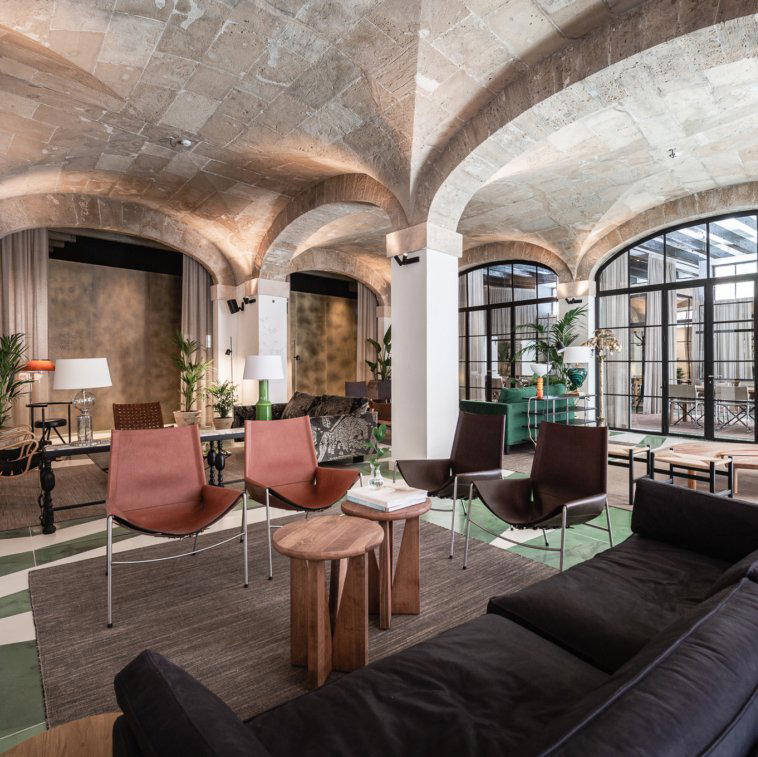
Among the estate's repurposed spaces, a chapel now serves as a restaurant and a former oven has been converted into a spa. These transformations are architecturally significant because they avoid the common hotel renovation mistake of erasing the building's previous function in favour of a neutral contemporary interior. The original use remains legible in the space, which gives guests a physical connection to the estate's long history of agricultural and domestic life. For comparable estate-hotel models in Spain that take this approach to heritage preservation, Abadía Retuerta LeDomaine in Castile and Terra Dominicata in the Priorat demonstrate how monastic and agricultural buildings can sustain a luxury hotel format without sacrificing historical legibility.
Land, Agriculture, and the Responsible Luxury Model
The sustainability argument at Son Bunyola is grounded in the estate's actual landmass rather than in any programme of offsets or certification schemes. When a property covers 1,300 acres and sits inside a UNESCO World Heritage zone, the management of that land becomes both an environmental responsibility and the primary editorial statement of the hotel. The vines, citrus trees, almond and olive groves across the estate are not decorative; they represent a working agricultural landscape that connects the property's daily operation to the island's centuries-old farming traditions.
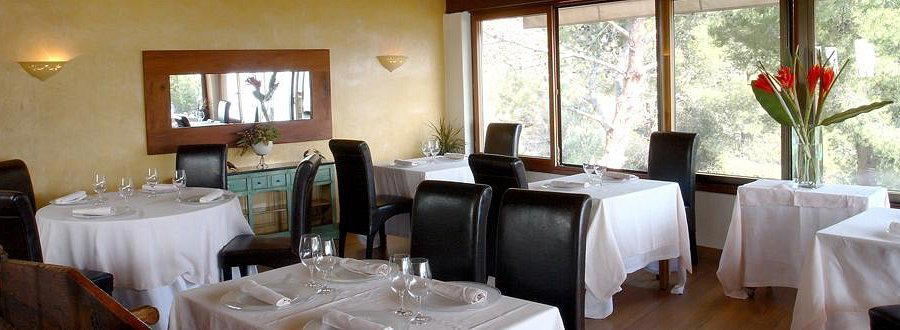
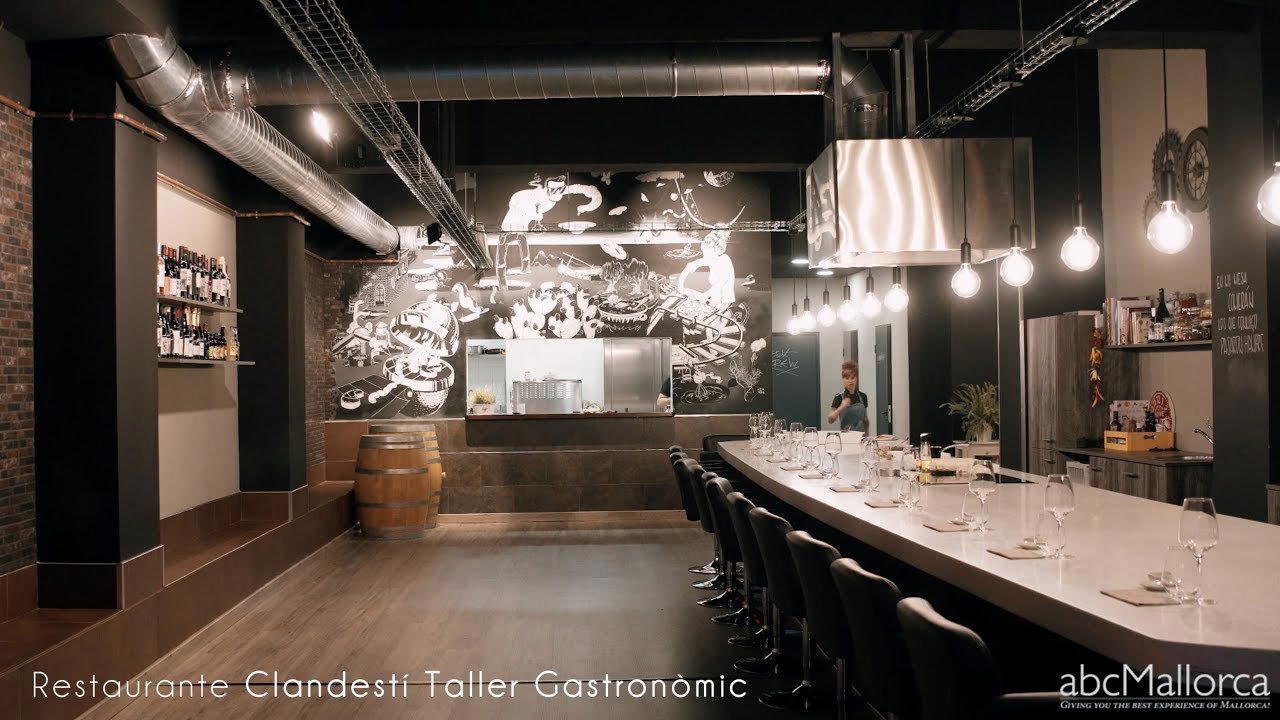
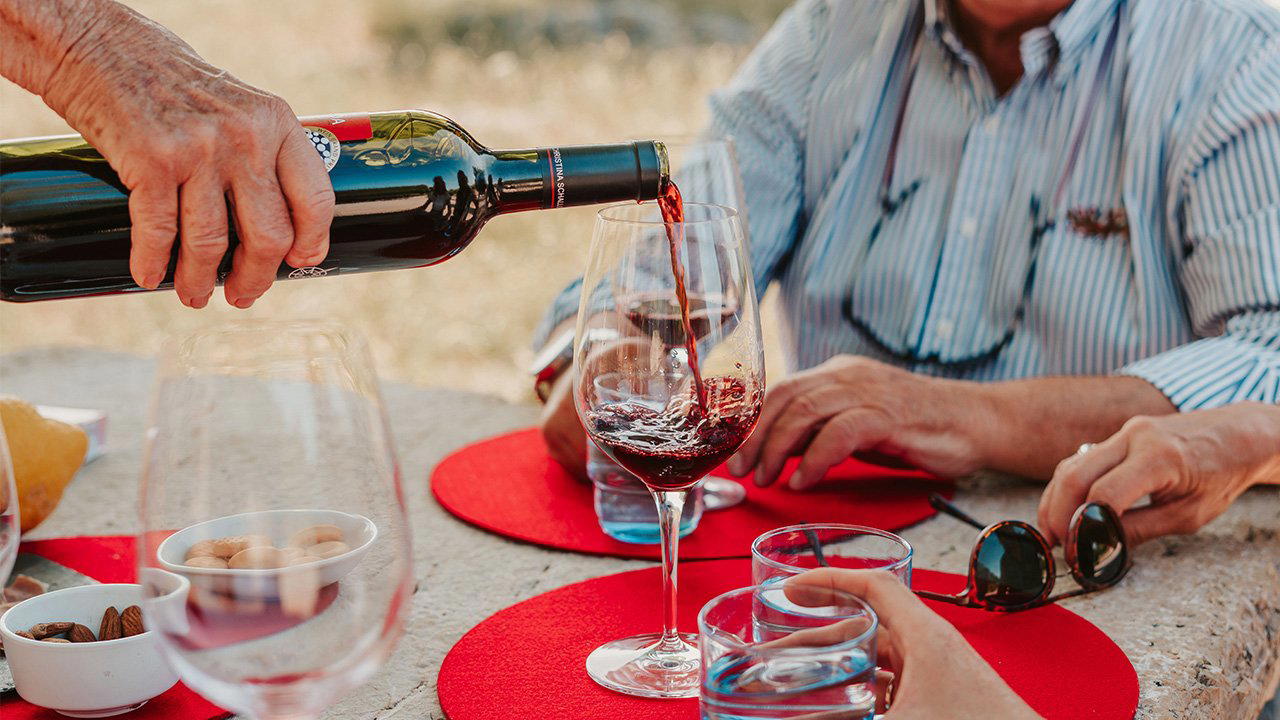
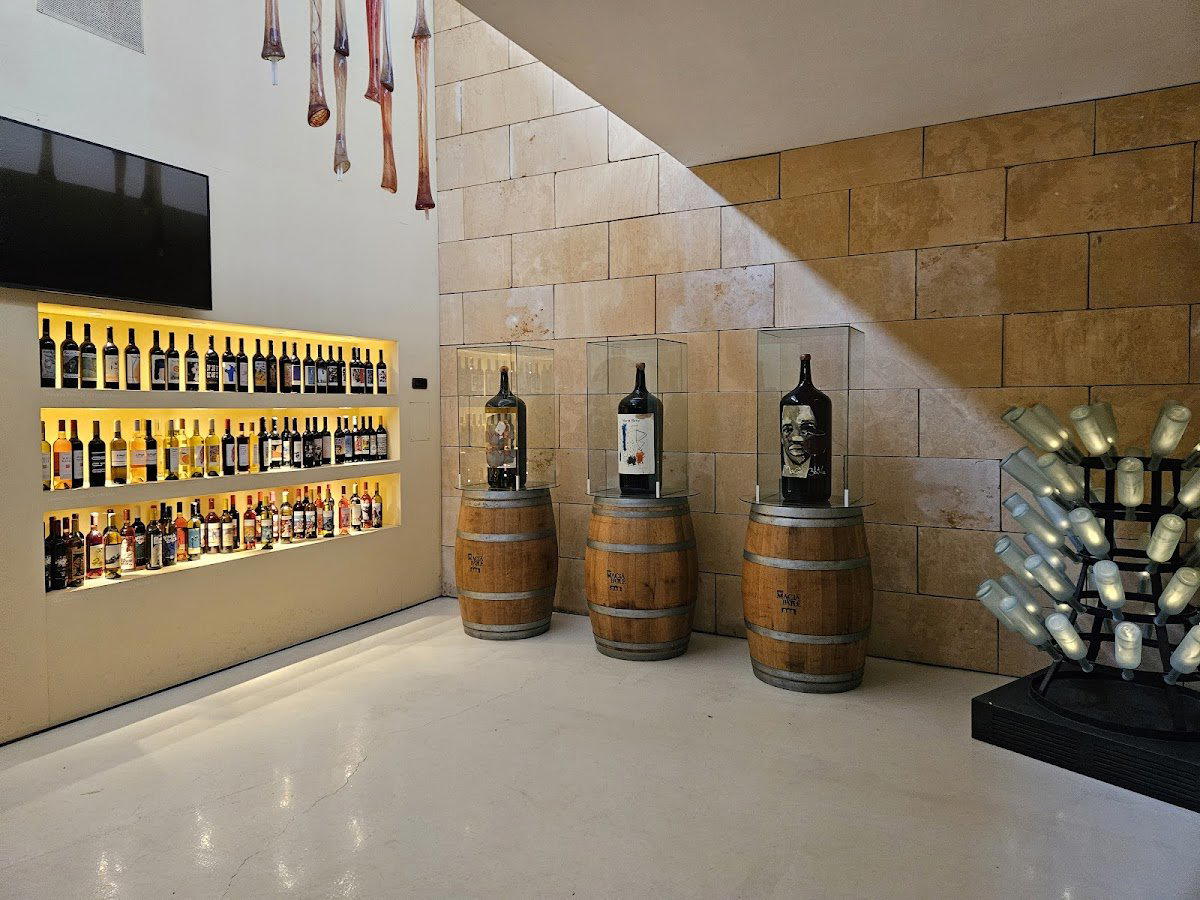
The cooking at Sa Terrassa, the main dining room, follows the logic of the land: Mallorcan and Mediterranean-inspired dishes built around local and seasonal produce. This is a dining model consistent with what the leading estate properties in Spain have demonstrated, that proximity of kitchen to source is both a quality guarantee and an ethical position. The tapas format at Sa Tafona, described as a more playful interpretation of the tradition, offers a lighter entry into the same local ingredient set. Wines from the estate's own vineyard are available across both dining contexts and with the private villa menus, completing a farm-to-table circuit that operates entirely within the property's boundaries.
This level of agricultural integration places Son Bunyola in a specific sub-category of luxury hotel that is more common in wine-producing regions of mainland Spain than on Mallorca itself. Torre del Marqués Hotel Spa & Winery in Aragón and Atrio Restaurante Hotel in Cáceres both operate in the overlap between serious hospitality and estate agriculture. On Mallorca, the closest parallel in terms of landscape embeddedness is Grand Hotel Son Net, though Son Bunyola's scale and UNESCO context give it a different set of land-stewardship obligations.
Activity and Access
The Tramuntana is among Europe's better-regarded cycling terrains. The mountain roads that run through this range draw serious cyclists annually, and several professional teams use the island for pre-season training. Son Bunyola's position within the range makes it a credible base for riding, with routes available at multiple difficulty levels. Hiking trails through the UNESCO zone connect the estate to the surrounding network of dry-stone pathways, many of which follow historic livestock and agricultural routes that predate modern road infrastructure.
The coastline below the estate is accessible by kayak, an activity that provides a different kind of access to the three miles of Mediterranean views that define the property's eastern exposure. On the island's broader circuit, Mallorca's wine culture has developed substantially over the past two decades, and the estate's proximity to local producers makes for a natural extension of the vine-to-glass narrative that runs through Son Bunyola's dining programme. For a broader orientation to what the island offers, our full Mallorca restaurants guide covers dining across the island's main zones. Those interested in comparable properties elsewhere on the island should consider La Residencia, A Belmond Hotel in Deià and Pleta de Mar Luxury By Nature on the northeast coast, both of which operate in Mallorca's upper tier but with different landscape and design orientations.
Pricing at Son Bunyola is on request. The property sits in the segment of the market where rate transparency is managed through direct enquiry, consistent with how comparable villa-led estate hotels across Spain position themselves. The 27-room scale means the property operates at a low occupancy ceiling, which shapes both exclusivity of experience and the level of personalisation that the staff can deliver. Bookings and rate enquiries are handled directly with the estate. Those seeking context across Spain's luxury hotel market before committing might also reference Mandarin Oriental Ritz, Madrid or Akelarre in San Sebastián as anchors in the country's upper bracket.
Price Lens
Comparable venues nearby, for context on price, style, and recognition.
| Venue | Price | Awards | Notes |
|---|---|---|---|
| Son Bunyola Resort and VillasThis venue (the venue you are viewing) | $500–750 | 1 Michelin Key · Virtuoso Luxury Hotel Partner | Not listed |
| Convent de La Missió, Grand Luxury Boutique Hotel | Not listed | 1 Michelin Key · Preferred Hotels L.V.X. Collection | historic Palma, Converted 17th-century convent blending historic charm with modern luxury. |
| Cap Vermell Grand Hotel | $500–750 | 2 Michelin Keys · Virtuoso Luxury Hotel Partner | Canyamel, Grand luxury resort inspired by traditional Mallorcan architecture with contemporary wellness focus and gastronomic excellence. |
| Fontsanta Thermal Spa & Wellness | $300–500 | 1 Michelin Key · Preferred Hotels L.V.X. Collection | Campos, Contemporary luxury blending traditional 19th-century Mallorcan architecture with modern minimalist design; stone buildings with private furnished terraces emphasize connection to natural landscape. |
| Grand Hotel Son Net | Not listed | La Liste Top Hotels · Virtuoso Luxury Hotel Partner | Puigpunyent, Restored 17th-century Mallorcan manor estate with original features like stone floors, antique fireplaces, and vaulted ceilings. |
| Jumeirah Mallorca | Not listed | Michelin Selected · La Liste Top Hotels | Port de Sóller, Clifftop luxury resort integrated with natural surroundings |
Recognition history
Dated appearances from independent guides and award organizations, with the underlying list record or original source where available.
Michelin 1 Key
Michelin
Virtuoso Luxury Hotel Partner
Virtuoso
Preferred Hotels Member
Preferred Hotels
Full recognition history (4 entries)
Michelin 1 Key
Michelin
Continue exploring
More in Mallorca
Hotels in Mallorca
All hotels in Mallorca →
Bars in Mallorca
Browse all →
Restaurants in Mallorca
All restaurants in Mallorca →

Details
- Quiet
- Scenic
- Elegant
- Rustic
- Sophisticated
- Honeymoon
- Romantic Getaway
- Wellness Retreat
- Weekend Escape
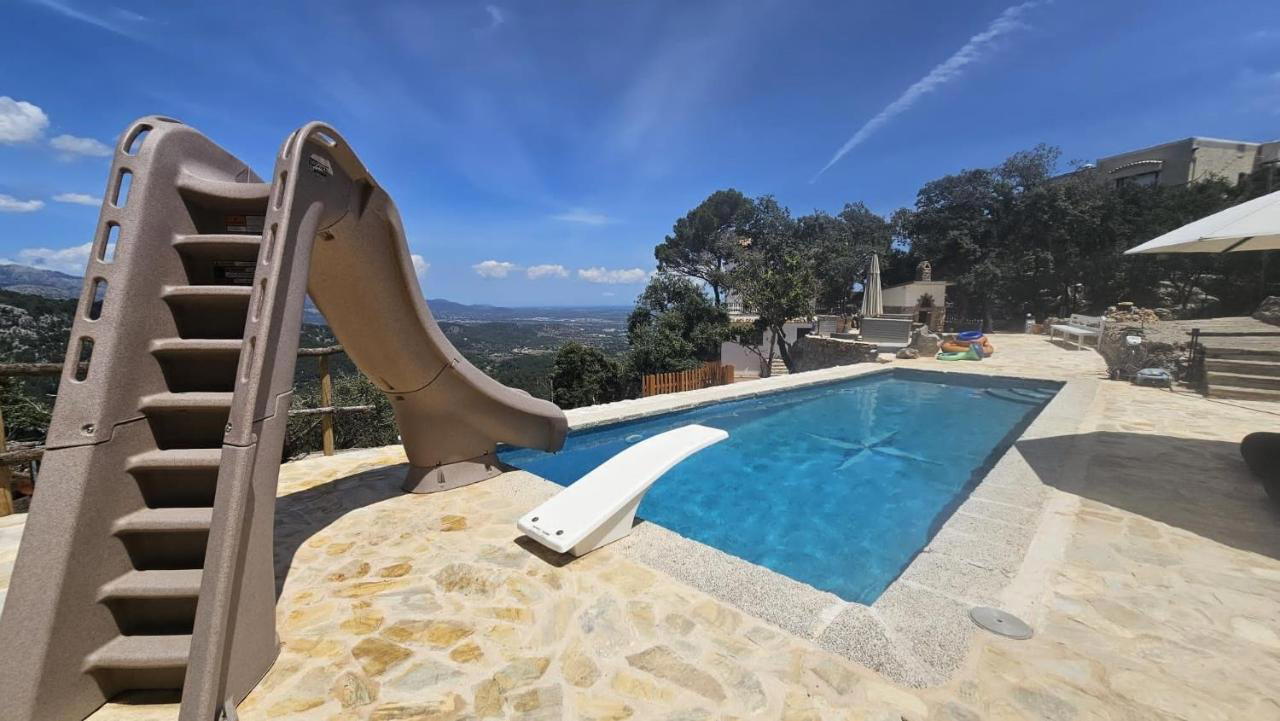
- Infinity Pool
- Private Villa
- Panoramic View
- Pool
- Spa
- Fitness Center
- Room Service
- Concierge
- Tennis Court
- Wi Fi
- Mountain
- Waterfront
- Wheelchair Accessible
- Elevator
- Step Free Entrance
- Accessible Parking
Serene and tranquil with minimalist rustic interiors, subtle lighting, soundproofed rooms, and awe-inspiring natural surroundings.