Camille Ô Baux
Set on the Rue de la Calade in the ancient hilltop village of Les Baux-de-Provence, Camille Ô Baux occupies a position that few restaurants in the Alpilles can match for sheer environmental weight. The address places it inside among the more produce-rich corridors in southern France, where olive groves, herb-covered garrigue, and market gardens converge within a short radius. For visitors to Les Baux, it is a local-first counterpoint to the grand hotel dining rooms that define the village's upper tier.
Pearl is the En Primeur Club membership app — saves, bookings, and concierge access live there. Same editors, same standards.
- Address
- La Fontaine aux Fées, Rue de la Calade, 13520 Les Baux-de-Provence, France
- Phone
- +33986398496
- Website
- camilleobaux.fr
- Directions
- Get directions
 Saves & bookings on Pearl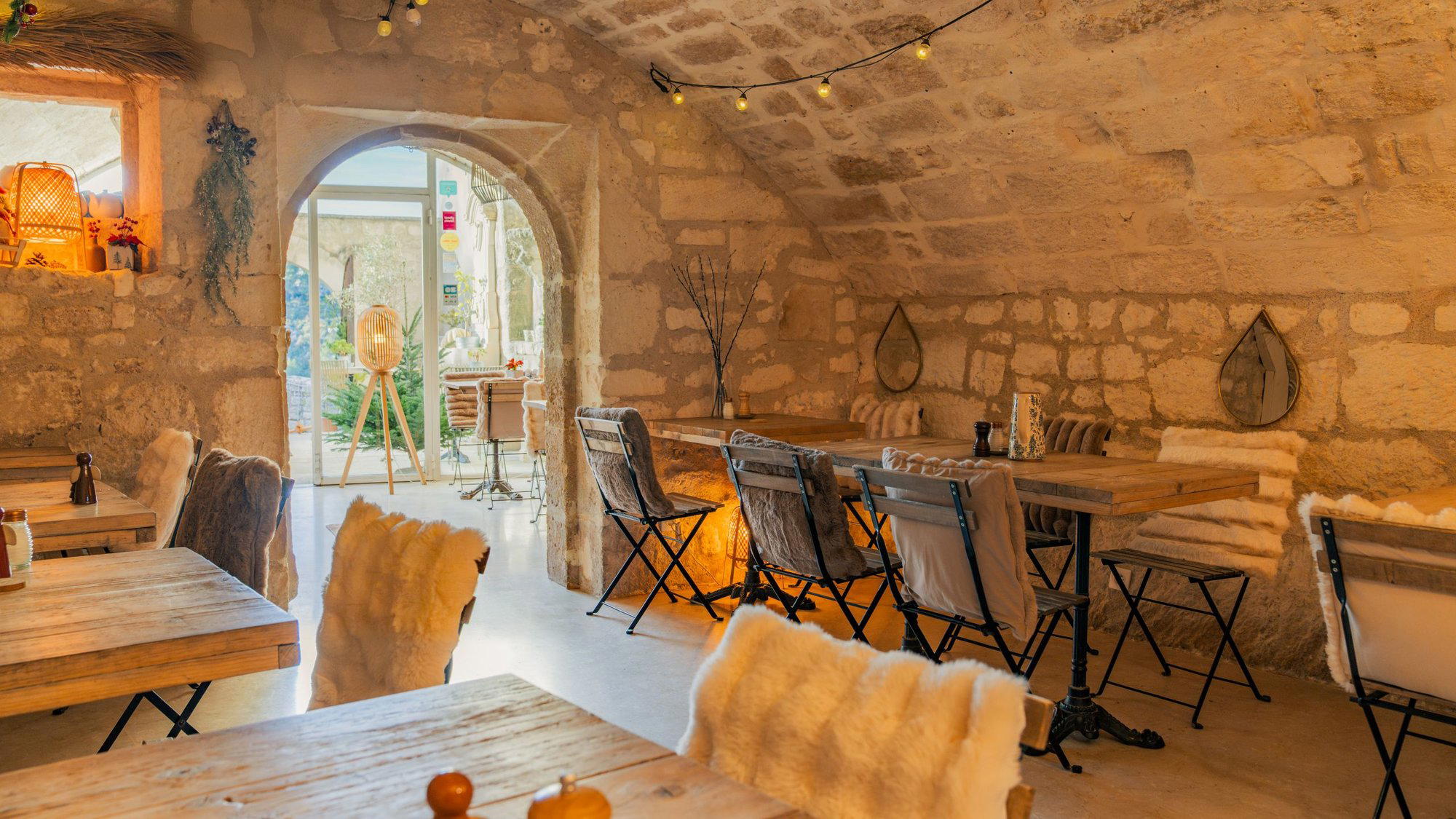
Stone, Garrigue, and the Provençal Table
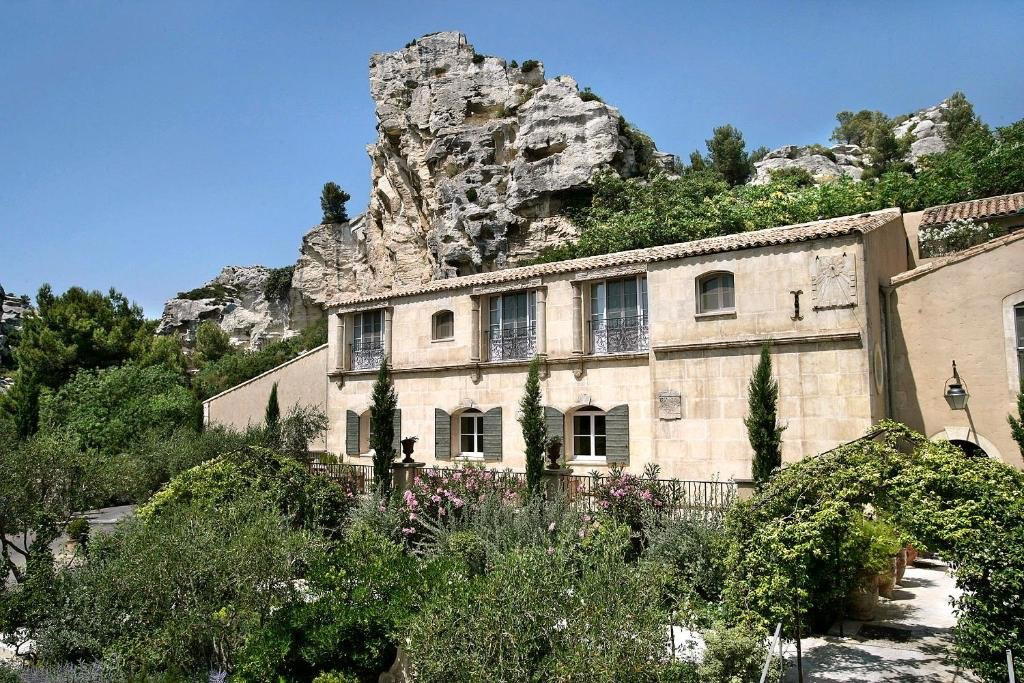
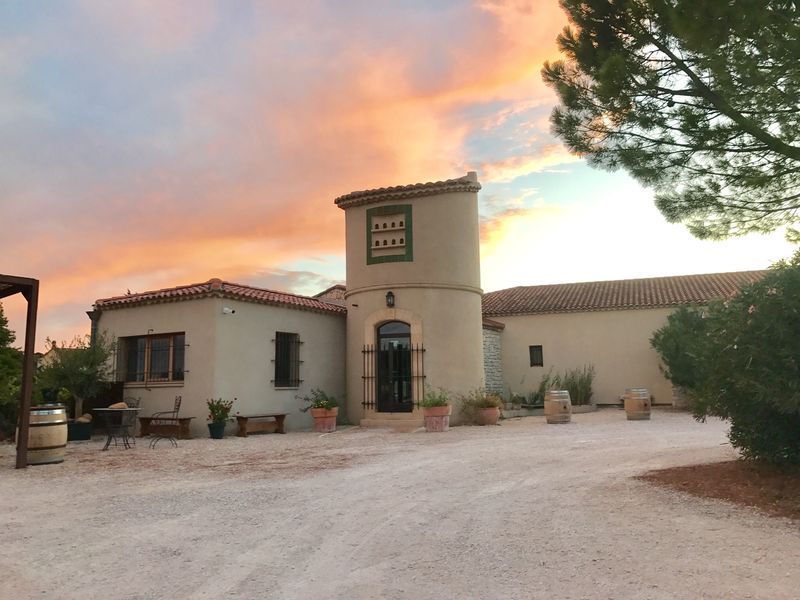
Camille Ô Baux is a casual French bistro in Les Baux-de-Provence, with vegetarian and vegan options, and averages about $20 per person. Arriving at the Rue de la Calade in Les Baux-de-Provence means passing through several hundred years of compressed history before you reach a restaurant door. The village sits at roughly 245 metres above the Alpilles plain, its limestone facades and cobbled lanes worn smooth by centuries of foot traffic. The address of Camille Ô Baux, La Fontaine aux Fées, places it within this compressed medieval core, where the built environment exerts a particular kind of pressure on anything that chooses to operate here. Restaurants in Les Baux-de-Provence do not exist in a neutral urban context; they exist inside among the more frequently visited and historically weighted villages in the south of France, and that geography shapes expectation before a guest sits down.
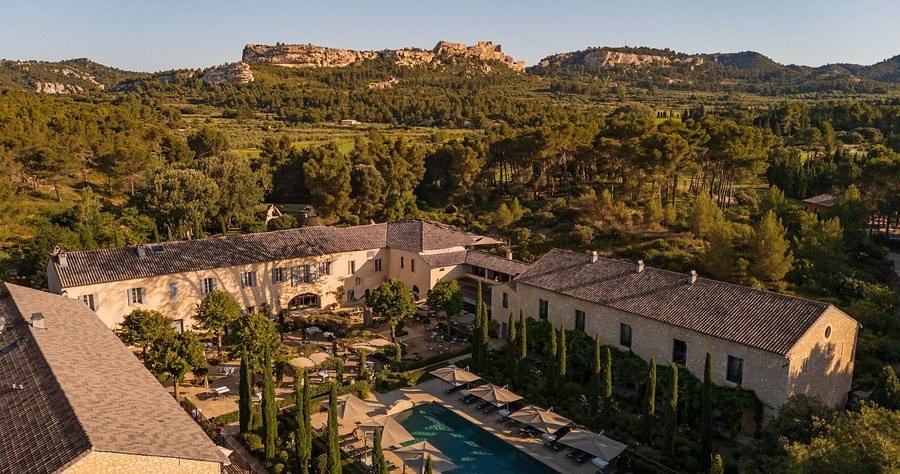
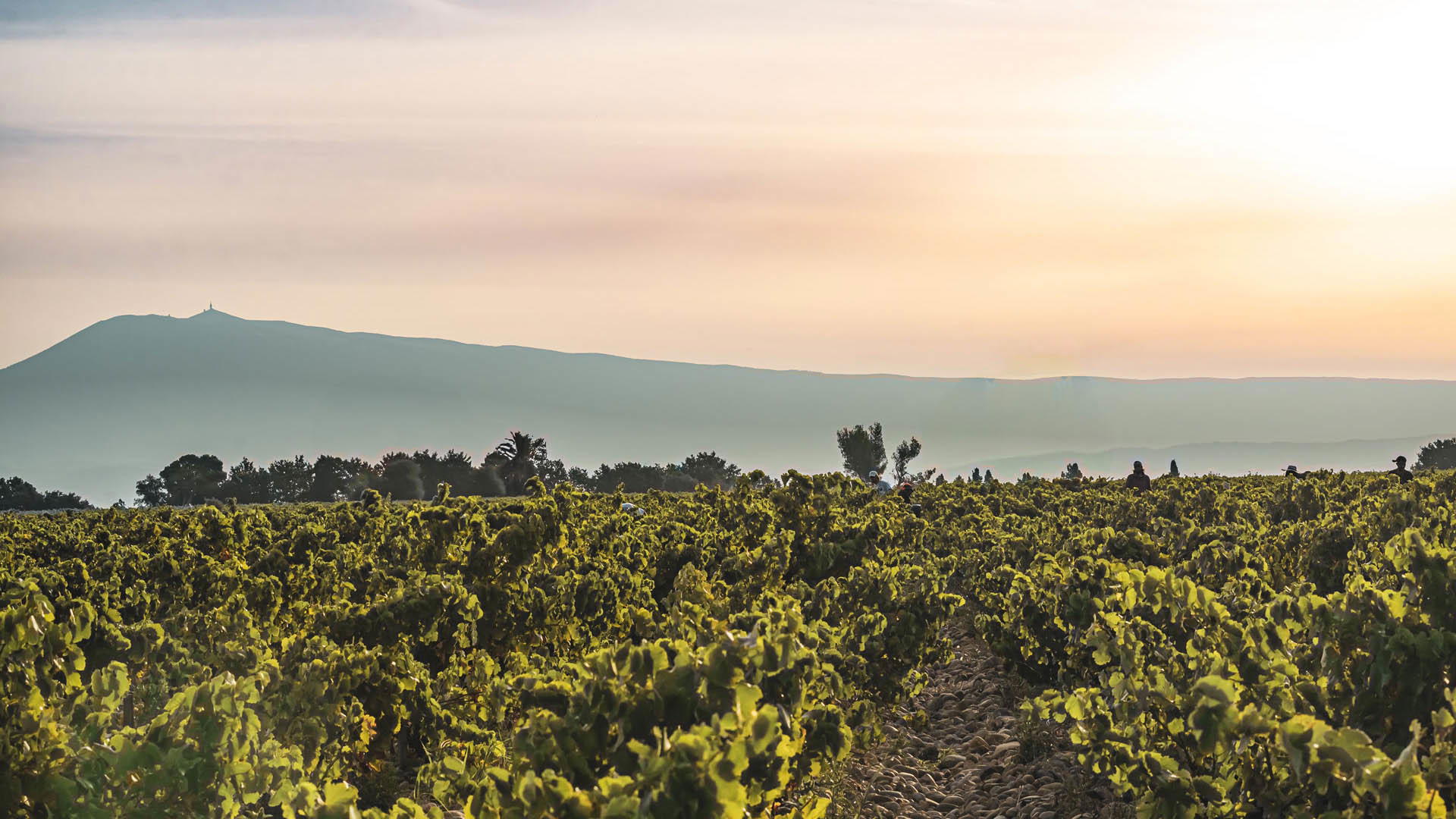
That physical setting also shapes what ends up on the plate. The Alpilles and its surrounding basin constitute among the more productive agricultural zones in Provence. Within a short drive of Les Baux, you find olive oil estates operating under the Vallée des Baux AOC, market gardeners supplying the Arles and Saint-Rémy markets, herb-covered garrigue where wild thyme and rosemary grow with minimal human intervention, and small-scale producers whose output rarely travels far beyond the regional circuit. A restaurant in this village that does not take seriously what grows and is raised within that radius is working against its own geography.
The Ingredient Logic of the Alpilles
Southern French cooking, at its most coherent, operates as a kind of translation: the chef's job is to make visible what the land and season have produced, rather than to impose a fixed repertoire on variable raw material. This is a different discipline from the grand classical tradition, where the sauce and the technique tend to be the constant and the ingredient the variable. In the Alpilles, the reverse applies. The tomatoes that arrive from the Crau plain in late summer are a different proposition from anything available in January, and cooking that ignores that difference is cooking that ignores its own location.
This sourcing logic connects Les Baux-de-Provence to a broader pattern in French regional dining that has been gaining institutional recognition for decades. Restaurants such as Bras in Laguiole built an entire gastronomic identity around the specificity of the Aubrac plateau's flora, while Mirazur in Menton has made the microclimate of the Franco-Italian borderland central to its menu logic. In Provence, the same principle has long informed the kitchen at L'Oustau de Baumanière, which has held Michelin recognition for decades and remains the dominant fine-dining reference point in Les Baux. The question for any other address in the village is where it positions itself relative to that benchmark.
Les Baux as a Dining Village
Les Baux-de-Provence is unusual among Provençal villages in that it supports multiple dining registers within a small geographic footprint. At the leading sits the hotel dining room model, represented most completely by Oustaù de Baumanière, where the formality of service, the depth of the wine list, and the price point reflect a grand-maison tradition that connects to the longer arc of French gastronomy at addresses like Auberge de l'Ill in Illhaeusern, Georges Blanc in Vonnas, or Les Prés d'Eugénie in Eugénie-les-Bains. Below that register, the village has a scattering of more accessible addresses aimed at the considerable volume of day visitors and overnight guests who arrive through the spring and summer season.
Camille Ô Baux sits within this village context, at an address that carries the weight of the medieval quarter. For visitors planning time in the area, the broader regional dining circuit is worth mapping: La Table du Castellet in Le Castellet and Auberge du Vieux Puits in Fontjoncouse represent the kind of destination dining in the wider Provence-Languedoc arc that rewards a multi-night stay built around the table. At greater distance but relevant to any serious France itinerary are Flocons de Sel in Megève and Alléno Paris au Pavillon Ledoyen in Paris, each representing what French haute cuisine looks like at its most technically ambitious. For a full picture of what Les Baux-de-Provence offers across registers, our full Les Baux De Provence restaurants guide maps the options by style and occasion.
Planning a Visit
Les Baux-de-Provence draws the heaviest visitor numbers between April and September, when the light on the Alpilles limestone is at its most dramatic and the produce calendar is at its fullest. The village itself is compact enough that almost everything within it is walkable, though arriving by car from Saint-Rémy-de-Provence (roughly eleven kilometres to the north) or from Arles (around twenty kilometres to the southwest) is the practical approach for most visitors. The Rue de la Calade, where the restaurant is addressed, runs through the heart of the old village and is accessible on foot from the main car parks at the village entrance. The restaurant is recommended for reservations, particularly for weekend visits during peak summer months.
For those building a wider southern France itinerary around serious dining, it is worth noting that the Côte d'Azur and northern Provence together constitute one of the densest concentrations of Michelin-recognised tables in France outside Paris, with Paul Bocuse - L'Auberge du Pont de Collonges and Troisgros - Le Bois sans Feuilles anchoring the Rhône corridor to the north. International visitors arriving via Paris who want to extend to a flagship before travelling south might also consider Le 1947 à Cheval Blanc in Courchevel as a mountain-route detour. Those travelling from North America with French gastronomy as the central itinerary logic will find useful orientation from comparable high-commitment dining formats at Le Bernardin in New York City and Lazy Bear in San Francisco, both of which operate on a similarly produce-attentive editorial framework.
Comparison Snapshot
Comparable venues nearby, for context on price, style, and recognition.
| Venue | Cuisine | Price | Notes |
|---|---|---|---|
| Camille Ô BauxThis venue — the venue you are viewing | French Bistro with Vegetarian & Vegan Options | $$ | Not listed |
| Benvengudo | Modern Provençal French | $$$$ | Les Baux-de-Provence |
| Oustaù de Baumanière | Modern Provençal Fine Dining | $$$$ | Les Baux-de-Provence |
| L'Oustau de Baumanière | Modern Provençal Fine Dining | $$$$ | Les Baux-de-Provence |
| L’aventure | French Mountain Grill | $$ | Oz en Oisans |
| La Cour d'Honneur | Seasonal French Bistronomique | $$ | Centre Ville |
Continue exploring
More in Les Baux-de-Provence
Restaurants in Les Baux-de-Provence
Browse all →
Bars in Les Baux-de-Provence
Browse all →
Hotels in Les Baux-de-Provence
Browse all →
At a Glance
- Cozy
- Rustic
- Scenic
- Casual Hangout
- Brunch
- Terrace
- Local Sourcing
- Mountain
Current opening hours
- Monday
- Closed
- Tuesday
- Closed
- Wednesday
- Closed
- Thursday
- 10:30 AM–6 PM
- Friday
- 10:30 AM–6 PM
- Saturday
- 10:30 AM–6 PM
- Sunday
- 10:30 AM–6 PM
Hours can change for holidays and private events. Last verified .
Doux et convivial with sunny terrace ambiance.