
Michelin Plate
Our verdict
Holding a Michelin Plate in both 2024 and 2025, Calvi Ristorante in Altamura runs two parallel registers: a regional and Mediterranean track rooted in Puglian ingredients, and a more freewheeling creative track where technique takes over. At the single-euro price point, it sits well below the starred circuit while delivering a kitchen ambition that punches above its tier.

Pearl is the En Primeur Club membership app, where members save venues, book tables and use the concierge.
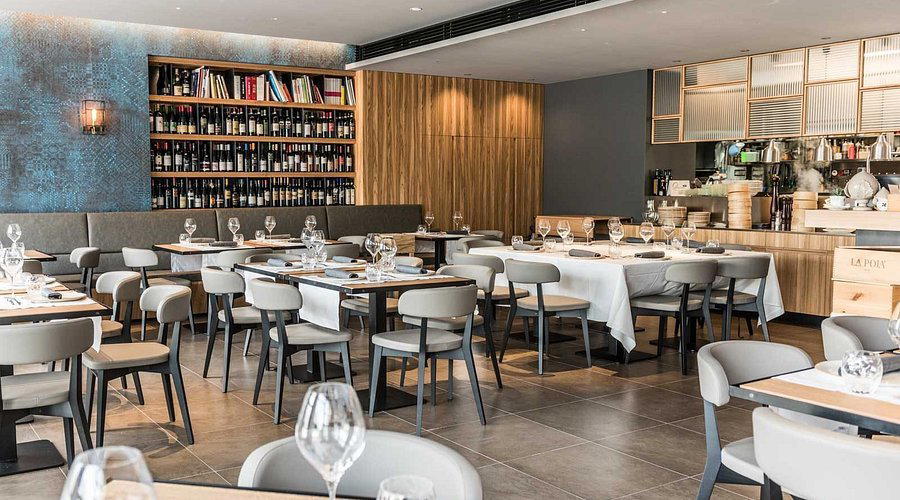
Where Altamura's Bread Country Meets a Kitchen With Two Speeds
Walk into Calvi Ristorante on Via Bari and the first thing you notice is the kitchen. It is open, wide, and deliberately placed so that the room faces the work rather than away from it. In a town like Altamura, where the bakery window has always been the most honest form of hospitality, that visibility carries meaning. You are not being sold a mood. You are watching food being made.
Altamura sits at the centre of the Alta Murgia plateau in inland Puglia, a dry, refined limestone landscape where the cooking has historically been shaped by what survives the terrain: durum wheat, dried legumes, foraged greens, aged cheeses, and lamb from animals that graze on tough scrubland. The city's DOP-protected bread, baked from locally milled semola rimacinata, is one of the most recognisable food products in southern Italy. For travellers arriving from the Adriatic coast or from Bari, about 45 kilometres to the northeast, this is a different Puglia, one less glamorised and more agricultural in its reference points. See our full Altamura restaurants guide for a broader picture of how the city's dining scene has been developing.
Two Menus, One Kitchen Philosophy
What makes Calvi worth attention is not simply that it exists in a town with limited fine-dining infrastructure, but that it operates with a clear structural division in its approach to ingredients. One track stays close to the Puglian-Mediterranean canon, drawing on regional produce and preparing it with relative restraint. The other track gives the kitchen latitude to reframe those same materials in more technically ambitious ways.
This dual-register format is increasingly common in contemporary Italian restaurants that want to hold a local audience while also signalling ambition to travelling guests. You find versions of it at starred houses across the country: the comfort menu alongside the chef's menu, the regional fixed course alongside the creative tasting. What distinguishes the better examples of this model is whether the two tracks share a coherent sourcing logic or simply represent different price brackets. Here, the Michelin-recognised dish that surfaces in available documentation points toward the latter: black rice tacos with roasted eel, green beans, soya bean sprouts, and spicy hummus mayo. That combination pulls from Japan, the Levant, and southeast Asia to reframe an ingredient (eel, rice) that southern Italian cooking has long understood. The approach is ingredient-first even when the technique is cosmopolitan.
The Italian restaurant scene that Calvi sits within has been working through this question of regional identity versus technical ambition for several decades. At the starred end of the spectrum, houses like Osteria Francescana in Modena and Reale in Castel di Sangro have built international reputations on exactly this tension. Further south, the conversation is less settled. That context makes the Michelin Plate recognition in both 2024 and 2025 a more specific signal than it would be in Milan or Florence: it marks the restaurant as a kitchen that a credible evaluator found worth returning to.
The Ingredient Logic of the Alta Murgia
Understanding what goes on a plate at Calvi means understanding where the raw materials come from. Inland Puglia's food culture is built on a short supply chain. The durum wheat that defines Altamura's identity also defines its pasta and bread traditions. Legume farming, particularly fava beans and chickpeas, has shaped a vegetable-forward tradition that predates the current fashion for plant-centred menus by centuries. Lamb and goat, rather than beef, anchor the meat cookery. Aged ricotta and cacioricotta provide the regional cheese register.
When a kitchen in this context reaches outward, as the creative track at Calvi does, the question is whether it reaches out to show off technique or to find new frames for ingredients that are already there. The eel and black rice dish suggests the latter. Eel is not a foreign imposition; it appears in both Puglian coastal and inland cooking traditions. Black rice, soya sprouts, and hummus mayo do not erase the ingredient's regional legibility. They recontextualise it for a diner who has already eaten it the traditional way. That is a more interesting editorial position than fusion for its own sake.
For comparison, the top end of Italy's contemporary creative spectrum, places like Piazza Duomo in Alba, Le Calandre in Rubano, or Uliassi in Senigallia, all operate within a similar sourcing logic at the three-star tier. The ingredient provenance and regional specificity are what separate those kitchens from generic creative cooking. Calvi is working with the same underlying principle at a fraction of the price and without the institutional support of a starred address.
Where Calvi Sits in the Broader Italian Creative Scene
Italy's contemporary restaurant map has multiple tiers between the neighbourhood trattoria and the three-star houses. Enrico Bartolini in Milan, Enoteca Pinchiorri in Florence, and Dal Pescatore in Runate all occupy the leading bracket. Between those marquee names and the everyday local restaurant is a wide middle tier where most of the interesting cooking in Italy actually happens. That tier includes Michelin-recognised houses in provincial cities, often operating with a single-euro or two-euro price indicator and without the reservation scarcity that defines the starred circuit.
Calvi operates in that middle tier. The price point sits at the lower end of the single-euro bracket, making it accessible to a broad local audience, not just destination diners. That combination of accessibility and critical recognition is relatively rare in inland Puglia, where the restaurant economy has historically been structured around volume rather than kitchen ambition.
For the traveller planning a route through southern Italy, Altamura is a logical stop on a circuit that could extend to Matera, roughly 30 kilometres to the southeast, or to Bari as a transit hub with its own distinct seafood-focused dining scene. Our Altamura hotels guide, bars guide, wineries guide, and experiences guide provide the rest of the infrastructure picture for a longer stay in the region.
For those comparing the creative contemporary format across Italian cities, Casa Perbellini 12 Apostoli in Verona, Quattro Passi in Marina del Cantone, and Atelier Moessmer Norbert Niederkofler in Brunico each represent distinct regional takes on the same question of how Italian kitchens absorb technique without losing ingredient specificity. Internationally, the same conversation plays out at houses like César in New York City and Jungsik in Seoul, where contemporary format meets a strong regional or national ingredient identity.
Planning a Visit
Calvi Ristorante is at Via Bari, 134, Altamura, in the Bari province of Puglia. The restaurant sits in the single-euro price range, making it one of the more accessible options at this level of recognition in the region. For current hours and reservation availability, direct contact or an in-person approach is the practical route given the absence of an online booking portal in current public records.
Frequently asked questions
Is Calvi Ristorante suitable for children?
The restaurant operates at a single-euro price range and runs two distinct menus, one rooted in regional Mediterranean cooking, the other more technically creative. The regional menu's straightforward Pugliese flavours and the relaxed, open-kitchen format make it a reasonable choice for families. Dishes like the black rice tacos with roasted eel are hands-on eating by design, which tends to work well at a mixed table.
What kind of setting is Calvi Ristorante?
The room is built around a large open-view kitchen, positioned so diners face the pass directly, a deliberate architectural choice that makes the cooking part of the experience rather than something hidden behind a wall. The style is contemporary rather than formal, and the address on Via Bari places it within Altamura, a town in Bari province better known for its DOP bread than its restaurant scene. Michelin has awarded it a Plate in both 2024 and 2025, signalling recognition without the ceremony of a star designation.
Does Calvi Ristorante have a Michelin star or similar recognition?
Calvi Ristorante has received recognition including: This welcoming, contemporary-style restaurant with a large open-view kitchen serves two different types of cuisine – one regional and Mediterranean in style, the other more creative allowing the chef’s culinary skills to take centre stage. ….
What should I eat at Calvi Ristorante?
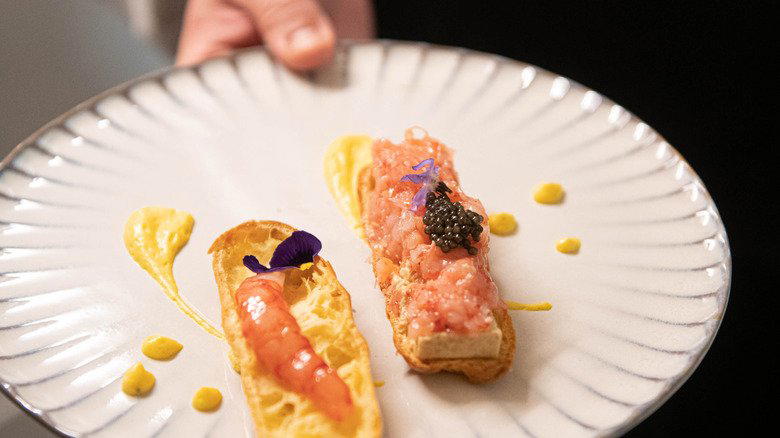
The black rice tacos with roasted eel, green beans, soya bean sprouts, and spicy hummus mayo represent the kitchen's creative register and are noted in the Michelin record as the dish to order, eaten with the hands. Beyond that signature, the menu splits between regional Mediterranean plates drawing on Alta Murgia produce and a more technically driven creative menu where the kitchen's ambition is more visible.
How It Stacks Up
| Venue | Cuisine | Price | Awards | Notes |
|---|---|---|---|---|
| Calvi RistoranteThis venue (the venue you are viewing) | Modern Italian with Regional Mediterranean Influences | Not listed | Michelin Plate | Not listed |
| Atelier Moessmer Norbert Niederkofler | Modern Alpine Fine Dining | $300–500 | 3 Michelin Stars · World's 50 Best #38 | Italian, Creative |
| Dal Pescatore | Classic Italian Fine Dining | $200–300 | 3 Michelin Stars · World's 50 Best #38 | Italian, Italian Contemporary |
| Enoteca Pinchiorri | Contemporary Italian Fine Dining | $200–300 | 3 Michelin Stars · World's 50 Best #32 | Italian - French, Italian Contemporary |
| Enrico Bartolini | Modern Italian Fine Dining | $300–500 | 3 Michelin Stars · World's 50 Best #85 | Creative |
| Osteria Francescana | Avant-Garde Italian Contemporary | $300–500 | 3 Michelin Stars · World's 50 Best #1 | Progressive Italian, Creative |
Recognition history
Dated appearances from independent guides and award organizations, with the underlying list record or original source where available.
Michelin Plate
Michelin
Full recognition history (3 entries)
Michelin Plate
Michelin
Michelin Plate
Michelin
Continue exploring
More in Altamura
Restaurants in Altamura
All restaurants in Altamura →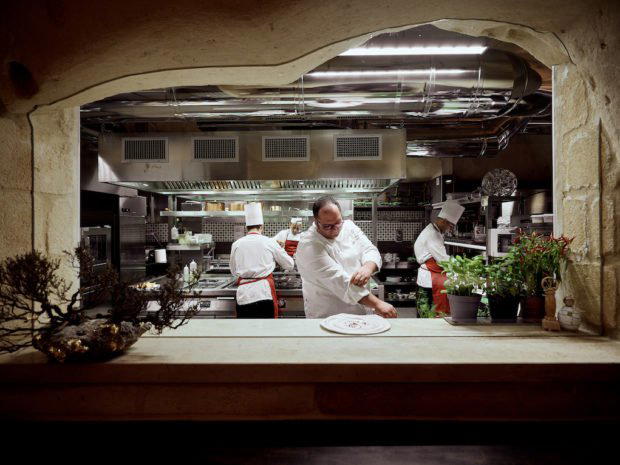
Bars in Altamura
Browse all →
Hotels in Altamura
Browse all →

Details
- Elegant
- Modern
- Sophisticated
- Date Night
- Special Occasion
- Group Dining
- Open Kitchen
- Extensive Wine List
- A La Carte
- Vegetarian Friendly
Current opening hours
- Monday
- Closed
- Tuesday
- 1–3 PM, 8:15–11 PM
- Wednesday
- 1–3 PM, 8:15–11 PM
- Thursday
- 1–3 PM, 8:15–11 PM
- Friday
- 1–3 PM, 8:15–11 PM
- Saturday
- 1–3 PM, 8:15–11 PM
- Sunday
- 1–3 PM
Hours can change for holidays and private events. Hours as of .
Elegant and welcoming with bright spaces, comfortable seating, and a magnificent open kitchen that serves as a theater without propagating smells.