


1 Michelin Key · Mr & Mrs Smith Seal of Approval · Design Hotels Member
Sextantio Le Grotte della Civita occupies eighteen cave rooms carved into Matera's ancient sassi, offering one of Italy's most architecturally committed stays at around $367 per night. It operates within the albergo diffuso model, placing guests inside the hillside rather than adjacent to it.

Pearl is the En Primeur Club membership app, where members save venues, book tables and use the concierge.
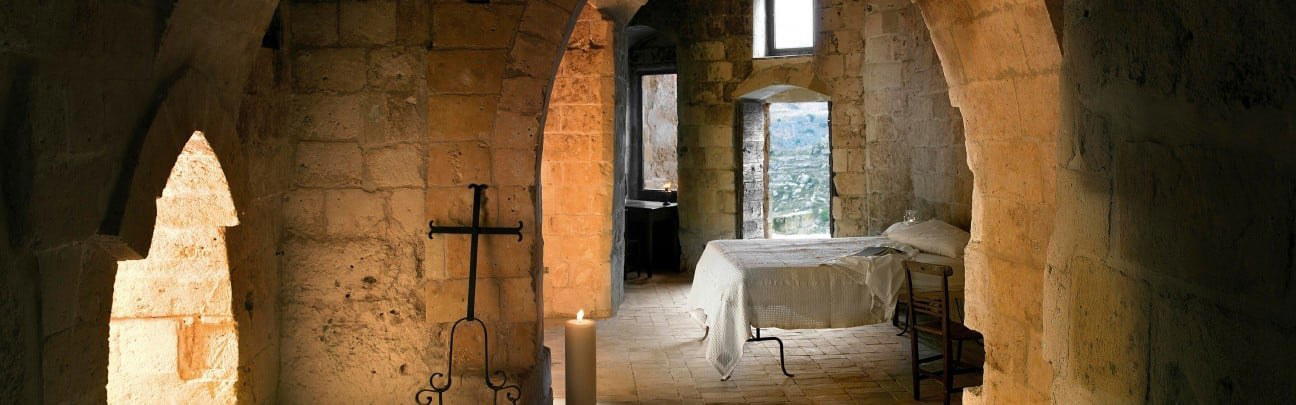
Stone, Silence, and the Logic of Total Immersion
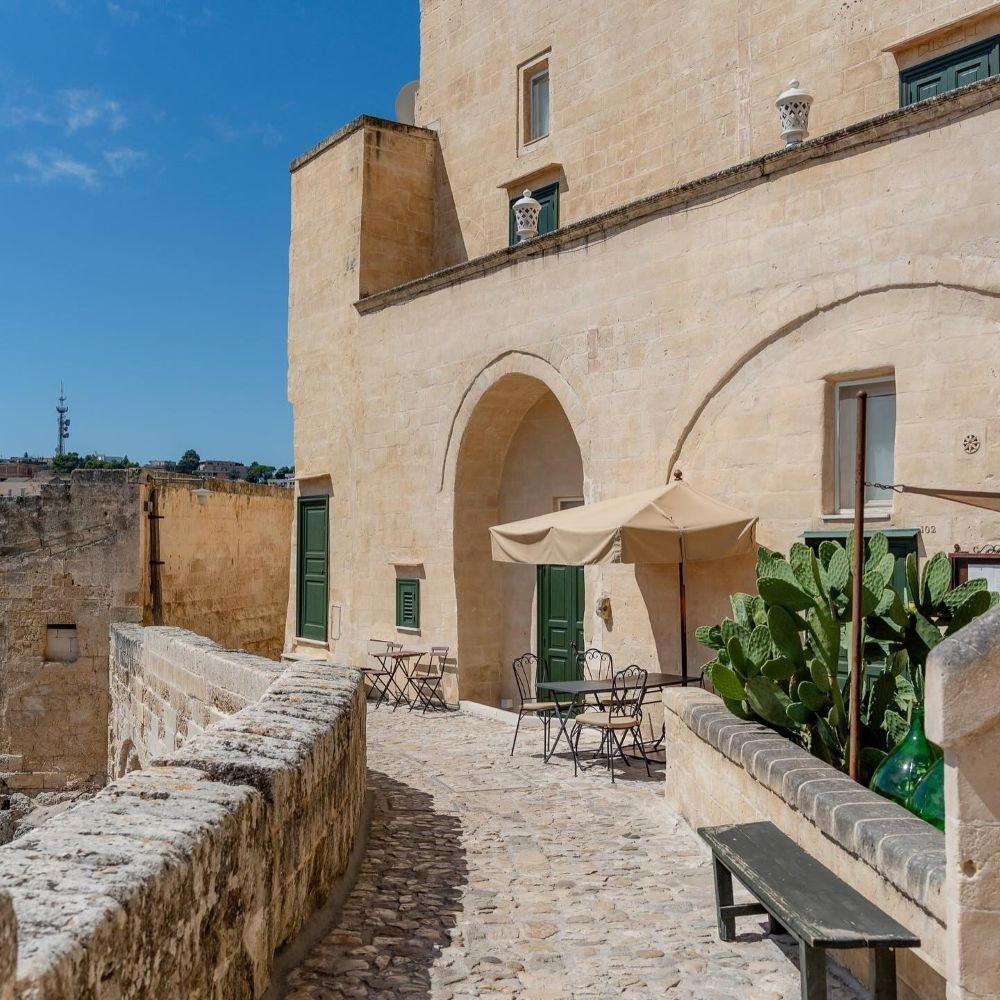
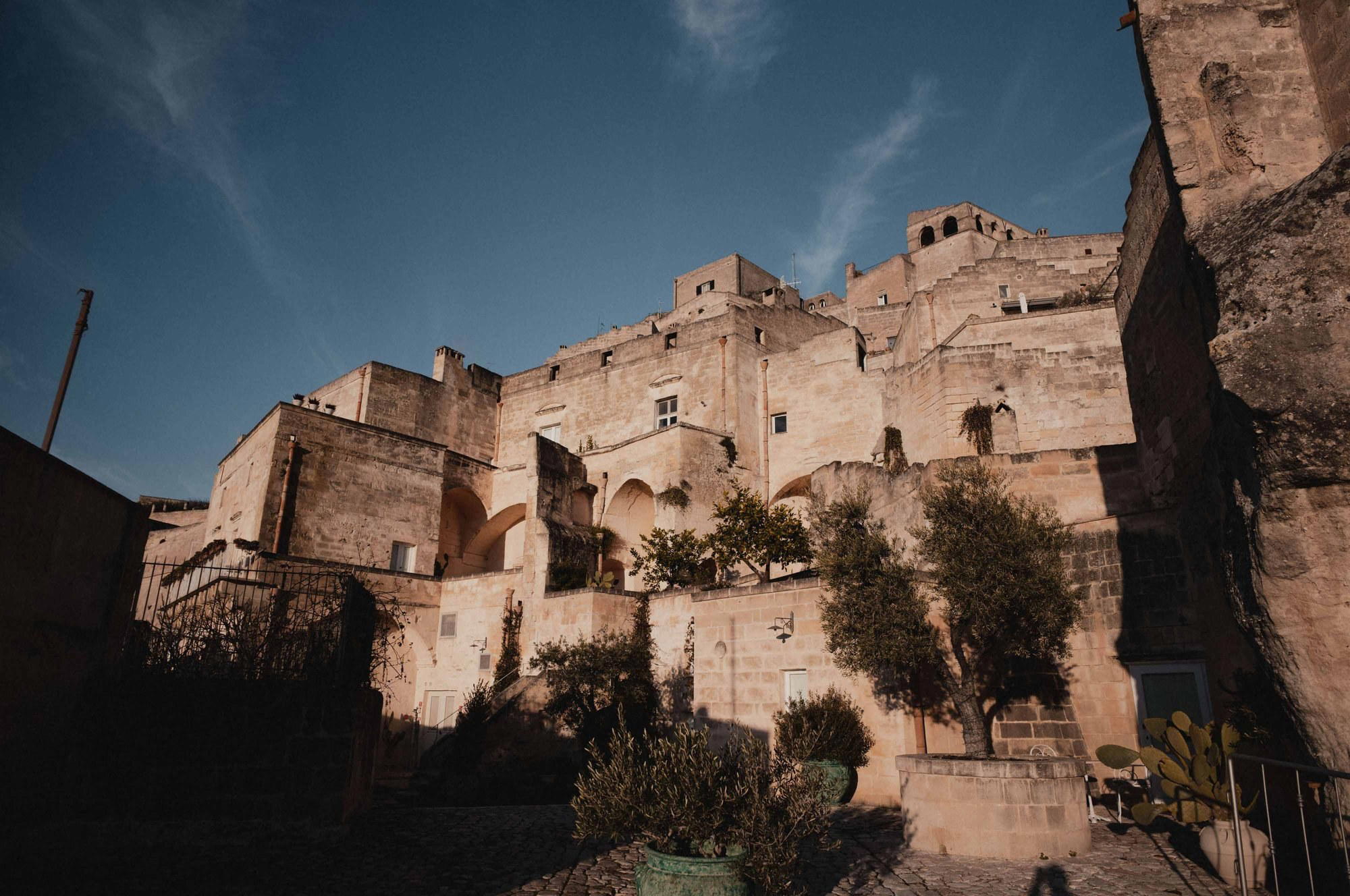
Approaching Matera from the main road, the scale of the sassi only registers once you're already inside them. What appear from a distance to be windows cut into pale volcanic rock resolve, on closer inspection, into doorways, terraces, and the quiet architecture of habitation stretching back to Paleolithic times. The sassi, Matera's UNESCO-listed cave districts, represent one of the longest continuous settlements in human history, and the city has spent decades deciding what responsible engagement with that history looks like. Sextantio Le Grotte della Civita sits at the more committed end of that answer: eighteen rooms distributed across cave dwellings in the Civita district, with no attempt to impose a lobby or a conventional hotel footprint on the space.
The albergo diffuso model, a distributed hotel form developed primarily in Italy, places accommodation units within existing village fabric rather than consolidating them into a purpose-built structure. Most practitioners of the model use it as a framework for rural revival, converting abandoned farmhouses or historic townhouses into guestrooms while preserving the surrounding community. Sextantio applies the concept in its most extreme register: the rooms are not adjacent to the caves, they are the caves. The address on Via Civita leads not to a reception block but to a stone threshold into the hillside itself.
What the Albergo Diffuso Model Demands of Its Guests
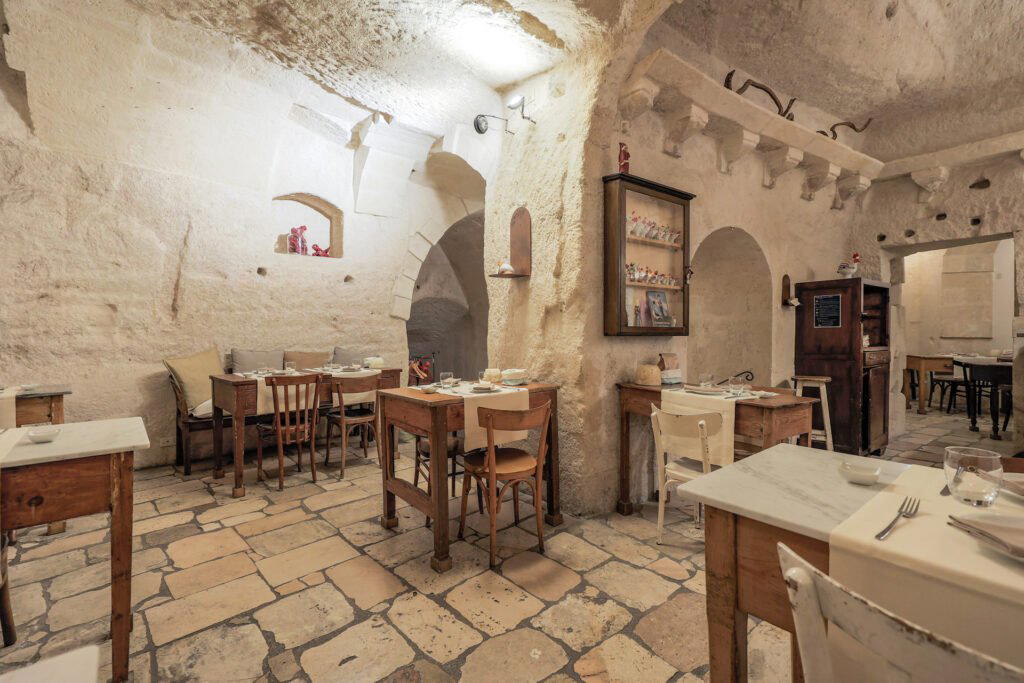
Staying inside a structure that predates the Roman Empire requires an adjustment in expectations, and Sextantio does not soften that reality. Rooms are carved from tufa stone, a light volcanic rock that retains cool air in summer and absorbs warmth in winter, and the aesthetic is deliberately undecorated. There are no frills here, no imported upholstery patterns or art-hotel gestures. The walls are bare rock, the ceilings low in places, the proportions dictated by geology rather than interior design convention.
What separates this from a novelty proposition is the rigour applied to the fixtures within that raw environment. The bathrooms, which occupy caverns adjacent to the sleeping spaces, are fitted with materials and hardware chosen with care by the Milanese sensibility behind the property. The bathtub in a bare rock alcove is, by all accounts, the bathtub rather than an afterthought. That tension between elemental setting and considered material quality is precisely where Sextantio's logic holds. It is not asking guests to rough it; it is asking them to accept that luxury, in this context, means something different from what a five-star city hotel implies.
The property earned a Michelin Key in 2024, placing it within the growing cohort of Italian stays that Michelin now recognises for hospitality quality independent of restaurant credentials. Eighteen rooms keep the operation small enough that service can be attentive without theatrical scale.
Matera in the Broader Italian Hotel Context
Italy's premium accommodation market has historically concentrated in a small number of circuits: the Amalfi Coast, Tuscany, the Venetian lagoon, Rome, the lake districts. Properties like Aman Venice in Venice, Four Seasons Hotel Firenze in Florence, and Bulgari Hotel Roma in Rome anchor the luxury tier in those well-trafficked destinations. Southern Italy has been slower to develop the same density of recognised premium stays, which makes Matera's emergence as a destination of genuine interest more significant. The city's tenure as a European Capital of Culture in 2019 accelerated international attention, but the sassi had been drawing serious travellers for longer than that.
Within Matera itself, accommodation options span a range. Sant'Angelo Matera and Vetera Matera represent different approaches to the same historic fabric, both operating within the sassi context but with varying degrees of architectural intervention. Sextantio's position in that set is defined by its commitment to minimal interference with the original structures, which places it in a different conversation from properties that use cave aesthetics as a surface gesture.
Comparable in ambition, if not in format, are Italian properties that pursue a specific form of place-rootedness: Castello di Reschio in Lisciano Niccone, Borgo Egnazia in Savelletri di Fasano, and Rosewood Castiglion Del Bosco in Montalcino each take existing historic fabric as their starting point. What distinguishes Sextantio is the age and primacy of the structure it works within. Borgo conversions tend to involve medieval or Renaissance buildings; Sextantio is working with something considerably older, which changes both the guest experience and the ethical stakes of the development. Further south along Italy's coast, Borgo Santandrea on the Amalfi Coast and Il San Pietro di Positano in Positano offer their own form of geological drama, but embedded in very different scenery and price tiers. Those seeking cave-adjacent experiences in other landscape registers might also consider Amangiri in Canyon Point, which applies a similarly elemental design logic to the American Southwest.
Other Italian properties worth contextualising against Sextantio's model include Casa Maria Luigia in Modena, which takes a different approach to the idea of total immersion through a culinary lens, and Corte della Maestà in Civita di Bagnoregio, which similarly operates within an ancient hilltop settlement context. For those building a longer Italian itinerary, Passalacqua in Moltrasio, Portrait Milano in Milan, JK Place Capri in Capri, Il Pellicano in Porto Ercole, Bellevue Syrene 1820 in Sorrento, Borgo San Felice Resort in Castelnuovo Berardenga, Castel Fragsburg in Merano, Castelfalfi in Montaione, and EALA My Lakeside Dream in Limone sul Garda each offer distinct registers of the country's hospitality range.
Planning the Stay
Matera sits in Basilicata, in Italy's deep south, at a remove from the country's main tourism infrastructure. Bari Airport (BRI) is approximately 60 kilometres away and serves the widest range of connecting flights; Naples International (NAP) is around 300 kilometres distant and works well for travellers combining Matera with the Campania coast. Trains connect to Matera, but the logistics of arriving with luggage and navigating the sassi on foot make a car transfer the more practical choice. The property's entrance is addressed to Via Madonna delle Virtu for navigation purposes, which differs from the postal address on Via Civita.
Rates run from approximately $367 per night, positioning the property at a moderate premium for the region but well below what comparable Michelin-recognised boutique stays command in Tuscany or Venice. The eighteen-room inventory means availability becomes constrained during peak periods, particularly in the warmer months when Matera receives most of its international visitors. For context on the dining scene around your stay, see our full Matera restaurants guide. Those seeking similarly considered stays in non-Italian destinations might look at The Fifth Avenue Hotel in New York City or Aman New York in New York City for the same interest in heritage fabric repurposed with material rigour.
Cuisine and Awards Snapshot
Comparable venues nearby, for context on price, style, and recognition.
| Venue | Cuisine | Price | Awards | Notes |
|---|---|---|---|---|
| Sextantio Le Grotte della CivitaThis venue (the venue you are viewing) | Albergo Diffuso (scattered hotel) concept preserving authentic Sassi cave dwellings with contemporary luxury restoration; blends archaeological heritage with sensory indulgence. | $100–200 | 1 Michelin Key · Mr & Mrs Smith Seal of Approval | Not listed |
| Palazzo Gattini Luxury Hotel | Restored 16th-century noble palazzo blending historic grandeur with contemporary luxury | $100–200 | Michelin Selected | Sassi di Matera |
| Sant’Angelo Matera | Diffuse cave hotel in historic Sassi district | Not listed | Michelin Selected · Small Luxury Hotels of the World Member | Sassi di Matera |
| Vetera Matera | Luxury scattered albergo diffuso in restored Sassi caves | $300–500 | 2 Michelin Keys · Travel + Leisure It List Hotels | Rione Vetera |
| Palazzo Del Duca Hotel & Restaurant | Historic luxury palace hotel with scattered hospitality in restored Sassi buildings | $200–300 | Michelin Guide New Hotels New Hotel · Michelin Selected | Sassi di Matera |
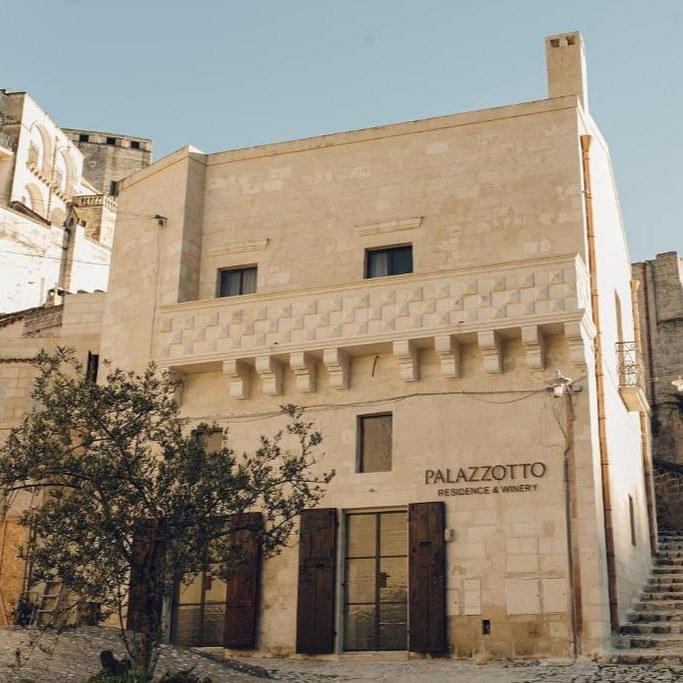
| Il Palazzotto I Residence & Winery | Restored historic cave residence with winery | Not listed | Michelin Selected | Sasso Barisano |
Recognition history
Dated appearances from independent guides and award organizations, with the underlying list record or original source where available.
Michelin 1 Key
Michelin
Design Hotels Member
Design Hotels
Mr & Mrs Smith Seal of Approval
Mr & Mrs Smith
Full recognition history (5 entries)
Michelin 1 Key
Michelin
Michelin 1 Key
Michelin
Continue exploring
More in Matera
Hotels in Matera
All hotels in Matera →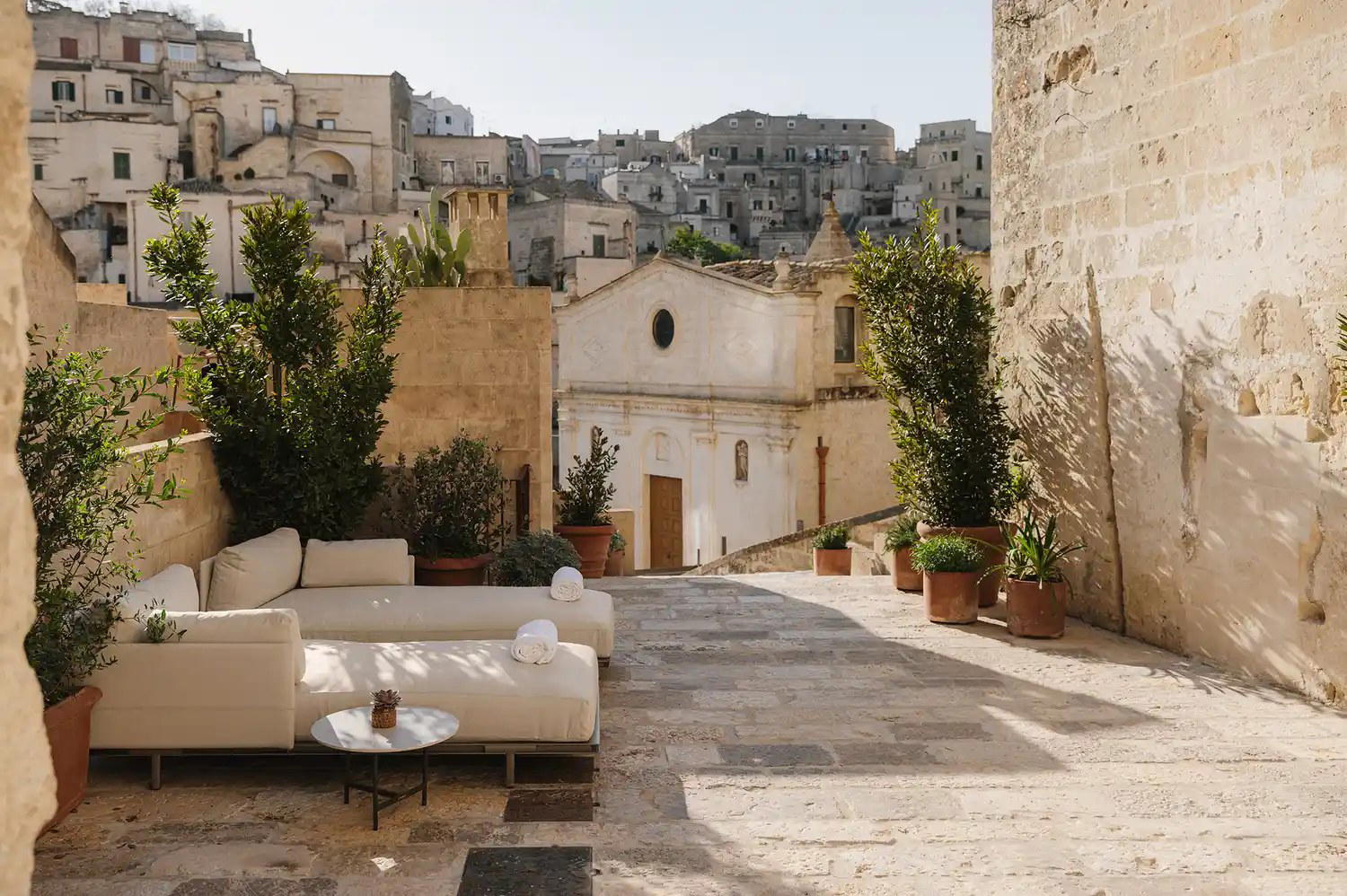
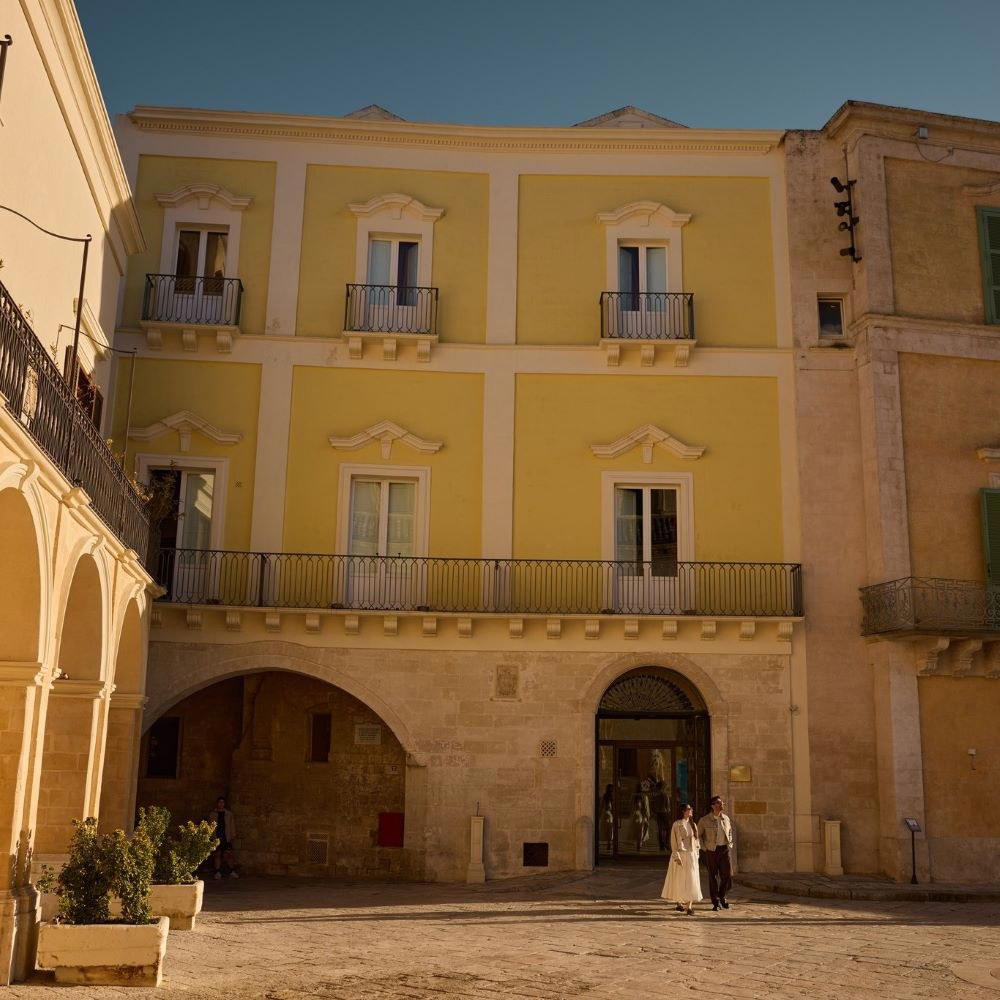
Bars in Matera
Browse all →
Restaurants in Matera
All restaurants in Matera →

Details
- Romantic
- Scenic
- Intimate
- Elegant
- Historic
- Honeymoon
- Romantic Getaway
- Anniversary
- Destination Wedding
- Historic Building
- Panoramic View
- Private Dining
- Garden
- Terrace
- Destination Spa
- Wi Fi
- Spa
- Room Service
- Concierge
- Restaurant
- Bar
- Bicycle Rental
- Mountain
- Garden
Candlelit, intimate atmosphere with stone walls and antique furnishings; warm, sensory experience enhanced by firelight, classical music, and lighting that preserves the historic cave character while providing modern comfort.