Calle Dao
Calle Dao sits at 38 W 39th St in Midtown Manhattan, occupying a cross-cultural niche that draws from Latin and Asian culinary traditions. The address places it within walking distance of Bryant Park and the surrounding Garment District, a part of Midtown that has developed a more varied dining identity than its office-tower reputation suggests. For New York diners tracking ingredient-driven cooking across category boundaries, it earns attention on its own terms.
Pearl is the En Primeur Club membership app — saves, bookings, and concierge access live there. Same editors, same standards.
- Address
- 38 W 39th St, New York, NY 10018
- Phone
- +16464765696
- Website
- calledao.com
- Directions
- Get directions
 Saves & bookings on Pearl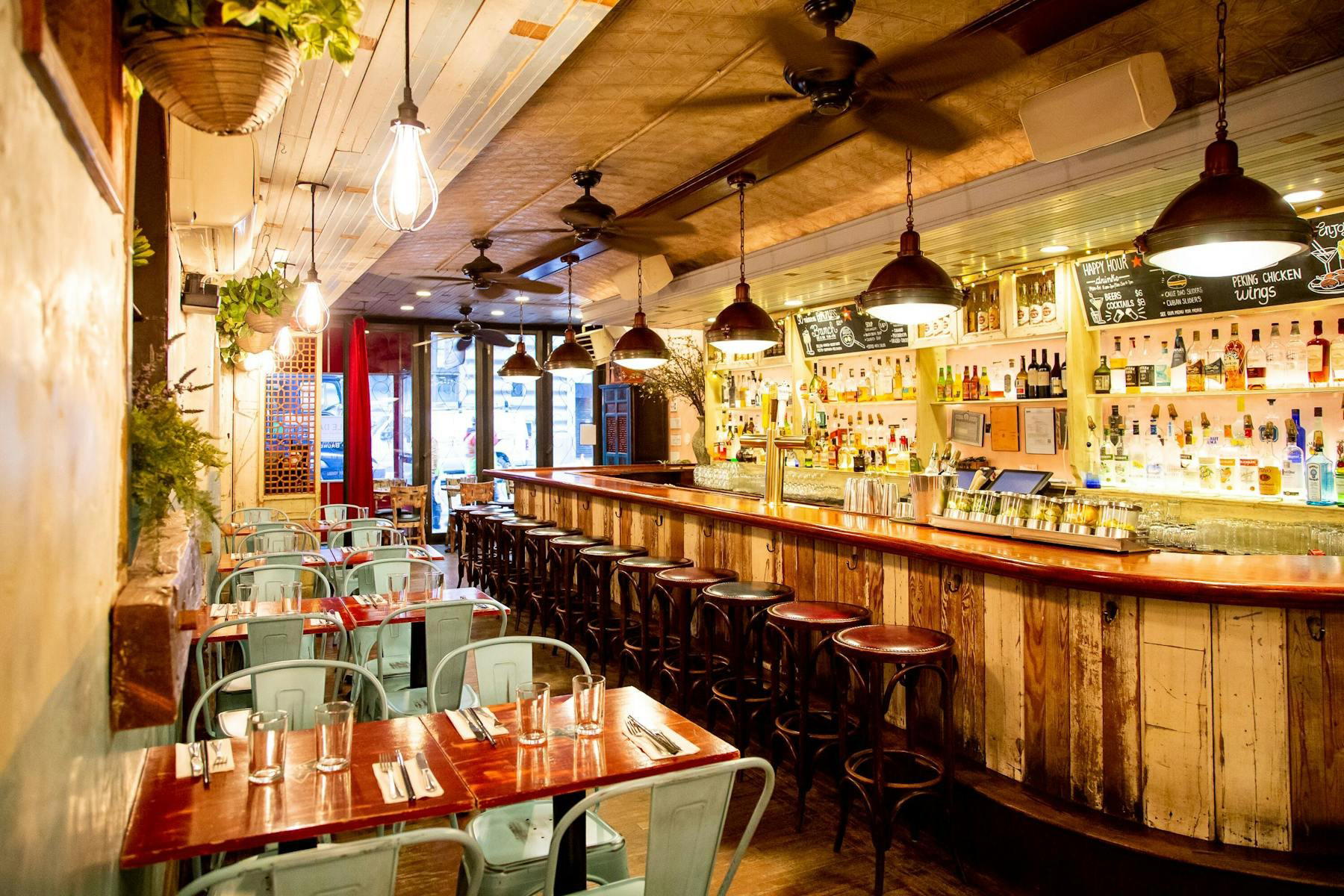
Midtown's Cross-Cultural Cooking and Where Calle Dao Fits
Midtown Manhattan's dining identity has long been defined by the expense-account French rooms and high-volume steakhouses that serve the office towers above. That picture has shifted. A quieter tier of cooking has taken root in the blocks around Bryant Park and the Garment District, restaurants that don't fit a single-cuisine box and aren't competing for the same four-star recognition as Le Bernardin or Per Se. Calle Dao, at 38 W 39th St, operates in this space: a Cuban-Chinese Fusion restaurant in New York City at 38 W 39th St, with a recommended reservation policy and an approximate price of $50 per person.
New York has a long history of culinary fusion that goes well beyond marketing, it is a product of supply chains, immigrant communities, and the city's sheer density of ingredient sources. Kitchens working at the intersection of Latin American and East Asian traditions are drawing from two of the deepest larders available to any American city. The question for any restaurant in this category is whether the sourcing logic holds up, or whether the cross-cultural angle is purely cosmetic.
The Ingredient Logic Behind Latin-Asian Cooking
The culinary traditions that converge in a Latin-Asian kitchen share more sourcing DNA than they might appear to. Both rely heavily on rice as a base grain, use fermentation as a flavor-building technique, think sofrito on one side, gochujang and miso on the other, and work with cuts and preparations that extract maximum value from the whole animal or fish. When kitchens take this seriously, the result isn't a novelty mashup but a coherent set of cooking decisions grounded in how each tradition actually uses its raw materials.
New York's supply infrastructure makes this kind of sourcing credible. The city's wholesale markets, particularly the Hunts Point Produce Market in the Bronx, move more fresh produce than any comparable facility on the East Coast. Fishmongers serving the city's Asian restaurant community operate at a precision that benefits any kitchen paying attention. Latin American specialty producers, for ingredients like aji amarillo paste, plantains at varying stages of ripeness, or dry-aged chorizos, have expanded their presence in the New York metro area substantially over the past decade. A kitchen drawing from both sides of that supply chain has access to ingredients that would be impossible to source with the same consistency in most American cities.
This is the context in which restaurants like Calle Dao matter to New York's dining conversation, because New York is one of the few cities where the raw material quality needed to execute it properly is reliably available. Compare this to a farm-to-table format like Blue Hill at Stone Barns in Tarrytown, which anchors its sourcing in a single estate, or Single Thread Farm in Healdsburg, where the ingredient chain runs from an owned farm to the plate. The restaurant's sourcing logic is urban and aggregated rather than agrarian and controlled, which suits Midtown Manhattan's character precisely.
The Midtown Context: A Neighborhood Finding Its Dining Register
The blocks between Bryant Park and the west side of Fifth Avenue have historically been a lunch destination. The rhythm of the Garment District, early starts, mid-morning deliveries, offices clearing out by early evening, didn't historically reward dinner investment. That pattern has changed as the residential density in and around Midtown has increased and as the area has attracted a more diverse working population, including the tech and creative firms that moved into the neighborhood's older commercial buildings.
Within New York's broader dining geography, the W 39th St address is not the obvious destination for ingredient-driven cooking. That conversation tends to cluster in the West Village, the Lower East Side, and parts of Brooklyn. But the concentration of the city's most decorated kitchens further downtown, Eleven Madison Park, Atomix, Masa, leaves a gap in Midtown that restaurants operating at a more accessible price point are positioned to fill. The cross-cultural kitchens in this part of the city tend to operate with less ceremony than those downtown counterparts, which suits a different dining purpose.
comparable set and Price Context
The restaurant doesn't compete in the same tier as New York's decorated tasting-menu rooms. Its reference points are more likely the Latin-inflected kitchens and pan-Asian restaurants that occupy Midtown's mid-market dining space, places where the cooking is taken seriously but the format doesn't require a reservation months in advance or a three-figure-per-person commitment before drinks. That position is, where interesting ingredient-driven work in the city is happening right now: below the Michelin bracket, where kitchens have more freedom to source laterally and experiment with flavor combinations that a tasting-menu format might not accommodate.
Smyth in Chicago, Lazy Bear in San Francisco, Providence in Los Angeles, and Addison in San Diego each demonstrate how regional supply chains shape a kitchen's identity. At the more rarified end, The French Laundry in Napa, The Inn at Little Washington, and Frasca Food and Wine in Boulder show how ingredient provenance can become central to a restaurant's identity rather than a supporting detail. Internationally, Atelier Moessmer Norbert Niederkofler in Brunico and Dal Pescatore in Runate represent how regional sourcing conviction builds long-term credibility. Emeril's in New Orleans offers another data point on how cross-cultural traditions, French and Creole, in that case, produce a kitchen identity that is coherent precisely because the ingredient overlap is real, not constructed.
Awards and Standing
Comparable venues nearby, for context on price, style, and recognition.
| Venue | Cuisine | Price | Notes |
|---|---|---|---|
| Calle DaoThis venue — the venue you are viewing | Cuban-Chinese Fusion | $$$ | Not listed |
| Lola's | Southern-Asian Fusion | $$$ | Midtown South-Flatiron-Union Square |
| Franchia | Pan-Asian Vegan Fusion | $$$ | Midtown-Times Square |
| M. Wells | Quebecois Steakhouse | $$$ | Long Island City-Hunters Point |
| KJUN | Korean-Cajun Fusion | $$ | Murray Hill-Kips Bay |
| Natsumi Tapas | Japanese-Italian Fusion Tapas | $$$ | Gramercy |
Continue exploring
More in New York City
Restaurants in New York City
Browse all →
Bars in New York City
Browse all →

Hotels in New York City
Browse all →





At a Glance
- Lively
- Trendy
- Energetic
- Group Dining
- Brunch
- Late Night
- Casual Hangout
- Open Kitchen
- Craft Cocktails
Current opening hours
- Monday
- 12–10 PM
- Tuesday
- 12–10 PM
- Wednesday
- 12–10 PM
- Thursday
- 12–10 PM
- Friday
- 12–11 PM
- Saturday
- 11 AM–11 PM
- Sunday
- 11 AM–9 PM
Hours can change for holidays and private events. Last verified .
Lively and eclectic atmosphere with lush greenery and decor evoking old-world Havana's Chinatown.