Positioned on the Place de la Concorde, Café Lapérouse occupies one of Paris's most historically charged addresses, where the weight of the square's geography shapes the dining experience before a dish arrives. Compared to the Michelin-decorated rooms of the 8th arrondissement, it offers a different register of Parisian grand dining, one rooted in setting and ceremony rather than modernist technique.
Pearl is the En Primeur Club membership app — saves, bookings, and concierge access live there. Same editors, same standards.
- Address
- 2 Pl. de la Concorde, 75001 Paris, France
- Phone
- +33153936553
- Website
- cafe-laperouse.com
- Directions
- Get directions
 Saves & bookings on Pearl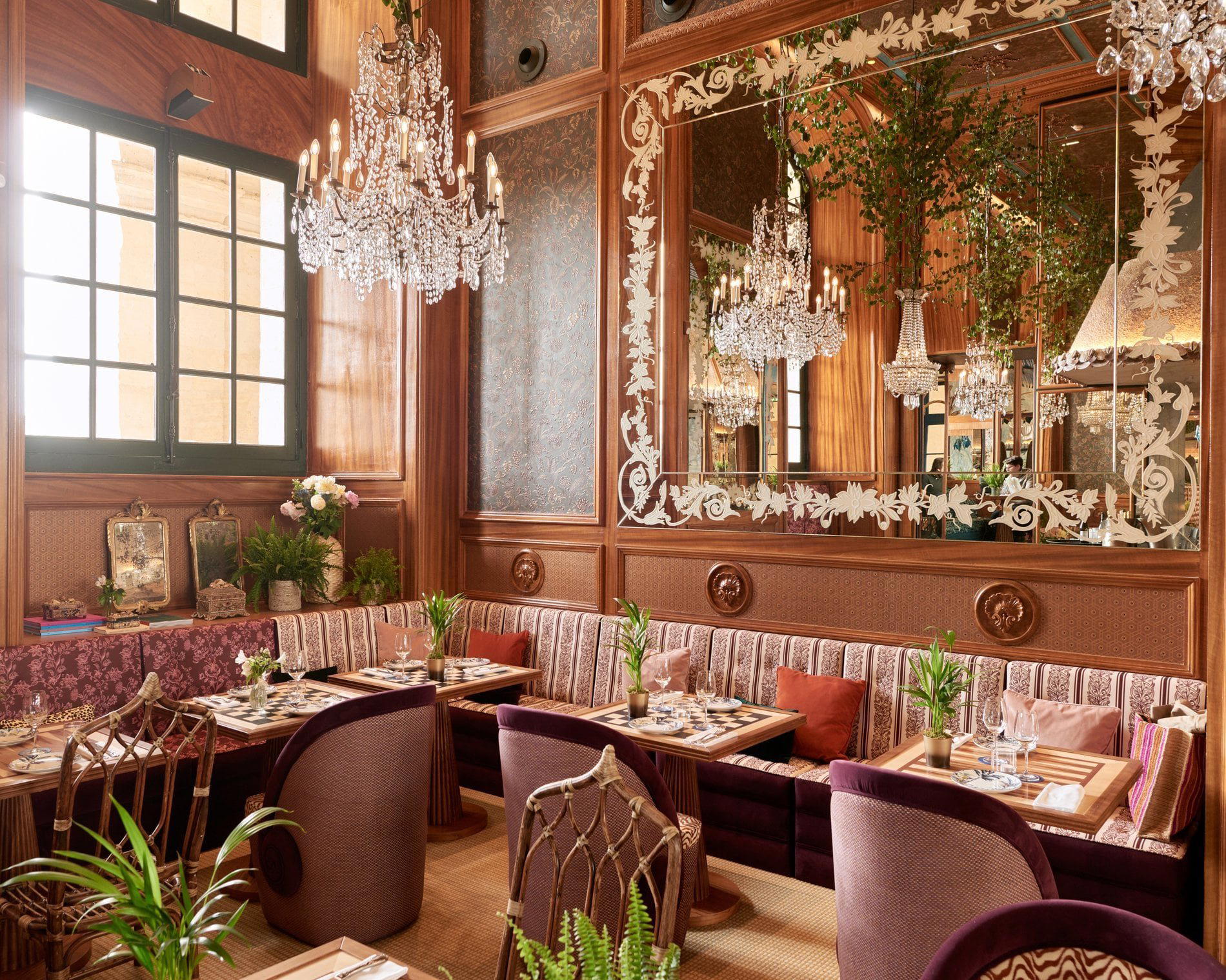
Place de la Concorde and the Gravity of Address
Few squares in Paris carry as much accumulated weight as the Place de la Concorde. Stretching between the Tuileries and the Champs-Élysées, flanked by the Seine to the south and the Madeleine to the north, it is a space that has staged coronations, executions, and triumphs in roughly equal measure. A restaurant at this address doesn't simply have a view, it inherits an argument about what Parisian grandeur means and who it belongs to. Café Lapérouse, positioned at 2 Place de la Concorde, operates inside that argument whether it chooses to or not.
This is the editorial context that matters most for Café Lapérouse: the Place de la Concorde is not a neighbourhood in the conventional sense. It is a threshold between the formal and the aspirational, connecting the governmental gravity of the 1st arrondissement to the luxury retail corridor of the 8th. Dining here places a guest in a spatial tradition that has little to do with the intimate bistro culture of the Left Bank or the chef-driven modernism of the 8th's Michelin rooms. The reference points are architectural and historical before they are culinary.
Where It Sits in the Paris Dining Spectrum
Paris's high-end dining offer has split, over the past two decades, into broadly distinct registers. One cohort, represented by addresses like Alléno Paris au Pavillon Ledoyen, Arpège, and Kei, anchors its identity in culinary technique, Michelin recognition, and the authority of the chef's name. A second cohort anchors itself in setting, ceremony, and the weight of the address itself. Le Cinq at the Four Seasons George V operates in both registers simultaneously, but it is the exception. Most rooms must choose their primary currency.
Café Lapérouse's primary currency is clearly its location. The Place de la Concorde address functions as the credential, in the same way that a Michelin star functions as a credential for the technique-led rooms nearby. This is neither a criticism nor an endorsement, it is a description of how the room positions itself in the market and what a guest is purchasing when they book. Visitors expecting the culinary ambition of L'Ambroisie will be calibrating against the wrong benchmark. Those seeking a formal Parisian occasion with a historically significant backdrop are closer to the right frame of reference.
France's most celebrated dining rooms outside Paris, from Mirazur in Menton to Troisgros in Ouches and Flocons de Sel in Megève, have largely built their identities around the chef's vision, often in settings that required the guest to travel toward the kitchen rather than the kitchen traveling toward the address. The Paris grand-setting model inverts that logic: the address is the destination, and the cuisine exists in service of the occasion.
The Concorde Setting as Experience Architecture
Approaching the Place de la Concorde from the rue de Rivoli side, the scale is immediately apparent. The Luxor Obelisk at the centre of the square, standing 23 metres, was gifted by Egypt in 1833 and remains among the more legible markers of Paris's layered historical self-presentation. The surrounding fountains, the aligned vistas toward the Assemblée Nationale and the Arc de Triomphe, the constant movement of traffic around a space designed for ceremony, all of this frames the approach to any restaurant at this address before a guest crosses the threshold.
Inside a room at this location, the question is always whether the interior design and the dining experience can hold their own against what the guest has just walked through. This is a harder editorial question than it might appear. The Concorde's scale is almost theatrical in its grandeur, and interiors that attempt to match it risk feeling overwrought, while those that underplay it risk feeling incongruous. Particularly successful grand-setting restaurants in Paris, and the tradition runs from the Palais Royal through to the hotel dining rooms of the 8th, tend to resolve this tension through restraint in decoration and precision in service rhythm.
French Institutional Dining and Its Continued Relevance
The category of French institutional dining, formal rooms at historically significant addresses, drawing on classic service protocols and broadly classical menus, has faced real pressure over the past fifteen years. The critical conversation has largely moved toward chef-driven tasting menus, natural wine programs, and the kind of biographical cuisine that draws lineage from figures like Paul Bocuse, Michel Bras, or Michel Guérard while pushing actively away from classical formalism. Yet institutional dining has not collapsed, it has found a more specific audience.
That audience tends to be occasion-driven rather than cuisine-driven. Anniversary dinners, business entertaining at a scale that requires spatial authority, and international visitors for whom a particular image of Paris is part of the reason they made the trip, these are the guests for whom a room like Café Lapérouse functions most effectively. The same pattern holds at Georges Blanc in Vonnas, Auberge de l'Ill in Illhaeusern, and Auberge du Vieux Puits in Fontjoncouse, rooms where the setting and the accumulated reputation carry as much weight as what arrives on the plate. For contrast with French dining that has crossed the Atlantic entirely on culinary reputation alone, the trajectory of Le Bernardin in New York is instructive: no historical address, no inherited grandeur, just technical authority sustained over decades.
The distinction matters because it shapes what a guest should expect from their visit and how they should evaluate the experience afterward. A room that positions itself primarily through its address is not making a claim about its ranking in the technical hierarchy of French cuisine, and it should not be judged on those terms.
Planning Your Visit
The restaurant is located at 2 Place de la Concorde, 75001 Paris, in the 1st arrondissement, directly on one of the city's most central squares. The nearest Métro stations are Concorde (lines 1, 8, and 12), making it accessible from both the Right Bank hotel districts and the Saint-Germain-des-Prés side of the river. Given the address's prominence and the occasion-led nature of its audience, advance reservation is advisable, particularly for weekend dinners or any date tied to a Paris event calendar. For a different register of Paris grand dining, Lazy Bear in San Francisco offers a useful point of international comparison for how occasion-led dining formats operate in a different city context. And for those interested in the southern French dining tradition, La Table du Castellet in Le Castellet represents another approach to setting-as-credential in a Provençal frame.
Quick reference: 2 Place de la Concorde, 75001 Paris. The restaurant is open daily from 8 AM to 11 PM, and reservations are recommended.
The Essentials
Comparable venues nearby, for context on price, style, and recognition.
| Venue | Cuisine | Price | Notes |
|---|---|---|---|
| Café LapérouseThis venue — the venue you are viewing | Not listed | $$$$ | Not listed |
| L'Avenue | Élysée, Modern French Brasserie | $$$$ | Not listed |
| Le Céladon | Gaillon, Classic French Fine Dining | $$$$ | Not listed |
| Maison de l'Amerique Latine | Saint-Germain-des-Prés, French Seafood | $$$$ | Not listed |
| Le Georges | Not listed | $$$$ | 4th arrondissement, Modern French Fusion with Rooftop Views |
| Orgueil | Not listed | $$$$ | 11th arrondissement, Modern French Bistronomy |
Continue exploring
More in Paris
Restaurants in Paris
Browse all →
Bars in Paris
Browse all →
Hotels in Paris
Browse all →
At a Glance
- Romantic
- Elegant
- Sophisticated
- Ornate
- Whimsical
- Well Known
- Date Night
- Brunch
- Special Occasion
- Terrace
- Historic Building
- Hotel Restaurant
- Extensive Wine List
- Skyline
- Street Scene
Current opening hours
- Monday
- 8 AM–11 PM
- Tuesday
- 8 AM–11 PM
- Wednesday
- 8 AM–11 PM
- Thursday
- 8 AM–11 PM
- Friday
- 8 AM–11 PM
- Saturday
- 8 AM–11 PM
- Sunday
- 8 AM–11 PM
Hours can change for holidays and private events. Last verified .
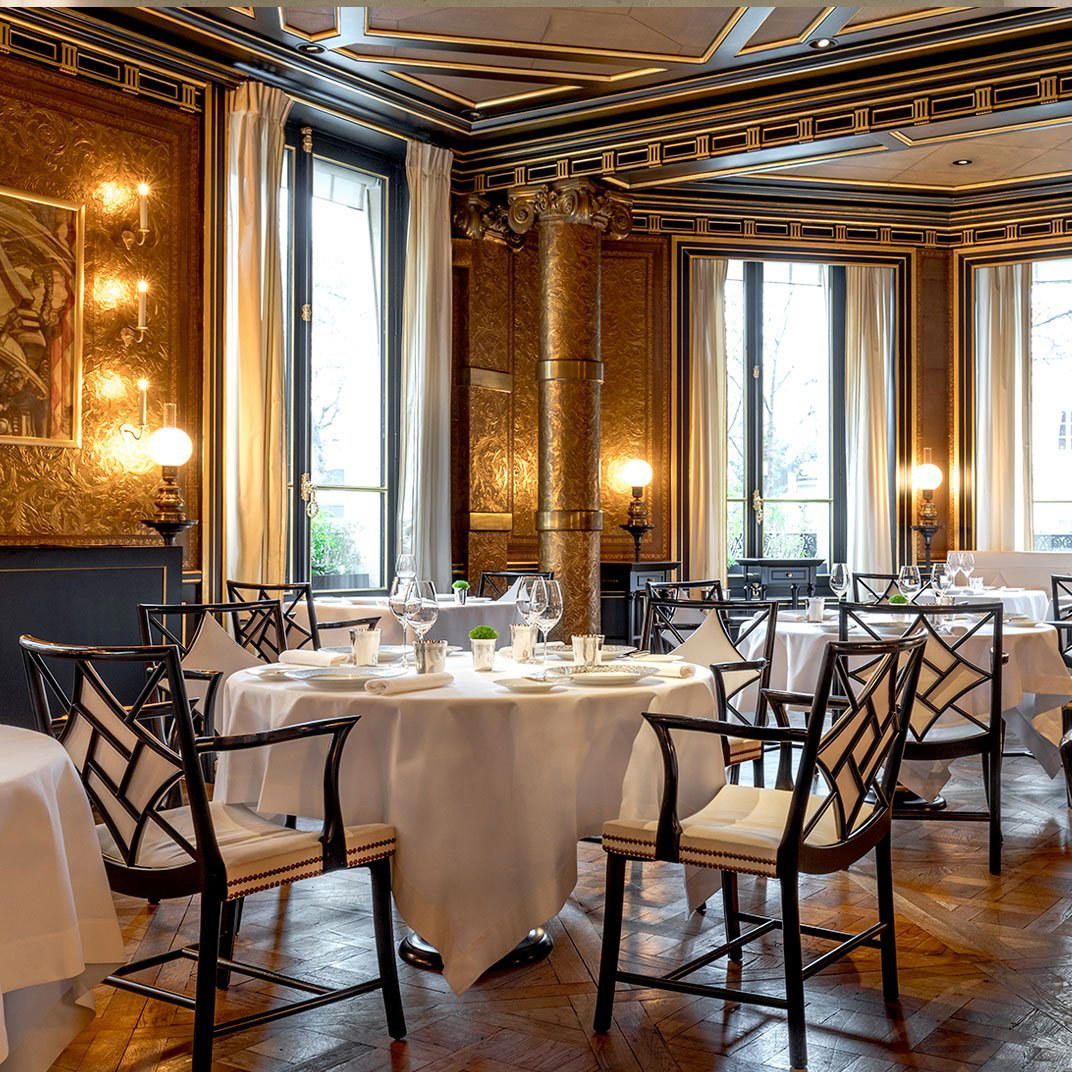
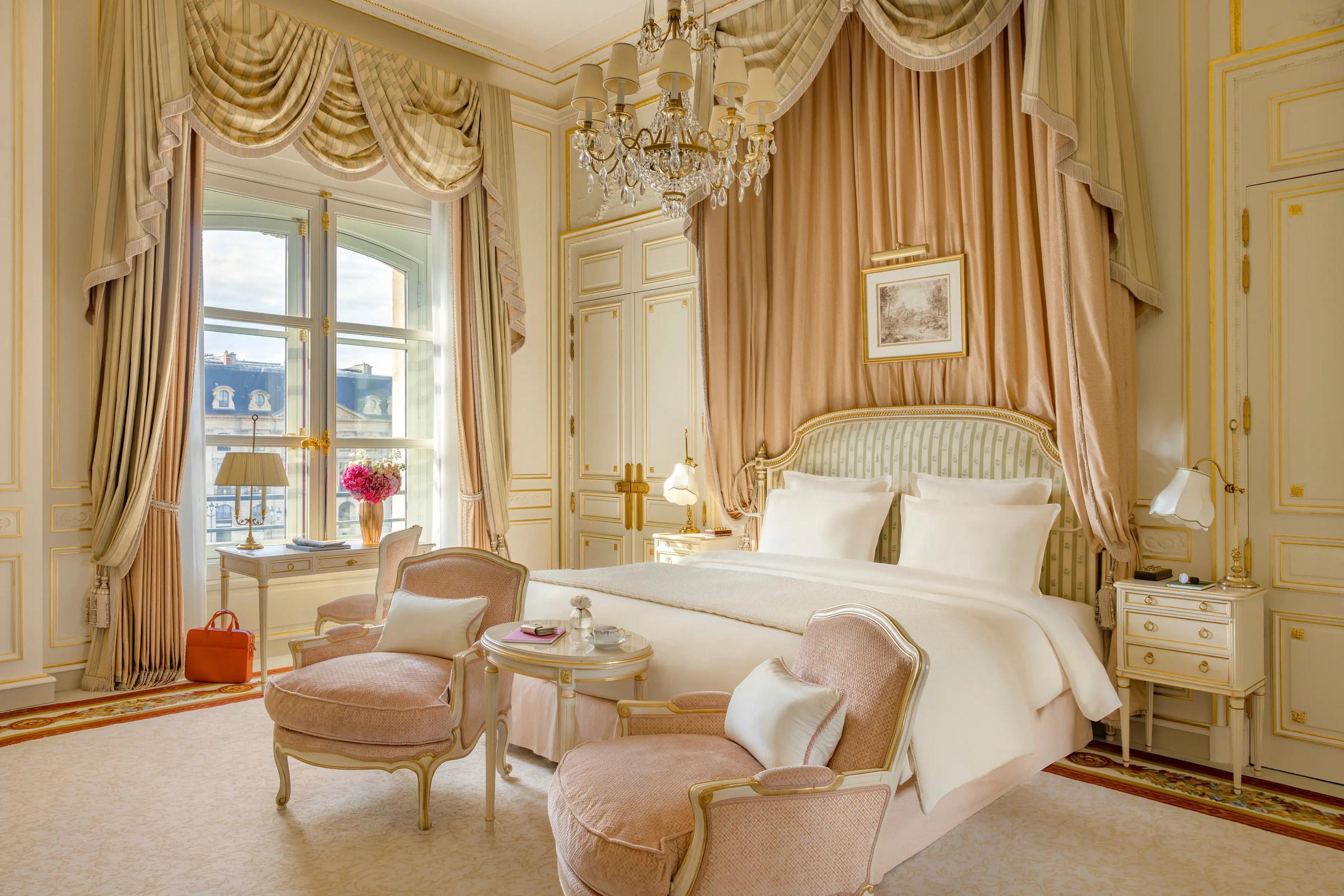
Néo-classique, néo-kitsch blending 18th-century, Art Deco, and Roaring Twenties elements with romantic, rock'n'roll energy and spectacular terrace views.