On Rue Popincourt in the 11th arrondissement, Orgueil occupies a position that reflects how the eastern Paris dining scene has shifted over the past decade, away from grand-room formality and toward a more considered, neighbourhood-scaled ambition. The address situates it within a cohort of restaurants that have quietly redefined what serious eating looks like in Paris outside the traditional power postcodes.
Pearl is the En Primeur Club membership app — saves, bookings, and concierge access live there. Same editors, same standards.
- Address
- 6 Rue Popincourt, 75011 Paris, France
- Phone
- +33183973480
- Website
- bonaloi.com
- Directions
- Get directions
 Saves & bookings on Pearl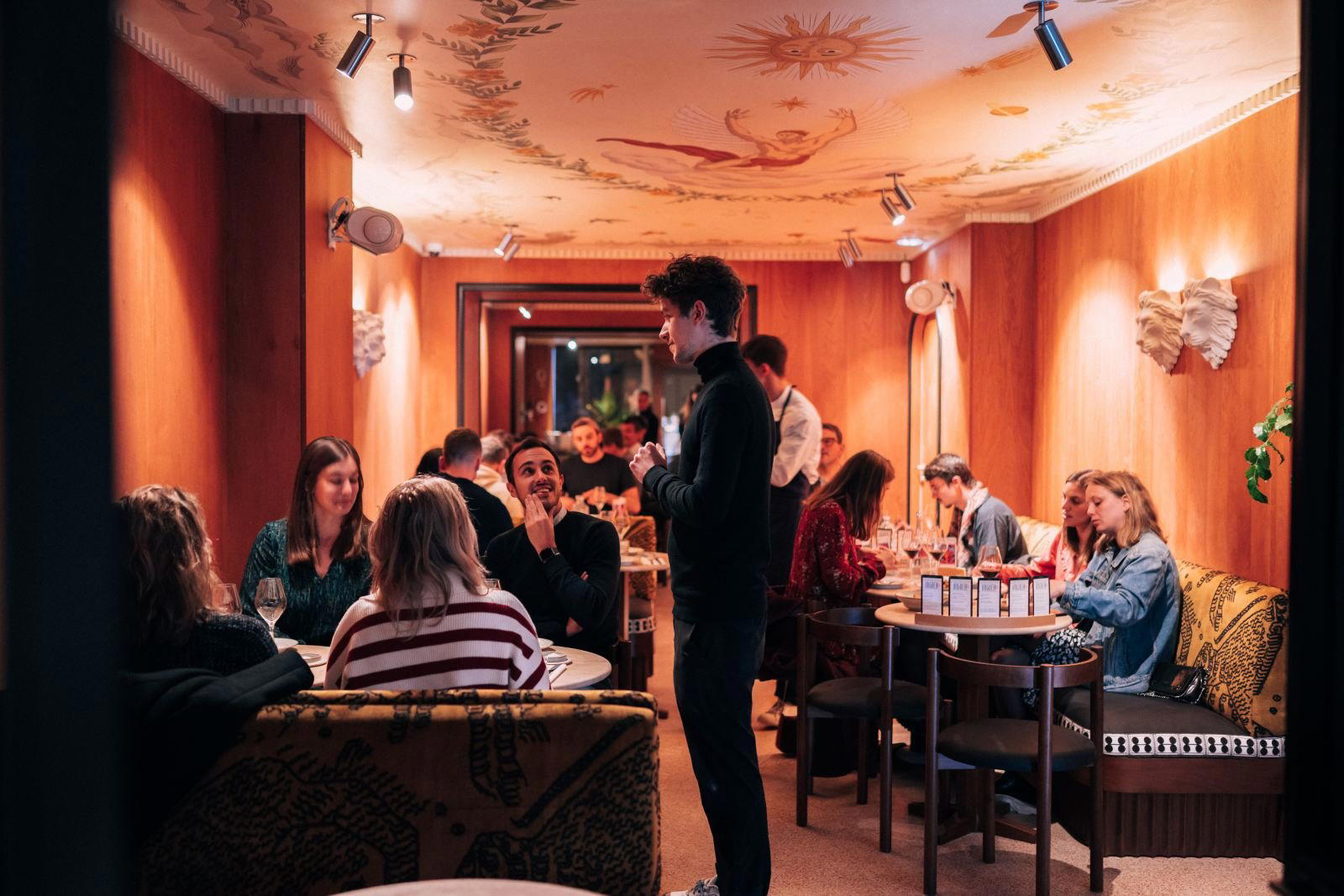
A Street in the 11th, and What It Signals
Rue Popincourt sits in a part of Paris that has, over the past fifteen years, accumulated a different kind of dining credibility than the 8th or the 1st. The 11th arrondissement built its reputation not on grand rooms and white-glove service but on kitchens where precision and informality arrived in the same course. Orgueil, at number 6, is a restaurant in Paris’s 11th arrondissement serving Modern French Bistronomy. Its address is itself an editorial statement about where serious cooking has been migrating in the French capital.
The broader context matters here. While the established tier of Parisian haute cuisine, represented by rooms like L'Ambroisie on Place des Vosges or Le Cinq inside the Four Seasons George V, has remained anchored to its traditional geography and ritual, the 11th has functioned as a release valve for chefs and diners who want the same level of intent without the ceremonial overhead. Orgueil is one of the addresses that crystallises that shift.
How the 11th's Restaurant Culture Arrived Here
The evolution of this pocket of Paris tracks a recognisable European pattern: post-industrial blocks absorb independent restaurants, those restaurants attract a dining public that values cooking over staging, and over time the neighbourhood develops a gravitational pull of its own. What the 11th has managed, more successfully than most comparable urban patches, is to sustain that character as rents and attention have both risen.
Orgueil fits inside that arc. The name itself, French for pride, or arrogance, depending on the register you read it in, suggests a kitchen with a point of view, not a room designed to disappear into the background. In a city where the French restaurant tradition has long been pulled between reverence for classical technique and pressure to evolve, a name like that implies a considered position. Whether that position has shifted since the restaurant first established itself on Rue Popincourt is exactly the kind of question the 11th's dining culture tends to answer incrementally, through accumulated reputation rather than press releases.
For wider context on how Paris restaurants at this level compare and position themselves, see our full Paris restaurants guide.
The Reinvention Question in Paris Dining
Across French fine dining, particularly durable addresses are those that have managed reinvention without losing the thread of what made them worth visiting in the first place. That pattern runs from the multi-generational continuity at Auberge de l'Ill in Alsace to the more radical repositioning that houses like Alléno Paris au Pavillon Ledoyen have undertaken within the capital itself. At Troisgros, reinvention meant a physical relocation and a generational handover; at Bras in Laguiole, it meant a deliberate withdrawal from the Michelin system. Each of those moves was a form of editorial statement about what a restaurant owes its audience versus what it owes itself.
Orgueil, operating in the 11th rather than in the grand-address tier represented by those houses, faces a different version of that pressure. Neighbourhood restaurants in Paris that build genuine reputations tend to encounter a specific inflection point: the moment when early-adopter loyalty matures into broader recognition, and the room has to decide whether to scale ambition or hold its original format. The leading ones in this part of the city have learned that the format is the point.
Restaurants like Kei, which grafted Japanese precision onto a French technical base and eventually earned Michelin recognition for doing so, demonstrate that Paris rewards kitchens with a coherent thesis. The question Orgueil's evolution poses is what its own thesis has been, and whether the address on Rue Popincourt has sharpened or complicated it over time.
Where Orgueil Sits in Its comparable set
Within the Paris dining hierarchy, the 11th-arrondissement tier sits below the multi-starred formal rooms but above the casual-bistro layer, it is the segment where cooking ambition is high, format is deliberately restrained, and the room often holds fewer covers than a traditional brasserie. That compression of scale and ambition is not distinctive to Paris: you find analogous dynamics in the tasting-menu-led neighbourhood restaurants of London's Hackney, Copenhagen's Vesterbro, or New York's outer-borough dining clusters. What Paris does differently is weight the classical technique lineage more heavily, even in informal rooms.
By address and positioning, Orgueil belongs in a conversation with the more considered end of that tier, closer in spirit to the kind of cooking that earns serious attention from French restaurant critics than to the all-day café model that has also proliferated in the 11th. The name, the street, and the category all point toward a kitchen that is making a deliberate argument rather than filling a neighbourhood gap.
For French restaurants operating at comparable levels of ambition outside Paris, the reference points include AM par Alexandre Mazzia in Marseille, Assiette Champenoise in Reims, and Mirazur in Menton, each of which demonstrates that interesting cooking in France is no longer exclusively a Parisian conversation. Internationally, the structural parallels with a room like Atomix in New York City are instructive: small-format, high-intent kitchens that operate outside the grand-hotel tier but compete for the same critical attention.
Planning Your Visit
Rue Popincourt is accessible from the Oberkampf or Saint-Ambroise metro stations, both on line 9, placing the restaurant within easy reach of central Paris. The 11th's dining corridor is walkable from those stops, and the surrounding streets hold enough complementary addresses to support a full evening in the neighbourhood rather than a single-destination visit.
Reservations are recommended, and the restaurant’s hours are Monday to Thursday 12 to 2:30 PM and 7 PM to 12 AM, Friday and Saturday 12 to 2:30 PM and 7 PM to 12:30 AM, and Sunday 12 to 2:30 PM and 7 PM to 12 AM. For dining rooms with the kind of format Orgueil's positioning implies, arriving without a reservation is rarely a viable strategy.
Dietary requirements are best communicated at the time of booking. Arpège. Menus that operate with a fixed or limited-choice format, as many rooms at this tier do, typically need advance notice to accommodate substitutions cleanly.
Quick reference: 6 Rue Popincourt, 75011 Paris, Metro Oberkampf (line 9) or Saint-Ambroise (line 9).
Style and Standing
Comparable venues nearby, for context on price, style, and recognition.
| Venue | Cuisine | Price | Notes |
|---|---|---|---|
| OrgueilThis venue — the venue you are viewing | Modern French Bistronomy | $$$$ | Not listed |
| Sphère | Modern French Gastronomy with Japanese Influences | $$$$ | 8ème arrondissement |
| L'Atelier | Modern French Fine Dining | $$$$ | Saint-Germain |
| Le Boeuf sur le Toit | Classic French Brasserie | $$$$ | 8e Arr. - Élysée |
| Baronne | Modern French Grill | $$$$ | 8th arrondissement |
| La Fontaine Gaillon | Traditional French Brasserie | $$$$ | Opera |
Continue exploring
More in Paris
Restaurants in Paris
Browse all →
Bars in Paris
Browse all →
Hotels in Paris
Browse all →



At a Glance
- Elegant
- Sophisticated
- Romantic
- Intimate
- Trendy
- Date Night
- Group Dining
- Special Occasion
- Open Kitchen
- Extensive Wine List
- Local Sourcing
- Zero Waste
Current opening hours
- Monday
- 12–2:30 PM, 7 PM–12 AM
- Tuesday
- 12–2:30 PM, 7 PM–12 AM
- Wednesday
- 12–2:30 PM, 7 PM–12 AM
- Thursday
- 12–2:30 PM, 7 PM–12 AM
- Friday
- 12–2:30 PM, 7 PM–12:30 AM
- Saturday
- 12–2:30 PM, 7 PM–12:30 AM
- Sunday
- 12–2:30 PM, 7 PM–12 AM
Hours can change for holidays and private events. Last verified .
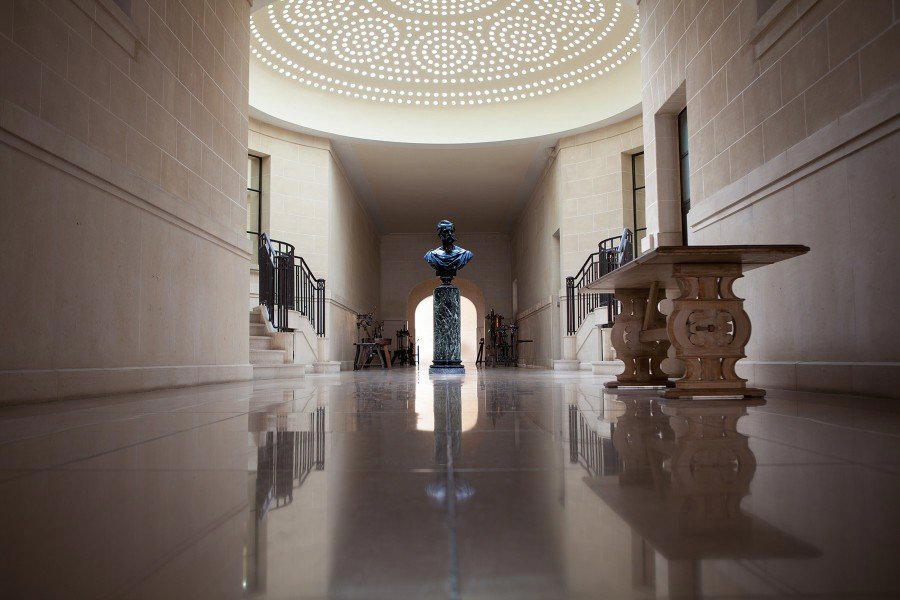
Refined baroque decor with spectacular floral arrangements and cosmic ceiling motifs creating a charming, elegant atmosphere.