Our verdict
Le Céladon occupies a measured position within Paris's 2nd arrondissement fine dining circuit, at 15 Rue Daunou. The room sits inside a tier of classic French houses where kitchen discipline, front-of-house coordination, and cellar depth operate as a collective argument rather than a single signature. Comparable in price bracket to peers such as Kei and Le Cinq, it draws a clientele that values formal service architecture over spectacle.

Pearl is the En Primeur Club membership app, where members save venues, book tables and use the concierge.

The menu
What to order
- Sealed pot vol-au-vent
- Cabbage stuffed with foie gras
- Warm foie gras
Where the 2nd Arrondissement Sets Its Formal Table
Paris's 2nd arrondissement is not where the city stages its most theatrical dining. The Grands Boulevards corridor, running from the Opéra down toward the Bourse, has always been a district of purposeful lunches and considered evening meals rather than destination pilgrimages. The neighbourhood's fine dining rooms tend to reward the kind of guest who knows what a brigade de salle is supposed to do and notices when it does it correctly. Le Céladon, at 15 Rue Daunou, sits squarely in that tradition.
The address alone is instructive. Rue Daunou is a short street connecting the Opéra district to the lower end of the 1st arrondissement, a corridor historically associated with theatre crowds, banking clientele, and the kind of international visitor who prefers proximity to Palais Royal over the Marais. A formal French restaurant here is not an anomaly; it is a continuation of something the neighbourhood has practised for well over a century. For context on how Paris's classic French tradition distributes across the city's arrondissements, our full Paris restaurants guide maps the full range.
The Architecture of a French Service Team
In Paris's premium tier, the strongest argument a restaurant can make is rarely about a single element. The city has no shortage of kitchens where technical execution is flawless but the dining room feels indifferent, or where the sommelier program is serious but the food is merely adequate. The rooms that accumulate sustained reputations tend to be those where kitchen, cellar, and floor operate as a coordinated unit rather than competing departments.
This is the editorial logic behind the team-dynamic model that defines classical French fine dining at its most functional. The chef's register sets a tempo; the sommelier's selections respond to it; the front-of-house conducts the pace at which both reach the guest. When the three work in alignment, the result is a dining experience where transitions feel considered rather than mechanical. L'Ambroisie on the Place des Vosges represents one end of this model, where the room's quietude is itself part of the argument. Le Cinq at the Four Seasons George V represents another register entirely, where hotel scale is subordinated to brigade precision. Le Céladon occupies a position between those two poles: formal without the weight of monument status, precise without the exhibitionism of the grand hotel dining room.
That middle register is, in practice, where many of Paris's most consistent meals happen. The theatrics of Alléno Paris au Pavillon Ledoyen or the conceptual intensity of Arpège demand a particular kind of attention from the diner. A room that executes classical French service at a high level without requiring that level of engagement from the guest is a different, and often more repeatable, proposition.
The category of classical French cuisine in Paris has not contracted so much as stratified. At the leading, houses like L'Ambroisie and Kei occupy their own altitude, with Michelin recognition and booking windows that reflect demand accumulated over decades. Below that tier, a group of serious formal restaurants operates at a price point broadly equivalent to the starred houses but with a slightly lower public profile. These rooms tend to be more accessible on shorter notice while maintaining kitchen standards that place them in clear conversation with the tier above.
Among France's broader fine dining geography, the classical tradition extends well beyond Paris. Auberge de l'Ill in Illhaeusern has held three stars since 1967, making it one of the longest-running examples of the tradition. Troisgros in Ouches and Paul Bocuse's Auberge du Pont de Collonges represent the regional French model at its most historically documented. In contrast to these provincial institutions, a Paris room like Le Céladon operates without the mythology of a destination address, which means its continued existence depends on the quality of the meal itself rather than the weight of the pilgrimage.
The contemporary French scene has also seen productive departures from the classical model. AM par Alexandre Mazzia in Marseille and Mirazur in Menton work at the intersection of French technique and Mediterranean regionalism. Flocons de Sel in Megève and Bras in Laguiole use landscape and season as structural elements. Assiette Champenoise in Reims and Au Crocodile in Strasbourg anchor the Alsace and Champagne traditions. Le Céladon draws none of those geographical or conceptual anchors; its argument is made entirely in the room, which is both its constraint and its discipline.
Planning Your Visit
The 2nd arrondissement is accessible from multiple Metro lines, with Opéra (lines 3, 7, 8) and Quatre-Septembre (line 3) both within easy walking distance of Rue Daunou. The area is compact enough that visitors combining dinner with an evening at the Opéra Garnier or a pre-dinner aperitif in the Palais Royal gardens will find the geography cooperative.
For international comparisons, the formal French service model has direct counterparts at tables like Le Bernardin in New York, where French technique operates at the top of the American market, and at Atomix in New York, which applies a comparable brigade discipline to a Korean-inflected tasting format. Auberge du Vieux Puits in Fontjoncouse shows what the formal French model looks like when transplanted to a remote southern French village. The comparison is useful: what changes is the setting and the mythology, not the underlying service architecture.
Venue Logistics at a Glance
| Venue | Price Tier | Location | Category |
|---|---|---|---|
| Le Céladon | €€€€ | 2nd arr. Paris | Classic French |
| L'Ambroisie | €€€€ | 4th arr. Paris | French, Classic |
| Kei | €€€€ | 1st arr. Paris | Contemporary French |
| Le Cinq | €€€€ | 8th arr. Paris | French, Modern |
| Alléno Ledoyen | €€€€ | 8th arr. Paris | Creative |
Frequently asked questions
What is the atmosphere like at Le Céladon?
Le Céladon occupies the composed, formal register that defines the better dining rooms of Paris's 2nd arrondissement. The address on Rue Daunou places it within the Opéra district's established circuit of rooms built for structured, unhurried service rather than spectacle. Expect a brigade-led floor with attention to pace and form.
What's the address for Le Céladon?
Le Céladon is located at 15 Rue Daunou, 75002 Paris, France, Paris.
How does Le Céladon compare to other classical French restaurants near the Opéra in Paris?
The Opéra district in Paris's 2nd arrondissement has historically sustained a particular type of formal dining room, one that handles pre- and post-theatre traffic without sacrificing kitchen standards. Le Céladon on Rue Daunou sits within this circuit, positioned closer to the composed, service-forward model than the more experimental end of Paris's current French fine dining scene. For visitors cross-referencing options in the 75002 postcode, the room's formality is its clearest differentiator from the neighbourhood's brasserie-led alternatives.
What do people recommend at Le Céladon?
What the room's position in the classical French tier of Paris implies is a kitchen organised around technique-led cooking: sauces, protein precision, and seasonal French produce as the structural logic. Verify the current menu directly with the restaurant before visiting.
What's the best way to book Le Céladon?
For a formal dining room at this address in Paris's 2nd arrondissement, advance booking is advisable, particularly for Friday and Saturday evenings when Opéra district traffic peaks. Booking several weeks ahead is a reasonable baseline for rooms in this category.
What's the defining dish or idea at Le Céladon?
In classical French fine dining at this level in Paris, the argument is rarely made by a single plate. The defining idea tends to be coherence: how the kitchen's technique, the service rhythm, and the room's formality work as a unified position.
Can Le Céladon accommodate dietary restrictions?
Formal French kitchens structured around brigade service, as Le Céladon operates within, routinely accommodate dietary requirements when notified well in advance. The classical French format at this tier in Paris gives the kitchen enough structural flexibility to adjust courses without compromising the overall progression. check the venue's official channels before your reservation to confirm specific requirements.
Price and Positioning
Comparable venues nearby, for context on price, style, and recognition.
| Venue | Cuisine | Price | Notes |
|---|---|---|---|
| Le CéladonThis venue (the venue you are viewing) | Classic French Fine Dining | $100–150 | Not listed |
| Bel Canto | French Bistronomic with Opera | $100–150 | Hôtel de Ville, French Bistronomic with Opera |
| Restaurant Monsieur Lancaster | Modern French Regional Fine Dining | $150–200 | 8th Arr., Modern French Regional Fine Dining |
| Café de l’Homme | Modern French Fine Dining | $100–150 | Trocadéro, Modern French Fine Dining |
| La Cour Jardin | Seasonal French Courtyard Bistro | $50–100 | 8th Arr. - Élysée, Seasonal French Courtyard Bistro |
| Verjus | Modern French Fine Dining | $50–100 | 1st arrondissement, Modern French Fine Dining |
Continue exploring
More in Paris
Restaurants in Paris
All restaurants in Paris →
Bars in Paris
All bars in Paris →
Details
- Elegant
- Sophisticated
- Romantic
- Cozy
- Classic
- Date Night
- Business Dinner
- Special Occasion
- Hotel Restaurant
- Private Dining
- Extensive Wine List
- A La Carte
- Vegetarian Friendly
- Vegan Options
Current opening hours
- Monday
- 12–2 PM
- Tuesday
- 12–2 PM
- Wednesday
- 12–2 PM
- Thursday
- 12–2 PM
- Friday
- 12–2 PM, 7–9 PM
- Saturday
- 7–9 PM
- Sunday
- Closed
Hours can change for holidays and private events. Hours as of .
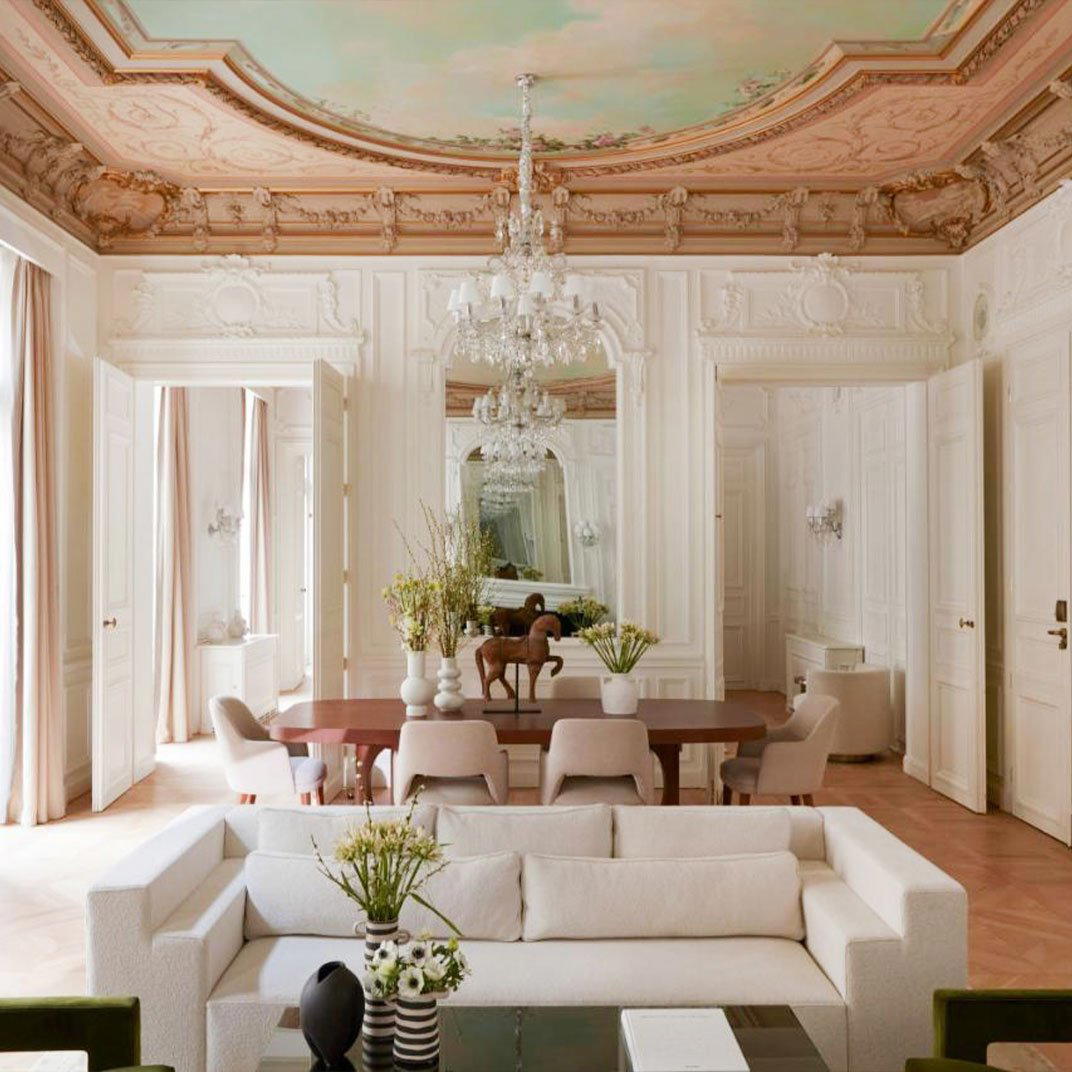
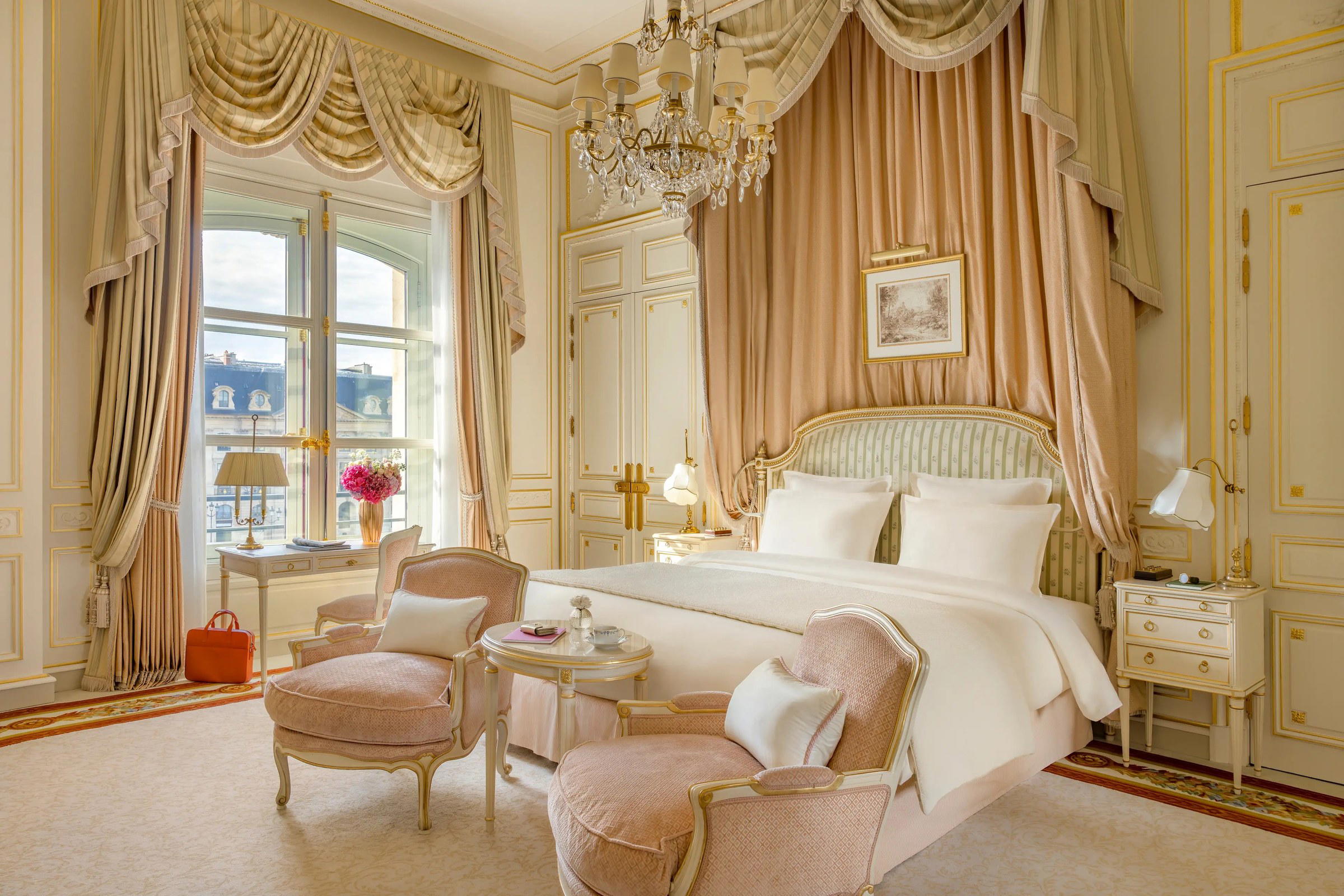
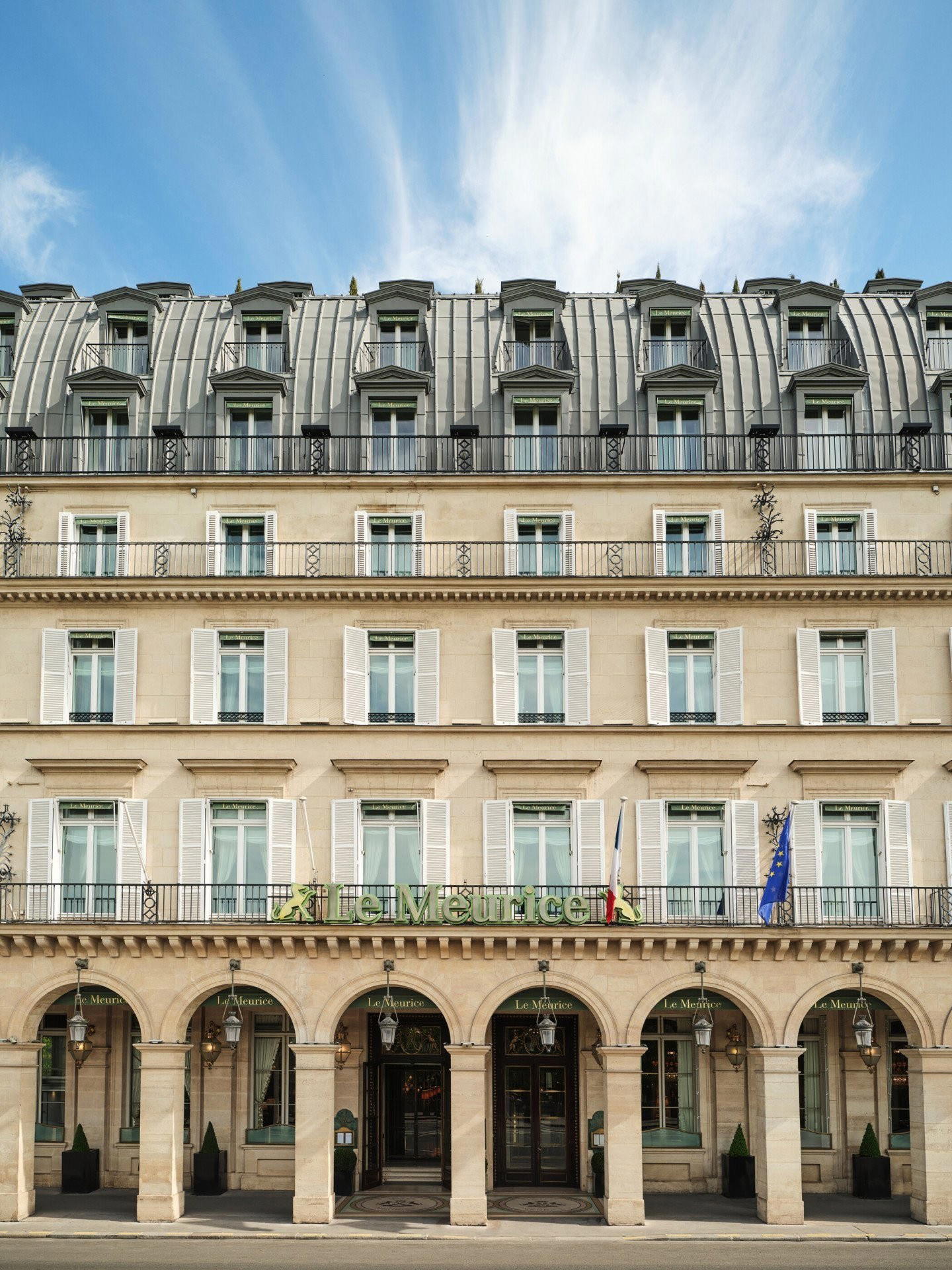
Bright, refined room with céladon green walls, soft golden lighting, cozy medallion chairs, thick carpets, and classic French decor creating a luxurious, intimate Parisian home atmosphere.