Our verdict
At 9 Rue Camille Desmoulins in the 11th arrondissement, Café du coin occupies the kind of corner-room position that Paris does better than almost any other city: modest in scale, deliberate in detail, and positioned squarely within a neighbourhood that has been reshaping its dining identity for the better part of a decade. The address alone places it inside one of the capital's more interesting mid-range dining conversations.

Pearl is the En Primeur Club membership app — saves, bookings, and concierge access live there. Same editors, same standards.
- Address
- 9 Rue Camille Desmoulins, 75011 Paris, France
- Phone
- +33 1 48 04 82 46
- Hours
- Mon–Fri 8 AM–2 AMSat–Sun 10 AM–2 AM
- Website
- cafeducoinparis.net
- Directions
- Get directions
The menu
What to order
- Pizzette
- Fish croquettes
- Sardines with labneh
A Corner in the 11th: What the Address Tells You
Paris has a grammar for its café corners, and the 11th arrondissement speaks it with particular fluency. The streets around Rue Camille Desmoulins sit at the intersection of two long-running shifts in the city's dining character: the migration of serious cooking away from the grands boulevards and toward the eastern arrondissements, and the parallel rise of the neighbourhood bistro as a credible alternative to the formal restaurant circuit. Café du coin, positioned at number 9 on that street, occupies a physical type that Parisians have always trusted: the corner room, visually anchored to its block, pulling in foot traffic from multiple directions at once.
That corner format is not incidental. Across French café culture, the corner position has historically functioned as a social pivot point, a place where the rhythm of the street enters the room. Tables near windows command sightlines in two directions. The room breathes differently from a straight-fronted address. It is an architectural condition as much as a hospitality one, and the 11th has preserved more of these corner formats than the more heavily touristed arrondissements to the west. For context on how Paris's broader restaurant scene distributes across price tiers and formats, see our full Paris restaurants guide.
The 11th and Its Dining Identity
The arrondissement's dining character has been consolidating around a specific set of values: informality in service, seriousness in sourcing, and a price point that sits deliberately below the grand-restaurant tier without conceding on kitchen ambition. This is not the territory of Alléno Paris au Pavillon Ledoyen or Le Cinq at the Four Seasons George V, where the room itself is part of the proposition and the price reflects that accordingly. Nor is it the classical register of L'Ambroisie on the Place des Vosges, where decades of accumulated reputation underpin every cover charge.
The eastern arrondissements, by contrast, have built their current dining credibility on a different model: smaller rooms, shorter menus, and an implicit compact with regulars that keeps prices honest. The neighbourhood café at the corner of a residential block is the most local expression of that model. It does not compete with the Michelin-tracked grandes tables; it competes with other neighbourhood rooms for the loyalty of people who eat out frequently and know the difference between a kitchen that is paying attention and one that is not.
French fine dining's institutional anchors sit elsewhere in the country. Multi-generational houses like Troisgros in Ouches, Auberge de l'Ill in Illhaeusern, and Paul Bocuse's Auberge du Pont de Collonges represent one pole of that tradition. The neighbourhood café represents another: shorter lineage, less ceremony, and a much more direct relationship between the kitchen and the people sitting twenty feet from it.
Space as Editorial Statement
The design conditions of a corner café in Paris carry their own implicit argument. Where the grandes tables invest heavily in room architecture as a signal of occasion, the neighbourhood café relies on a different vocabulary: the worn zinc counter, the handwritten chalkboard, the proximity of tables that makes overhearing your neighbour's conversation inevitable. These are not failures of ambition. They are deliberate signals about what kind of experience is being offered and to whom.
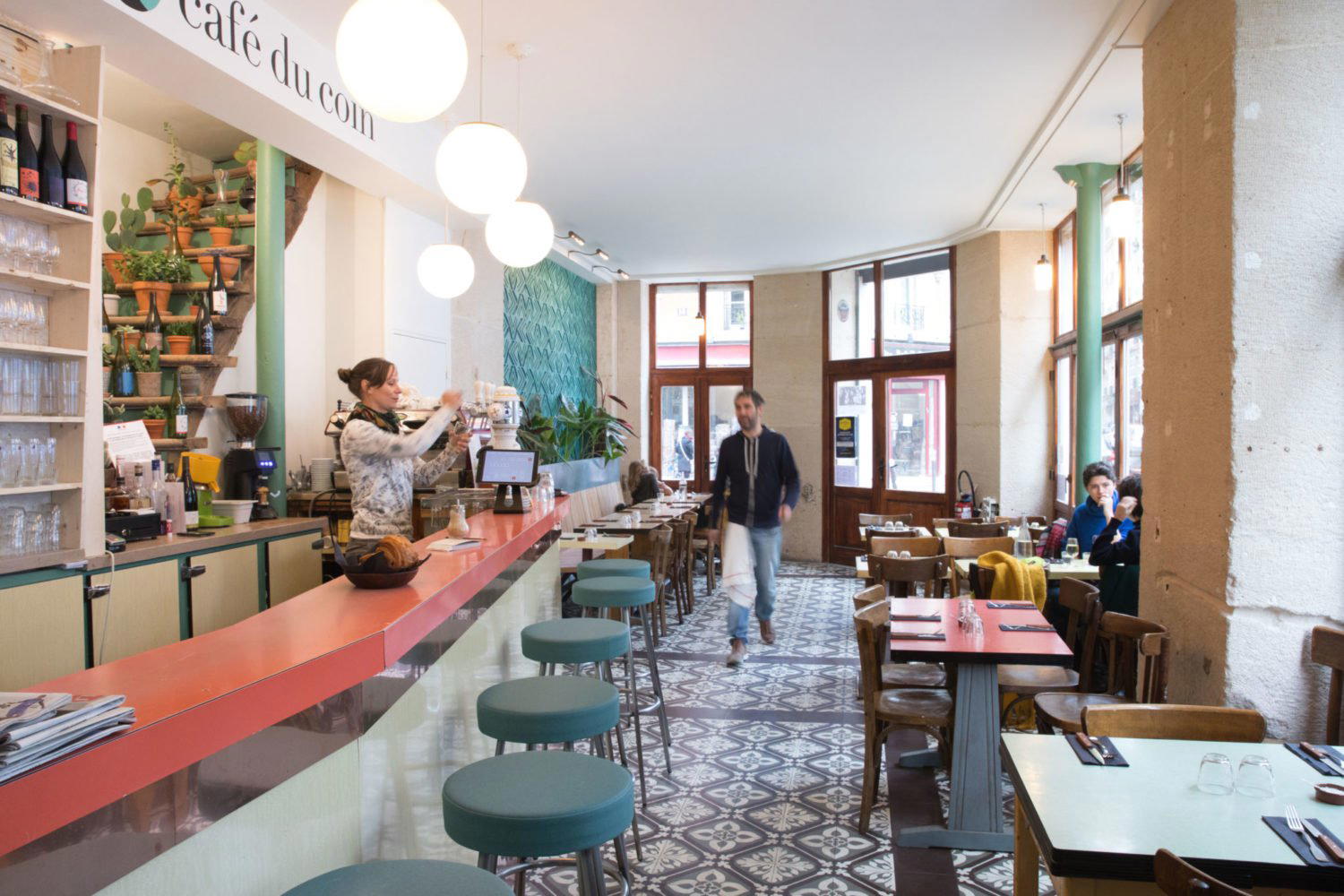
Corner rooms like the one at 9 Rue Camille Desmoulins tend to have a particular spatial quality: natural light from two aspects, a visual relationship with the street that changes through the day, and a room geometry that avoids the tunnel effect of straight-fronted spaces. In the 11th, where much of the built fabric dates to the 19th century, these proportions are often generous by the standards of purpose-built restaurant spaces elsewhere in Europe. The ceiling height, the window scale, the relationship between bar and dining room: these are architectural inheritances rather than design decisions, and they give the better corner addresses a physical character that newer openings in more expensive postcodes often struggle to replicate.
For those accustomed to the more architecturally ambitious end of French dining, whether at Arpège, Kei, or destination restaurants further afield like Mirazur in Menton or Flocons de Sel in Megève, the neighbourhood café format asks for a recalibration of expectations. The room is not trying to impress on arrival. It is trying to feel like somewhere you already know, which is a harder thing to achieve and, when it works, a more durable one.
Where Café du Coin Sits in Paris's Current Moment
Paris has seen a sustained shift over the past decade toward smaller, more personal dining formats. The bistronomie movement, which placed serious cooking inside informal rooms, has now produced a second generation of openings where the informality is assumed rather than announced. The corner café format sits adjacent to this tradition without being wholly defined by it: it predates bistronomie and will outlast whatever comes next.
The 11th remains one of the better arrondissements in which to observe this pattern. Its mix of long-established neighbourhood institutions and newer kitchen-serious openings gives it a dining density that rewards walking. The addresses worth noting are rarely the ones with queues outside; they tend to be the ones that a certain category of Parisian eats at twice a week without telling anyone. Regional France offers comparable dynamics at a different scale: Auberge du Vieux Puits in Fontjoncouse, Bras in Laguiole, Les Prés d'Eugénie in Eugénie-les-Bains, Georges Blanc in Vonnas, and La Table du Castellet all operate at a very different register, where the destination itself is part of the dining calculus. In Paris, the neighbourhood café operates on the opposite logic: the destination is your own neighbourhood, and the café is the reason you stay in it.
Internationally, the neighbourhood-room format has counterparts: Lazy Bear in San Francisco represents the American take on community-driven dining at a higher price point, while Le Bernardin in New York anchors the French fine-dining tradition in an export context. Neither is directly comparable to a Paris corner café, which suggests how specific and how resilient the format actually is.
Know Before You Go
- Address: 9 Rue Camille Desmoulins, 75011 Paris, France
- Arrondissement: 11th (eastern Paris, Bastille/Oberkampf zone)
- Price range:; expect neighbourhood-café pricing consistent with the 11th arrondissement
- Booking: Contact; walk-in capacity typical for the format
- Getting there: The 11th is served by several Métro lines; Rue Camille Desmoulins is accessible from multiple stations in the Oberkampf and Bastille catchment area
Frequently asked questions
What do people recommend at Café du coin?
For a corner café in the 11th arrondissement, the expectation is a short, market-driven menu with French bistro anchors. The cuisine type and signature dishes would be leading confirmed directly with the venue before visiting.
How hard is it to get a table at Café du coin?
Café du coin does not currently hold awards documentation that would place it in the high-demand booking tier alongside Paris's Michelin-tracked rooms. At the neighbourhood café level in the 11th, walk-in access is often possible, particularly at off-peak hours, though this varies by day and season.
What's the defining dish or idea at Café du coin?
That positioning carries its own set of expectations around approachability, seasonality, and value.
Do they accommodate allergies at Café du coin?
As a general practice across Paris's neighbourhood café sector, allergy accommodation is most effectively arranged ahead of arrival rather than at the table.
Is Café du coin overpriced or worth every penny?
The 11th arrondissement neighbourhood café format typically prices below the €€€€ tier occupied by Paris's grand restaurants. Whether the specific kitchen output justifies the price is a question that confirmed cuisine data and recent diner reporting would answer more reliably than speculation.
Is Café du coin part of a wider neighbourhood dining circuit in the 11th?
The 11th arrondissement has developed one of Paris's denser concentrations of independent dining addresses over the past decade, with Rue Camille Desmoulins sitting within walking distance of a number of other neighbourhood-focused rooms. A corner café at this address is well positioned to be part of a regular local circuit rather than a standalone destination visit, which is consistent with how the format operates across the arrondissement. Confirming current hours and format directly with the venue will give the clearest picture of how it fits into a broader evening or afternoon in the area.
Credentials Lens
| Venue | Cuisine | Price | Awards | Notes |
|---|---|---|---|---|
| Café du coinThis venue — the venue you are viewing | Modern French Bistro | $20–30 | Not listed | Not listed |
| Alléno Paris au Pavillon Ledoyen | Modern French Fine Dining | $150–200 | 3 Michelin Stars · World's 50 Best #79 | Creative |
| Kei | Modern French with Japanese Influences | $300–500 | 3 Michelin Stars · World's 50 Best #93 | Contemporary French, Modern Cuisine |
| L'Ambroisie | Classic French Haute Cuisine | $300–500 | 2 Michelin Stars · World's 50 Best #23 | French, Classic Cuisine |
| Le Cinq - Four Seasons Hôtel George V | Modern French Fine Dining | $300–500 | 3 Michelin Stars · World's 50 Best #24 | French, Modern Cuisine |
| Pierre Gagnaire | Avant-Garde French Fine Dining | $200–300 | 3 Michelin Stars · World's 50 Best #17 | French, Creative |
Continue exploring
More in Paris
Restaurants in Paris
Browse all →
Bars in Paris
Browse all →
Hotels in Paris
Browse all →
Details
- Cozy
- Lively
- Classic
- Casual Hangout
- After Work
- Brunch
- Terrace
- Natural Wine
- Local Sourcing
- Street Scene
- A La Carte
- Small Plates
- Natural Wine
Current opening hours
- Monday
- 8 AM–2 AM
- Tuesday
- 8 AM–2 AM
- Wednesday
- 8 AM–2 AM
- Thursday
- 8 AM–2 AM
- Friday
- 8 AM–2 AM
- Saturday
- 10 AM–2 AM
- Sunday
- 10 AM–2 AM
Hours can change for holidays and private events. Last verified .
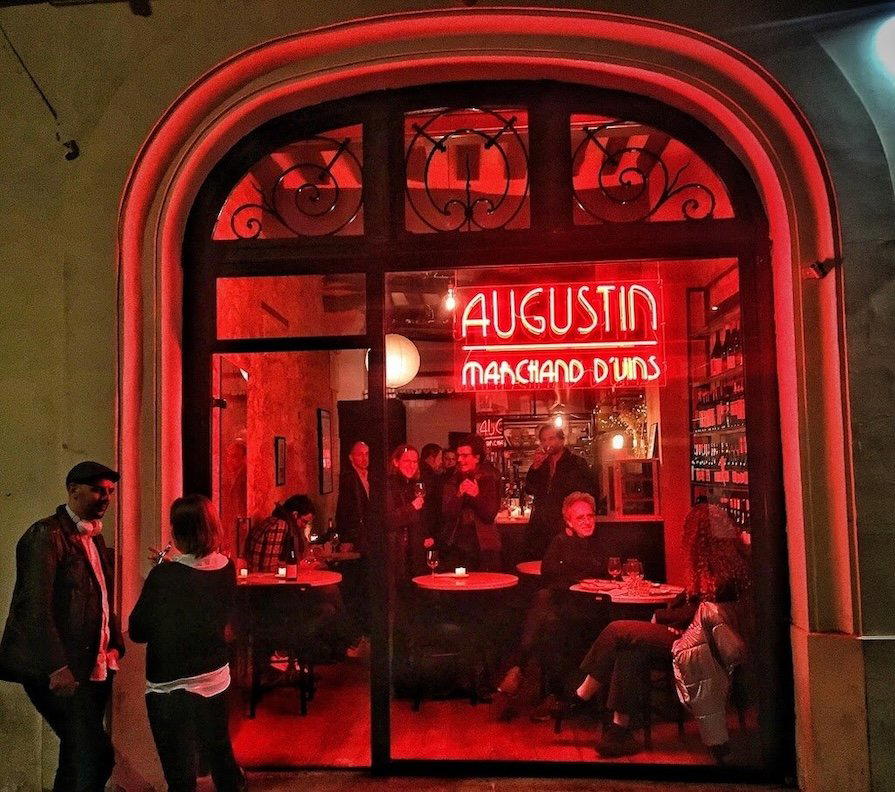
Relaxed corner café with 1950s-style bar, big windows, green plants, and lively terrace seating.