On Rue Beaubourg at the edge of the Marais, Café Mélia occupies a position that places it within one of Paris's most culinarily layered neighbourhoods. The café sits between the grand-institution dining of the Right Bank and the more casual, market-driven eating that defines the 3rd arrondissement's daily rhythm. For visitors mapping a morning or afternoon in the area, it offers a grounded, neighbourhood-scale counterpoint to the city's more formal dining tier.
Pearl is the En Primeur Club membership app — saves, bookings, and concierge access live there. Same editors, same standards.
- Address
- 39 Rue Beaubourg, 75003 Paris, France
- Phone
- +33974640911
- Website
- cafemeliaparis.fr
- Directions
- Get directions
 Saves & bookings on Pearl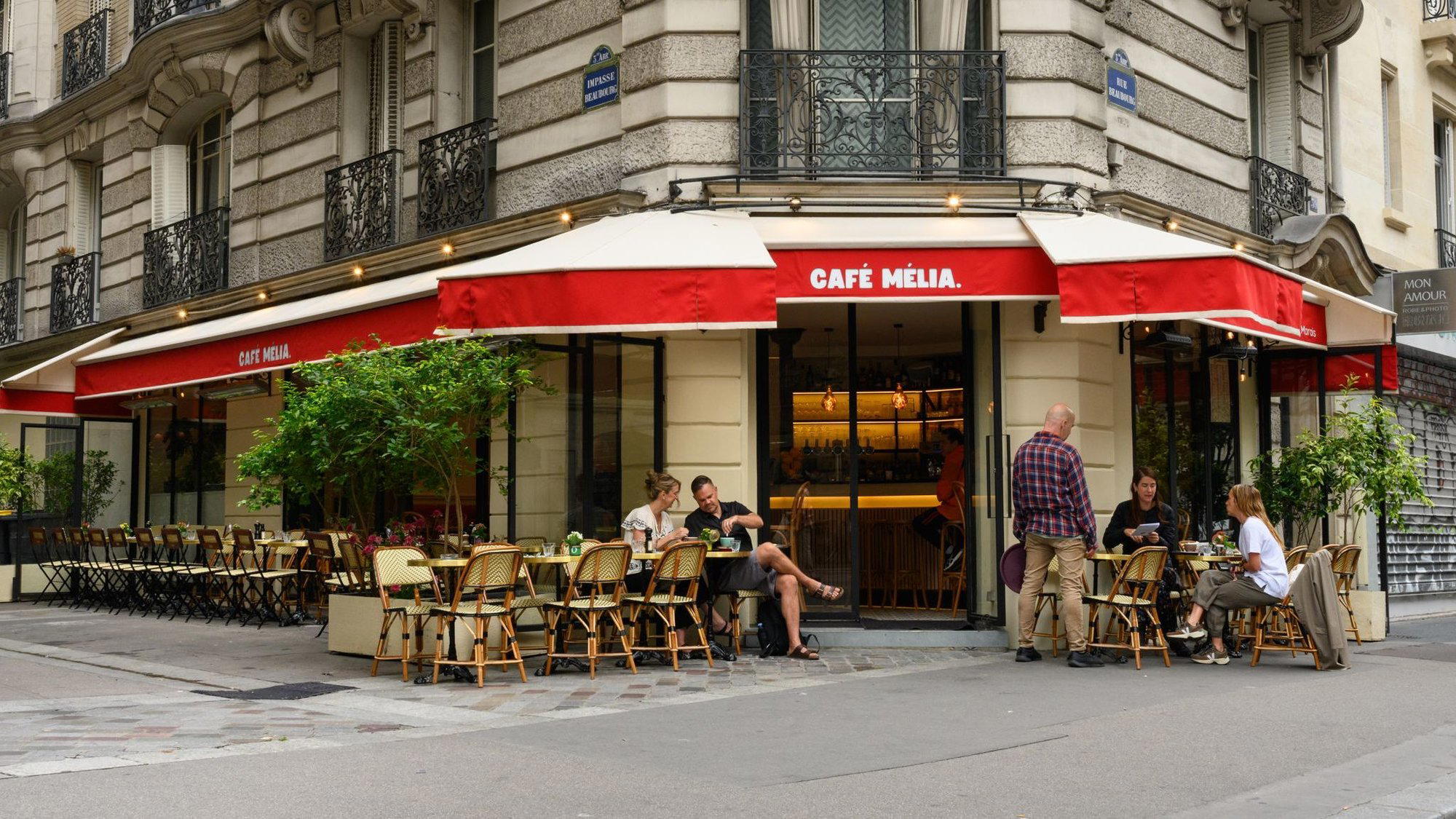
Where the Marais Meets the Morning
Rue Beaubourg runs along the western edge of the Marais, threading between the Centre Pompidou's industrial plaza and the quieter residential streets of the 3rd arrondissement. The stretch at number 39 is neither tourist corridor nor hidden side street — it sits in the middle register of Parisian neighbourhood life, where the foot traffic is a mix of locals running errands and visitors oriented by the museum rather than a restaurant reservation. That context matters when reading a café in this location. The Marais has one of the densest concentrations of café culture in Paris, and the offerings range from self-consciously designed third-wave coffee bars to old-school zinc counters where the pastis arrives faster than the menu.
Café Mélia's address places it within walking distance of the Pompidou, which means the surrounding atmosphere shifts by time of day: quieter before the museum opens, busier through midday, and settling back into neighbourhood rhythms by late afternoon. For the Marais specifically, this temporal pattern is worth understanding before you arrive. The 3rd arrondissement moves differently from the 4th — less tourist density, a stronger residential character, and a café culture that still functions primarily for people who live and work nearby.
The Sensory Register of a Marais Café
Parisian café culture has a physical grammar that is consistent enough to be read even before you sit down. At street level, the visual markers are familiar: metal chairs angled toward the pavement, a chalkboard with the day's specials, a bar counter visible through the window with the coffee machine as centrepiece. What differentiates one café from another in a neighbourhood like the Marais is more often atmospheric than architectural, the quality of light in the afternoon, the sound mix of conversation and espresso grind, whether the interior feels oriented toward lingering or toward quick turnover.
The 3rd arrondissement's café interiors tend toward the unfussy. This is not the gilded brasserie tradition of the grands boulevards, nor the aggressively minimal aesthetic of the newer specialty coffee openings further east in the 10th and 11th. The middle register that characterises much of the Marais café scene involves worn tile, modest zinc, and a pace that accommodates both the espresso-at-the-bar regulars and the longer lunch crowd. That sensory environment, unhurried, neighbourhood-scaled, lit by whatever the day's weather provides, is the dominant mode in this part of Paris.
How Café Culture in This Part of Paris Works
France's café tradition is not primarily a food story, though food is always present. It is a social infrastructure story: the café as the place where the day is organised, where solitary reading and group conversation coexist without friction, where the same table can function as breakfast counter at 8am and wine pause at 6pm. In the Marais, that tradition sits alongside a food culture that has evolved considerably over the past decade. The neighbourhood now contains some of the city's more serious contemporary bistros, a strong falafel and Jewish deli corridor on Rue des Rosiers, and a growing number of wine-forward natural wine bars concentrated near the Marché des Enfants Rouges.
A café on Rue Beaubourg is positioned at the calmer end of that spectrum. The area's proximity to the Pompidou brings an international visitor flow, but the 3rd arrondissement retains enough residential mass that neighbourhood cafés function for locals as a primary use case, with visitors secondary. That ordering affects everything from the speed of service to the composition of the menu, breakfast and lunch formats that serve the working week, rather than elaborate tasting menus calibrated for destination dining.
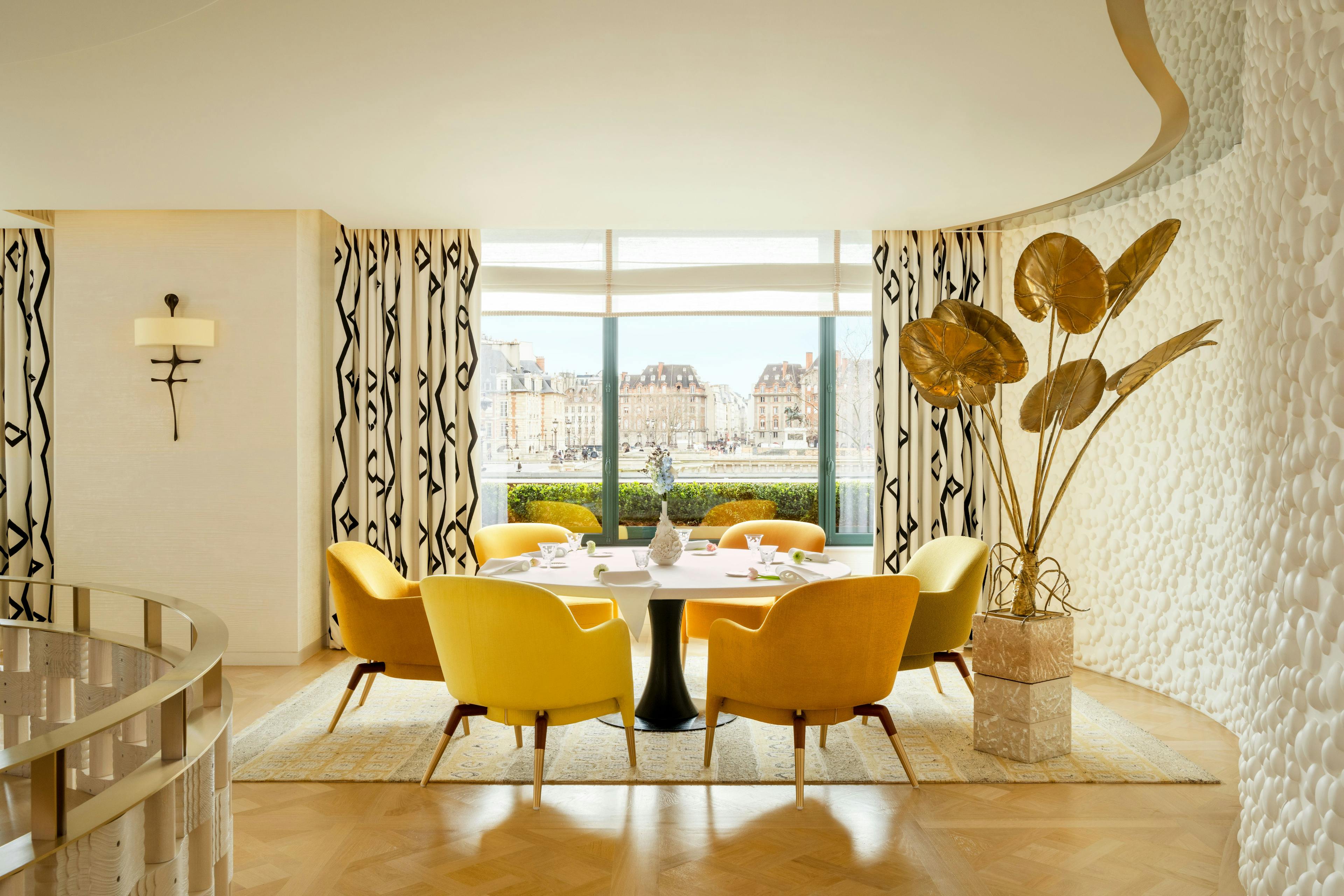
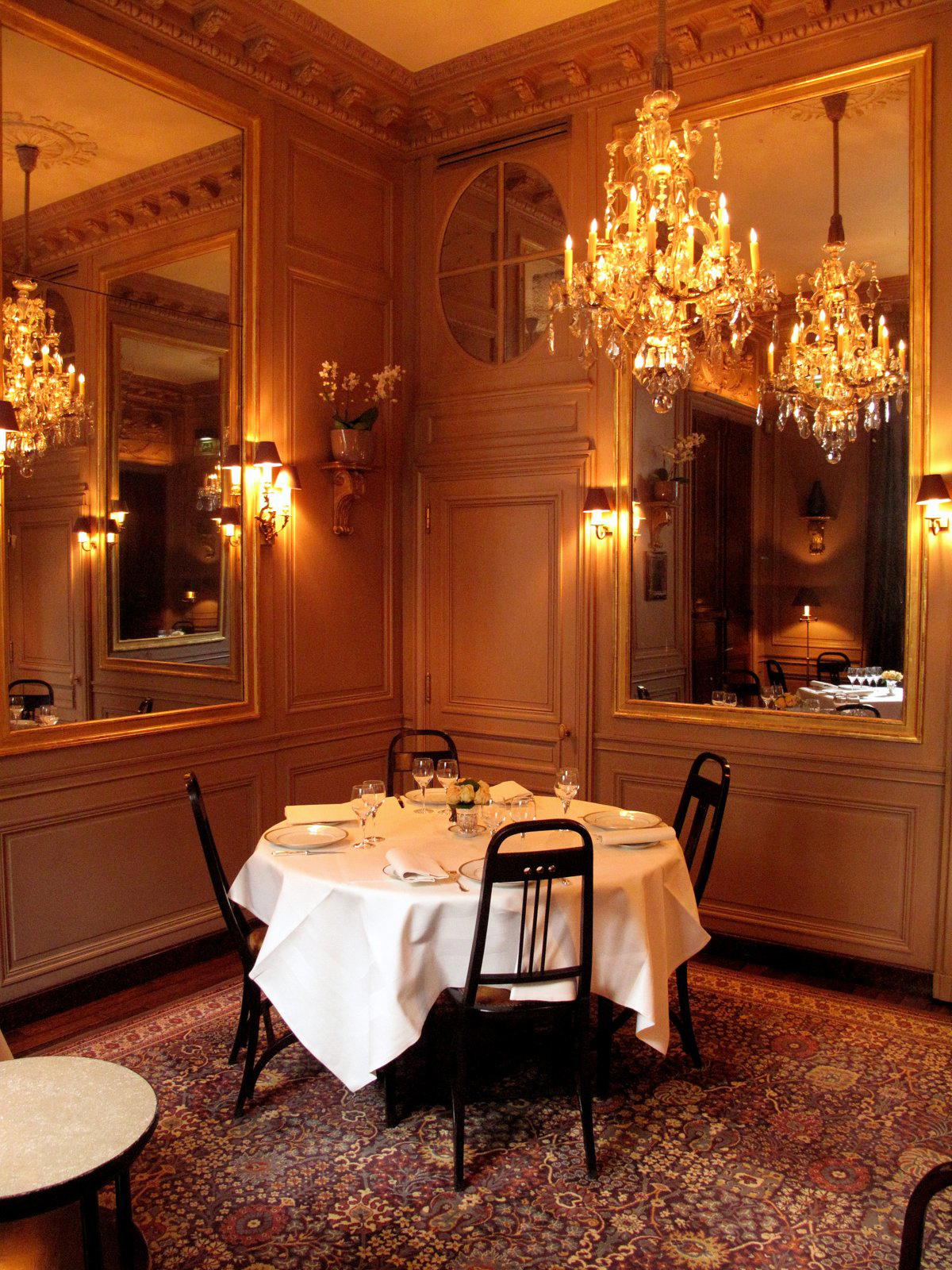
For visitors more interested in the formal dining tier that Paris is internationally associated with, the Right Bank options within broader reach include L'Ambroisie on the Place des Vosges in the 4th, one of the city's most formally composed dining rooms in a category of classic French cuisine, and Kei in the 1st, which represents a distinct strand of contemporary French cooking shaped by Japanese technique. Further afield, the city's most decorated kitchens include Alléno Paris au Pavillon Ledoyen and Le Cinq at the Four Seasons Hôtel George V, both operating at the summit of the city's formal dining register. See our full Paris restaurants guide for the broader picture across price points and arrondissements.
Situating the Café Within French Dining More Broadly
France's dining culture has always operated across multiple registers simultaneously, and it is worth placing neighbourhood café dining in that context. The country's marquee restaurant tradition, represented by places like Arpège in Paris, Mirazur in Menton, or Troisgros in Ouches, is well documented and internationally recognised. The regional anchor institutions like Paul Bocuse's Auberge du Pont de Collonges, Bras in Laguiole, Auberge de l'Ill in Alsace, Les Prés d'Eugénie in Eugénie-les-Bains, La Table du Castellet in Provence, Georges Blanc in Vonnas, Flocons de Sel in Megève, and Auberge du Vieux Puits in Fontjoncouse, define the destination-dining stratum that visitors plan entire itineraries around. The café is the other end of that same culture: the daily, unreserved, unpretentious infrastructure that makes French food culture durable rather than merely aspirational. It is also, for many visitors who arrive from cities like New York or San Francisco, where venues like Le Bernardin and Lazy Bear represent the formal dining extreme, the more immediately accessible register of French food culture.
Planning a Visit
The Marais is well served by public transport. Rambuteau (line 11) and Arts et Métiers (lines 3 and 11) are both within comfortable walking distance of Rue Beaubourg, and the area is navigable on foot from much of central Paris. Morning visits align with the neighbourhood's residential rhythm; lunchtime brings a broader mix that includes museum visitors from the Pompidou.
Quick reference: Café Mélia, 39 Rue Beaubourg, 75003 Paris. Nearest metro: Rambuteau (line 11). Verify current hours and availability directly with the venue.
How Café Mélia Paris compares with similar nearby venues.
| Venue | Cuisine | Price |
|---|---|---|
| Ambassade d’Auvergne | Auvernyat | Not listed |
| Le Mazenay | Farm to table | €€ |
| Auberge Nicolas Flamel | French, Modern Cuisine | €€€ |
Continue exploring
More in Paris
Restaurants in Paris
Browse all →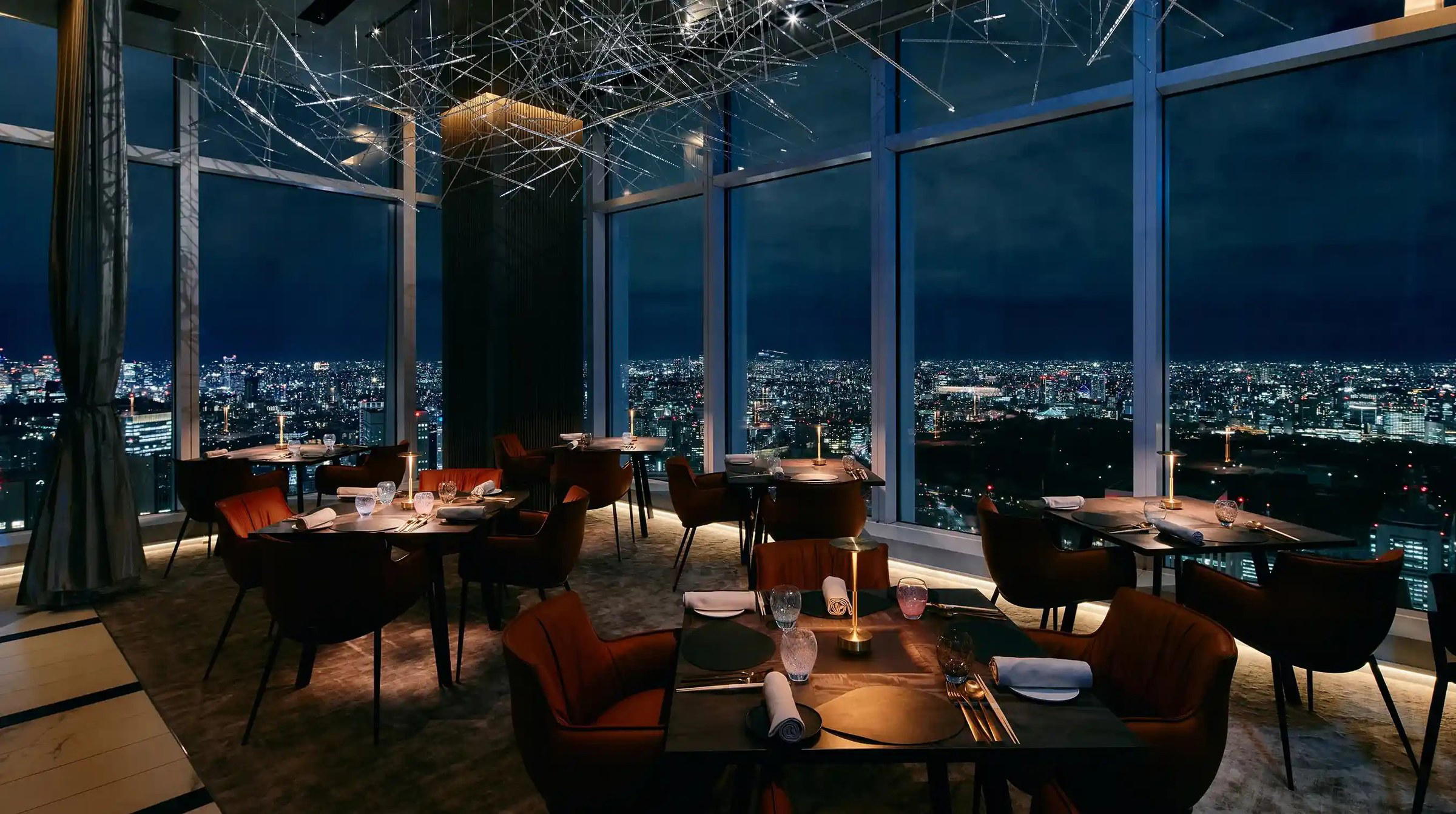
Bars in Paris
Browse all →
Hotels in Paris
Browse all →



At a Glance
- Lively
- Cozy
- Classic
- Intimate
- Energetic
- Casual Hangout
- Group Dining
- After Work
- Brunch
- Late Night
- Private Event
- Standalone
- Private Dining
- Historic Building
- Craft Cocktails
- Zero Proof
- Beer Program
- Street Scene
Current opening hours
- Monday
- 9 AM–12 AM
- Tuesday
- 9 AM–12 AM
- Wednesday
- 9 AM–1 AM
- Thursday
- 9 AM–1 AM
- Friday
- 9 AM–1 AM
- Saturday
- 10 AM–1 AM
- Sunday
- 11:30 AM–9 PM
Hours can change for holidays and private events. Last verified .
Warm, friendly, and lively brasserie atmosphere with a polished yet casual feel; the venue emphasizes a cozy, welcoming setting for all-day dining and cocktails.