Bistro V occupies a Boulevard de Port-Royal address in Paris's 5th arrondissement, placing it within walking distance of the Luxembourg Gardens and the dense restaurant culture of the Left Bank. The bistro format here sits within a Parisian dining tradition that values precision over theatrics, making it a reference point for the neighbourhood's quieter, table-cloth-and-chalkboard register.
Pearl is the En Primeur Club membership app — saves, bookings, and concierge access live there. Same editors, same standards.
- Address
- 56 Bd de Port-Royal, 75005 Paris, France
- Phone
- +33145353531
- Website
- lebistrov.fr
- Directions
- Get directions
 Saves & bookings on Pearl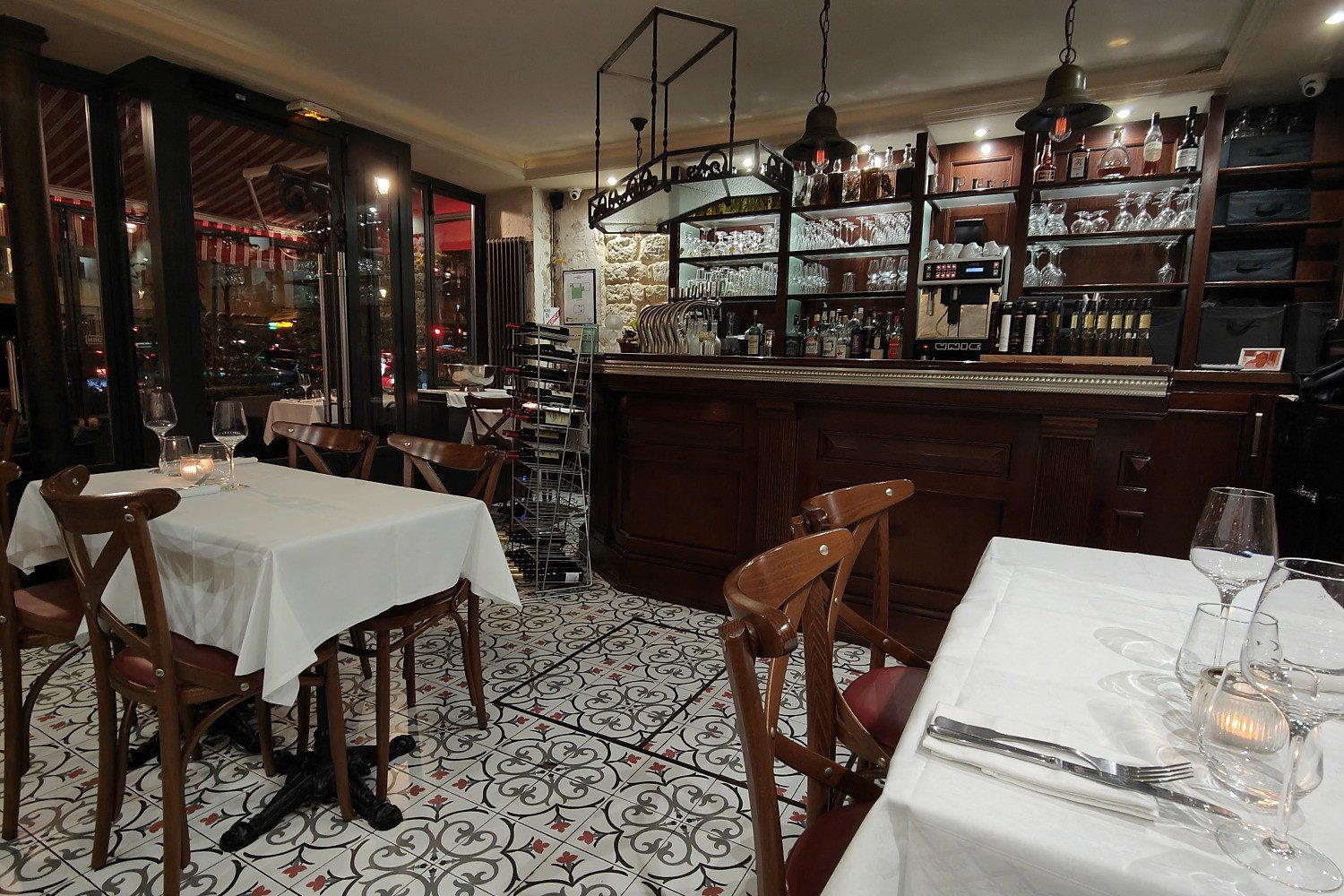
The Left Bank Register: Where Port-Royal Meets the Bistro Tradition
Boulevard de Port-Royal runs through the 5th arrondissement with the unhurried confidence of a street that has never needed to announce itself. The southern edge of the Latin Quarter bleeds into the 13th here, and the restaurant culture along this stretch reflects that in-between quality: fewer tourist menus, more neighbourhood rhythm, and a dining pace set by the kind of Parisian who eats out on a Tuesday without considering it an occasion. Bistro V at number 56 sits inside that register, a Left Bank address that positions it within one of the city's most coherent bistro traditions rather than among the Michelin-flagged dining rooms of the Right Bank or Saint-Germain's self-conscious gastronomy corridor.
The bistro format in Paris has undergone a slow, contested renovation over the past two decades. The classic zinc counter, the handwritten plat du jour, the carafe of house Burgundy — these remain, but they now coexist with a younger generation of cooks who trained in serious kitchens and chose the bistro frame deliberately, not by default. That tension between inherited form and applied technique defines much of what makes Left Bank dining interesting at this price tier, and it is the context in which an address like Bistro V makes most sense.
Atmosphere and Setting: What the 5th Arrondissement Sounds Like
The 5th is a neighbourhood that works acoustically. Narrow streets muffle traffic. Markets on Rue Mouffetard operate at a volume calibrated to conversation rather than transaction. By the time a dining room on Port-Royal fills mid-evening, the background register is compact tables, ceramic on marble, and French spoken at a pace that does not perform itself. These are not incidental details; they are the atmospheric infrastructure of a certain kind of Paris meal, one that does not require spectacle because the setting provides enough texture on its own.
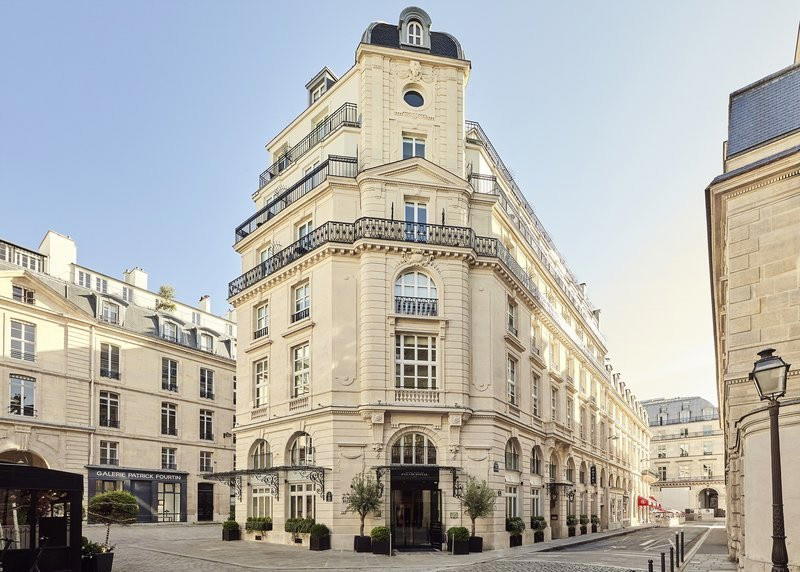
Bistro V's position on a boulevard rather than a side street means a slightly different sensory proposition: the haussmannian scale of the road, the plane trees that line this part of the 5th, and the proximity of the Val-de-Grâce dome visible from certain angles southward. Boulevard dining in Paris carries its own specific character, distinct from the tucked-in courtyard or the hidden passage. There is a directness to it, a plainness of address that signals confidence rather than coyness.
Where Bistro V Sits in the Paris Dining Spectrum
Paris's restaurant tiers are more clearly stratified than in almost any other city. At the upper end, addresses like L'Ambroisie on Place des Vosges and Alléno Paris au Pavillon Ledoyen operate at €€€€ with the full weight of Michelin recognition and decades of institutional credibility. One tier below, restaurants like Kei and Le Cinq at the Four Seasons George V occupy a contemporary French register that blends technical ambition with a degree of formal structure. The bistro tier, where Bistro V operates, is lower in ceremony and often more interesting for it: the kitchen has less to prove on a conceptual level and more room to focus on what the French call justesse, the quality of getting things exactly right without excess.
Within France more broadly, the contrast is equally instructive. The destination restaurants that draw international visitors tend to anchor rural or semi-rural addresses: Mirazur in Menton, Flocons de Sel in Megève, Troisgros in Ouches, Bras in Laguiole, or the long-established grandeur of Paul Bocuse near Lyon and Auberge de l'Ill in Alsace. Against that tradition of the grande maison embedded in landscape and local produce, the Paris bistro operates on entirely different logic: density, convenience, and a relationship with its neighbourhood rather than its terroir.
Further afield, the French bistro format has been adapted with varying fidelity in cities like New York, where Le Bernardin represents the French fine-dining transplant at its most sustained, and San Francisco, where a place like Lazy Bear shows how American kitchens have absorbed French structural discipline into entirely different cultural contexts. The Parisian original remains the reference point precisely because it operates within the social infrastructure that produced it.
The Cuisine Question: What Left Bank Bistro Cooking Actually Means
French bistro cooking at its most coherent is not simplified fine dining. It is a distinct mode with its own hierarchy of values: the quality of the base stock, the timing of a sauce reduction, the sourcing of butter and eggs, the decision about how much garnish a plate actually needs. The Left Bank's bistro culture has historically prized this kind of technical fundamentalism over novelty, which is why the neighbourhood continues to attract serious cooks who want to practice the form without the pressure of a multi-course tasting menu structure.
For a broader view of how this restaurant sits within the city's dining map, see our full Paris restaurants guide, which covers the range from three-star addresses to neighbourhood tables across all arrondissements. Comparable traditions of regional anchoring and technique-first cooking are visible at places like Georges Blanc in Vonnas, Auberge du Vieux Puits in Fontjoncouse, Les Prés d'Eugénie in Eugénie-les-Bains, and La Table du Castellet in Provence. Each of these represents a regional expression of the same underlying commitment to French culinary order; Bistro V translates that commitment into an urban, neighbourhood-scaled format. The Arpège model, with its vegetable-forward philosophy and rue de Varenne address, offers the closest point of comparison within Paris itself for a kitchen that treats simplicity as a discipline rather than a compromise.
Planning Your Visit
Bistro V is located at 56 Boulevard de Port-Royal, 75005 Paris, in the southern 5th arrondissement. The nearest metro stations are Port-Royal on line B of the RER (a 2-minute walk) and Les Gobelins on line 7. The neighbourhood is walkable from the Luxembourg Gardens in approximately 10 minutes. Reservations: Contact directly via the address above; no booking platform or website is currently listed in available records, so walk-in or phone reservation is the operative approach. Dress: No formal dress code is documented; the boulevard bistro context suggests smart-casual. Budget: Price range is not confirmed in available records; expect Left Bank bistro pricing, broadly in the €30-60 per person range for a full meal with wine, though this is a general reference for the category rather than a confirmed figure.
Budget and Context
A short peer table to compare basics side-by-side.
| Venue | Cuisine | Price | Awards |
|---|---|---|---|
| Bistro VThis venue — the venue you are viewing | Not listed | Not listed | Not listed |
| Alléno Paris au Pavillon Ledoyen | Creative | €€€€ | Michelin 3 Star |
| Kei | Contemporary French, Modern Cuisine | €€€€ | Michelin 3 Star |
| L'Ambroisie | French, Classic Cuisine | €€€€ | Michelin 3 Star |
| Le Cinq - Four Seasons Hôtel George V | French, Modern Cuisine | €€€€ | Michelin 3 Star |
| Pierre Gagnaire | French, Creative | €€€€ | Michelin 3 Star |
Continue exploring
More in Paris
Restaurants in Paris
Browse all →
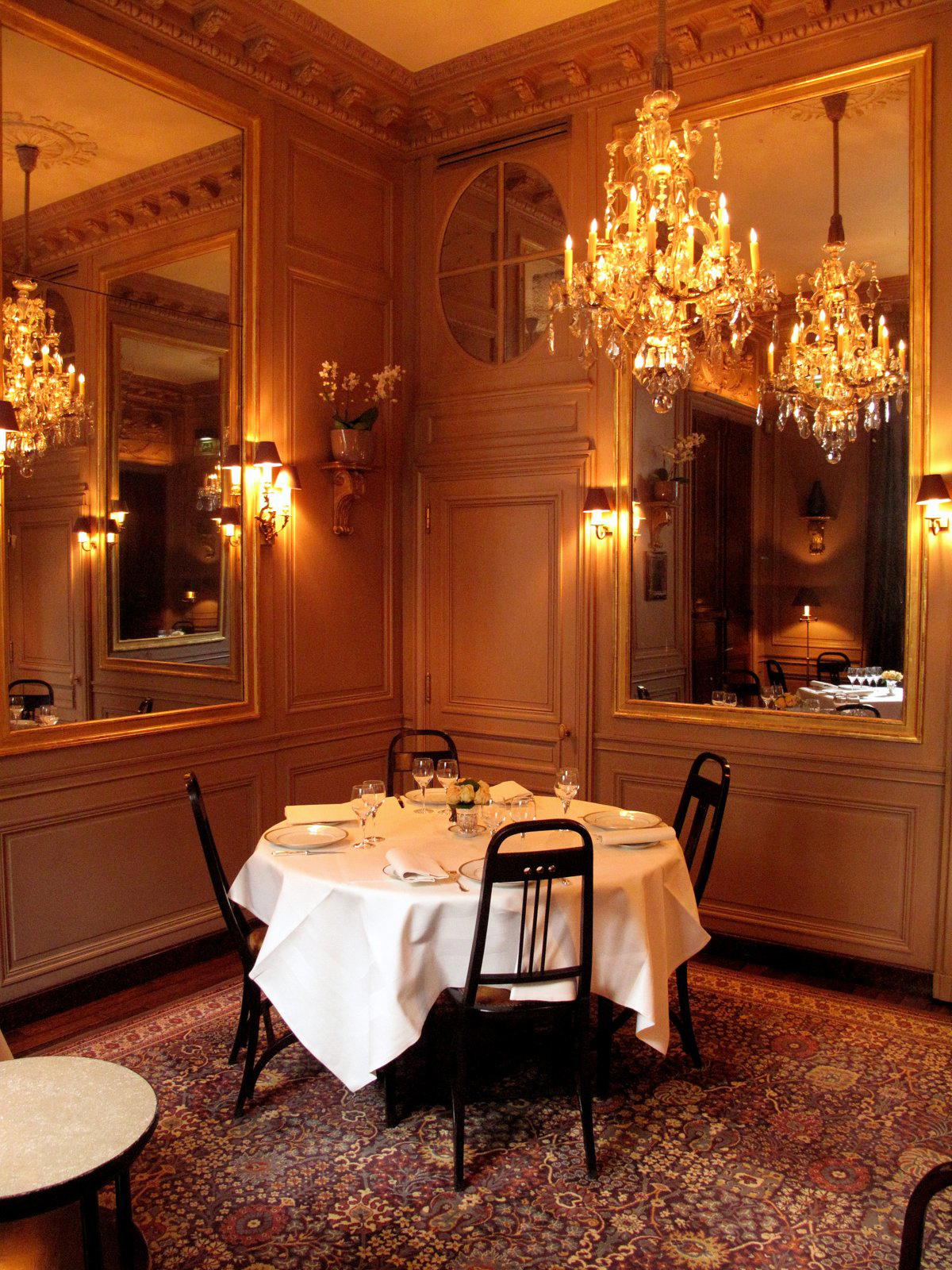
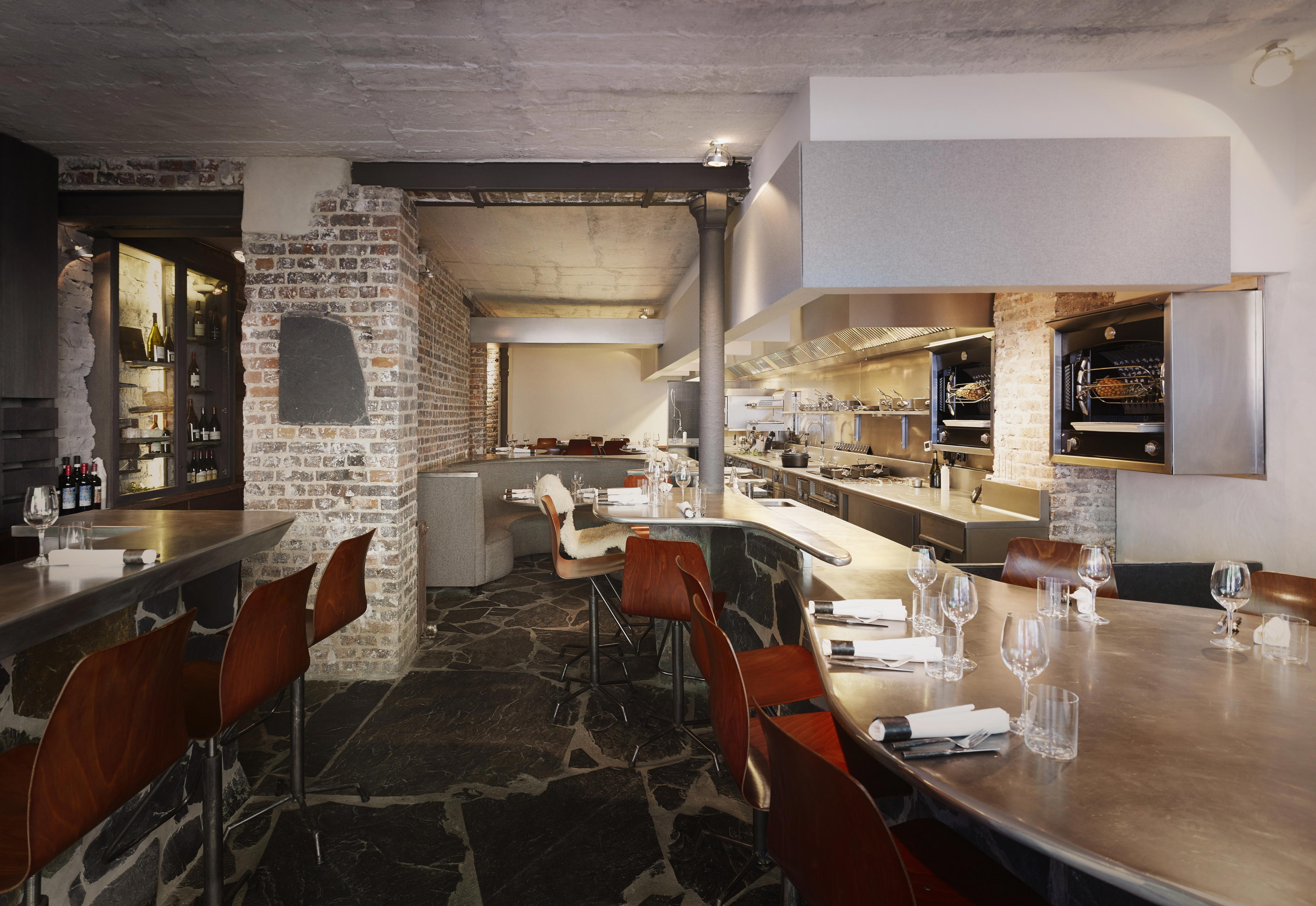
Bars in Paris
Browse all →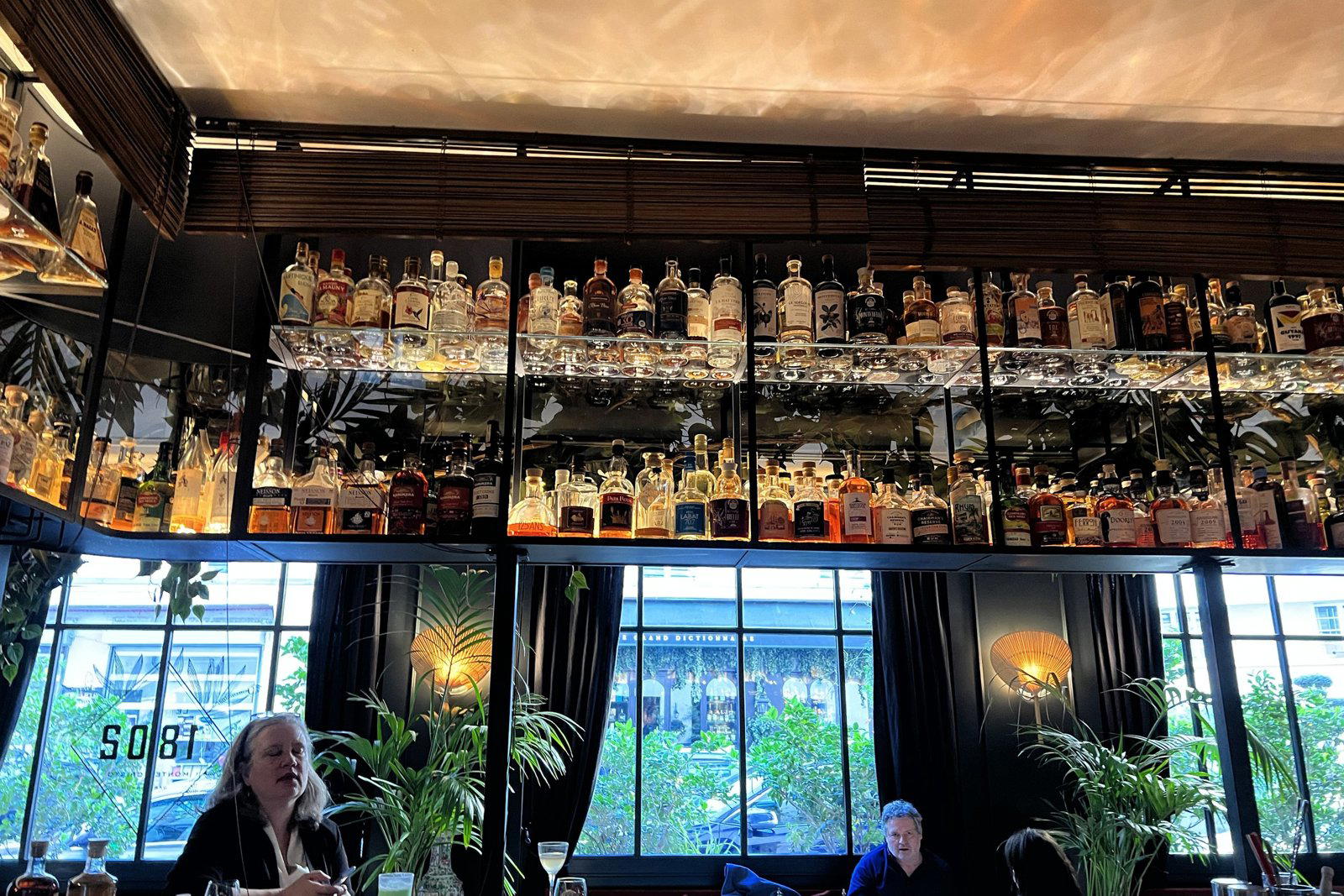
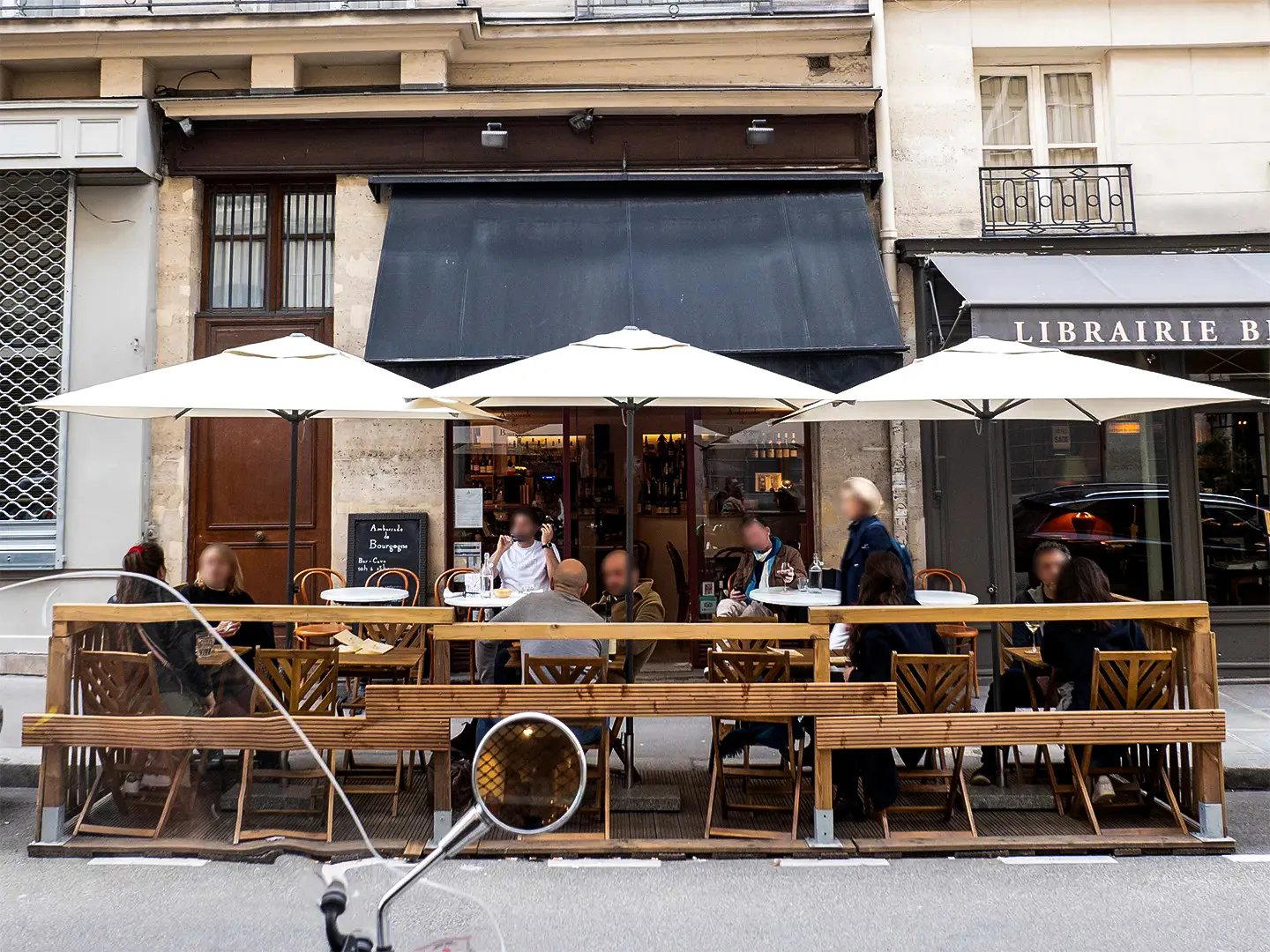
Hotels in Paris
Browse all →





At a Glance
- Cozy
- Elegant
- Intimate
- Date Night
- Special Occasion
- Standalone
- Extensive Wine List
Current opening hours
- Monday
- 7 PM–12 AM
- Tuesday
- 7 PM–12 AM
- Wednesday
- 7 PM–12 AM
- Thursday
- 7 PM–12 AM
- Friday
- 7 PM–12 AM
- Saturday
- 7 PM–12 AM
- Sunday
- 7 PM–12 AM
Hours can change for holidays and private events. Last verified .
Warm and friendly with an inviting, cozy vibe.
Know Before You Go
- Getting there
- 56 Bd de Port-Royal, 75005 Paris, France