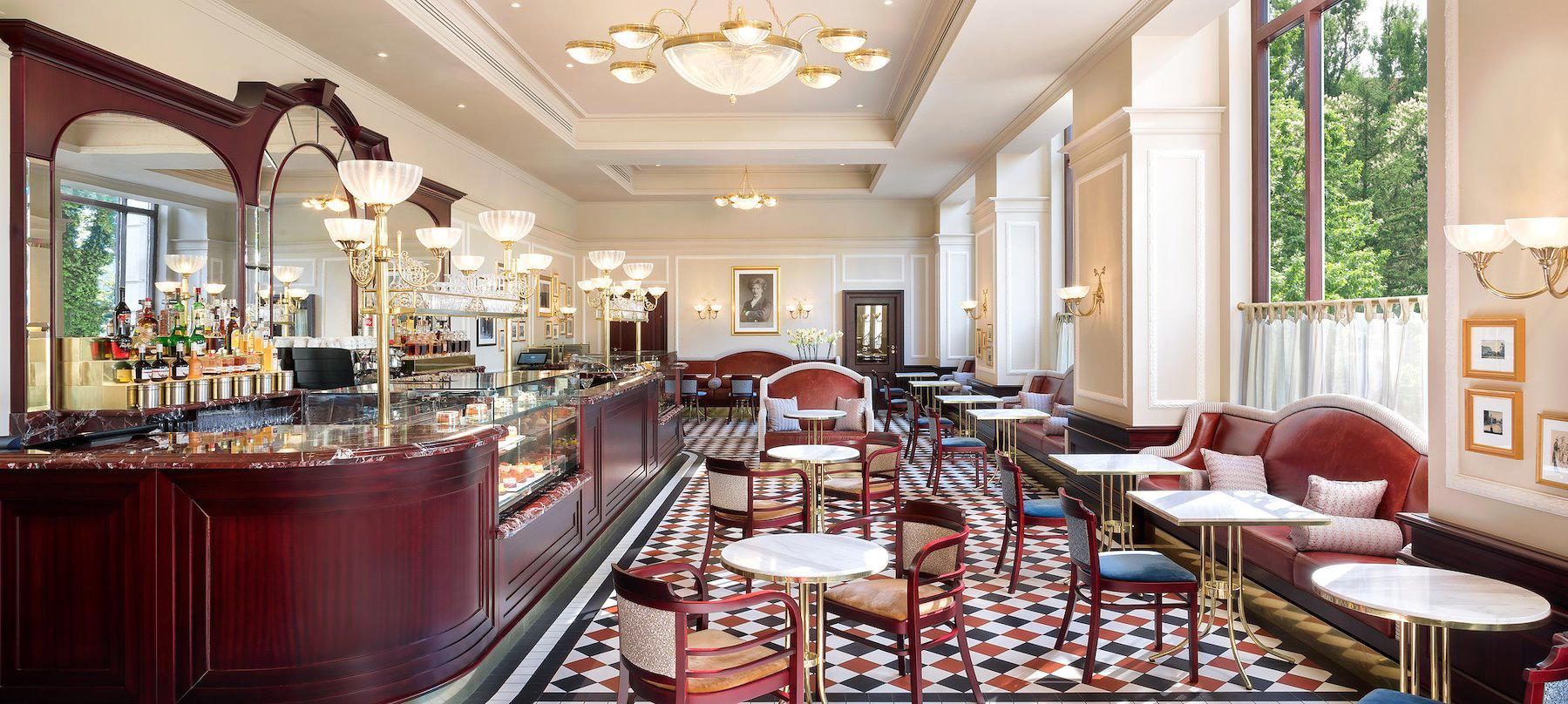
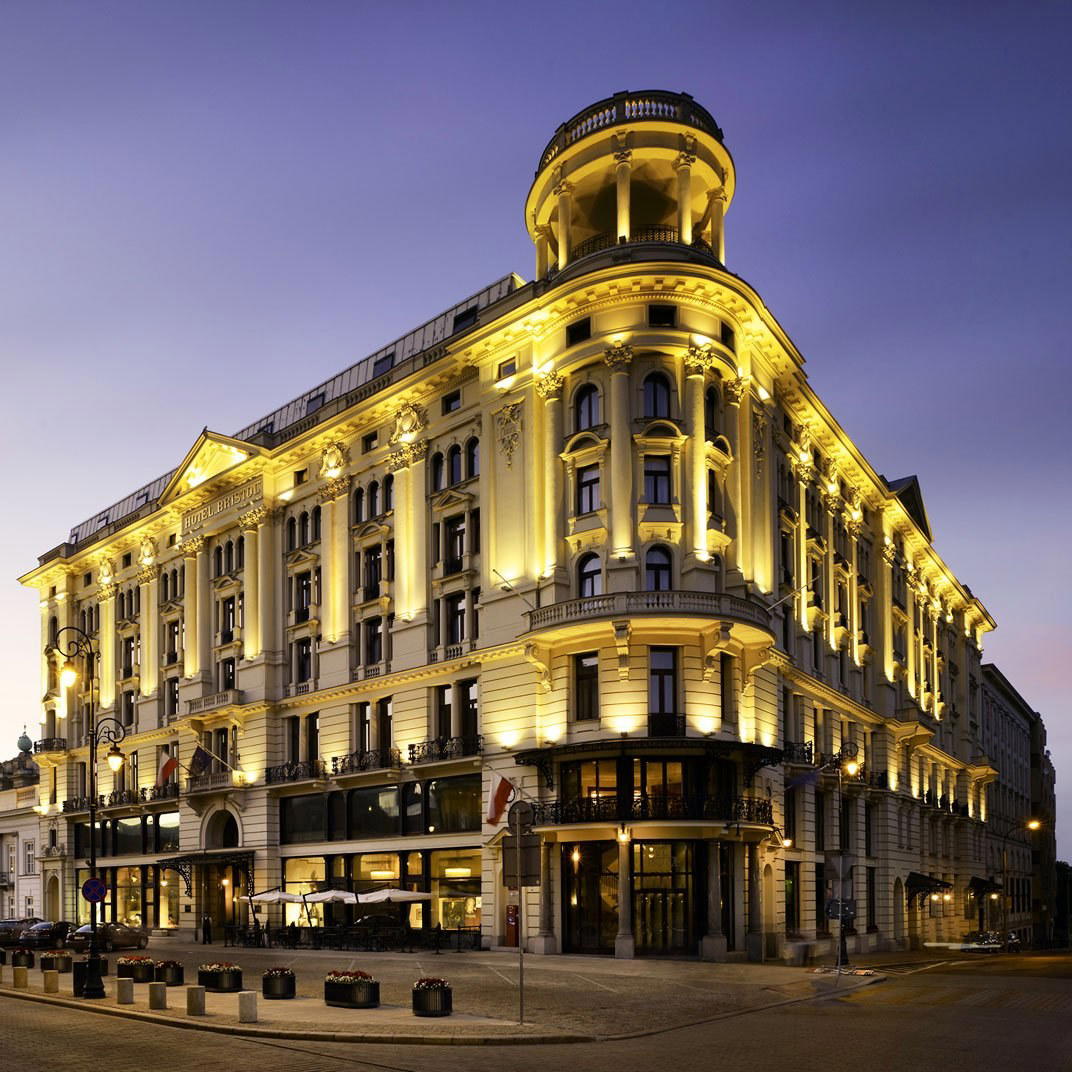
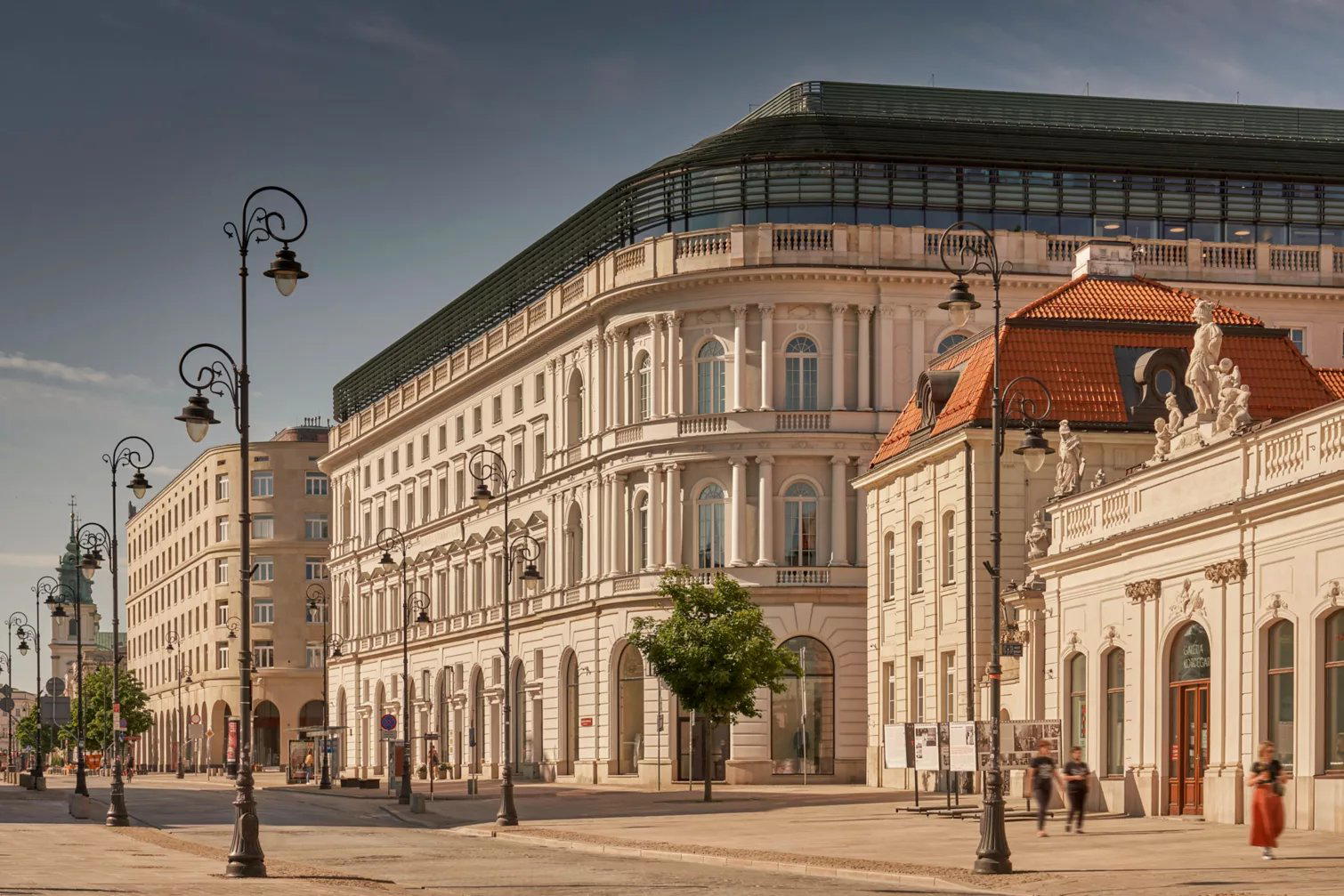
On Krakowskie Przedmieście, Warsaw's most ceremonial boulevard, Café Bristol occupies a position that regulars treat less as a restaurant choice and more as a civic habit. The address alone carries decades of social weight, drawing a clientele that returns not for novelty but for continuity, the kind of place where the room itself is part of the order.
 Discover on Pearl
Pearl is the En Primeur Club membership app — saves, bookings, and concierge access live there. Same editors, same standards.
- Address
- Krakowskie Przedmieście 42/44, 00-325 Warszawa, Poland
- Phone
- +48225511828
- Website
- cafebristol.pl
The Address That Precedes the Menu
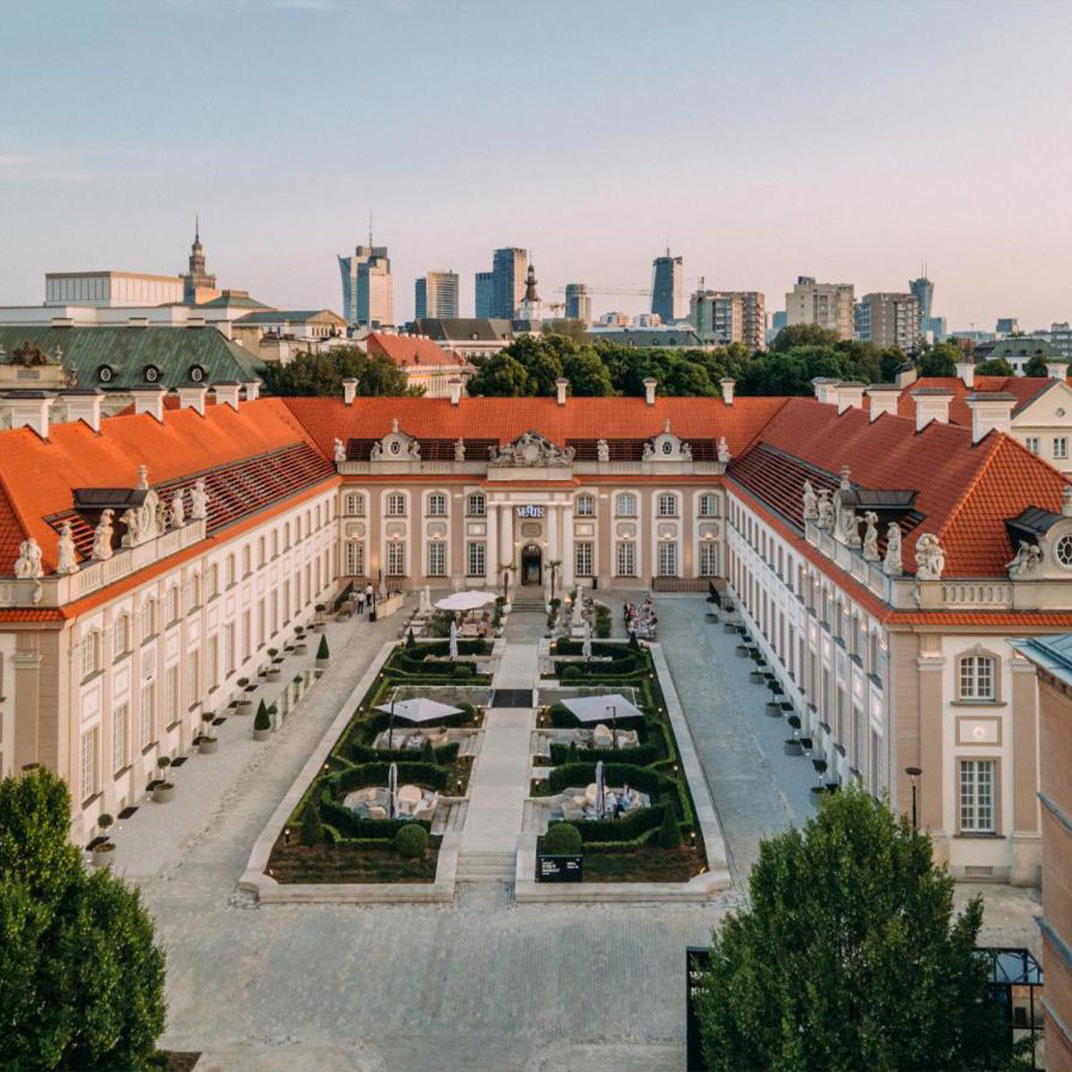
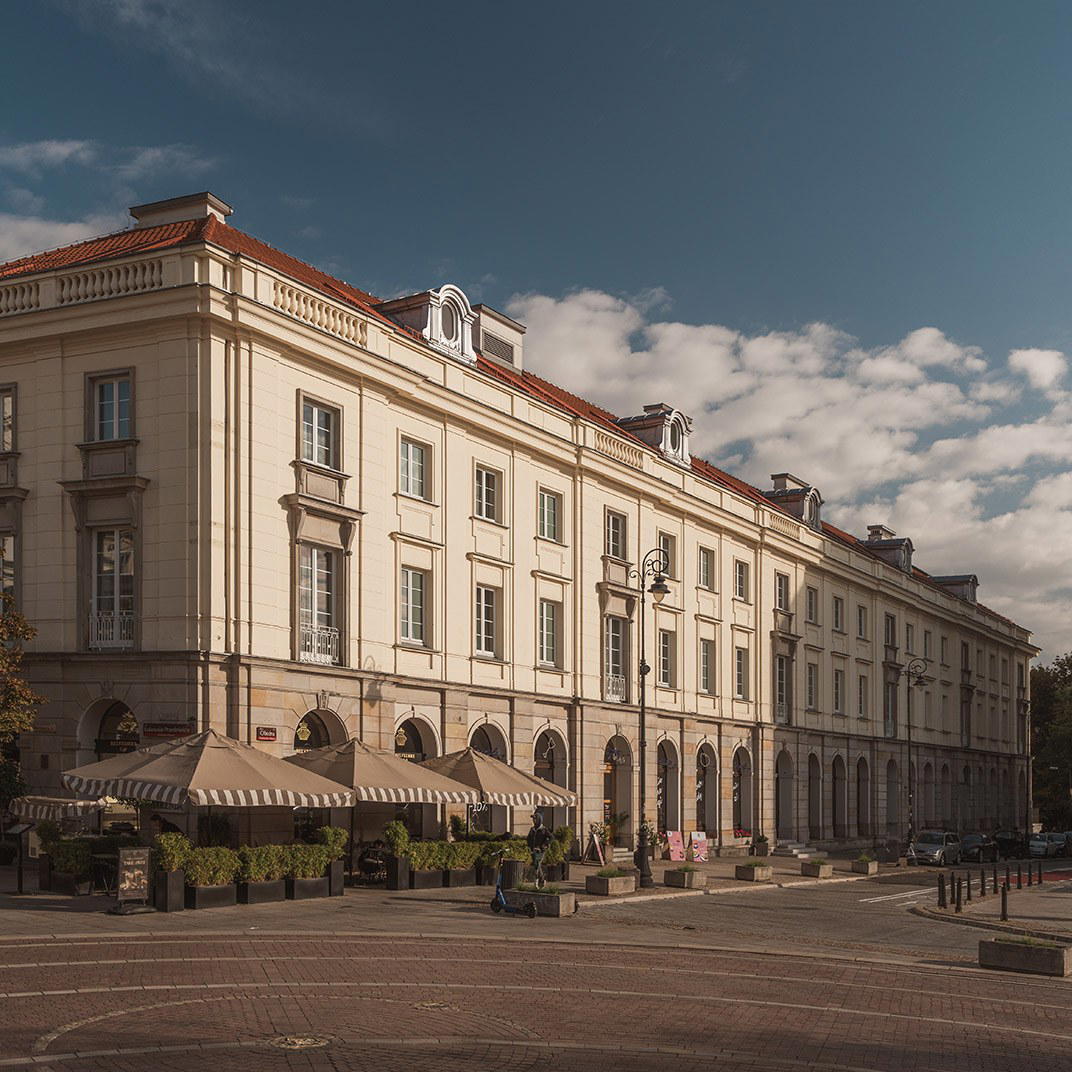
Krakowskie Przedmieście is not a street where restaurants compete for attention in the usual sense. The boulevard runs from the Old Town toward the university quarter, lined with palaces, embassies, and hotels whose facades have been reconstructed, bombed, and restored across a century of upheaval. Café Bristol sits within this address at number 42/44, and the building's history operates as a kind of ambient credential, the kind that requires no signage to communicate. For the regulars who have been coming here for years, the choice of this room over any other in Warsaw is itself a statement about what kind of occasion they believe they are having.
Warsaw's dining scene has shifted considerably over the past decade. The city now holds serious representation across modern Polish cooking, with venues like NUTA (Creative) and hub.praga (Modern Cuisine) pushing the city's culinary ambitions into genuinely experimental territory. At the other end of the contemporary spectrum, alewino (Modern Polish, Traditional Cuisine) and Rozbrat 20 (Modern European, Modern Cuisine) serve a clientele that wants craft and intention without theatrical presentation. Café Bristol occupies a different category altogether: the grand café tradition, where the room's architectural register sets a tone that the food and service are expected to sustain, not surpass.
What the Regulars Are Actually Ordering
The regulars' relationship with a venue like this is rarely about discovery. In the grand café tradition, a format with deep roots across Central European cities, from Vienna's coffeehouses to Budapest's historic hotel dining rooms, the appeal is the opposite of novelty. Patrons return because the experience is calibrated, because they know where the light falls in the afternoon, because the staff remember their preferences, because the room looks the same as it did on the occasion that first mattered to them. This is a dining culture built on repetition as a form of connoisseurship, not habit as a failure of imagination.
In Warsaw specifically, this dynamic carries extra weight. The city was largely destroyed in the Second World War and rebuilt over decades; the pre-war institutions that survived, or were painstakingly restored, carry a cultural function that newer restaurants simply cannot replicate. A café on Krakowskie Przedmieście is not competing primarily with Baken or the city's newer bistro formats. It occupies a separate tier in the local imagination, one where continuity and physical grandeur are the primary offering, and where the food is expected to be competent and considered rather than agenda-setting.
How Café Bristol Fits the City's Dining Map
Warsaw's premium dining tier has diversified substantially. The city now draws comparisons, at least in ambition, with the kind of focused culinary investment visible at Bottiglieria 1881 Restaurant in Kraków or Muga in Poznań, venues where the tasting menu format and sourcing philosophy carry the editorial weight. Café Bristol does not operate in that register. Its competitive set is the city's heritage hotel dining rooms and upscale café-restaurants, a category where the guest is paying partly for the address, partly for the service standard, and partly for the sense that the occasion has been properly framed.
That framing matters in Warsaw in a way that can be difficult to articulate to visitors arriving from cities with unbroken institutional continuity. The Polish capital's history means that places carrying genuine pre-war lineage, or plausible architectural continuity with that era, hold a social significance that goes beyond restaurant classification. For a certain generation of Warsaw regulars, Café Bristol is not primarily a food destination; it is a room that helps them locate themselves in the city's longer story.
Poland's broader dining geography reinforces how distinct Warsaw's heritage café tier really is. Coastal venues like Arco by Paco Pérez in Gdańsk and La Cucina Ristorante in Gdansk operate in entirely different social and architectural registers. Mountain dining at Giewont in Kościelisko serves a leisure-travel clientele with different expectations entirely. The heritage boulevard café is, within Poland's dining culture, largely a Warsaw phenomenon, and within Warsaw, largely concentrated on or near Krakowskie Przedmieście.
Planning Your Visit
The address, Krakowskie Przedmieście 42/44, places Café Bristol within walking distance of the Royal Castle and the Old Town, making it a natural anchor for mornings or afternoons spent in the historic centre. The boulevard is served by multiple tram and bus lines, and the surrounding area is one of the more walkable parts of central Warsaw. For visitors staying elsewhere in the city, the location doubles as a reason to structure a broader itinerary around the Royal Route corridor. Weekend mornings and holiday periods warrant advance planning. Café Bristol is open daily from 8 AM to 7 PM, and reservations are recommended.
Beyond Warsaw: Comparable Experiences in Poland and Abroad
Travellers drawn to heritage dining rooms with strong local identity will find analogues across the EP Club network. Ariel in Krakow trades on a different kind of historical resonance, its Kazimierz address carries the weight of the Jewish quarter's cultural restoration. Bar Przystań in Sopot and OK Wine Bar in Wrocław offer regional counterpoints with their own institutional characters. For international reference points on what grand-room dining can achieve when the kitchen ambition matches the architectural setting, Le Bernardin in New York City and Lazy Bear in San Francisco represent the range of what serious intention looks like in a formal dining room, even if the formats differ considerably. For something closer to the precision-focused end of the Polish dining spectrum, Nare Sushi in Skórzewo and Luneta & Lorneta Bistro Club in Ciekocinko show how culinary ambition has spread well beyond the country's major cities.
Cuisine and Awards Snapshot
Comparable venues nearby, for context on price, style, and recognition.
| Venue | Cuisine | Price | Awards | Notes |
|---|---|---|---|---|
| Café BristolThis venue — the venue you are viewing | Viennese Café & Patisserie | $$$ | , | |
| Szóstka | Modern Seafood Fusion | $$$ | , | Srodmiescie |
| Youmiko Vegan Sushi | Vegan Japanese Sushi | $$$ | , | Muranów |
| Latino Brasserie@Ferdy's | Polish Brasserie | $$$ | , | Osiedle Za Zelazna Brama |
| Poke Bowl Chmielna | Hawaiian Poke Bowls | $$ | , | Srodmiescie |
| Tomo Sushi | Traditional Japanese Sushi | $$ | , | Ujazdow |
At a Glance
- Classic
- Elegant
- Iconic
- Sophisticated
- Cozy
- Casual Hangout
- Brunch
- Date Night
- Solo
- After Work
- Historic Building
- Hotel Restaurant
- Terrace
- Craft Cocktails
- Local Sourcing
- Street Scene
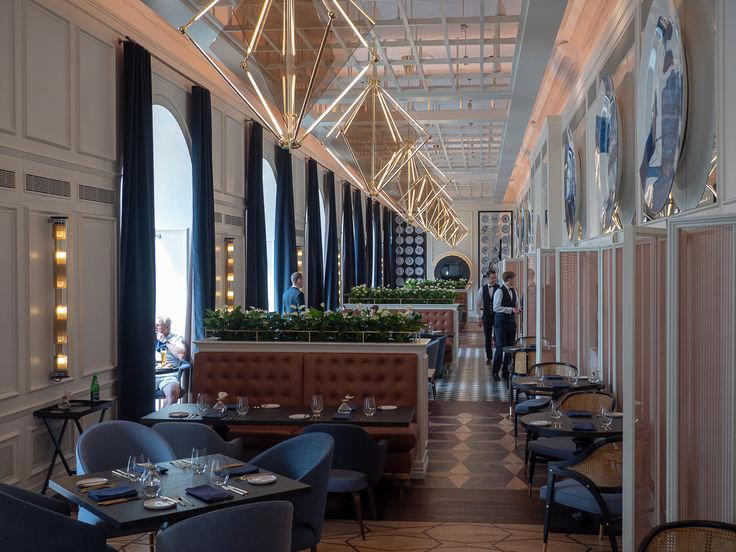
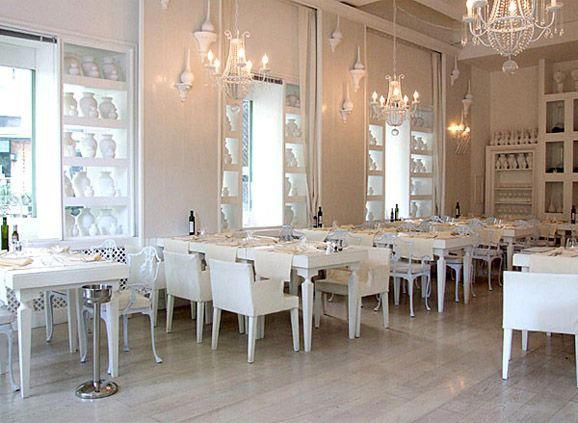
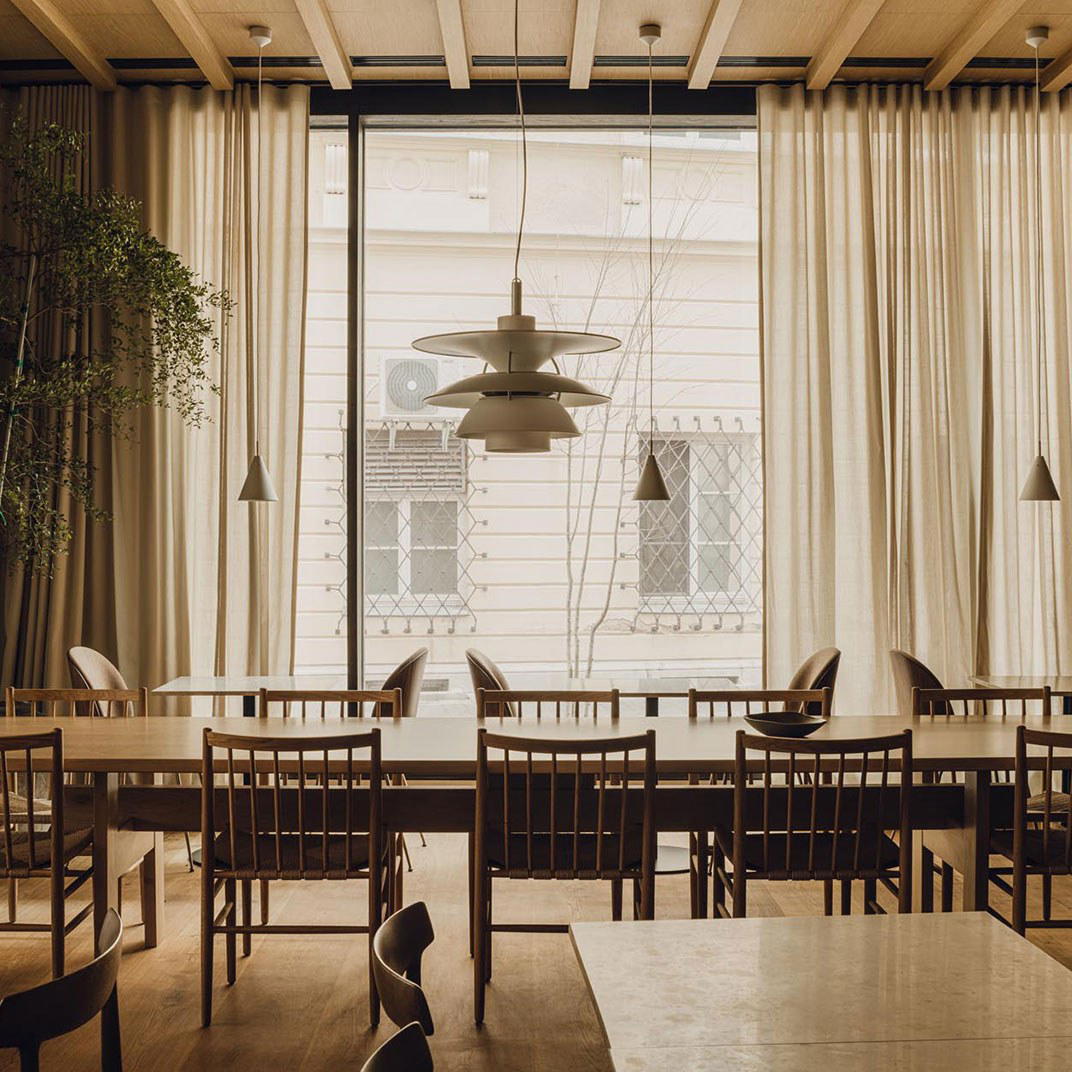
Warm and nostalgic with original Viennese-style interiors, Art Nouveau design, and intimate lighting that evokes early 20th-century elegance.