
Where Dior's couture sensibility meets Pierre Hermé's precision pastry, Café Dior occupies the upper floor of the Dior flagship in Shibuya. Ranked #98 in Opinionated About Dining's Casual Japan list in 2024 and #120 in 2025, it draws a crowd that comes as much for the atmosphere as the pastry counter. Open daily from 10:30am to 8:30pm, it is one of Tokyo's more architecturally considered café stops.
Pearl is the En Primeur Club membership app — saves, bookings, and concierge access live there. Same editors, same standards.
- Address
- Shibuya, Tokyo 150-0001, Japan
- Phone
- +81 3-6263-8131
 Saves & bookings on Pearl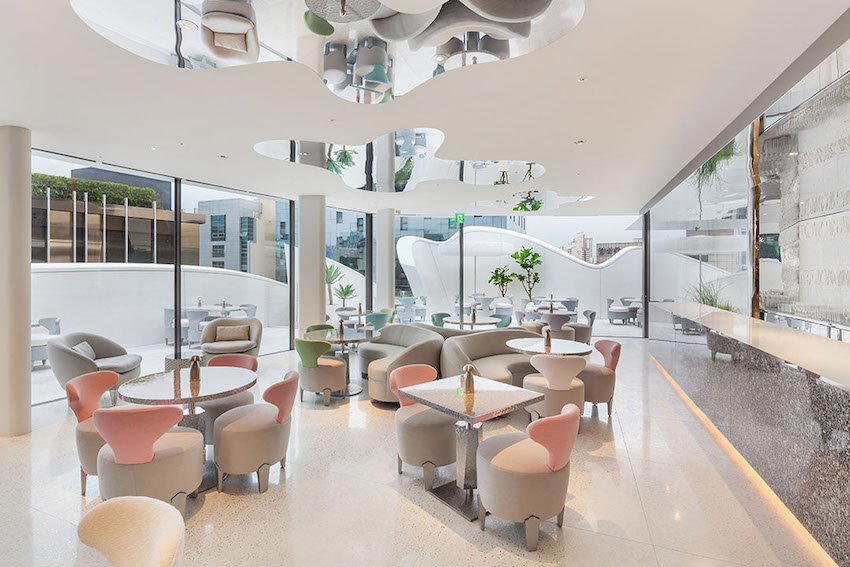
Café Dior by Pierre Hermé is a French patisserie café in Shibuya, Tokyo, with a €4 price tier and a smart casual dress code. The Café Dior by Pierre Hermé, on the upper floor of the Dior flagship in Shibuya, belongs to a smaller, more considered tier: spaces where the collaboration between brand and pastry name carries enough weight to make the experience legible on its own terms. Pierre Hermé's involvement is not decorative. His work sits at the technical end of Parisian patisserie, and his name in this context functions as a quality signal with a verifiable track record, his Paris houses sit in the same award conversation as Blé Sucré and Cedric Grolet in the French capital.
The Space and What It Signals
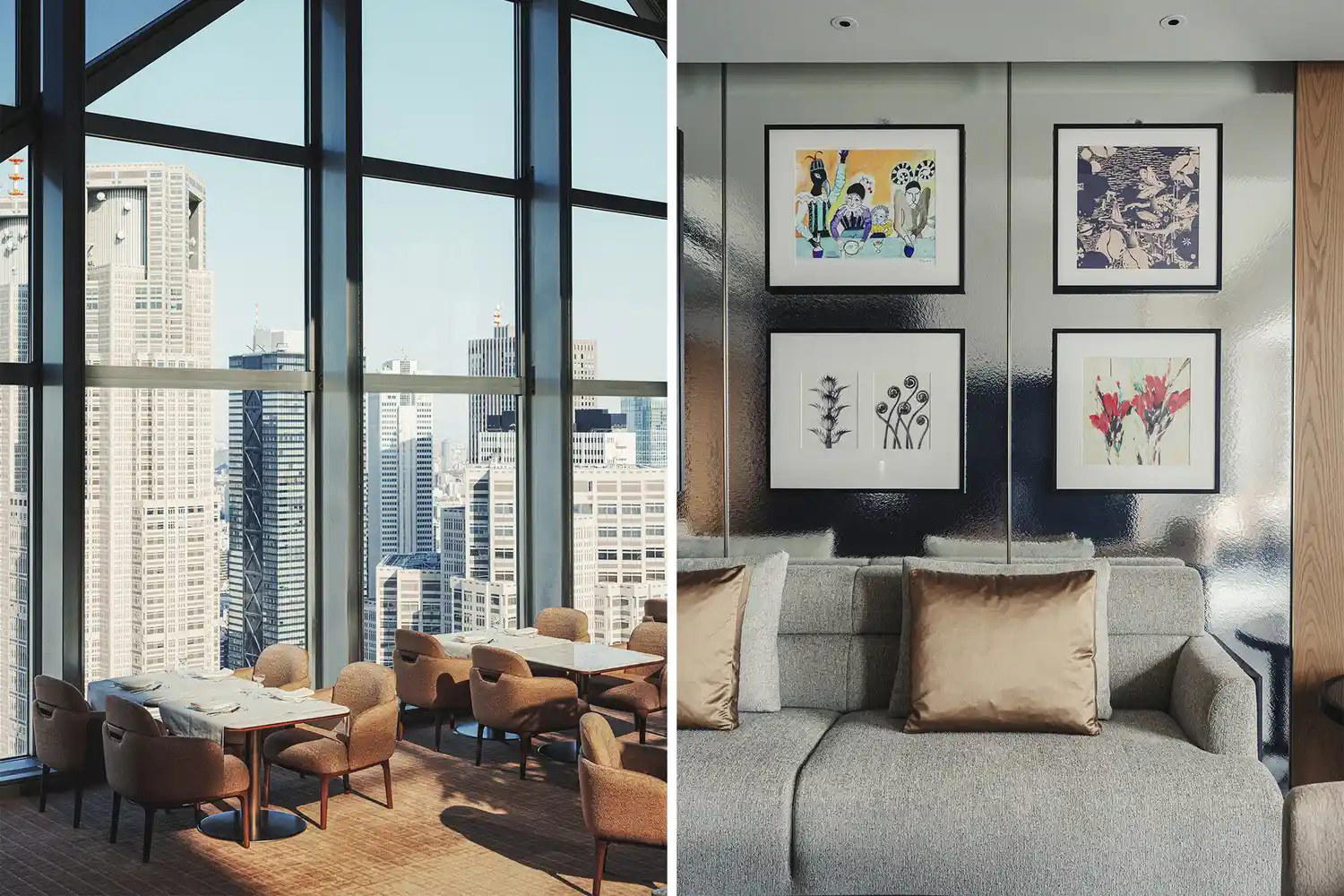
Entering from Shibuya's commercial noise, the transition is deliberate. The Dior flagship in this part of Tokyo is designed as a series of considered interior moments, and the café occupies one of the upper registers of that architecture. The colour palette references the house: grey, white, and soft neutral tones that suppress visual distraction and let the pastry display carry its own weight. The lighting is calibrated rather than dramatic, closer to natural diffusion than the hard-edged brightness that marks most retail food operations in the city.
What the space communicates, before any food arrives, is that the collaboration between fashion house and pastry house has been taken seriously at the design level. This is not common. The majority of brand-affiliated cafés in Tokyo lean on the label's visual identity without committing the interior square footage to an experience that justifies the premium positioning. Café Dior works partly because the spatial logic reinforces the proposition: you are not eating in a shop, you are sitting inside an aesthetic argument about what a branded café can be.
Tokyo's patisserie scene provides useful comparison. The city supports dedicated pastry counters of considerable depth, including a tes souhaits and Patisserie Ryoco, both operating from a craft-first rather than brand-first premise. Café Dior sits in a different category: it is a flagship expression of a collaboration, not a standalone pastry destination. That distinction matters when setting expectations.
Sensory Architecture: What You Are Actually Experiencing
The sound environment inside is low. Conversation carries quietly, the background music stays under rather than over the ambient noise threshold, and there is none of the espresso-machine clatter that characterises Tokyo's more casual café operations. This is a space designed for a particular pace, one that resists the throughput logic of most retail-adjacent food operations.
The pastry display is the visual centrepiece. Pierre Hermé's aesthetic language across his Paris houses favours precise geometry, controlled colour, and surface finishes that read as intentional rather than decorative. That approach translates here: the cases are edited rather than abundant. This is a curatorial decision with a point of view, fewer pieces, displayed with space around them, communicates value differently than a counter stacked with volume. Tokyo's premium patisserie culture has a long tradition of this kind of presentation, and Café Dior reads fluently within that convention while adding the Dior visual register on top of it.
Tea and coffee programme supports the pastry rather than competing with it. This is the correct hierarchy for a space of this type. A café that over-invests in an elaborate drinks menu at the expense of pastry coherence loses its editorial clarity; Café Dior does not make that mistake.
Awards Context and Where It Sits in Tokyo's Dining Map
Opinionated About Dining ranked Café Dior by Pierre Hermé at #98 in its 2024 Casual Japan list, moving to #120 in 2025. That movement is a data point worth noting: the list is competitive and the casual category in Japan is dense with strong operators. Holding a position inside the top 120 across both years, in a category that includes dedicated craft patisseries, specialist coffee operations, and longstanding neighbourhood institutions, confirms that the café earns its recognition on quality grounds rather than brand association alone. The Google rating of 4.2 across 243 reviews is consistent with a space that delivers reliably rather than occasionally.
For context on where Café Dior sits within the broader Tokyo dining ecology: it occupies a different tier and format entirely from the city's starred restaurant circuit. Harutaka, L'Effervescence, and RyuGin represent Tokyo's Michelin three-star category, a set defined by tasting menus, long booking windows, and a formal experiential proposition. Café Dior operates in daytime hours with walk-in accessibility and a per-piece purchase model. These are not competing offers. The comparison is useful only to locate the café on the map: it sits in the premium casual register, where the quality bar is set by craft and presentation rather than by course count or service formality.
Across Japan, the broader dining scene that Café Dior inhabits as a casual entry point encompasses serious regional destinations: HAJIME in Osaka, Gion Sasaki in Kyoto, akordu in Nara, Goh in Fukuoka, 1000 in Yokohama, and 6 in Okinawa. The café does not compete with those formats but shares the same city context in which quality expectations have been set by decades of serious food culture.
Timing and the Shibuya Visit
That consistency is an operational advantage in a part of Tokyo where lunch-hour crowds and weekend foot traffic can make visit planning unpredictable. The 10:30am opening means early-session visits are possible before Shibuya reaches peak density, and the 8:30pm close accommodates an early evening stop without the urgency of a restaurant-style booking window.
Shibuya as a neighbourhood has expanded its premium food and retail offer considerably over the past several years. The area now supports a wider range of serious dining and café options than its reputation as a youth shopping district might suggest. Café Dior sits within that upgraded positioning, in a building whose architecture makes a statement about what the brand wants the Shibuya address to mean.
Know Before You Go
- Address: Shibuya, Tokyo 150-0001, Japan
- Hours: Monday to Sunday, 10:30am – 8:30pm
- Cuisine: Patisserie
- Awards: Opinionated About Dining Casual Japan #98 (2024); #120 (2025)
- Google Rating: 4.2 (243 reviews)
- Booking: Walk-in format; no reservations required
- Dress: Smart casual is consistent with the space
Comparable Venues
Comparable venues nearby, for context on price, style, and recognition.
| Venue | Cuisine | Price | Notes |
|---|---|---|---|
| Café Dior by Pierre Hermé | French Patisserie | $$$$ | Shibuya |
| Nouvelle Epoque | Contemporary French-Japanese Fine Dining | $$$$ | Minato |
| Hiromichi | Michelin-Starred French Fine Dining | $$$$ | Shibuya |
| ラ・ロシェル山王 | French Kaiseki | $$$$ | Chiyoda |
| La Maison du Chocolat Marunouchi ten | French Chocolate Boutique & Patisserie | $$$$ | Chiyoda |
| トワヴィサージュ | Modern French Fine Dining | $$$$ | Chūō |
Continue exploring
More in Tokyo
More from Chef Various
Browse all →
Restaurants in Tokyo
Browse all →


Bars in Tokyo
Browse all →






At a Glance
- Elegant
- Sophisticated
- Modern
- Date Night
- Special Occasion
- Design Destination
- Hotel Restaurant
Bright white-based interior with stylish, relaxing atmosphere unified in Dior's elegant worldview.