Café de Altamira

Michelin Bib Gourmand
Our verdict
Café de Altamira sits beside Santiago de Compostela's central market, translating Galician produce into updated traditional cooking at a price point most visitors find refreshing. The 2025 Michelin Bib Gourmand confirms what regulars already know: the kitchen, led by chef Franck Baranger, delivers market-driven results with real conviction. Two tasting menus and an à la carte make it accessible at multiple commitment levels.

Pearl is the En Primeur Club membership app, where members save venues, book tables and use the concierge.
The menu
What to order
- Galician octopus
- Grilled king prawns
- Crème brûlée
Market Proximity as Kitchen Policy
In Santiago de Compostela, the relationship between the Mercado de Abastos and the restaurants that surround it shapes the city's dining character more than any single chef or trend. The market, housed in an early twentieth-century stone arcade, is the nervous centre of Galician produce: percebes pulled from the Costa da Morte, lacón from local smallholdings, vegetables grown in the rain-drenched valleys around the Ría de Muros e Noia. Restaurants positioned close to it, and willing to let that proximity govern their menus, operate differently from kitchens that source through regional distributors. Café de Altamira sits directly adjacent to this market on Rúa das Ameas, and the strapline it has chosen, "the flavour of the market", is a structural commitment, not a branding phrase.
That adjacency shows up in the kitchen's approach: what arrives each morning at the stalls shapes what appears on the plate that evening. Café de Altamira manages it while holding a 2025 Michelin Bib Gourmand, the Guide's recognition for cooking that delivers notable quality at moderate prices. That combination of market discipline and accessible pricing is a tighter needle to thread than either factor alone.
What the Bib Gourmand Actually Signals
Michelin's Bib Gourmand category, introduced in 1997, identifies restaurants where the inspectors find above-average cooking without the price pressure of the starred tier. In Spain's more competitive dining cities, Bib Gourmand status can mean a long-established neighbourhood spot or a technically ambitious kitchen keeping prices in check through lean operations. In Santiago de Compostela, where the dining scene skews toward pilgrim-economy volume on one end and serious regional cooking on the other, the designation carries particular weight.
Café de Altamira's 2025 Bib Gourmand places it in a different competitive tier from the starred addresses in the city. A Tafona (Contemporary) holds a Michelin star and prices accordingly at €€€€. Café de Altamira's €€ price range puts it in conversation with places like A Maceta (Fusion), though its Michelin recognition distinguishes it within that bracket. For context on how Spain's broader Michelin ecosystem distributes, the country's starred restaurants include El Celler de Can Roca in Girona, Arzak in San Sebastián, and DiverXO in Madrid, a different register entirely.
The Room: Rustic Framework, Deliberate Choices
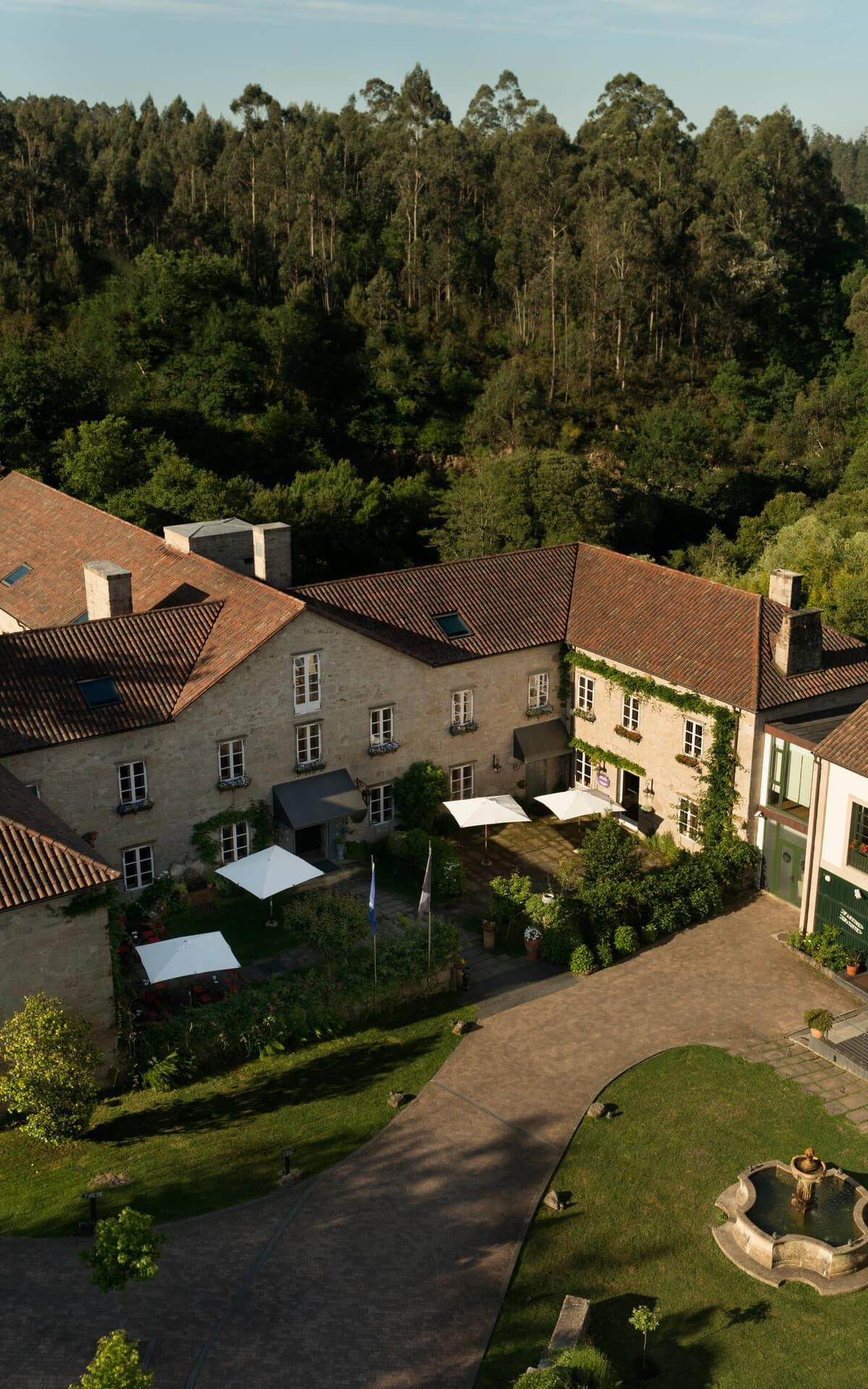
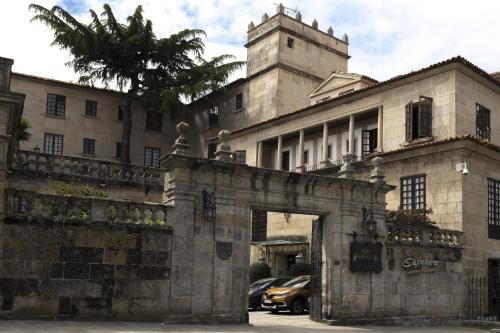
The physical environment at Café de Altamira is worth addressing separately, because it does real work. The restaurant operates from the Pazo de Altamira, a historic building on Rúa das Ameas, but runs with its own entrance and independent management, a separation that matters both operationally and in terms of atmosphere. Hotel restaurants that feel like hotel restaurants rarely develop the local regulars that sustain a kitchen at the level needed for Michelin recognition. The independent entrance signals that this is not a hotel amenity; it is a restaurant that happens to share a building.
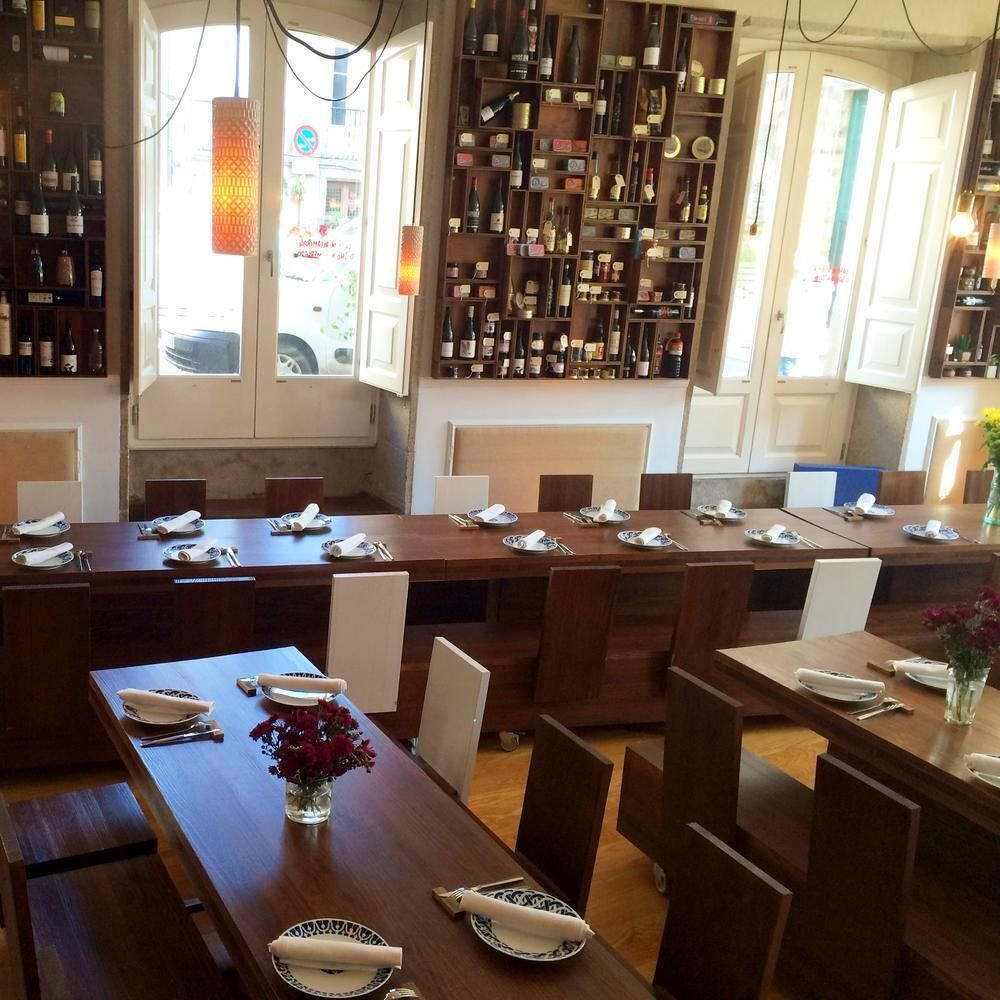
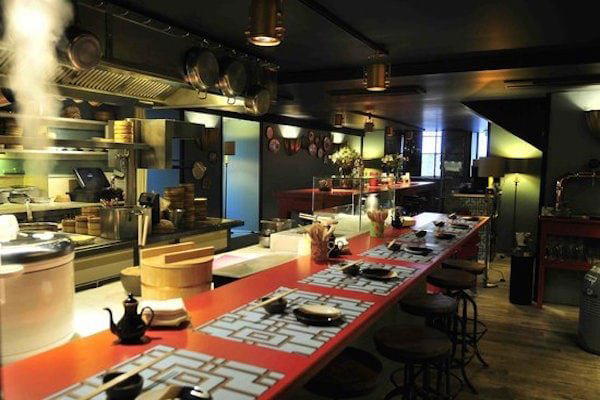
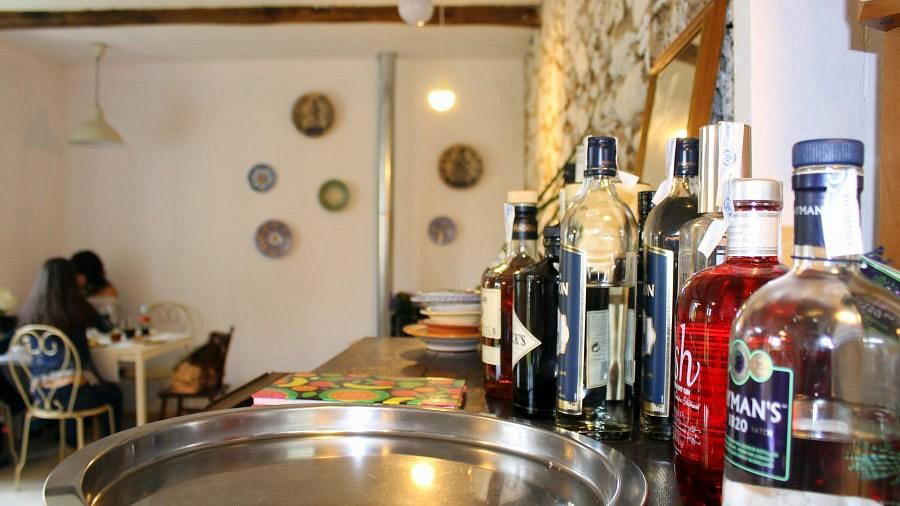
Inside, hanging light bulbs, unconventional bottle racks, and tableware from Sargadelos, the Galician ceramics manufacturer whose blue-and-white pieces carry regional cultural weight, create a room that reads as rustic without being themed. The large tables are configured for sharing, which aligns with the way Galician food tends to work: dishes arriving across the table rather than plated for individual consumption. The design is specific enough to place the room in its city and region rather than in an interchangeable European bistro template.
The Menu: Two Formats, One Logic
The kitchen offers both à la carte and two tasting menus, the Ameas and the Altamira. The tasting menu format has become a default for ambitious Spanish restaurants across price points, from the elaborate multi-hour sequences at addresses like Azurmendi in Larrabetzu and Aponiente in El Puerto de Santa María down to the more compact, market-led formats that suit a Bib Gourmand kitchen. Offering two menu lengths alongside à la carte allows the restaurant to serve both guests who want a structured progression through the kitchen's current thinking and those who want to eat around the menu at their own pace.
Chef Franck Baranger leads the kitchen. The approach Michelin's inspectors noted leans toward pleasantly updated traditional cooking: Galician cuisine as the foundation, with technique and flavour pairings that give classical dishes contemporary legibility without erasing their regional character. Michelin's own notation highlights a lightly roasted mackerel paired with ajoblanco and cherry-ponzu tomato, a combination that illustrates how the kitchen works. Ajoblanco, the Andalusian cold almond-and-garlic soup, arriving alongside ponzu-inflected tomatoes and Atlantic mackerel, is a dish that moves across Spanish and Japanese reference points without abandoning its Galician produce base. That kind of lateral thinking, applied to market-fresh ingredients, is what produces Bib Gourmand results rather than a more conservative treatment of regional classics.
For comparison within the €€ tier in Santiago, A Viaxe (Fusion) takes a different approach to updated cooking, while A Horta d'Obradoiro (Regional Cuisine) stays closer to traditional Galician frameworks. The range of interpretive angles available in Santiago at this price tier reflects a city where the pilgrimage economy has historically demanded volume, but where a younger generation of restaurants has pushed toward specificity and technique.
Placing It in the City's Dining Pattern
Santiago de Compostela's dining scene carries an unusual tension: the city receives hundreds of thousands of visitors annually along the Camino routes, but its food culture is grounded in Galician agricultural and maritime identity that predates the pilgrimage economy by centuries. Restaurants that manage to serve both pilgrim traffic and local regulars without compromising on ingredients or technique occupy a particular niche. Café de Altamira's market-adjacency and Michelin recognition suggest it has found that niche at the €€ price point.
For context on the wider Santiago table, Don Quijote represents a different tradition in the city's dining mix. The full picture of what the city offers at every price tier and format is mapped in our full Santiago de Compostela restaurants guide. Elsewhere in Spain, the tradition of market-rooted traditional cooking operating at accessible prices has produced similarly decorated results at venues like Auga in Gijón and, in a French-regional parallel, Auberge Grand'Maison in Mûr-de-Bretagne, both of which show how seriously Michelin weighs the Bib Gourmand category within the cooking traditions it covers. Cocina Hermanos Torres in Barcelona demonstrates what the starred tier looks like when the same market-commitment logic scales up into a more technically ambitious kitchen.
Planning Your Visit
The restaurant sits at Rúa das Ameas, 9, in the old city of Santiago de Compostela, a short walk from the cathedral quarter and directly beside the Mercado de Abastos. The €€ pricing and Bib Gourmand status make advance booking advisable, particularly at weekends and during peak pilgrimage season from spring through early autumn, when Santiago's visitor numbers peak sharply. The sharing-table format means the room works for groups, though the à la carte option gives solo diners or couples more flexibility than a tasting menu commitment requires. For everything else Santiago offers alongside dinner, our full Santiago de Compostela hotels guide, bars guide, wineries guide, and experiences guide cover the city across all formats.
Frequently asked questions
Can I bring kids to Café de Altamira?
The large sharing tables and relaxed atmosphere make it a reasonable choice for families. The €€ price range keeps costs proportionate, and the Bib Gourmand designation reflects an accessible register rather than a formal dining room. Nothing in the format demands adult-only company.
Is Café de Altamira formal or casual?
Casual. Michelin awarded it a Bib Gourmand rather than a star, which signals cooking quality without the formal codes. The room runs with hanging bulbs, Sargadelos colourware, and shared tables, deliberate choices that set the tone well before the food arrives.
What awards or recognition does Café de Altamira have?
Café de Altamira has received recognition including: Its strapline, “the flavour of the market”, says it all! This friendly restaurant in the Pazo de Altamira hotel (with its own entrance and independent management) comes as a pleasant surprise with its decor of light bulbs hanging from the c….
What dish is Café de Altamira famous for?
Michelin's inspectors specifically called out the lightly roasted mackerel with ajoblanco and cherry-ponzu tomato, a dish that shows how the kitchen updates Galician tradition without discarding it. It sits on both the à la carte and the tasting menus, the Ameas and the Altamira.
Cuisine and Recognition
| Venue | Cuisine | Price | Awards | Notes |
|---|---|---|---|---|
| Café de AltamiraThis venue (the venue you are viewing) | Modern Galician Market Cuisine | $30–50 | Michelin Bib Gourmand | Not listed |
| Abastos 2.0 - Mesas | Modern Galician Market Cuisine | $50–100 | Michelin Bib Gourmand | Not listed |
| Casa Marcelo | Modern Galician-Japanese Fusion Tasting Menu | $100–150 | 1 Michelin Star · Macarfi 8.8 Food Rating | Not listed |
| A Tafona | Modern Galician Fine Dining | $50–100 | 1 Michelin Star · Guía Repsol 3 Soles | Contemporary |
| A Maceta | Galician Fusion with Asian Touches | $30–50 | Michelin Plate · Macarfi 7.8 Food Rating | Not listed |
| Abastos 2.0 - Barra | Modern Galician Seafood Tapas | $30–50 | Michelin Plate · Macarfi 8 Food Rating | Not listed |
Recognition history
Dated appearances from independent guides and award organizations, with the underlying list record or original source where available.
Michelin Bib Gourmand
Michelin
Full recognition history (3 entries)
Michelin Bib Gourmand
Michelin
Michelin Bib Gourmand
Michelin
Continue exploring
More in Santiago de Compostela
Restaurants in Santiago de Compostela
All restaurants in Santiago de Compostela →
Hotels in Santiago de Compostela
All hotels in Santiago de Compostela →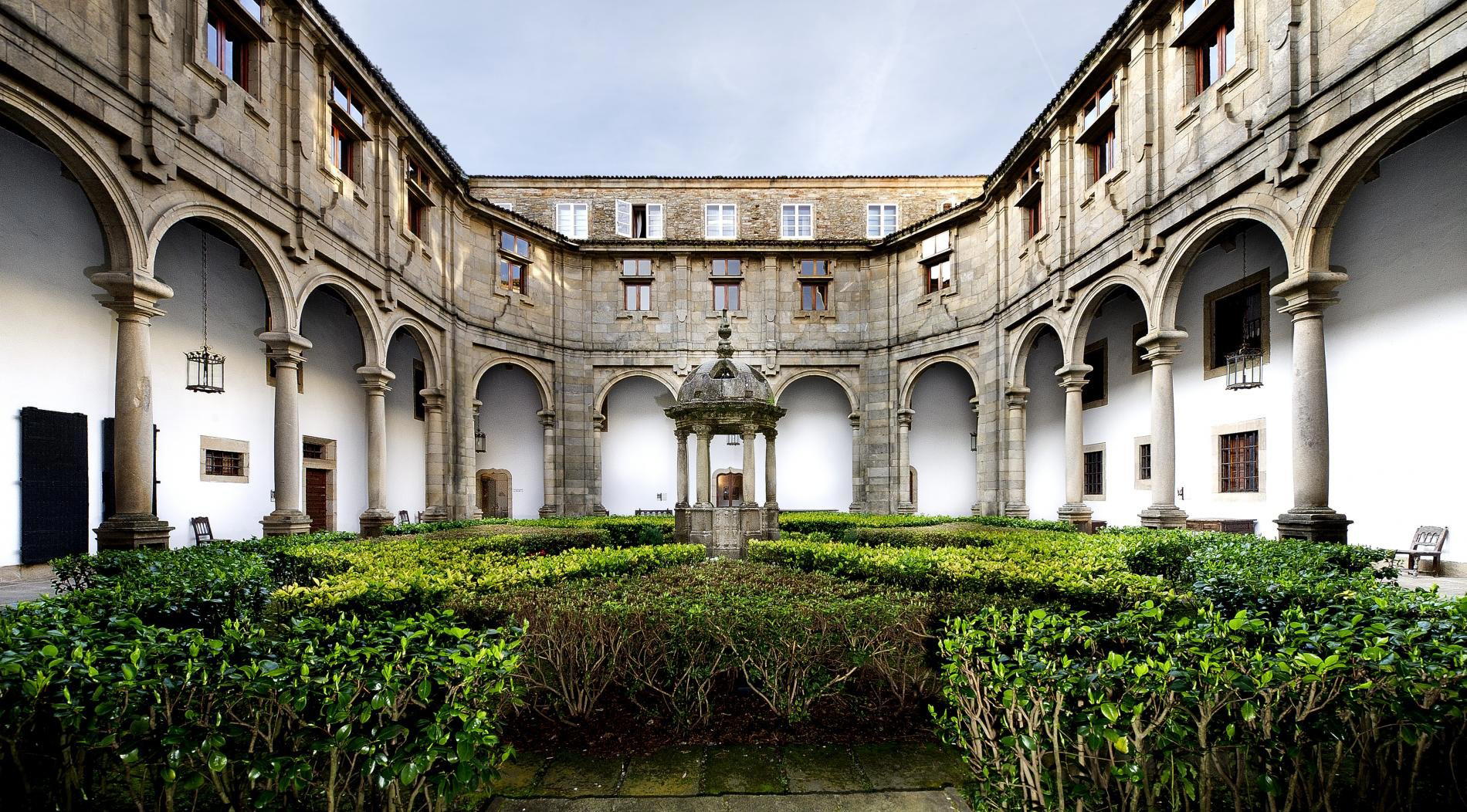

Details
- Cozy
- Rustic
- Intimate
- Classic
- Date Night
- Special Occasion
- Group Dining
- Open Kitchen
- Historic Building
- Hotel Restaurant
- Extensive Wine List
- Local Sourcing
- Tasting Menu
- A La Carte
- Small Plates
- Vegetarian Friendly
Warm, cozy atmosphere with rustic vintage decor featuring hanging light bulbs, unusual bottle racks, and colorful tableware, creating an intimate and lively buzz.