


Sitting atop Monte de San Pedro with panoramic views over A Coruña's estuary and the Atlantic, Árbore da Veira holds a Michelin star (2024) for its Atlantic-focused creative cuisine. Chef Luis Veira offers three tasting menus alongside à la carte, weaving sea and mountain ingredients into a contemporary Galician framework. Among the city's €€€ tier, it occupies the clearest argument for destination dining above the waterline.
Pearl is the En Primeur Club membership app — saves, bookings, and concierge access live there. Same editors, same standards.
- Address
- Estrada Os Fortes, s/n, 15011 A Coruña, Spain
- Phone
- +34 981 07 89 14
- Website
- arboredaveira.com
- Directions
- Get directions
 Saves & bookings on Pearl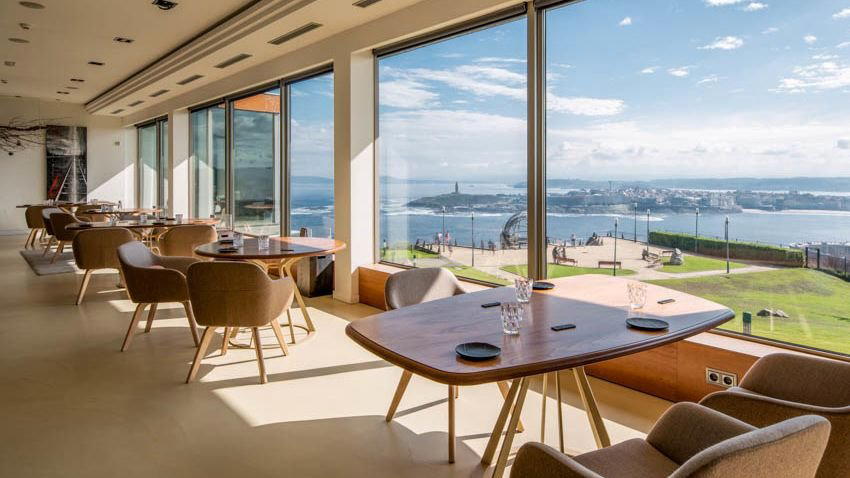
Above the City, Facing the Atlantic
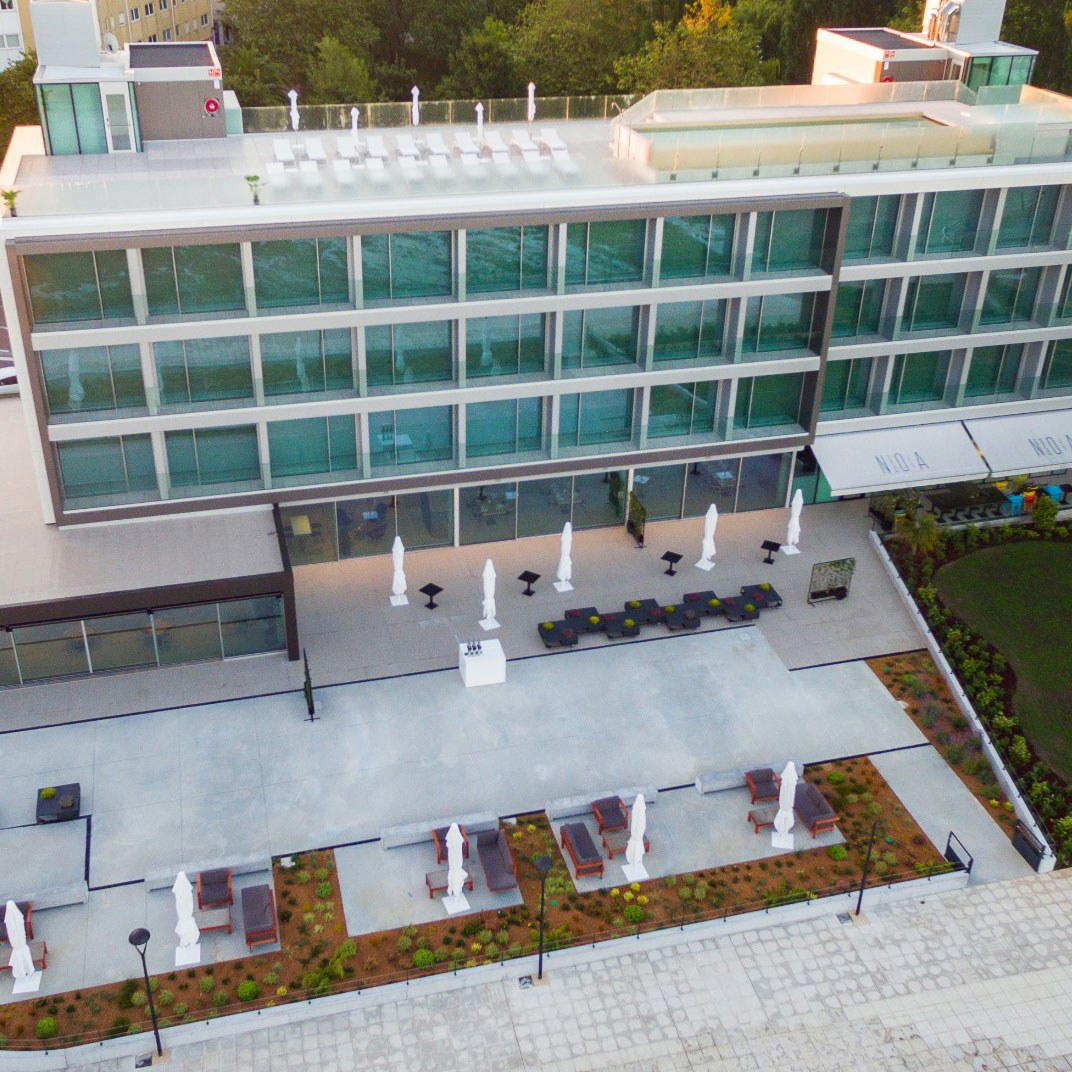
Monte de San Pedro sits at the western edge of A Coruña, a promontory that once carried artillery batteries guarding the Ría do Burgo. The military infrastructure is gone, but the elevation and the sight lines remain: from the hilltop, the city curves away to one side and the full breadth of the Atlantic opens on the other. This is the physical context for Árbore da Veira, and it is not incidental. The relationship between place and plate is the central editorial fact of a meal here. Few dining rooms in Galicia so completely unite the view you are eating toward with the ingredients arriving on the table.
Creative restaurants across Spain's Atlantic coast have long used geography as argument. Aponiente in El Puerto de Santa María built its identity around tidal-zone ingredients; Arzak in San Sebastián has spent decades translating Basque coastal memory into technical cookery. Árbore da Veira's position inside that national conversation is as the Galician entry point: a single Michelin star earned in 2024, a menu vocabulary rooted in the estuary and the hinterland, and a room that frames the ocean as directly as any of its peers.
The Dining Room and What It Does to You
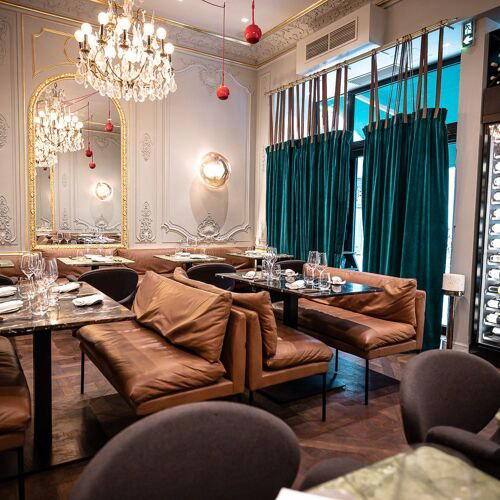
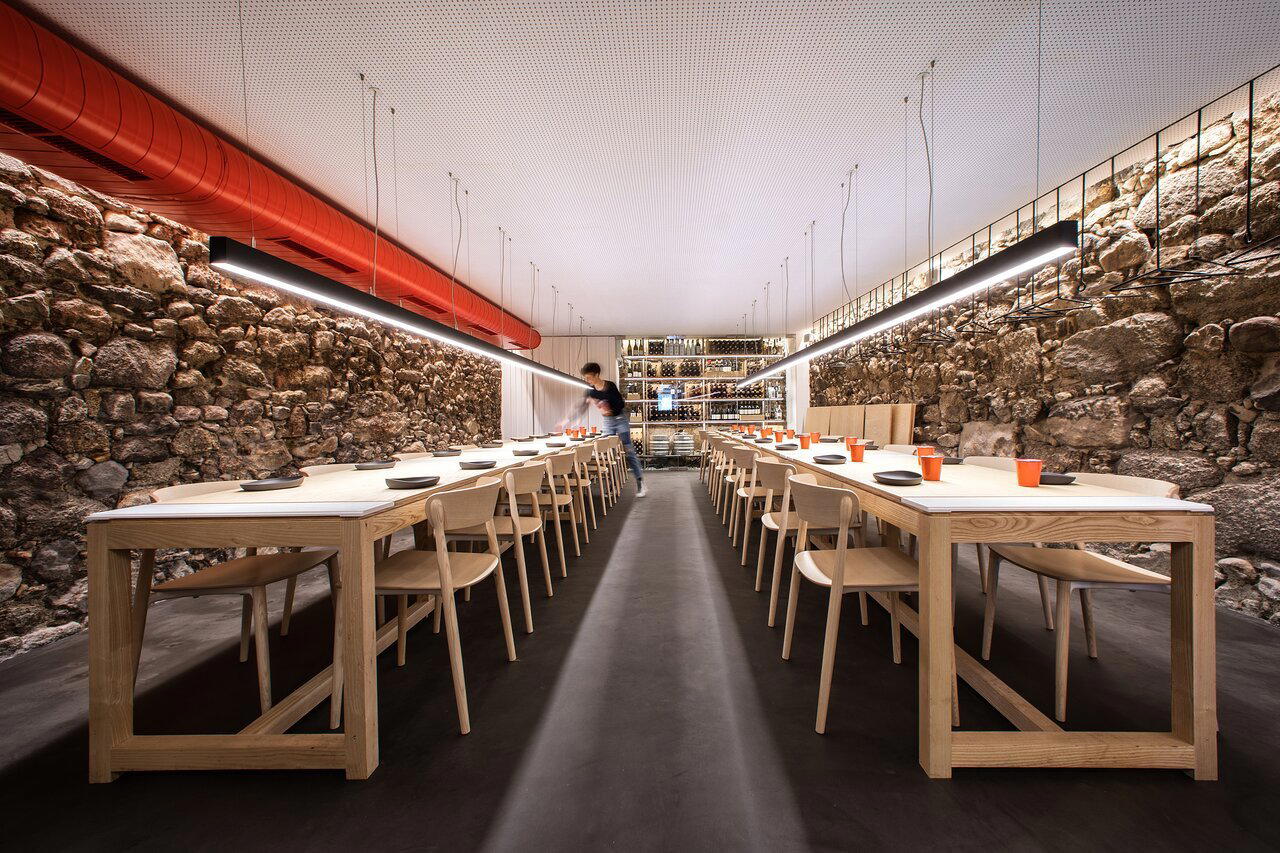
The interior works against the instinct to accumulate. Large bare tables, abundant natural light, and a sparse material palette keep attention on the view rather than the décor. The tableware reads as deliberately considered rather than default: innovative forms that signal the kitchen's intent without competing with what arrives on them. Private event rooms extend the footprint for groups, but the main dining experience is defined by those ocean-facing seats, where the light shifts through the afternoon into the evening service on Fridays and Saturdays.
In A Coruña's broader restaurant scene, the combination of elevation, panorama, and Michelin-level cooking is unusual enough to constitute a category of its own. The city's €€€ tier includes strong contemporary and Japanese options, but the specifically site-dependent character of Árbore da Veira places it in a different conversation from peers like Eclectic or the tighter urban format of 55 Pasos. The hilltop address is not a backdrop; it is part of the proposition.
Atlantic Framework, Mountain Counterpoint
Galician cuisine has always carried a structural tension between coast and interior, between the extraordinary seafood of the rías and the cured meats, game, and root vegetables that come down from the mountains to the east. Most traditional restaurants in the region resolve this tension by separating them: fish dishes and meat dishes sitting in parallel on the same menu. The more interesting approach, and the one this kitchen has committed to, is to treat the contrast as the material itself, pairing sea and mountain ingredients within a single dish rather than across the menu.
Chef Luis Veira, a native of A Coruña, has described his approach as keeping "the five senses firmly on the Atlantic," which sounds like a constraint but functions more like a gravitational principle. The Atlantic becomes the reference point from which other ingredients are measured. The sourced description of a dish combining basil, foie gras, and cherry gelatine named "the cherry that fell from the tree" illustrates how that principle operates in practice: the combination is surprising, the internal logic connects land-origin luxury ingredients through an acid-sweet resolution, and the overall effect is neither purely coastal nor purely inland.
This positions Árbore da Veira clearly within Spain's broader creative restaurant tradition. The country has produced a generation of chefs willing to treat their regional identity as dynamic rather than fixed: Azurmendi in Larrabetzu does this for the Basque countryside, El Celler de Can Roca in Girona for Catalan memory, Cocina Hermanos Torres in Barcelona and DiverXO in Madrid for more abstract personal systems. Galicia has been slower to produce internationally recognised names in this tier, which makes the 2024 Michelin star for Árbore da Veira a meaningful signal about the region's direction rather than simply one restaurant's achievement.
Three Menus and What They Represent
The structure of three tasting menus named Semente (Seed), Raíces (Roots), and Árbore (Tree) follows a naming logic that maps roughly onto depth and ambition: the shortest entry point, the mid-level exploration, and the full-length experience that gives the restaurant its name. This tiered format has become standard at Michelin-level Spanish restaurants because it allows different levels of commitment without fracturing the kitchen's narrative. The à la carte option sits alongside these menus for guests who prefer to build their own path through the same ingredient vocabulary.
Among A Coruña's creative dining options, this range of entry points is relatively generous. A Espiga and A Mundiña operate at lower price points with more direct Galician frameworks; Artabria sits in the traditional tier. Árbore da Veira occupies the space where technique and regional identity work together at the highest local level of formal validation. For international visitors calibrating against comparable creative restaurants in Paris, such as Alléno Paris au Pavillon Ledoyen or Arpège, the Galician context and the Atlantic ingredient set provide a distinctly different reference point even at the same formal level.
Planning Your Visit
The restaurant sits at Estrada Os Fortes, s/n, on top of Monte de San Pedro in the 15011 postal district of A Coruña. The hilltop location means arriving by car or taxi is the practical approach; the address is outside the comfortable walking range of the city centre. The dining room is open Wednesday through Sunday, though the schedule splits by day: Wednesday, Thursday, and Sunday offer lunch-only windows closing in the mid-afternoon, while Friday and Saturday extend into evening service until 10:30 PM. Monday and Tuesday are closed. For guests building a longer stay around the meal, the full A Coruña hotels, bars, and wider restaurant scene are mapped across our full A Coruña restaurants guide, our full A Coruña hotels guide, our full A Coruña bars guide, our full A Coruña wineries guide, and our full A Coruña experiences guide.
A Lean Comparison
| Venue | Cuisine | Price |
|---|---|---|
| Árbore da VeiraThis venue — the venue you are viewing | Creative | €€€ |
| NaDo | Gallician, Creative | €€ |
| El de Alberto | Modern Cuisine | €€ |
| Miga | Traditional Cuisine | €€ |
| Omakase | Japanese | €€€ |
| Taberna 5 Mares | Contemporary | €€ |
Recognition history
Dated appearances from independent guides and award organizations, with the underlying list record or original source where available.
Guía Repsol 2 Soles
Guía Repsol
Macarfi 8.6 Food Rating
Macarfi
Michelin 1 Star
Michelin
Michelin 1 Star
Michelin
Michelin 1 Star
Michelin
Continue exploring
More in A Coruña
Restaurants in A Coruña
Browse all →
At a Glance
- Elegant
- Scenic
- Sophisticated
- Special Occasion
- Date Night
- Panoramic View
- Extensive Wine List
- Local Sourcing
- Skyline
- Waterfront
Current opening hours
- Monday
- 1:30–5 PM
- Tuesday
- Closed
- Wednesday
- 1:30–5 PM
- Thursday
- 1:30–5 PM
- Friday
- 1:30–5 PM, 8:30 PM–12 AM
- Saturday
- 1:30–5 PM, 8:30 PM–12 AM
- Sunday
- 1:30–5 PM
Hours can change for holidays and private events. Last verified .
Light-filled dining room with large bare tables, simplistic design, and panoramic city views; some guests note a slightly cold atmosphere.
Know Before You Go
- Getting there
- Estrada Os Fortes, s/n, 15011 A Coruña, Spain