Brunetti Pizza
Our verdict
On Hudson Street in the West Village, Brunetti Pizza sits within one of New York's most competitive casual dining corridors, where the gap between a forgettable slice and a considered pie is wider than it appears. The address at 626 Hudson places it among a neighbourhood that rewards return visits over first-timer browsing. Daytime and evening service here operate at noticeably different tempos, making the time of your visit as relevant as what you order.

The menu
What to order
- Margherita Pizza
- Soppressata Pizza
- Meatball Pizza
Hudson Street and the West Village Pizza Question
The West Village has long operated as a proving ground for casual dining in New York. The neighbourhood's density of independent operators, combined with a resident base that eats out frequently and without ceremony, creates a self-correcting market: places that rely on foot traffic alone tend not to last, while those that build a regular clientele settle into something more durable. Pizza, in that context, is not a simple category. The distance between a neighbourhood staple and a forgettable box is measured in dough hydration, oven temperature, and the consistency of execution across a full service. Brunetti Pizza, at 626 Hudson Street, operates inside that dynamic.
Hudson Street itself runs through the heart of a block-by-block restaurant ecosystem that rewards specificity. Unlike the broader Manhattan dining scene, where destination restaurants at the level of Le Bernardin, Atomix, or Per Se draw from across the city and beyond, a West Village pizza address draws primarily from within walking distance. That proximity calculus shapes everything: the regulars are genuinely regular, the lunch crowd is often local workers and residents, and the evening shift brings a different energy entirely.
The Lunch-to-Dinner Divide
In New York's casual pizza segment, the daytime and evening experiences frequently diverge more sharply than the menu suggests. At lunch, the operative logic is speed and value: slices over whole pies, counter service over table waiting, a quieter room where the quality of the product carries the experience without ambient noise doing any heavy lifting. The West Village lunch crowd is not particularly forgiving of inconsistency, precisely because alternatives are never more than a short walk away.
Evening service in this part of the city shifts the frame. The neighbourhood fills with couples, small groups, and post-work gatherings that are less focused on throughput and more willing to sit with a full pie, a glass of wine, and the rhythm of a busy room. The same pizza that functions as a practical midday meal becomes, at 8 p.m. on a Friday, a social anchor. How a kitchen manages that transition, whether the product holds up under higher volume, whether the room accommodates the shift in pace, is one of the more useful lenses for assessing a neighbourhood operator.
For context, this lunch-versus-dinner dynamic plays out across the American casual dining spectrum. At the other end of the formality register, tasting-menu destinations like Eleven Madison Park and Masa do not face the same daytime-versus-evening tension, since their formats are designed around a single, controlled experience. The casual end of the market absorbs that variability differently, and the better operators in that tier build systems that make the transition as seamless as possible.
West Village Pizza in Its Competitive Set
New York's pizza conversation tends to cluster around a few reference points: the old-school slice shops of the outer boroughs, the Neapolitan-certified operators who have proliferated over the past decade, and a newer cohort of wood-fired and Roman-style formats that have complicated the taxonomy considerably. The West Village hosts representatives of several of these categories within a few blocks, which means any given address competes not just on quality but on format differentiation.
Nationally, the bar for considered pizza has risen. Operations like Lazy Bear in San Francisco and chef-driven restaurants such as Smyth in Chicago have pushed the conversation around ingredient sourcing and technical discipline into casual formats as well as fine dining. Closer to home, the Italian-American tradition that underpins much of New York's pizza identity connects to a broader lineage: the trattorias of northern Italy represented by venues like Dal Pescatore in Runate and the Alpine precision of Atelier Moessmer Norbert Niederkofler in Brunico illustrate how seriously European operators take the underlying craft. American pizza at its most considered draws from that same attention to process, even if the output looks very different.
Other American restaurant destinations that have built durable reputations on consistency and product quality include The French Laundry in Napa, Providence in Los Angeles, Blue Hill at Stone Barns in Tarrytown, Addison in San Diego, Single Thread Farm in Healdsburg, Emeril's in New Orleans, The Inn at Little Washington, and Frasca Food & Wine in Boulder. These are formal comparisons in terms of category, but they share a relevant trait: each has built a clientele through repeat visits rather than novelty. That is the same loyalty model a neighbourhood pizza operator in the West Village must cultivate, even at a fraction of the price point.
Planning Your Visit
Brunetti Pizza is located at 626 Hudson Street, New York, NY 10014, in the West Village. The address sits in a walkable stretch of Hudson that connects easily to Christopher Street and the broader neighbourhood grid. For readers building a broader New York itinerary, the full New York City restaurants guide maps the city's dining options across categories and price points.
Given the lunch-versus-dinner dynamic described above, the practical question is timing. A midday visit offers a quieter room and a clearer read on the kitchen's baseline. An evening visit, particularly on weekends, brings more atmosphere but also more variables. Confirm current hours and walk-in availability directly with the venue.
Quick reference: 626 Hudson St, New York, NY 10014. Walk-in or direct booking; confirm current hours before visiting.
Frequently asked questions
What do regulars order at Brunetti Pizza?
The West Village pizza circuit tends to reward those who default to the format a kitchen has clearly optimised around, whether that is a particular style of pie, a signature topping combination, or a specific dough preparation. At neighbourhood operators in this part of the city, regulars typically develop a short list based on repeated visits rather than menu exploration. Ask at the counter what moves fastest during lunch service; it is usually the clearest indicator of what the kitchen is turning out most consistently. For broader context on New York's dining scene, see coverage of Le Bernardin and Atomix.
Can I walk in to Brunetti Pizza?
In the West Village's casual pizza segment, walk-in access is standard during off-peak hours, particularly at lunch on weekdays. Evening and weekend demand in this neighbourhood can compress availability quickly, since the area's residential density means locals fill rooms early. For a weekend evening visit, checking directly before you go is the practical step. For price-tier context, note that the West Village casual category sits well below the $$$$ bracket occupied by Masa and Eleven Madison Park. Walk-in pizza is a different transaction entirely.
How does Brunetti Pizza's West Village location affect the experience compared to other New York pizza addresses?
Location in New York's pizza conversation carries real weight: a West Village address draws a different clientele and competitive pressure than a Lower East Side slice shop or a Brooklyn neighbourhood operator. The West Village customer base is generally familiar with the category, eats locally and repeatedly, and has a well-calibrated sense of what a considered pie should deliver. That context sets a higher baseline expectation than a tourist-heavy corridor might, which tends to push neighbourhood operators toward consistency over novelty. For a broader picture of where Brunetti fits within the city's restaurant ecosystem, the New York City guide covers the full range of cuisine types and price tiers across Manhattan and beyond.
A Lean Comparison
A compact comparison to help you place this venue among nearby peers.
| Venue | Cuisine | Price | Awards | Notes |
|---|---|---|---|---|
| Brunetti PizzaThis venue (the venue you are viewing) | Authentic Neapolitan Pizza | Not listed | Not listed | Not listed |
| Le Bernardin | French Seafood Fine Dining | $300–500 | 3 Michelin Stars · World's 50 Best #13 | French, Seafood |
| Atomix | Modern Korean Tasting Menu | $300–500 | 2 Michelin Stars · World's 50 Best #7 | Modern Korean, Korean |
| Per Se | French Fine Dining Tasting Menu | $300–500 | 3 Michelin Stars · World's 50 Best #40 | French, Contemporary |
| Masa | Traditional Japanese Omakase | $500+ | 2 Michelin Stars · World's 50 Best #27 | Sushi, Japanese |
| Eleven Madison Park | Contemporary Plant-Based Fine Dining | $300–500 | 3 Michelin Stars · World's 50 Best #4 | French, Vegan |
Continue exploring
More in New York City
Restaurants in New York City
All restaurants in New York City →
Bars in New York City
All bars in New York City →





Details
- Cozy
- Rustic
- Casual Hangout
- Group Dining
- Brunch
- Open Kitchen
- Garden
- A La Carte
- Vegetarian Friendly
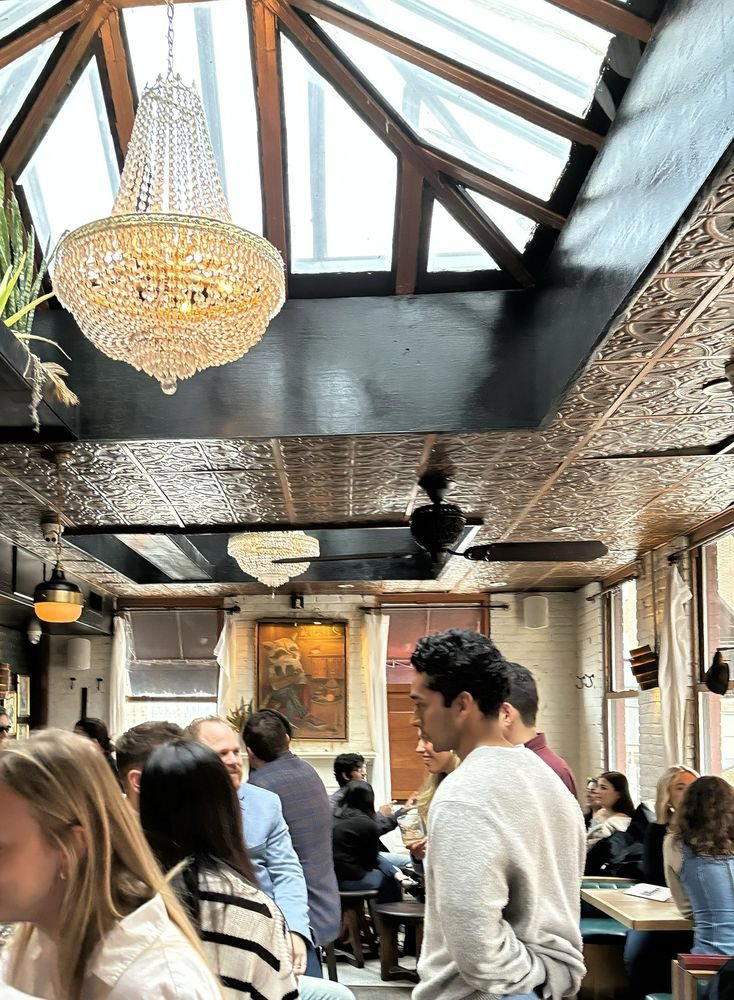
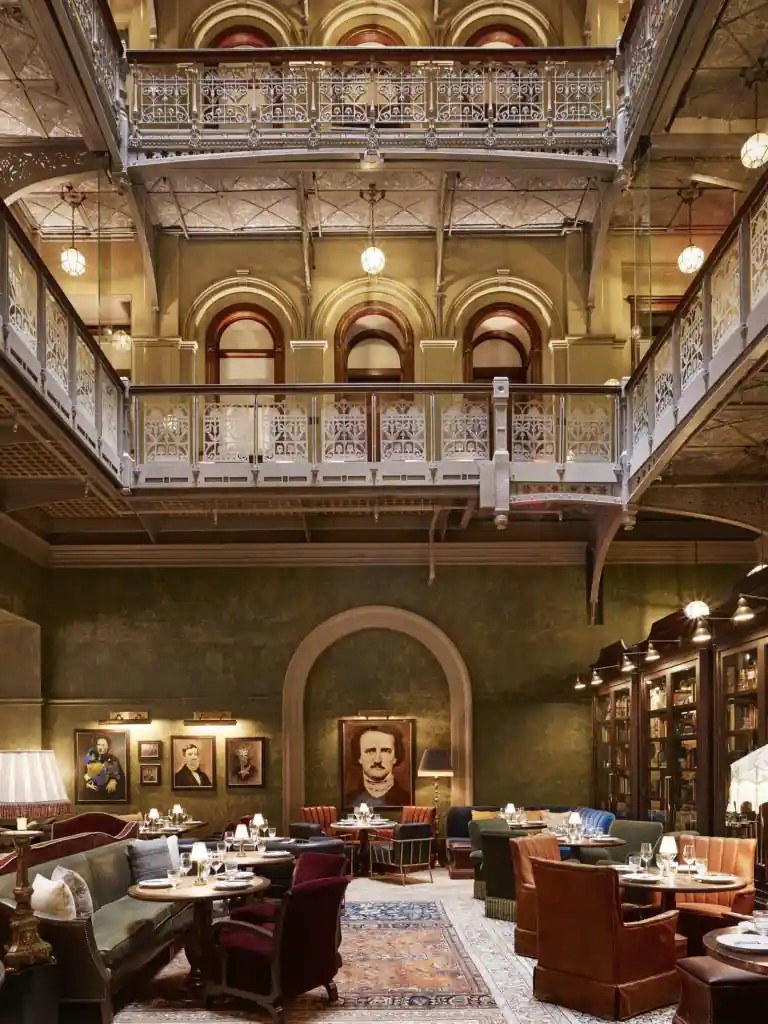
Cozy and rustic with a woody, garden-enhanced space, comfortable seating, and an inviting neighborhood feel.