Brewer's Fork
Brewer's Fork occupies a converted space on Moulton Street in Charlestown, one of Boston's older residential neighborhoods, where the kitchen leans into wood-fired cooking and craft beer programs. The setting reads more neighborhood tavern than downtown destination, which suits the crowd it draws. For visitors crossing the Charlestown Bridge from the North End, it offers a grounded counterpoint to the city's more formal dining options.
Pearl is the En Primeur Club membership app — saves, bookings, and concierge access live there. Same editors, same standards.
- Address
- 7 Moulton St, Charlestown, MA 02129
- Phone
- +1 617 337 5703
- Website
- brewersfork.com
- Directions
- Get directions
 Saves & bookings on Pearl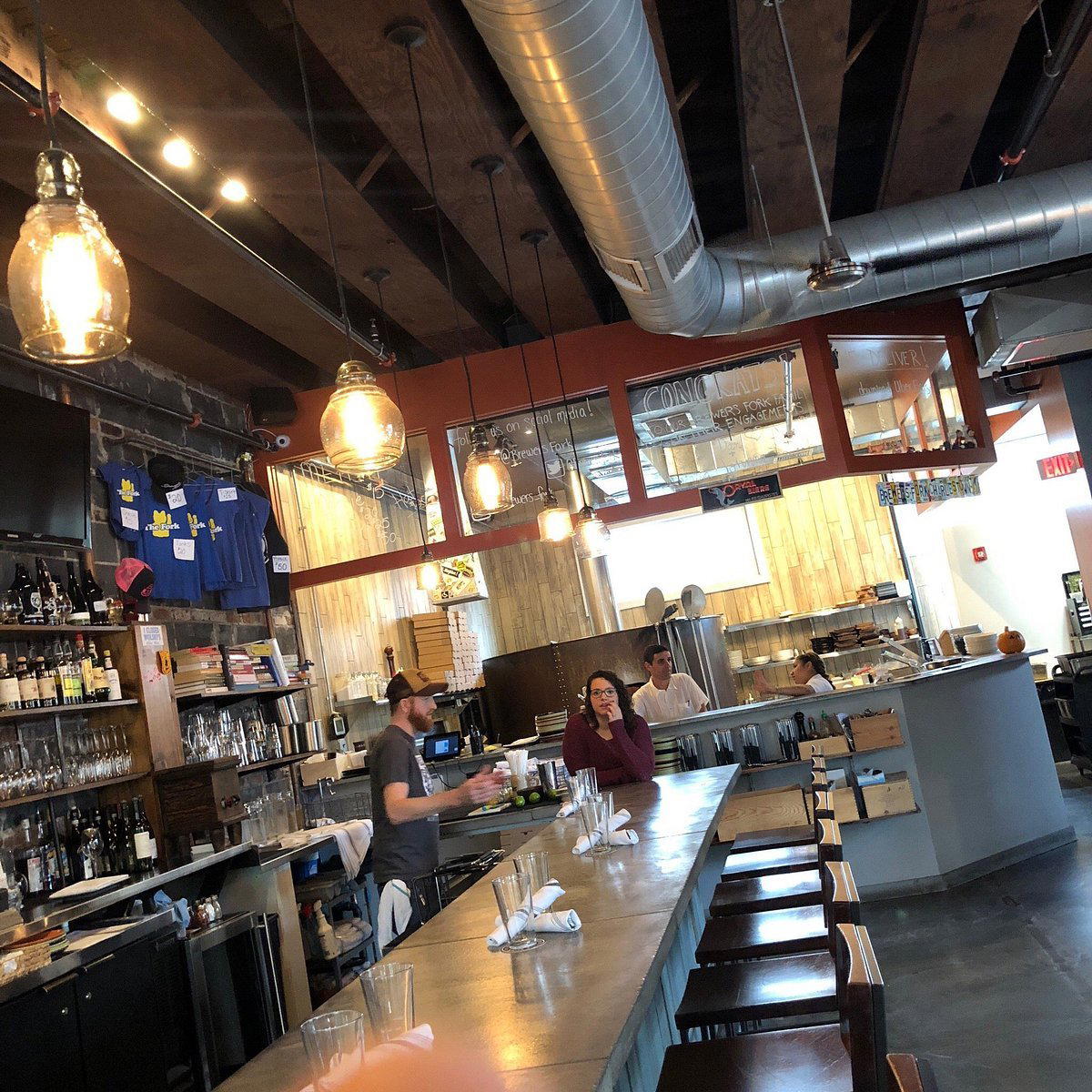
Charlestown and the Case for Neighborhood Dining
Boston's dining geography has long been defined by its waterfront corridors and downtown concentration, with neighborhoods like the North End and the Seaport absorbing most of the editorial attention. Charlestown operates differently. The area's brick rowhouses and narrow streets predate most of the city's other residential districts, and its dining scene has developed along quieter lines, oriented around residents rather than tourism traffic. Brewer's Fork, at 7 Moulton Street, sits inside that logic. It draws from the neighborhood rather than performing for it.
That positioning matters when you consider how wood-fired cooking has moved through American restaurant culture over the past decade. What began as a high-concept signal at destination restaurants has gradually settled into a more democratic register, places where the hearth is a kitchen tool rather than a theatrical prop. Charlestown suits that maturation. The neighborhood doesn't demand spectacle, and a kitchen built around open fire fits its character better than it might in, say, the South End or the Financial District. Compare that trajectory with how Lazy Bear in San Francisco or Smyth in Chicago have used fire-forward cooking at a more formal tier, Brewer's Fork occupies an intentionally lower-pressure register within the same broad tradition.
Wood Fire as Culinary Logic
Wood-fired cooking in the American context draws on multiple traditions simultaneously: the open-hearth cookery of colonial New England, the barbecue culture of the South, and the wood-oven traditions of Italian-American urban dining. Boston has its own relationship with all three. New England's food history includes centuries of hearth cooking, and the city's large Italian-American population, concentrated historically in the North End, a short walk from Charlestown, brought wood-oven technique into the mainstream long before craft restaurant culture made it fashionable.
What distinguishes a well-run wood-fired kitchen from a marketing exercise is discipline: managing heat zones, understanding how smoke behaves with different proteins and vegetables, and resisting the temptation to let char become the primary flavor. The approach at its most considered produces cooking where fire is an ingredient rather than a finishing effect. Restaurants like Blue Hill at Stone Barns in Tarrytown and Single Thread Farm in Healdsburg have shown how fire and seasonal sourcing can work together at the fine dining tier; Brewer's Fork operates at a more accessible price point but draws from the same instinct toward honest, technique-driven cooking.
The Beer Program and What It Signals
Pairing a craft beer program with wood-fired cooking isn't accidental. Both traditions emphasize fermentation, regional ingredient sourcing, and a certain resistance to the formality of the wine-anchored dining room. Boston has a mature craft beer culture, Massachusetts breweries have built national reputations over the past two decades, and a kitchen that takes its beer list seriously operates in productive conversation with that culture rather than treating beer as a secondary offering.
The bar programs at Boston's more ambitious restaurants have generally moved toward cocktail sophistication, following national trends. The restaurant's emphasis on beer represents a different editorial choice, one that reinforces the neighborhood tavern register and broadens the appeal to a crowd that might find the cocktail-bar posture of other Boston spots alienating. In a city where 311 Omakase and Agosto are pushing the formal end of the dining spectrum, there is a real role for a room where the beer list is as considered as the food.
Charlestown's Dining Context
Charlestown's restaurant options are sparser than adjacent neighborhoods, which gives individual venues more weight in defining the character of eating there. The neighborhood sits across the Inner Harbor from the North End, Boston's Italian district, which holds some of the city's highest-density dining, and just north of the TD Garden entertainment corridor. Visitors moving between those zones often bypass Charlestown entirely, which means the clientele at Moulton Street skews local.
That's not a weakness. Some of the more durable dining rooms in American cities are the ones that serve a neighborhood first and destination diners second. The trade-off is lower walk-in traffic and greater reliance on repeat customers, which tends to keep kitchens honest. For context on how Boston's more destination-oriented dining operates, the waterfront options like 1928 Rowes Wharf and 75 on Liberty Wharf represent a different model entirely, calibrated for hotel guests and event dining rather than neighborhood regulars. The restaurant belongs to neither of those camps, sitting instead alongside the kind of independently operated rooms that define a city's middle layer, not the headline restaurants, but the ones locals actually return to.
Boston's broader dining geography, including formal steakhouses like Abe & Louie's and the raw bar tradition anchored by Neptune Oyster in the North End, represents a city that knows its dining identity well. Charlestown has been slower to build its own culinary character, which makes the presence of a wood-fired room with a serious beer program more significant than it might appear on the surface.
Planning Your Visit
Moulton Street is a short walk from the Charlestown Navy Yard and accessible from the MBTA's Community College stop on the Orange Line, or via water taxi from the downtown waterfront. Given the neighborhood's limited dining density, booking ahead for weekend evenings makes practical sense, the room isn't large, and there's no equivalent fallback option within an easy walk if you arrive without a reservation. Weeknight visits tend to draw a more local crowd, which changes the room's energy in a way some visitors prefer. For those building a wider Boston itinerary, our full Boston restaurants guide covers the range of options across neighborhoods and price tiers.
For context on how wood-fired and hearth-driven cooking operates nationally, venues like The French Laundry in Napa, Providence in Los Angeles, Addison in San Diego, and The Inn at Little Washington define what the format looks like under formal conditions. The restaurant is not competing in that tier, nor is it trying to. Its reference points are closer to Emeril's in New Orleans in spirit: a kitchen that takes technique seriously without asking the guest to do the same.
Budget and Context
Comparable venues nearby, for context on price, style, and recognition.
| Venue | Cuisine | Price | Notes |
|---|---|---|---|
| Brewer's ForkThis venue — the venue you are viewing | Not listed | $$ | Not listed |
| Clery's | Not listed | $$ | Back Bay, American bar & grill with brunch and late-night vibes |
| Franklin Cafe | South End, Modern American | $$ | Not listed |
| Fenway Johnnies | Kenmore, American Gastropub | $$ | Not listed |
| Fire + Ice | Not listed | $$ | Back Bay, Interactive Grill American Fusion |
| Gordon Ramsay Burger - Boston | North End, Gourmet American Burgers | $$ | Not listed |
Continue exploring
More in Boston
Restaurants in Boston
Browse all →
Bars in Boston
Browse all →
Hotels in Boston
Browse all →
Wineries in Boston
Browse all →
At a Glance
- Rustic
- Cozy
- Lively
- Casual Hangout
- Brunch
- Group Dining
- Open Kitchen
- Beer Program
- Craft Cocktails
- Local Sourcing
Current opening hours
- Monday
- 11:30 AM–10 PM
- Tuesday
- 11:30 AM–10 PM
- Wednesday
- 11:30 AM–10 PM
- Thursday
- 11:30 AM–10 PM
- Friday
- 11:30 AM–11 PM
- Saturday
- 10:30 AM–11 PM
- Sunday
- 10:30 AM–9 PM
Hours can change for holidays and private events. Last verified .
Warm and inviting with rustic wood-fired atmosphere and casual neighborhood feel.