Clery's
Clery’s sits within Boston’s broad American dining tradition, a category shaped by neighborhood pubs, waterfront rooms, steakhouse formality, and immigrant influences rather than a single canon. For travelers mapping the city through food, it belongs in the casual American conversation: less about ceremony than about how Boston eats between work, games, and late evenings.
Pearl is the En Primeur Club membership app — saves, bookings, and concierge access live there. Same editors, same standards.
- Address
- Boston, United States
- Directions
- Get directions
 Saves & bookings on Pearl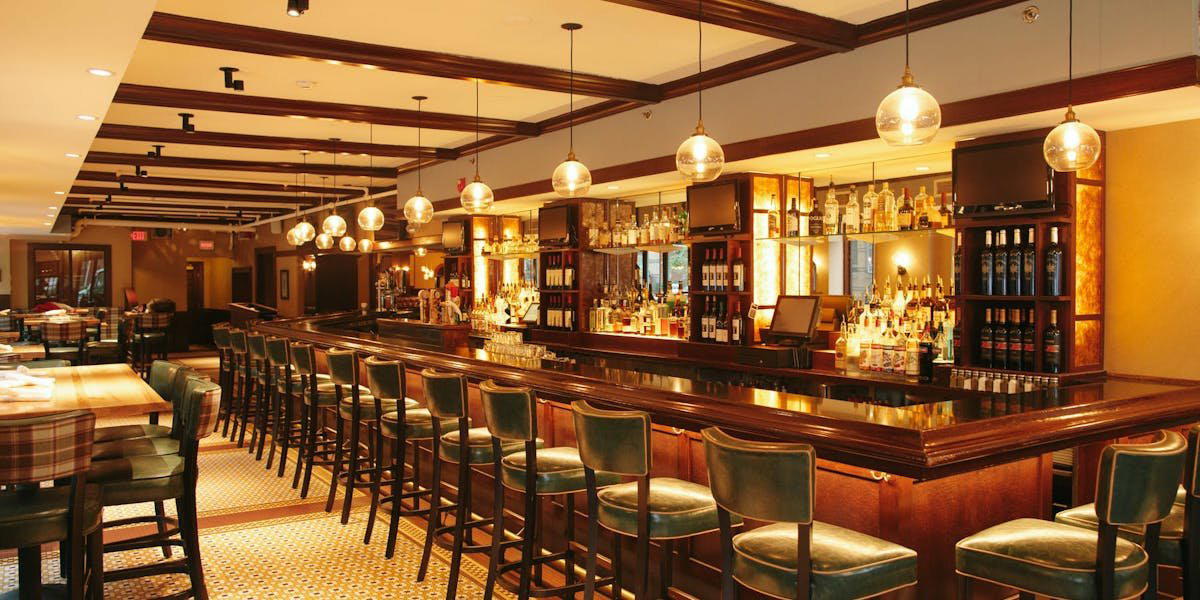
Boston’s American restaurants often announce themselves before the menu does: the sound of after-work tables settling in, the pace of a city that eats early when there is a game and later when the neighborhood carries the night. Clery’s belongs to that practical Boston register, where American cooking is less a fixed cuisine than a social format. The category can stretch from tavern plates to polished dining rooms, but its local strength is the way it absorbs the city around it: Irish pub memory, New England seafood habits, steakhouse appetite, college-town informality, and a downtown rhythm built around offices, transit, and sport.
That matters because “American” in Boston rarely means one tradition. It is a blended language. A single night in the city can move from waterfront seafood to Back Bay beef, from counter-format Japanese dining to casual neighborhood grills. Clery’s should be read inside that range rather than as a destination built on tasting-menu theater or chef mythology. The useful question is not whether it competes with Boston’s formal dining rooms; it is whether it fits the city’s appetite for accessible, social American food.
American dining in Boston is a mix of pub culture, seafood memory, and neighborhood pace
The Boston version of American dining has always been shaped by proximity: to the harbor, to universities, to old hotel bars, to sports venues, to compact neighborhoods where a restaurant doubles as a meeting point. That produces a different kind of value than the reservation-led tasting room. The food does not need to declare a manifesto. It needs to make sense for mixed groups, shifting plans, and a city where dinner can be the main event or the hour before something else.
Clery’s operates in that familiar American lane. With no chef-driven tasting format or award structure defining the public story, the editorial read is category-based: this is the kind of Boston address to consider when the priority is an easygoing meal rather than a highly staged one. That is not a downgrade. In a city with plenty of formal dining, the middle of the market carries much of the local character. It is where American cuisine shows its actual fusion: inherited pub habits, regional comfort, and the flexibility to serve different appetites at one table.
For context across the city, EP Club’s Boston coverage ranges from neighborhood American rooms such as 110 Grill to waterfront addresses including 1928 Rowes Wharf and 75 on Liberty Wharf. Boston’s dining map also includes more format-specific choices, from 311 Omakase to classic steakhouse territory at Abe & Louie’s (Steakhouse). Clery’s reads differently from those categories: less specialized, more social, and closer to the everyday American current that keeps a city fed between marquee meals.
The value is in fit, not ceremony
American restaurants can be difficult to judge if the only yardstick is awards. Some rooms exist to perform precision; others exist to absorb the unevenness of real travel days. Clery’s belongs to the second group. The case for it is situational: a casual Boston meal, a group that does not want a rigid format, or a night when the city itself is the point and dinner needs to remain flexible.
That flexibility is also the reason expectations should be set correctly. This is not the page for a chef biography, a named signature dish, or a trophy list. The stronger editorial signal is how it fits Boston’s broader dining culture. In cities with deep restaurant ecosystems, particularly useful addresses are not always the ones with the longest critical trail. Some are simply calibrated to the way locals and travelers use a neighborhood: gather, eat, continue the night.
Readers building a wider Boston itinerary can use Our full Boston restaurants guide alongside Our full Boston bars guide, Our full Boston hotels guide, Our full Boston experiences guide, and Our full Boston wineries guide. For a broader American-cuisine lens outside Massachusetts, compare the category’s range through 1789, American in Washington, D.C. and 4 Saints, American in Palm Springs. The national picture gets wider still when regional and immigrant influences come forward, as seen in Jōdo Saké Bar in Los Angeles, Onigiri Time in Pasadena, ¿Por Qué No? in Portland, 'Ai Love Nalo in Waimanalo Beach, 'āina in San Francisco, and 'Ama 'Ama in Kapolei.
How It Compares
Comparable venues nearby, for context on price, style, and recognition.
| Venue | Cuisine | Price | Notes |
|---|---|---|---|
| Clery'sThis venue — the venue you are viewing | American bar & grill with brunch and late-night vibes | $$ | Not listed |
| Sauciety | Modern American Grill | $$ | South Boston Waterfront |
| Fenway Johnnies | American Gastropub | $$ | Kenmore |
| West End Johnnie's | American Gastropub | $$ | Bulfinch Triangle |
| Flour Bakery & Café | American Bakery Cafe | $$ | South End |
| Shy Bird - Fenway | American Rotisserie | $$ | Kenmore |
Continue exploring
More in Boston
Restaurants in Boston
Browse all →
Bars in Boston
Browse all →
Hotels in Boston
Browse all →

Wineries in Boston
Browse all →
At a Glance
- Lively
- Energetic
- Classic
- Cozy
- Casual Hangout
- After Work
- Group Dining
- Late Night
- Brunch
- Private Event
- Live Music
- Private Dining
- Standalone
- Craft Cocktails
- Beer Program
- Street Scene
Casual and high-energy with a neighborhood-pub feel that transitions into a louder, clubby scene at night; dim bar lighting, TVs, and music create a social atmosphere suited to groups, sports watching, and late-night crowds.