On Rue Jean-Pierre Timbaud in the 11th arrondissement, BMK Folie-Bamako occupies a stretch of Paris where West African and Malian influences have quietly shaped the neighbourhood's character for decades. Positioned differently from the formal French houses that define the city's high-end dining tier, it draws those looking for a meal rooted in a tradition the broader Paris restaurant scene rarely gives full attention.
Pearl is the En Primeur Club membership app — saves, bookings, and concierge access live there. Same editors, same standards.
- Address
- 40 Rue Jean-Pierre Timbaud, 75011 Paris, France
- Phone
- +33987563628
- Website
- bmkparis.com
- Directions
- Get directions
 Saves & bookings on Pearl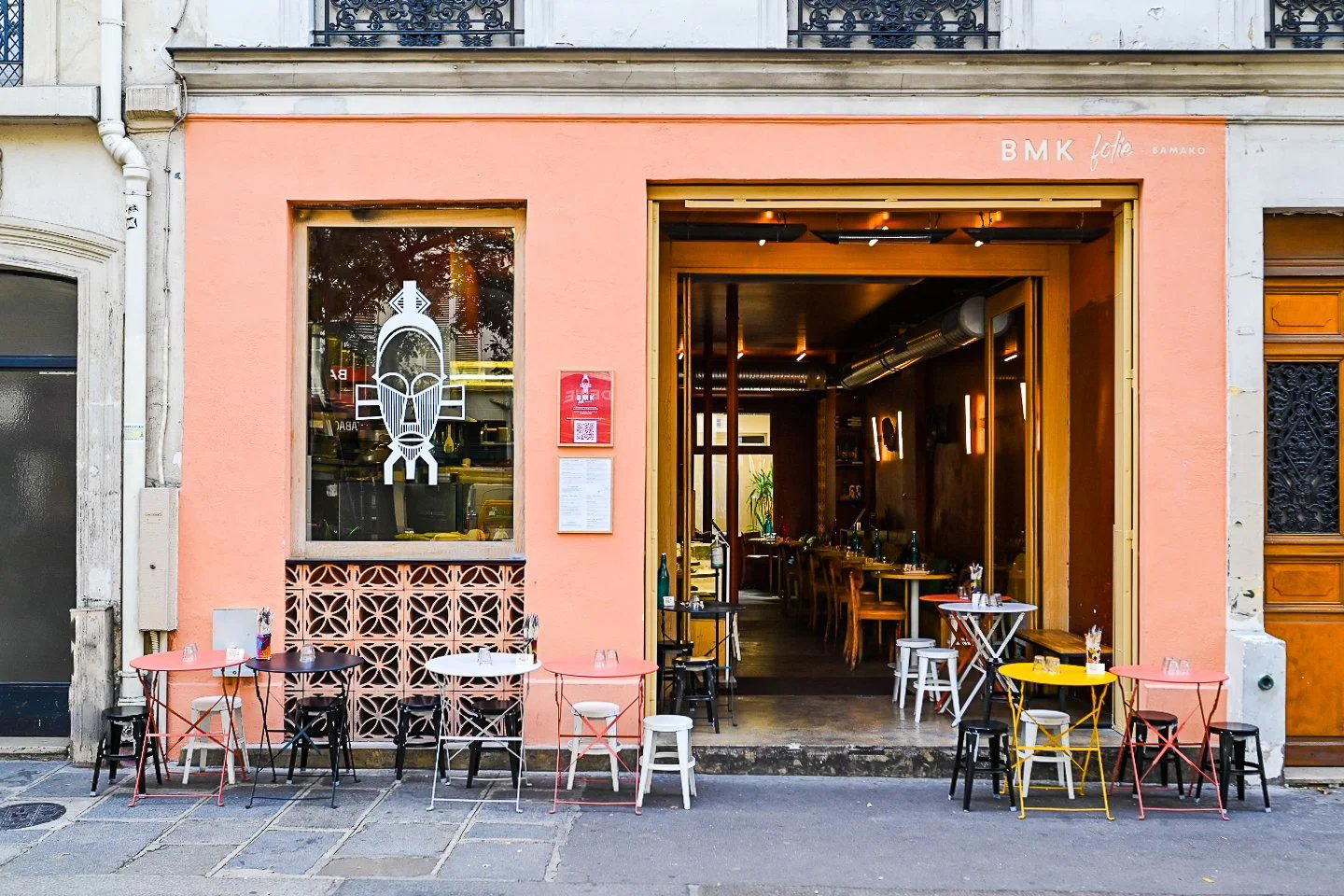
Where the 11th Arrondissement Meets West African Table Culture
Rue Jean-Pierre Timbaud runs through one of Paris's most compositionally interesting stretches: the eastern 11th, where wine bars and natural-leaning bistros share blocks with Malian grocers, Senegalese tailors, and the kind of neighbourhood restaurants that have never needed a publicist. It is in this context that BMK Folie-Bamako sits at number 40, presenting West African cooking on its own terms, without the frame of French classical technique as a reference point.
The Folie-Bamako name points to Bamako, the capital of Mali, where communal eating and long-cooked sauces shape much of the local food culture. In Paris, that tradition finds a diaspora expression: adapted to a different supply chain, a different clientele, but still anchored in the underlying logic of the original. This is how occasion dining often works in immigrant-community restaurants, where the meal carries cultural continuity as well as pleasure.
Occasion Dining Outside the Grand Dining Room
Paris has a dominant grammar for milestone meals: a formal room, a tasting menu, a sommelier. Restaurants like L'Ambroisie on the Place des Vosges or Arpège near the Rodin Museum define that grammar for international visitors. But a different kind of occasion dining exists in parallel, one where the significance of the meal comes from cultural specificity rather than formal ceremony. For Paris's substantial West African community, and for anyone who has spent time in Bamako, Dakar, or Abidjan, a properly executed mafé or thiéboudienne is not a lesser choice than a three-star tasting menu. It is simply a different category of meaningful.
BMK Folie-Bamako sits in that second tradition. The 11th arrondissement has enough of a track record with this kind of neighbourhood-anchored, community-specific dining that the address alone signals something about what to expect: a room where the food is the focus, not the décor or service choreography. That positioning has appeal well beyond the diaspora community itself. Paris attracts international visitors who have already done the classical French circuit, who have been to Kei for Franco-Japanese refinement, or to Flocons de Sel in Megève for alpine haute cuisine, and are now looking for a Paris meal that operates outside those well-mapped coordinates.
The Broader Shape of West African Dining in Paris
France's relationship with West Africa, Mali, Senegal, Côte d'Ivoire, Guinea, has produced one of the largest West African diaspora communities in Europe, and Paris's restaurant scene reflects that, unevenly. There are Senegalese restaurants throughout the 18th and 19th arrondissements. There are Malian grills in the Goutte d'Or. What is rarer is a West African table that attracts a cross-cultural clientele not because it has softened its cooking toward French expectations, but because the neighbourhood around it has developed the kind of openness that the eastern 11th specifically tends to produce.
Rue Jean-Pierre Timbaud and its immediate surroundings have developed a reputation, over roughly two decades, as a zone where the line between neighbourhood local and destination restaurant is usefully blurry. Bars, wine-natural bistros, and community-facing restaurants coexist at a density that rewards walking and comparing. This is a different kind of dining district than the 8th arrondissement's grand addresses or the Marais's design-forward rooms, it is less curated, more contingent, and in that contingency more likely to produce an evening that feels genuinely situated in the city rather than produced for its visitors. For those planning an occasion meal that carries memory rather than spectacle, that texture has value.
Comparable moments of culinary discovery outside the formal tier exist across France: the cooking at Auberge du Vieux Puits in Fontjoncouse is geographically remote but destination-grade; Bras in Laguiole built its identity around a regional vocabulary that the mainstream French dining world originally underestimated. The pattern, a kitchen working within a tradition that the broader market is slow to take seriously, repeats across French food history. The difference at BMK Folie-Bamako is that the tradition in question is not a French regional one. It is Malian, and that makes it more genuinely distinct from the dining options that surround it in the city.
Planning Your Visit
Rue Jean-Pierre Timbaud is served by the Couronnes metro stop (line 2) and is within easy walking distance of Oberkampf (lines 5 and 9). Budget expectations here sit around €20 per person, with a casual dress code and reservations recommended. For those building a broader France itinerary around serious eating, the formal houses worth anchoring against include Mirazur in Menton, Troisgros in Ouches, Paul Bocuse in Collonges-au-Mont-d'Or, Auberge de l'Ill in Illhaeusern, Les Prés d'Eugénie in Eugénie-les-Bains, La Table du Castellet, and Georges Blanc in Vonnas. For international comparison points in the community-dining-as-occasion-meal tradition, Lazy Bear in San Francisco and Le Bernardin in New York City represent different but instructive models of how a clear culinary identity anchors a restaurant's reputation over time.
- Mafé
- Bamako Fried Chicken
- Allocos
- Attiéké
- Suya
- Zaamé
A Lean Comparison
Comparable venues nearby, for context on price, style, and recognition.
| Venue | Cuisine | Price | Notes |
|---|---|---|---|
| BMK Folie-BamakoThis venue — the venue you are viewing | Not listed | $$ | Not listed |
| Wally Le Saharien | Not listed | $$$ | 9th Arr., Authentic Algerian Saharan Cuisine |
| Osè African Cuisine | Not listed | $$ | Château d'Eau (10th Arr.), West African Street Food Bowls |
| Ethiopia | Roquette, Traditional Ethiopian | $$ | Not listed |
| IMA CANTINE | Not listed | $$ | 10th Arr. - Entrepôt, Mediterranean Vegetarian Canteen |
| Brasserie Martin | Not listed | $$ | 11th arrondissement, Traditional French Brasserie with Rotisserie |
Continue exploring
More in Paris
Restaurants in Paris
Browse all →
Bars in Paris
Browse all →
Hotels in Paris
Browse all →



At a Glance
- Cozy
- Bohemian
- Lively
- Casual Hangout
- Group Dining
- Family
- Brunch
- Terrace
- Standalone
- Zero Proof
- Local Sourcing
Current opening hours
- Monday
- 12–2:30 PM, 7–10:30 PM
- Tuesday
- 12–2:30 PM, 7–10:30 PM
- Wednesday
- 12–2:30 PM, 7–10:30 PM
- Thursday
- 12–2:30 PM, 7–10:30 PM
- Friday
- 12–3 PM, 7–10:30 PM
- Saturday
- 12–10:30 PM
- Sunday
- 12–3:45 PM, 6:30–10 PM
Hours can change for holidays and private events. Last verified .
Warm and cozy with flashy cushions, mirror tables, and Malian wooden decor; small but nicely decorated interior with a friendly, welcoming atmosphere.