
Tabelog 100 #68
Our verdict
Blondir places Tokyo’s serious pastry culture outside the usual central-city circuit, in Shakujiimachi, where cake and bread are treated with the same selectivity diners often reserve for sushi counters or wine bars. Its Tabelog Sweets TOKYO 100 selections in 2019 and 2023 give it a clear trust signal in a category where reputation is built through repeat custom rather than spectacle.

Pearl is the En Primeur Club membership app, where members save venues, book tables and use the concierge.
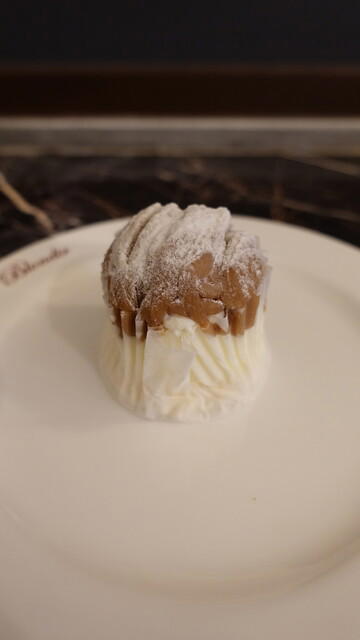
Shakujiimachi changes the tempo before the pastry does. The approach is residential, low-rise and local, a long way from the department-store basement counters where much of Tokyo’s dessert buying happens under fluorescent precision. That context matters: a sweets shop in Nerima has to earn repeat travel, not just passing trade. Blondir sits in that quieter Tokyo, where cake and bread operate less as souvenirs and more as a weekly ritual for people who know exactly what they are looking for.
Tokyo sweets culture, read with the discipline of a wine list
Tokyo’s serious pastry scene rewards curation over abundance. The better addresses tend to work like compact cellars: limited categories, clear house preferences, and a clientele that reads small differences with unusual attention. Blondir’s public identity is built around cake and bread, and its selection for Tabelog Sweets TOKYO 100 in both 2019 and 2023 places it inside a recognised group of Tokyo dessert specialists rather than the broader café category. That distinction is useful. A café can be judged by atmosphere and dwell time; a pastry shop is judged by repeat purchase, technical consistency and whether the counter has a point of view.
The wine-list analogy is not decorative here. Tokyo has a habit of treating sweets with the same seriousness found in sake bars, sushi counters and French dining rooms: provenance, balance, storage and timing all matter. In that culture, a cake-and-bread specialist reads less like a casual sugar stop and more like a narrow, edited program. The draw is not a sprawling menu. It is the confidence implied by a shop that can sustain attention in a city crowded with patisseries, boulangeries, kissaten desserts and convenience-store perfectionism.
Blondir’s price band also says something about its place in the city’s dessert economy. It sits above impulse-snack territory but below the ceremonial spend of luxury hotel pastry counters and restaurant dessert courses. That middle tier is competitive because Tokyo customers are exacting at every level. Nearby comparison points show how varied this part of western Tokyo can be: BUTCHER'S TABLE Ooizumi gakuen ten occupies a similar everyday spend bracket, while PIZZERIA GTALIA DA FILIPPO reaches higher for dinner and Musashino Enza, Teuchi Udon Hasegawa and Shotaro Udon sit closer to casual noodle-and-local-meal territory. Against that mix, a sweets specialist has a different job: not to feed a full evening, but to justify a dedicated detour.
Why a Nerima pastry address carries different weight
Central Tokyo rewards visibility. Nerima rewards intention. Shakujiimachi is not where travellers usually begin a dessert crawl, which makes recognition in a citywide sweets selection more meaningful. The area’s appeal is not built on grand hotel lobbies or luxury retail floors; it is a neighbourhood context, where bakeries, family meals and takeaway routines shape demand. Blondir’s house-restaurant setting and takeaway format fit that pattern. This is pastry as part of local domestic life, not plated theatre.
The move from Fujimino in Saitama Prefecture adds another useful signal. Tokyo’s dining culture often absorbs specialists from surrounding prefectures once their audience grows, but the relocation into Nerima rather than Ginza, Aoyama or Marunouchi suggests a different kind of positioning. It does not chase international foot traffic first. It sits in the orbit of regulars, families and destination pastry buyers who will travel for a defined category. Children are welcomed, private rooms are not part of the format, and the non-smoking policy keeps the focus on takeaway and short-stop purchasing rather than lingering service.
For readers mapping Tokyo by appetite rather than by station hierarchy, this is the kind of address that belongs alongside a broader city file. The full restaurant picture runs from casual specialists such as 2D Cafe and 3 Chome no Curry Ya San to more meal-driven entries including . 鮪と炭火焼き うお炭 秋葉原店, 12/10 Shinjuku ten and 124. KAGURAZAKA (Yakitori). Used that way, Blondir is not competing with dinner; it sharpens the day around a pastry stop.
The practical reading: go for the edited category, not spectacle
The defining idea is cake and bread handled as a focused specialty, supported by repeat Tabelog Sweets TOKYO 100 recognition. There is no need to inflate that into a chef mythology or invented signature. The smarter read is simpler: Tokyo’s dessert culture is deep enough that a neighbourhood pastry counter can carry destination status when its category discipline is strong. In a city where many visitors chase sushi, ramen and cocktail reservations, this is a reminder that sweets have their own hierarchy, and that hierarchy often sits outside the obvious hotel-and-retail corridors.
Payment habits also shape the experience. Cash-only operations remain part of Japan’s smaller specialist food culture, especially where the format is compact and transaction-driven. For travellers used to card-first dining, that detail changes planning more than ambience does. The prohibition on photographing showcases is another practical cultural signal: the counter is treated as a working retail environment, not content scenery. That can feel severe to visitors, but it aligns with a Tokyo norm in which small shops protect flow, product presentation and other customers’ privacy.
Blondir makes the strongest case for travellers already building a Tokyo itinerary around category specialists rather than broad sightseeing. For citywide planning, pair it with Our full Tokyo restaurants guide, then widen the trip through Our full Tokyo hotels guide, Our full Tokyo bars guide, Our full Tokyo wineries guide and Our full Tokyo experiences guide. Readers comparing Japan’s regional food addresses can also cross-reference -Grilled beef Sukiyaki- KAMAKURA TANUKIAN 鎌倉 たぬき庵 in Kamakura.cafe in Osaka.know in Kumamoto, (Shoku) Vietnam in Kawasaki, [Curry Senmon Ten] Maruyama Kyoju. in Sapporo and [ki:] in Kyoto. For overseas context on Japanese food culture beyond Japan, Jōdo Saké Bar in Los Angeles and Onigiri Time in Pasadena show how tightly edited formats travel.
Frequently asked questions
Where do I go for Blondir?
Blondir is located in Tokyo.
What does dinner at Blondir typically cost?
Pricing at Blondir is listed as JPY 2,000 - JPY 2,999 JPY 2,000 - JPY 2,999.
Is Blondir open every day?
Hours at Blondir: Mon: Closed; Tue: 10 AM–12 PM, 1–6 PM; Wed: 10 AM–12 PM, 1–6 PM; Thu: 10 AM–12 PM, 1–6 PM; Fri: 10 AM–12 PM, 1–6 PM; Sat: 10 AM–12 PM, 1–6 PM; Sun: Closed.
What's the defining dish or idea at Blondir?
Blondir is defined by a focused cake-and-bread lineup, served as take-out in Nerima City, Tokyo. Its Tabelog Sweets TOKYO 100 selection in 2023, alongside the 2019 listing, gives the address its editorial weight.
Cuisine-First Comparison
Comparable venues at the same tier for side-by-side context.
| Venue | Cuisine | Price | Awards | Notes |
|---|---|---|---|---|
| BlondirThis venue (the venue you are viewing) | French pastries | Not listed | Tabelog 100 #68 | Not listed |
| Dans Dix ans | Artisan Japanese Bakery | Not listed | Tabelog 100 #96 | Kichijoji |
| BAKERY SASA | Tokyo neighborhood bakery | $1–10 | Tabelog 100 #40 | Shibuya |
| moonbow | Curry bar | $10–20 | Tabelog 100 #96 | Shibuya |
| Antica Gelateria Tamagawa ten | Italian gelato shop | $1–10 | Tabelog 100 #79 | Setagaya |
| nemo Musashikoyama honten | Bakery & Cafe | $10–20 | Tabelog 100 #82 | Shinagawa |
Recognition history
Dated appearances from independent guides and award organizations, with the underlying list record or original source where available.
Tabelog 100 #68 · No. 68
Tabelog · Tabelog 100 - Sweets - TOKYO - 2023
Continue exploring
More in Tokyo
Restaurants in Tokyo
All restaurants in Tokyo →


Bars in Tokyo
All bars in Tokyo →



Details
Current opening hours
- Monday
- Closed
- Tuesday
- 10 AM–12 PM, 1–6 PM
- Wednesday
- 10 AM–12 PM, 1–6 PM
- Thursday
- 10 AM–12 PM, 1–6 PM
- Friday
- 10 AM–12 PM, 1–6 PM
- Saturday
- 10 AM–12 PM, 1–6 PM
- Sunday
- Closed
Hours can change for holidays and private events. Hours as of .