
Bledor Hayama honten places Hayama’s bakery culture in a practical, coastal register: bread, cafe service, sandwiches, take-out, and pricing that keeps it closer to daily use than destination dining. Its Tabelog Bread EAST 100 selections in 2020 and 2022 give it a clear credential inside eastern Japan’s competitive bakery tier.
Pearl is the En Primeur Club membership app — saves, bookings, and concierge access live there. Same editors, same standards.
- Address
- 657-1 Isshiki, Hayama, Miura District, Kanagawa 240-0111, Japan
- Phone
- +81 46-875-4548
- Website
- bledore.jp
- Directions
- Get directions
 Saves & bookings on Pearl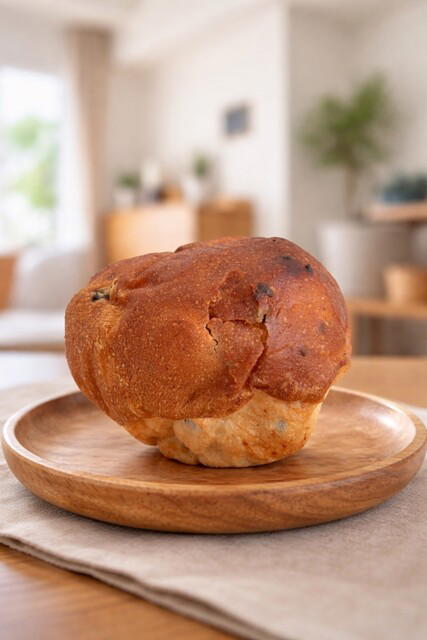
Hayama’s food rhythm is quieter than Tokyo’s counter culture: morning errands, coastal drives, family lunches, and bakeries that function as part pantry, part cafe. In that setting, Bledor Hayama honten reads less as a formal restaurant than as a local bread address with enough recognition to pull in diners who usually plan around sushi counters, soba rooms, and seaside dining rooms.
The useful way to understand it is through sourcing and format. Japanese bakery culture has long absorbed French technique, sandwich-counter practicality, and the domestic preference for precise, lightly handled breads. In Kanagawa’s Miura-gun, that combination matters because the area is not built around a single dining genre. A day can move from tea and casual sweets to soba, seafood, or a more composed dinner without changing the pace of the trip. Bledor Hayama honten sits in the daytime part of that circuit, with bread, cafe, and sandwich categories placing it closer to provisions-led eating than ceremonial dining.
Hayama's bakery culture works because it stays close to daily eating
Serious bakeries in Japan often compete on small decisions rather than spectacle: flour choice, fermentation discipline, fillings, crust texture, and how well a loaf survives the trip home. Those details are not decorative; they determine whether a bakery becomes useful beyond a single snack stop. Bledor Hayama honten’s selection for Tabelog Bread EAST 100 in 2020 and 2022 places it among bakeries noticed beyond its immediate neighbourhood, while its price band keeps the experience grounded in everyday use.
That combination is the point. Hayama has a softer dining tempo than central Yokohama or Tokyo, and a bakery-cafe format suits the way people actually move through the town. It can support a family morning, a light lunch, or a take-out run before continuing toward the coast. For travellers comparing local options, Fruhling and KIRIHARA occupy a similar casual price bracket, while Soba Edo sits in a higher spend tier and points to a different kind of meal planning. Hinode En stays at the lighter end of the local spend spectrum. Read together, the group shows how Miura-gun rewards pacing rather than itinerary stuffing.
The sourcing angle also explains why bakeries can matter in a premium travel context. Bread is often treated as a supporting player in restaurant criticism, but in Japan the category has its own hierarchy, audience, and award structure. A bakery selected for a bread-specific list is being judged within a narrower technical field than a general cafe. That does not make it formal; it makes it specific. The better question is not whether the room feels grand, but whether the format helps the food travel from breakfast to lunch without losing purpose.
A practical counterpoint to seaside dining and destination meals
Miura-gun dining is strongest when read as a sequence of formats. A bakery-cafe serves a different role from Restaurant La Mare, where the meal is framed by a more restaurant-led seaside occasion. It also differs from soba, tea, or set-meal traditions, where pacing and seating define the experience. The restaurant is useful because it does not require the same commitment. The categories are bread, cafe, and sandwich, with take-out listed as part of the service model, so the meal can be folded into a Hayama day rather than becoming the whole day.
That matters for families. Children are welcomed, the setting is non-smoking, and the price range sits low enough to allow a relaxed order without turning lunch into a major spend. The absence of private rooms is not a drawback in this category; bakery-cafes work through circulation, visibility, and quick decisions. In a town where a car, bus, or walking segment may shape the day, parking availability and take-out service are meaningful details rather than footnotes.
The payment setup is also worth noting for travellers used to card-first cities. Credit cards are not accepted, while electronic money and QR code payments are accepted. That detail places the shop firmly in Japan’s practical middle ground: not cash-only old school, not fully internationalised, and therefore worth planning around before arriving hungry with the wrong wallet.
How to place it within a Miura-gun day
Use the restaurant as a daytime anchor rather than a dinner substitute. Its listed hours begin earlier on weekends than weekdays, and the format suits breakfast, a casual lunch, or take-out before moving on. Travellers building a broader route can use Our full Miura-gun restaurants guide for nearby dining, then widen the trip through Our full Miura-gun hotels guide, Our full Miura-gun bars guide, Our full Miura-gun wineries guide, and Our full Miura-gun experiences guide.
For readers mapping Japanese casual dining more broadly, the comparison is useful across cities: -Grilled beef Sukiyaki- KAMAKURA TANUKIAN 鎌倉 たぬき庵 in Kamakura shows a more structured meat format. 鮪と炭火焼き うお炭 秋葉原店 in Tokyo points toward city izakaya energy.cafe in Osaka keeps the cafe thread urban.know in Kumamoto broadens the regional lens, (Shoku) Vietnam in Kawasaki reflects Japan’s everyday international dining, and [Curry Senmon Ten] Maruyama Kyoju. in Sapporo shows how single-category restaurants can earn serious attention without luxury signals.
The international echoes are different but relevant. Jōdo Saké Bar in Los Angeles translates Japanese drinking and dining references into a West Coast bar context, while Onigiri Time in Pasadena proves how portable formats can carry cultural specificity without long service rituals. Hayama’s bakery scene belongs to that same logic: the food may be casual, but the decisions behind it are exacting.
The editorial case for the restaurant is strongest for travellers who value category specialists. It is not the place to seek a long tasting menu or a formal room. It is the place to understand how a coastal Japanese town folds serious bread into ordinary hours, and why an award-noted bakery can tell as much about local appetite as a dinner reservation.
A Quick Peer Check
Comparable venues by cuisine and price in the same metro.
| Venue | Cuisine | Price | Notes |
|---|---|---|---|
| Bledor Hayama honten | Japanese Bakery Cafe | $$ | Hayama |
| KIRIHARA | Cafe / Kissaten | $$ | Hayama-machi |
| Restaurant La Mare | French-inspired creative seaside cuisine | $$ | Hayama-machi Horiuchi |
| Soba Edo | Japanese Soba Noodles | $$ | Hayama-machi |
| Hinode En | Japanese tea cafe & wagashi | $ | Hayama |
| Fruhling | Patisserie / Cake Shop | $ | Miura-gun |
Recognition history
Dated appearances from independent guides and award organizations, with the underlying list record or original source where available.
Tabelog 100 #50 · No. 50
Tabelog · Tabelog 100 - Bread - EAST - 2022
Continue exploring
More in Miura-gun
Restaurants in Miura-gun
Browse all →


Bars in Miura-gun
Browse all →






At a Glance
- Cozy
- Classic
- Casual Hangout
- Family
- Solo
- Brunch
- Standalone
Current opening hours
- Monday
- 8 AM–6 PM
- Tuesday
- 8 AM–6 PM
- Wednesday
- Closed
- Thursday
- 8 AM–6 PM
- Friday
- 8 AM–6 PM
- Saturday
- 7 AM–6 PM
- Sunday
- 7 AM–6 PM
Hours can change for holidays and private events. Last verified .
Casual and welcoming bakery-cafe atmosphere centered on takeaway and everyday bread selection rather than formal dining.