Our verdict
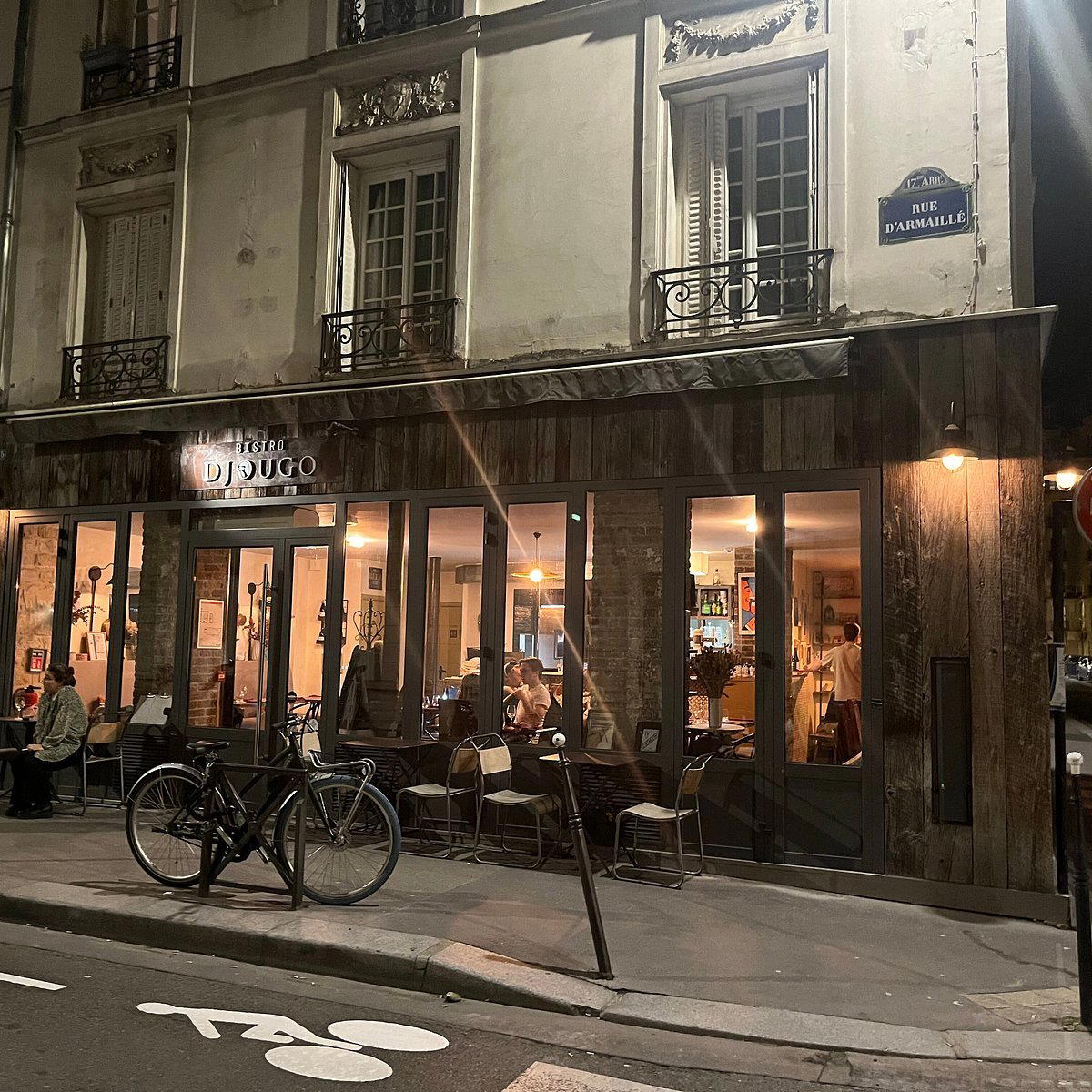
Bistro Djougo serves modern French bistro cooking with a focused meat line-up, an extensive wine list, and conversational pacing at 15 Rue d'Armaillé.

Pearl is the En Primeur Club membership app — saves, bookings, and concierge access live there. Same editors, same standards.
- Address
- 15 Rue d'Armaillé, 75017 Paris, France
- Phone
- +33986184550
- Hours
- Mon–Sat 12–2 PM, 7–10 PMSun 12–2 PM
- Website
- bistrodjougo.fr
- Directions
- Get directions
- Booking
- Book on Zenchef
The menu
What to order
- Os à moelle
- Black Angus Chuck Flap
- Boudin Noir revisité
Rue d’Armmillé and the Rhythm of the 17th
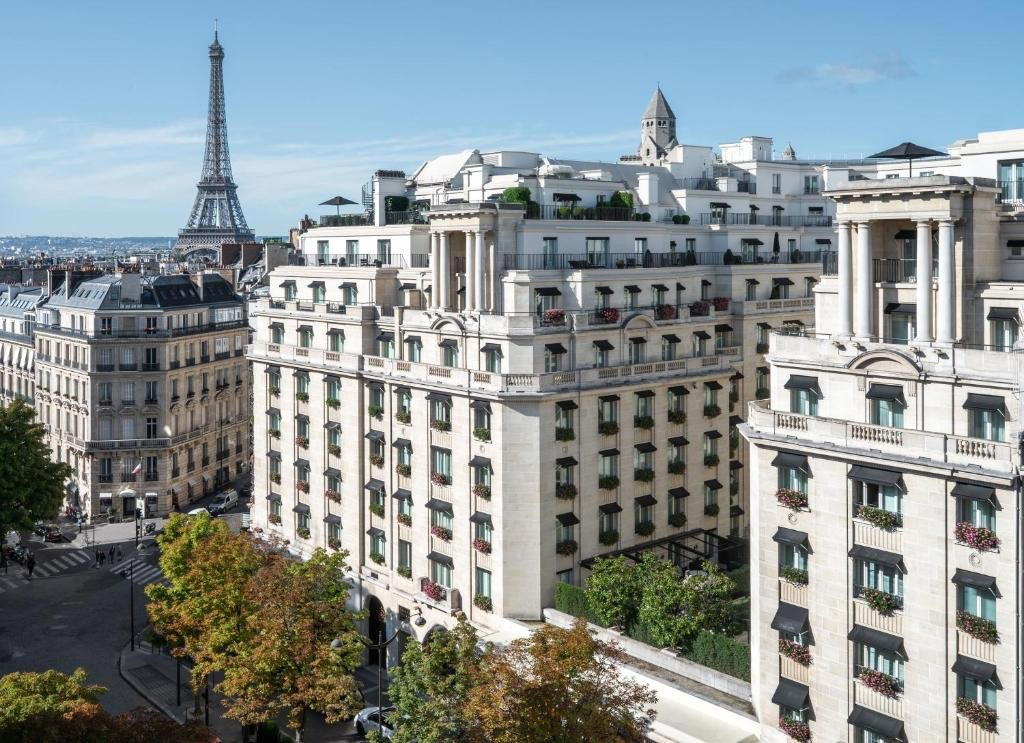
The 17th arrondissement occupies an interesting position in Paris’s dining geography: close enough to the 8th to draw comparison with the grand-hotel dining rooms of Le Cinq at the Four Seasons Hôtel George V, yet residential enough to sustain the kind of neighbourhood bistro that Parisians return to on a Tuesday without occasion. Rue d’Armmillé sits in that quieter register, a street where the pace drops from the boulevard and the dining proposition shifts accordingly. Bistro Djougo occupies this address at number 15, and the surrounding context shapes what kind of meal it is designed to be.
Paris bistro culture has long operated as a counterweight to the city’s formal restaurant tradition. Where three-Michelin-star institutions like L’Ambroisie or Arpège demand a particular kind of ceremonial attention from the diner, the bistro format is premised on something closer to the domestic meal: a table held for the duration, dishes arriving without theatrical interruption, and an implicit understanding that the conversation matters as much as the food. That ritual of unhurried eating is what the 17th’s residential streets are built to accommodate.
The Dining Ritual at This Address
In the French bistro tradition, the meal is structured by convention as much as by the menu. An apéritif sets the pace; the entrée-plat-dessert sequence disciplines the evening without rigidly constraining it. What distinguishes a serious neighbourhood bistro from a tourist-facing one is the degree to which that structure feels inhabited rather than performed. The kitchen’s relationship to the clock, the spacing between courses, the point at which the bread basket is refreshed without being asked: these details encode the bistro’s intent.
Bistro Djougo’s positioning on Rue d’Armmillé places it inside a tradition that French dining has exported globally with considerable force. Venues from Le Bernardin in New York to Lazy Bear in San Francisco have absorbed elements of the French service cadence, yet the original format, practised in a neighbourhood room with a compact menu and a regular clientele, retains its own authority. The meal at a Paris bistro does not require explanation. It simply requires patience and a willingness to follow its own internal clock.
Paris in the Context of French Regional Dining
Understanding what a Paris bistro does well requires understanding what it is not competing with. The great regional French tables, from Mirazur in Menton to Bras in Laguiole and Troisgros in Ouches, are anchored in landscape and produce in a way that the city cannot replicate. Auberge de l’Ill in Illhaeusern, Les Prés d’Eugénie in Eugénie-les-Bains, and Flocons de Sel in Megève each derive identity from their geography in ways that no Paris address can match. The city’s answer to that rootedness has historically been technique, ingredient sourcing from the best of those same regions, and a dining culture deep enough to sustain competition across every price tier.
At the formal end of Paris dining, venues like Allléno Paris au Pavillon Ledoyen and Kei compete on innovation and precision. The neighbourhood bistro occupies the opposite pole, where the measures of quality are consistency, value relative to ambition, and the accumulation of a loyal clientele. These are not lesser criteria; they are simply different ones, and the leading Paris bistros are judged by whether they meet them over years, not over a single meal.
Other celebrated provincial addresses, including Paul Bocuse in Collonges-au-Mont-d’Or, Georges Blanc in Vonnas, Auberge du Vieux Puits in Fontjoncouse, and La Table du Castellet in Le Castellet, have built identities over decades and across generations. The Paris bistro operates on a compressed version of the same logic: reputation accrues slowly, and a single bad service is remembered by the street as much as by guides.
What Rue d’Armmillé Tells You Before You Sit Down
A bistro at this kind of address, in a primarily residential arrondissement away from the tourist corridors, reads its room differently from a destination restaurant. The clientele is likely to include a proportion of repeat visitors, people who live or work nearby and have absorbed the place into their weekly routine. That changes the dynamic of service, menu development, and even the pacing of the evening. Regulars do not require explanation of the menu; occasional visitors benefit from the calibration that regulars impose on a kitchen over time.
The 17th also sits close enough to the 8th’s institutional dining zone that the contrast is felt. Crossing from the grand hotel dining rooms of the Avenue Montaigne axis into the quieter streets near Place des Ternes involves a real shift in register, and that shift is part of what the bistro format is designed to exploit. The meal costs less, the room is smaller, and the expectation of theatre is lower. What remains is the food and the time spent eating it. For much of the Paris dining public, that is sufficient.
Planning Your Visit
Bistro Djougo is located at 15 Rue d’Armmillé, 75017 Paris. The nearest Metro stations are Ternes (line 2) and Charles de Gaulle-Étoile (lines 1, 2, 6), both within a short walk. Dress: Smart casual is appropriate for a bistro in this neighbourhood. Timing: Service at Paris bistros conventionally begins at 12:30 for lunch and 7:30 for dinner; arriving outside those windows can mean a reduced menu or a wait. For broader context across the city, see our full Paris restaurants guide.
Frequently asked questions
What part of town is Bistro Djougo in?
Bistro Djougo is located at 15 Rue d'Armaillé, 75017 Paris, France, Paris.
Is Bistro Djougo a good option for a classic French bistro dinner near the Arc de Triomphe?
At 15 Rue d'Armaillé in the 17th arrondissement, Bistro Djougo sits within walking distance of the Ternes and Charles de Gaulle-Étoile Metro stations, placing it closer to the Arc de Triomphe quarter than most neighbourhood bistros without being caught in its tourist radius. That geography matters: the 17th draws a local Paris crowd rather than a hotel-adjacent one, so the room reads differently from the grand-brasserie strip of the 8th. For visitors who want proximity to that part of the city without the surrounding noise, this address is worth tracking.
What should I eat at Bistro Djougo?
The venue data doesn't specify a fixed menu, which is consistent with how bistros in residential Paris quarters like the 17th typically operate — a short, market-driven card that rotates with supply. At an address like 15 Rue d'Armaillé, away from tourist-corridor pressure, expect a kitchen focused on the entrée-plat-dessert sequence rather than tasting-menu ambition. Ask the room what's moving that day.
How hard is it to get a table at Bistro Djougo?
For a bistro at 15 Rue d'Armaillé in the primarily residential 17th, walk-in culture is plausible midweek, though weekend services at well-regarded neighbourhood addresses in Paris fill quickly. Arriving early or contacting the venue directly in person is the practical approach.
What's the standout thing about Bistro Djougo?
Location tells the first part of the story: 15 Rue d'Armaillé sits in the 17th arrondissement, close to Ternes and Charles de Gaulle-Étoile Metro stations, but firmly in residential rather than destination territory. A bistro operating at that address is answering to its neighbourhood before it answers to anyone else, which tends to produce a different kind of seriousness from places built around passing trade.
Standing Among Peers
| Venue | Cuisine | Price | Awards | Notes |
|---|---|---|---|---|
| Bistro DjougoThis venue — the venue you are viewing | Modern French Bistro with Exceptional Meats | Not listed | Not listed | Not listed |
| Alléno Paris au Pavillon Ledoyen | Modern French Fine Dining | $150–200 | 3 Michelin Stars · World's 50 Best #79 | Creative |
| Kei | Modern French with Japanese Influences | $300–500 | 3 Michelin Stars · World's 50 Best #93 | Contemporary French, Modern Cuisine |
| L'Ambroisie | Classic French Haute Cuisine | $300–500 | 2 Michelin Stars · World's 50 Best #23 | French, Classic Cuisine |
| Le Cinq - Four Seasons Hôtel George V | Modern French Fine Dining | $300–500 | 3 Michelin Stars · World's 50 Best #24 | French, Modern Cuisine |
| Pierre Gagnaire | Avant-Garde French Fine Dining | $200–300 | 3 Michelin Stars · World's 50 Best #17 | French, Creative |