
Binyan gives Nagoya’s Vietnamese dining scene a compact, everyday counterpoint to the city’s heavier local staples. Its Tabelog Asian cuisine/Ethnic cuisine EAST 100 selections in 2022, 2023, and 2024 place it among the region’s better-tracked casual ethnic restaurants, with a low lunch-budget profile and a format built around familiar Vietnamese staples rather than ceremony.
Pearl is the En Primeur Club membership app — saves, bookings, and concierge access live there. Same editors, same standards.
- Address
- Japan, 〒460-0024 Aichi, Nagoya, Naka Ward, Masaki, 4 Chome−6−10 羽衣ビル 1階
- Website
- vietnam9cafe.com
 Saves & bookings on Pearl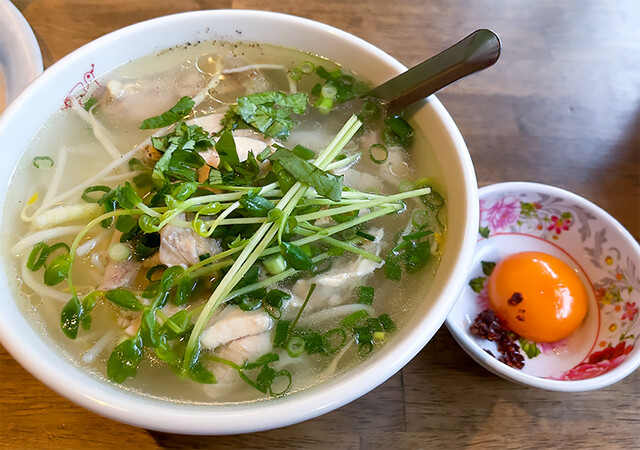
Kanayama is a working interchange before it is a dining district: trains crossing, office traffic thinning after lunch, and small restaurants trading in ground-floor rooms rather than theatrical dining rooms. That setting suits Vietnamese cooking. In Japan, its appeal often sits in contrast: rice noodles against wheat noodles, herbs and acidity against miso depth, quick plates against the longer rhythm of izakaya drinking. Binyan belongs to Nagoya’s everyday dining strand, where room, price tier, and food language point to lunch and casual meals rather than destination formality.
Read it not as a luxury address, but as proof of how deep Nagoya’s casual dining map has become. The city’s reputation outside Aichi still leans on miso katsu, hitsumabushi, kishimen, and tebasaki, yet station-adjacent neighborhoods have absorbed a wider Asian-cuisine grammar. Vietnamese restaurants occupy a particular niche: lighter broths, rice-paper textures, sandwich formats, and herb-led freshness, often priced closer to a daily canteen than a tasting-menu room.
Vietnamese staples in a city better known for miso depth
Vietnamese cooking in Japan has usually entered the mainstream through pho, banh mi, and fresh spring rolls. They travel well because they are legible without becoming generic pan-Asian cooking. Pho gives Japanese diners a familiar noodle format with a different broth register; banh mi brings bread, pickles, herbs, and protein into a quick-meal frame; fresh spring rolls foreground texture and temperature. Binyan’s public description anchors itself to those everyday dishes. This is not fusion as thesis, but a casual Nagoya room using recognizable Vietnamese forms in a city where lunch culture rewards speed, clarity, and price discipline.
The Tabelog Asian cuisine/Ethnic cuisine EAST 100 selections in 2022, 2023, and 2024 matter because the category is not a single-cuisine hierarchy. It groups Vietnamese, Nepali, Thai, Indian, and other non-Japanese traditions competing across eastern Japan. Within Nagoya, that places Binyan in a different conversation from ramen counters such as Mendokoro Suwa or Nakamura So, and from higher-spend meat rooms such as Yakiniku Jingu and Otoubashi Sumiy. The comparison is less rank than use case: ramen and yakiniku answer different cravings; Vietnamese cooking here offers a lighter, casual Asian option that does not depend on alcohol, smoke, or ceremony.
There is also a price signal. In Nagoya, ethnic-cuisine restaurants often split between low-cost lunch sets, mid-range spice restaurants, and higher-ticket specialist rooms. Nepali Chulo, for example, sits in a broader South Asian/Nepali lane with a different budget pattern, while Binyan’s listed range keeps it in the low daily-meal bracket. For travelers, it works between larger meals. For locals, it explains how a small Vietnamese restaurant can become part of the weekly circuit rather than a special-occasion plan.
A compact room, a short-service rhythm, and food built for daytime eating
The experience is defined by scale. A 26-seat restaurant changes the psychology of a casual meal: small enough for turnover and takeout to shape the pace, but not so small that it becomes a chef-counter performance. Non-smoking status, children welcome, a kids menu, stroller access, and takeout all push the format toward practical daytime dining in Kanayama, where the audience includes commuters, families, and friends meeting near a major station node.
Small restaurants with limited service windows reward earlier, decisive planning. The public note that some items may sell out on the day is an operational clue. Casual Vietnamese staples can look simple, but broths, pickles, herbs, fillings, and rice-paper handling do not scale endlessly in a compact room. Arriving late means a narrower board. Treat this as a focused lunch or early-afternoon stop, not somewhere to drift into near closing.
Payment and booking conventions also sit outside the frictionless card-and-app habits of larger groups. Cash-only dining remains common in Japan, but it changes a traveler’s rhythm. Reservations are available through the restaurant’s website by the previous evening, useful for building a Nagoya eating day around train movements and station neighborhoods rather than taxis and long dinners.
The sensory frame is modest, and that is its strength. Vietnamese restaurants at this level rarely trade on spectacle. The cues are quieter: steam from noodle bowls, the snap of pickled vegetables in a sandwich format, rice paper giving fresh spring rolls their translucent look, and the softer soundscape of a lunch room rather than an evening izakaya. Those category-level expectations explain why the cuisine can cut through Nagoya’s richer local canon.
Where it fits on a Nagoya food day
Binyan works as part of a broader Nagoya itinerary built around contrast. A traveler using Our full Nagoya restaurants guide might use it to offset heavier regional specialties, then move toward coffee, bars, or hotel dining elsewhere. The surrounding EP Club map helps separate category decisions: Our full Nagoya hotels guide for base selection, Our full Nagoya bars guide for evening drinking, Our full Nagoya wineries guide for wine-led planning, and Our full Nagoya experiences guide for non-restaurant time.
Within the city’s restaurant index, it sits beside names showing Nagoya’s spread: 1022, 451, Aaron, Alan., and All Day Dining Montmartre. For Vietnamese cooking elsewhere in Japan, (Shoku) Vietnam in Kawasaki offers a separate reference point, while the wider Japanese casual-food map includes [Curry Senmon Ten] Maruyama Kyoju. in Sapporo.cafe in Osaka.know in Kumamoto. 鮪と炭火焼き うお炭 秋葉原店 in Tokyo, and -Grilled beef Sukiyaki- KAMAKURA TANUKIAN 鎌倉 たぬき庵 in Kamakura. Across the Pacific, Jōdo Saké Bar in Los Angeles and Onigiri Time in Pasadena show how Japanese and Asian casual formats translate into another dining culture.
The editorial case is clear: this is a small, low-budget Vietnamese address in Kanayama with repeated Tabelog 100 recognition in its category. Its value lies in contrast, not grandeur. On a Nagoya trip heavy with regional classics, a daytime Vietnamese meal gives the palate a different register and the schedule a compact stop near one of the city’s better-connected areas.
How It Stacks Up
Comparable venues at a similar level for quick context.
| Venue | Cuisine | Price | Notes |
|---|---|---|---|
| BinyanThis venue — the venue you are viewing | Casual Vietnamese Cafe (Pho & Banh Mi) | $ | Not listed |
| Kanmiya Sawada Shoten | Japanese Kakigori & Sweets Café | $ | Naka |
| Nakamura So | Traditional Takayama ramen (chuka soba) | $ | Naka |
| Naruto Ya | Ramen & Tsukemen Shop | $ | Naka |
| Ramen Rikimaru | Nagoya ramen shop specializing in spicy miso | $ | Nakamura |
| Le Supreme Jeiāru nagoya takashimaya ten | Artisanal bakery & bread shop | $ | Nakamura |
Recognition history
Dated appearances from independent guides and award organizations, with the underlying list record or original source where available.
Tabelog 100 #14 · No. 14
Tabelog · Tabelog 100 - Asian cuisine / Ethnic cuisine - EAST - 2024
Continue exploring
More in Nagoya
Restaurants in Nagoya
Browse all →

At a Glance
- Cozy
- Casual
- Casual Hangout
- Solo
- Family
- After Work
- Standalone
- Beer Program
Current opening hours
- Monday
- 12–5 PM
- Tuesday
- 12–5 PM
- Wednesday
- 12–5 PM
- Thursday
- 12–5 PM
- Friday
- 12–5 PM
- Saturday
- 11 AM–3 PM
- Sunday
- Closed
Hours can change for holidays and private events. Last verified .
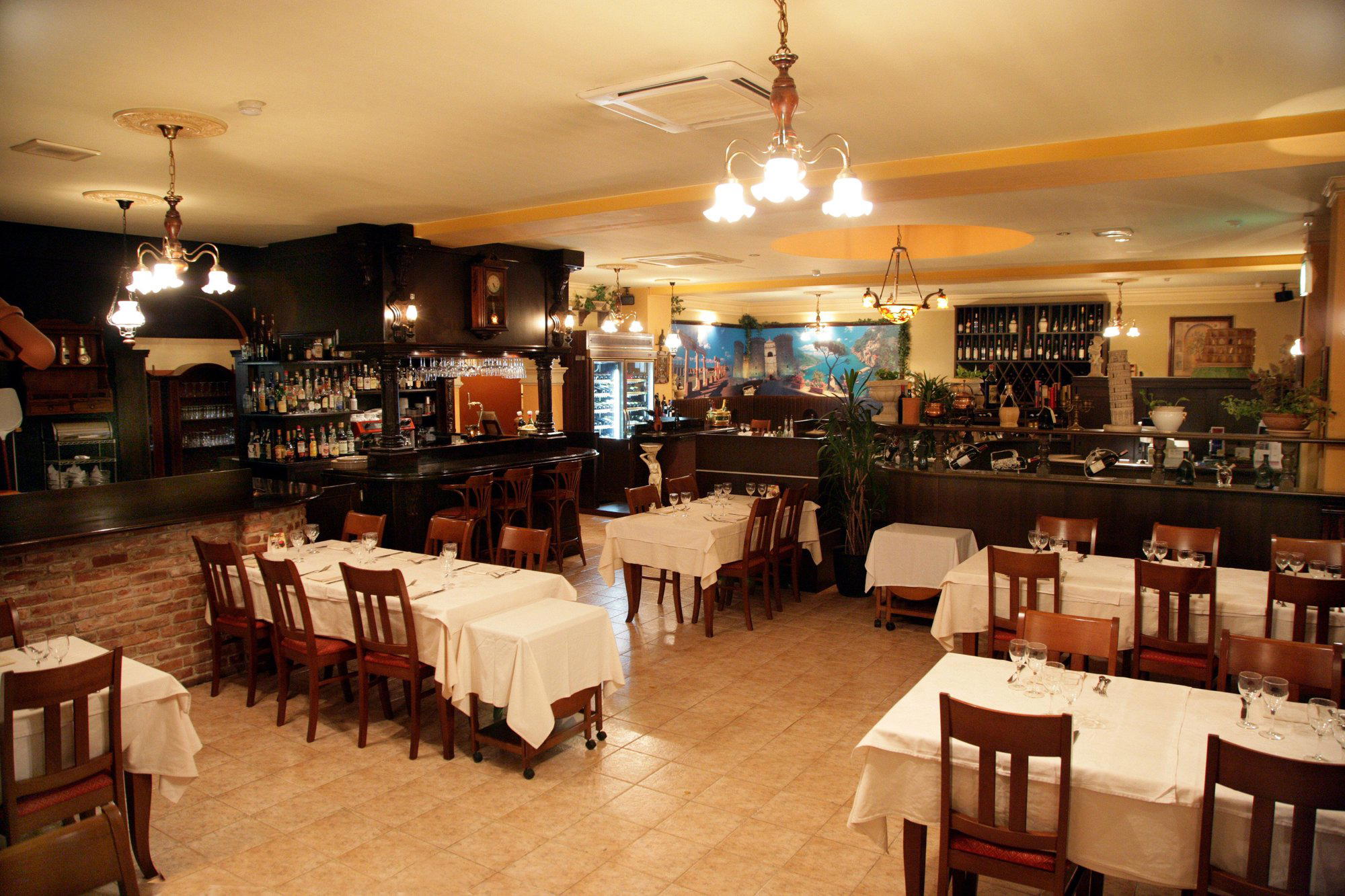
Small, cozy Vietnamese cafe with a relaxed, everyday atmosphere evoking the feel of Vietnam, simple decor, and a casual neighborhood vibe suited to solo diners and families.