On the corner of Király utca in Budapest's VII. district, Belvárosi Disznótoros keeps one of Hungary's most deeply rooted culinary traditions alive in the middle of a neighbourhood better known for ruin bars and late nights. The disznótoros format, a communal pig-slaughter feast, rarely survives city centre transplantation with its character intact. This address is one of the few places in Budapest where that tradition holds.
Pearl is the En Primeur Club membership app — saves, bookings, and concierge access live there. Same editors, same standards.
- Address
- Budapest, Király u. 1d, 1075 Hungary
- Phone
- +36 70 709 8570
- Website
- belvarosidisznotoros.hu
- Directions
- Get directions
 Saves & bookings on Pearl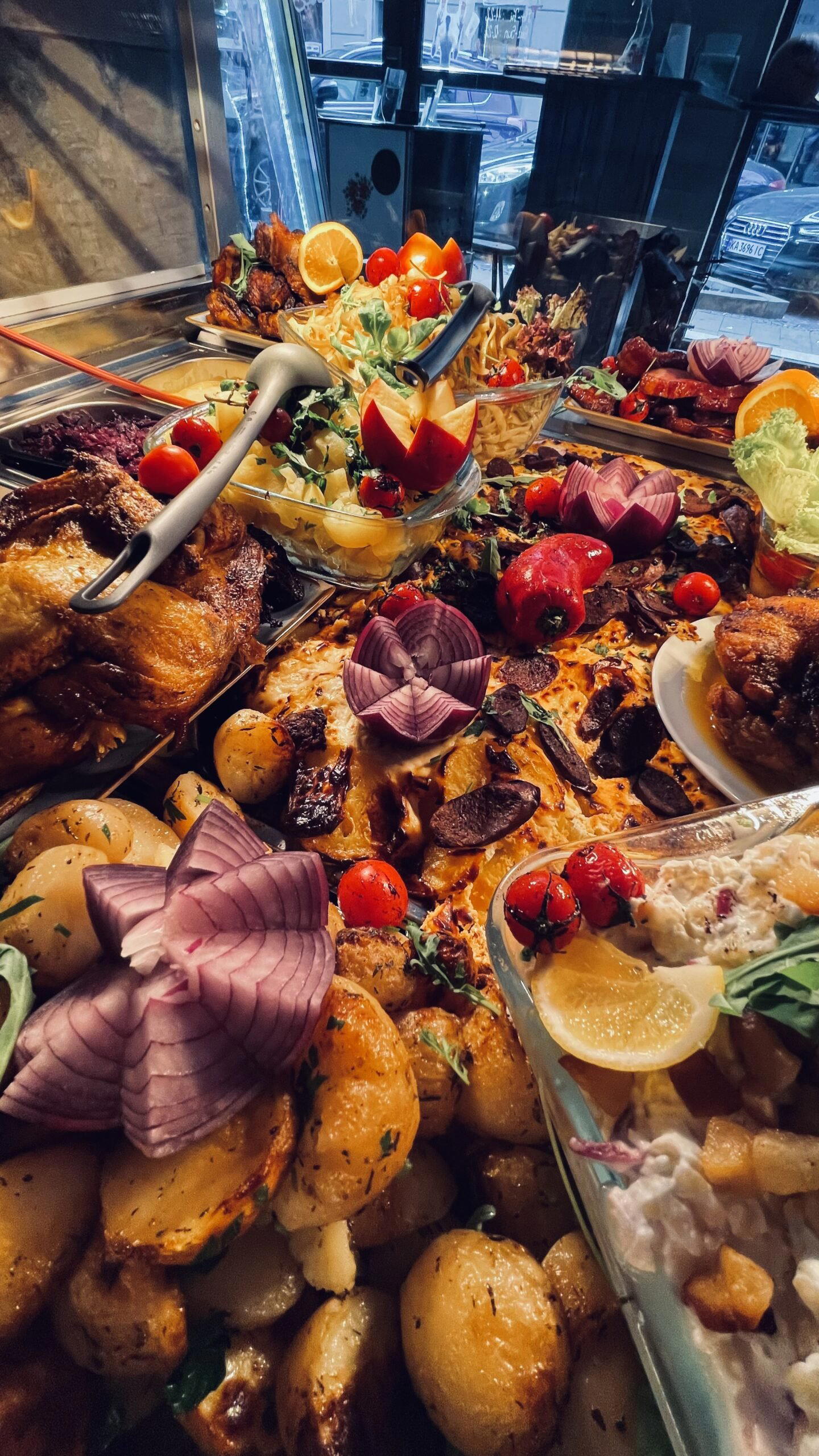
Király utca and the Tradition It Keeps
Belvárosi Disznótoros - Király utca is a restaurant in Budapest serving Traditional Hungarian Grilled Meats and Sausages, at Király u. 1d in the VII. district. Király utca cuts through a neighbourhood where crumbling Austro-Hungarian apartment blocks have been colonised by bars, vintage shops, and the kind of international foot traffic that tends to smooth the edges off local food culture. Against that backdrop, Belvárosi Disznótoros occupies a specific and deliberate counterposition: a place committed to the disznótoros tradition, the Hungarian pig-slaughter feast, in a city where that format has largely retreated to village kitchens and winter festival tables.
The disznótoros is not a menu concept. It is a seasonal ritual with a fixed grammar: freshly made hurka (offal sausage), kolbász, sült oldalas (roasted ribs), töpörtyű (crackling), and the various cooked cuts that emerge from a whole-animal process. In its original form, the event happens in November and December, when cold weather historically made slaughter and preservation practical. Urban versions that run year-round necessarily adapt that logic, but the core of the tradition, the nose-to-tail economy of the pig, the communal table, the absence of flourish, remains the point.
What the Room Tells You
Address at Király u. 1d places the restaurant at one of the more trafficked corners of the district, which means the physical environment works against the usual disznótoros association with rural quietude. What that location does instead is put the tradition into direct conversation with Budapest street life: the smell of rendered lard and paprika-spiced sausage drifting into a neighbourhood that is otherwise serving craft beer and fusion sandwiches. That tension is part of the editorial interest here. The sensory register of a disznótoros kitchen, fat rendering, smoked meat, the dense warmth of a room where preparation and service are not separated, is almost deliberately archaic in this context.
Budapest's higher-end dining addresses have moved in a consistent direction over the past decade. Venues like Stand (€€€€ · Modern Cuisine), Babel (€€€€ · Modern Cuisine), and Costes (€€€€ · Modern Cuisine) have built their reputations on reinterpreting Hungarian ingredients through contemporary technique. Borkonyha Winekitchen (€€€ · Modern Cuisine) and essência (€€€€ · Modern Cuisine) occupy similar territory, using the Michelin framework as a reference point. Belvárosi Disznótoros operates in a different register entirely, one where the measure of quality is fidelity to process rather than creative transformation.
The Disznótoros Format in Context
The survival of the disznótoros as a city-centre restaurant format is worth examining. Across Central Europe, whole-animal feasting traditions have either been absorbed into fine dining as a sourcing narrative or abandoned entirely as urban food culture moved toward lighter, more globally inflected menus. Hungary has been more resistant to that drift than neighbouring countries, partly because the pig holds a specific cultural weight in Hungarian cooking that goes beyond ingredient preference. The kolbász, the hurka, the disznósajt (head cheese), these are not novelty items on a charcuterie board. They are the product of a preparation sequence that takes hours and requires specific knowledge to execute correctly.
Restaurants that claim this tradition in a serious way are fewer than the tourism-facing menu descriptions would suggest. The distinction between a venue that serves sausage and one that actually runs a disznótoros kitchen matters. The latter involves sourcing whole animals, managing the full butchery sequence, and serving cuts in the order and form the process produces them, not a curated selection assembled from processed inputs. That operational commitment is what separates a disznótoros address from a Hungarian restaurant that happens to list hurka on the menu.
For comparison, the broader Hungarian dining map shows that this kind of specificity tends to concentrate outside the capital. Platán Gourmet in Tata, Pajta in Őriszentpéter, and Hosszú Tányér in Hosszúhetény each operate in provincial settings where proximity to farming and slaughter makes the logistics of traditional formats less demanding. Kővirág in Köveskál and Petrányi Csopak in Csopak are further examples of how Balaton-region dining has preserved traditional forms that Budapest venues often cannot sustain at the same level. Finding the disznótoros format maintained seriously at a Király utca address, inside the ring road, within walking distance of the Dohány Street Synagogue, is a different proposition.
Sensory Specifics of the Format
What a disznótoros meal actually involves, for visitors unfamiliar with the format, is a sequence of cooked pork products served as they come off the preparation line. Freshly made hurka arrives hot, the casing tight and the interior loosely textured with liver, lung, or rice depending on the variety. Kolbász carries a different density, the paprika and garlic paste that defines Hungarian sausage-making visible in both colour and smell. Töpörtyű, the rendered crackling, arrives as the kitchen's byproduct-turned-feature: concentrated fat, salt, and the faint sweetness of properly rendered lard. These are not dishes designed for delicacy. They are built for caloric weight and communal sharing, which shapes everything from portion logic to the expectation that bread and mustard will be on the table as structural elements rather than accompaniments.
The wine logic at a table like this points toward the fuller-bodied Hungarian reds, Egri Bikavér or Szekszárdi blends, that have enough structure to work against the fat content of the food. Hungary's wine programme has deepened considerably over the past two decades, and venues like Sauska 48 in Villány represent the kind of serious southern Hungarian viticulture that pairs naturally with pork-forward cooking. Öreg Prés in Mór and Teyföl in Szentendre add further regional context to how Hungarian food and drink traditions intersect in ways that the Budapest fine-dining circuit does not always foreground.
Planning a Visit
Király utca 1d sits at the southern end of the street, easily reached on foot from the M1 or M2 metro lines and within a short walk of the main VII. district bar and restaurant cluster. Given the seasonal logic of the disznótoros tradition, the winter months from November through February represent the period when this format is most coherent, both in terms of what the kitchen is producing and the atmospheric fit between the food and the weather. Visitors may also find relevant context in Old Kőrössy Fish Restaurant in Szegedin and Botanica in Dánszentmiklós, both of which show how regional Hungarian cooking operates outside the capital. For international reference points on format-committed dining, Lazy Bear in San Francisco and Le Bernardin in New York City represent how different cities have institutionalised specific format commitments at the premium tier.
Peers Worth Knowing
Comparable venues nearby, for context on price, style, and recognition.
| Venue | Cuisine | Price | Notes |
|---|---|---|---|
| Belvárosi Disznótoros - Király utcaThis venue — the venue you are viewing | Traditional Hungarian Grilled Meats and Sausages | $$ | Not listed |
| Horizont | Modern Brunch Cafe | $$ | Terézváros |
| Remiz | Traditional Hungarian Gourmet | $$ | Huvosvolgy |
| Café Gerbeaud | Hungarian Café & Pastries | $$$ | Varhegy |
| Kispiac | Traditional Hungarian Bistro | $$ | Terézváros |
| Franziska Buda | Healthy Cafe Breakfast & Brunch | $$ | Varhegy |
Continue exploring
More in Budapest
Restaurants in Budapest
Browse all →
Bars in Budapest
Browse all →
Hotels in Budapest
Browse all →

At a Glance
- Rustic
- Lively
- Cozy
- Casual Hangout
- Standalone
- Beer Program
Bustling self-service cafeteria-style with standing tables, crowded at lunch, no-frills rural gastronomy in urban setting.