
A Michelin Plate holder for two consecutive years, Bela Reka sits on Belgrade's western fringe and makes a case for Serbian cuisine anchored in direct farm sourcing. Ewe's milk cheese arrives from the restaurant's own farm in the Homolje Mountains, and dry-aged lamb shoulder has become the reference dish for what traditional Serbian cooking can achieve at this level.
Pearl is the En Primeur Club membership app — saves, bookings, and concierge access live there. Same editors, same standards.
- Address
- Tošin bunar 179, Beograd 11070, Serbia
- Phone
- +381 11 6555097
- Website
- restoranbelareka.rs
- Directions
- Get directions
 Saves & bookings on Pearl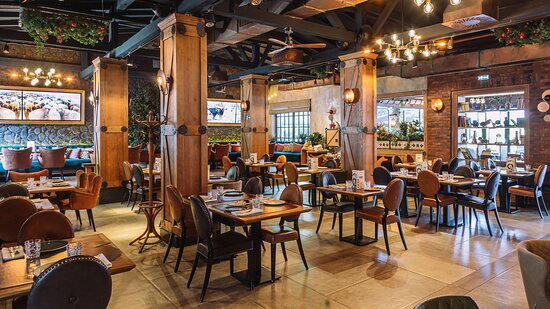
Where the City Ends and the Cooking Gets Serious
The drive out to Tošin bunar 179 takes you past the dense residential blocks that mark Belgrade's western edge, where the city loses its central-district energy and settles into something quieter and more workaday. It is not the address you expect for a restaurant known for its farm-sourced Serbian cooking. It is operating on its own terms, at an accessible price point that sits firmly at the lower end of Belgrade's dining spectrum.
The Sourcing Argument at the Centre of the Plate
Serbian traditional cuisine has always been shaped by its agricultural regions, but the distance between a restaurant claiming regional inspiration and one that actually controls its supply chain is considerable. Bela Reka sits in the latter category. The ewe's milk cheese served here comes from the restaurant's own farm in the Homolje Mountains in eastern Serbia. That is not a marketing detail, it is a structural commitment to a specific flavour profile that cannot be replicated by sourcing the same cheese from a distributor. Milk from mountain-grazed sheep carries the pasture in its fat content and bacterial culture. The result on the plate is sharper, more mineral, and more distinctly placed than anything a generic supply chain would deliver.
This kind of vertical integration, farm ownership feeding directly into a restaurant kitchen, is rare even among Europe's most celebrated traditional-cuisine houses. For comparison, Boroa in Amorebieta-Etxano and Can Bosch in Cambrils both operate within Spain's rigorous denominación frameworks, relying on certified regional producers. Bela Reka's approach goes a step further: ownership rather than partnership. Closer in spirit, to Auberge Grand'Maison in Mûr-de-Bretagne, where the relationship between land and table is similarly foundational rather than decorative.
The Dry-Aged Lamb and What It Represents
Among traditional Serbian preparations, roasted and slow-cooked lamb holds a position of cultural weight. What Bela Reka adds to that tradition is the dry-aging step, which is applied to the shoulder cut before it goes through the kitchen. Dry aging in controlled cases concentrates flavour and breaks down connective tissue in ways that slow roasting alone cannot achieve. The result is a shoulder with a depth of savouriness and a tenderness that signals careful process rather than improvisation. This is the dish the Michelin inspectors took note of, and it remains the anchor of the menu.
House-made Serbian bread is listed alongside it as a house specialty. In the context of a meal built around fermented dairy and aged meat, the bread functions as more than a side. Serbian bread traditions, which include enriched loaves and flatbreads with distinct regional variation, give the kitchen another surface for expressing its sourcing priorities. A restaurant that makes its own bread is signalling that it controls the final details of the table, not just the headline protein.
Portions, Price, and the Logic of the Experience
The restaurant's Michelin Plate recognition does not carry the star hierarchy's full weight, but it does mean the inspectors found the cooking worth including in the guide. At the € price tier, the restaurant sits in the same accessible bracket as Comunale Caffè e Cucina in Belgrade's centre, both offer serious cooking without the outlay required at Enso or higher-ticket modern-cuisine formats. The portions here are described as hearty and generous, which matters when the food is built around slow-cooked proteins and fermented dairy. This is not a restaurant where restraint in serving size signals refinement. The portions are calibrated to the cooking style: agrarian, generous, and grounded.
The Michelin note is direct about the trade-off involved: the food quality justifies the distance from the centre. For visitors working through Belgrade's dining scene from a central base, the restaurant requires planning, it is not a spontaneous walk-in, and the address puts it outside the radius of most city-centre hotel recommendations. But Serbian cooking at this level of sourcing specificity and Michelin recognition is not available at this price elsewhere in the city.
Placing Bela Reka in the Wider Traditional Cuisine Tier
Traditional cuisine as a restaurant category often sits in tension with the progressive end of the dining spectrum, where chefs trained in technique-heavy kitchens tend to attract more critical attention. Belgrade's more visible fine-dining conversation has moved toward modern formats: Langouste holds a full Michelin star, while contemporary European addresses have expanded the city's ambition. The restaurant occupies a different role, it is the argument that traditional Serbian cooking, executed with supply-chain discipline and farm ownership, belongs in the same conversation as any European regional-cuisine house.
That argument has parallels across the continent. Auga in Gijón, El Ermitaño in Benavente, and Coto de Quevedo Evolución in Torre de Juan Abad all work within regional Spanish traditions with similar seriousness. Casa Lavanda in Istanbul makes a comparable case for Anatolian sourcing. Across these examples, the through-line is the same: traditional cooking earns its critical standing not through nostalgia but through precision about where ingredients come from. The restaurant's Homolje farm is its credential in that conversation. Outside the Balkans, Fleur de Sel in Novi Slankamen is pursuing a related approach in the Serbian Vojvodina region, though within a different price and format tier.
Planning a Visit
The restaurant is located at Tošin bunar 179 in Zemun, the western municipality that borders central Belgrade. Reaching it from the city centre requires a taxi or rideshare, the address is not served by direct public transport from most hotel districts. The kitchen runs at a volume that rewards advance planning: treat this as a destination meal requiring the same pre-trip organisation you would apply to any Michelin-noted address. For context on what else Belgrade's dining scene offers at various tiers, the EP Club Belgrade restaurants guide maps the full range, alongside dedicated guides to hotels, bars, wineries, and experiences across the city.
How It Stacks Up
Comparable venues nearby, for context on price, style, and recognition.
| Venue | Cuisine | Price | Awards | Notes |
|---|---|---|---|---|
| Bela RekaThis venue — the venue you are viewing | Traditional Serbian | $$$ | Bib Gourmand | Not listed |
| Istok | Vietnamese Fusion with Thai & Korean | $$ | Bib Gourmand | Town Centre |
| Homa | Modern Serbian Fine Dining | $$$ | Michelin Plate | Dorćol |
| Iva New Balkan Cuisine | New Balkan Cuisine | $$ | Bib Gourmand | Bulevar Aleksandra |
| Pinòt | Seasonal International Bistro | $$$$ | Michelin Plate | West 65 |
| GiG | Modern Fine Dining with Serbian Influences | $$$ | Michelin Plate | Novi Beograd |
Recognition history
Dated appearances from independent guides and award organizations, with the underlying list record or original source where available.
Michelin Bib Gourmand
Michelin
Michelin Plate
Michelin
Michelin Plate
Michelin
Continue exploring
More in Belgrade
Restaurants in Belgrade
Browse all →
Bars in Belgrade
Browse all →
Hotels in Belgrade
Browse all →

At a Glance
- Rustic
- Cozy
- Classic
- Family
- Business Dinner
- Celebration
- Open Kitchen
- Extensive Wine List
- Farm To Table
- Local Sourcing
Current opening hours
- Monday
- 8 AM–11:45 PM
- Tuesday
- 8 AM–11:45 PM
- Wednesday
- 8 AM–11:45 PM
- Thursday
- 8 AM–11:45 PM
- Friday
- 8 AM–11:45 PM
- Saturday
- 8 AM–11:45 PM
- Sunday
- 8 AM–11:45 PM
Hours can change for holidays and private events. Last verified .
Rustic and charming with warm, welcoming atmosphere, contemporary touches, traditional decoration, and an open oven for fresh bread.