Beirão
Our verdict
Beirão sits on Rue des Hauts-Fourneaux in Dommeldange, a quietly residential district northeast of Luxembourg City centre where industrial heritage and suburban calm share the same streets. The restaurant draws on Portuguese culinary tradition — a cuisine underrepresented in the Grand Duchy's dining scene — bringing the characteristic warmth and directness of Lisbon-style hospitality to an unlikely postcode. For a city that skews heavily French and Contemporary European at the upper end, Beirão occupies a distinct position.

Pearl is the En Primeur Club membership app — saves, bookings, and concierge access live there. Same editors, same standards.
- Address
- 44 Rue des Hauts-Fourneaux, 1719 Dommeldange Luxembourg
- Phone
- +35227848244
- Hours
- Mon–Sat 11:45 AM–2 PM, 6:30–10 PMSun 11:45 AM–2 PM, 6:32–10 PM
- Website
- restaurantbeirao.lu
- Directions
- Get directions
- Booking
- Book on the venue's website
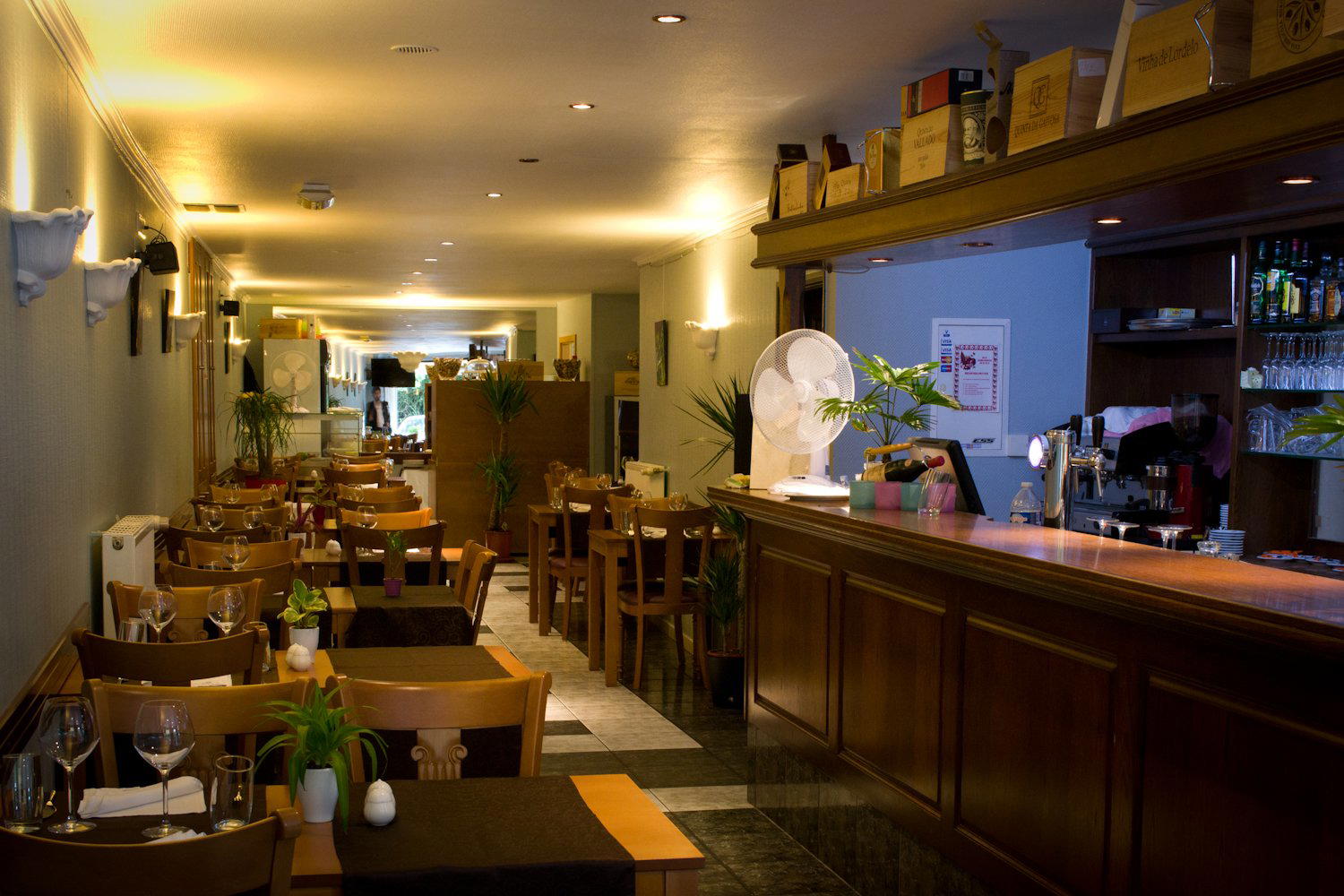
A Different Register on Rue des Hauts-Fourneaux
Dommeldange sits at an angle to the rest of Luxembourg City's dining conversation. The neighbourhood, northeast of the city's financial and administrative core, developed around the steel industry — its street names still carry that memory, Rue des Hauts-Fourneaux translating directly as Street of the Blast Furnaces. The residential streets that replaced the heavy industrial infrastructure have a particular quality: quieter than Kirchberg, less curated than Grund, without the self-conscious heritage of the old town. It is precisely the kind of postcode where a neighbourhood restaurant can build a following without competing for the attention of the Michelin-circuit crowd.
Beirão occupies that space. The name itself signals Portuguese identity — Beirão refers to someone from the Beira region of central Portugal, the inland plateau country between the Douro and the Tagus, a place associated with direct, generous cooking rather than coastal flourish. In a city where the upper dining tier is dominated by Contemporary French and Modern European formats (venues like Ma Langue Sourit and Léa Linster set the reference point at the €€€€ bracket, and creative independents like Apdikt define the mid-tier creative space), a Portuguese restaurant operating outside the city centre operates on an entirely different set of terms.
The Sensory Logic of Portuguese Cooking in a Northern European Context
Portuguese cuisine carries a set of sensory codes that read differently in Luxembourg than they do in Lisbon or Porto. The cooking tradition of the Beira interior, which the restaurant's name invokes, relies on preserved meats, mountain herbs, and slow-cooked preparations that reward patience rather than precision plating. Across northern Europe, this culinary register tends to feel grounding rather than showy: lower visual drama, higher aromatic density. The smell of slowly rendered pork fat, dried herbs from the serra, and long-cooked legumes produces a different atmospheric effect than the cleaner, more neutral presentation of a contemporary French kitchen.
That contrast matters in Luxembourg's specific dining context. The city's restaurant culture has invested heavily in the French technical tradition, producing a tier of formally trained, technique-driven kitchens. Places like Archibald De Prince and Fani represent different approaches to European dining, organic-focused and Italian respectively, but both sit within a broadly familiar Northern European fine-dining vocabulary. A restaurant drawing on Beirão-region tradition operates outside that vocabulary almost entirely, which is either a limitation or an asset depending on what the diner brings to the table.
Dommeldange as Context
The address on Rue des Hauts-Fourneaux places Beirão in a district that most out-of-town visitors will not encounter on a standard Luxembourg City itinerary. That is not a disadvantage so much as a defining characteristic. Dommeldange functions as a residential extension of the city rather than a destination neighbourhood, which means the restaurants that operate here tend to draw from a loyal local base rather than tourist footfall. The model produces a different kind of dining room energy: tables occupied by regulars, a pace set by the neighbourhood rather than by reservation-slot management, less pressure toward performance hospitality.
For comparison within the wider Luxembourg dining geography, the pattern is consistent: some of the country's most interesting independent restaurants sit outside the central postcodes. Beefbar Smets in Strassen and B13 in Bertrange demonstrate that the city's appetite for quality dining extends well into the suburban ring. Further afield, Beim Bertchen in Wahlhausen, Côté Cour in Bourglinster, and Les Roses in Mondorf les Bains confirm that Luxembourg's serious dining is genuinely decentralised. Beirão belongs to this dispersed pattern rather than the city-centre concentration.
The Portuguese Presence in Luxembourg
Luxembourg has one of the largest Portuguese immigrant communities in Europe relative to its population, Portuguese nationals and their descendants make up a significant proportion of the Grand Duchy's residents, a demographic fact that has shaped the country's social and culinary fabric for decades. This context is relevant to understanding what Beirão represents. It is not an exercise in novelty or culinary tourism; it serves a community for whom this food carries specific cultural meaning, while also functioning as a point of entry for diners exploring a cuisine that remains underrepresented at the formal restaurant level across the Benelux region.
That community context tends to produce restaurants with a particular quality of authenticity, not the performed authenticity of a themed concept, but the functional authenticity of cooking for people who would notice if something were wrong. It is the same quality that distinguishes a neighbourhood ramen shop in Tokyo from a ramen bar in a hotel lobby, or a Sichuan kitchen in a Chinese diaspora neighbourhood from a Sichuan-inflected menu in a European fusion context. The reference points are internal rather than external.
Planning a Visit
Beirão's location at 44 Rue des Hauts-Fourneaux in Dommeldange is accessible from central Luxembourg City by car or public transport, with the neighbourhood sitting roughly along the axis connecting the city centre to the Kirchberg plateau. As with most independent neighbourhood restaurants in the Grand Duchy, contacting the venue directly is advisable before visiting, particularly for weekend evenings when local demand tends to concentrate. The restaurant's booking details are not currently listed publicly through the major reservation platforms, which reinforces its neighbourhood character. Visitors travelling from Luxembourg City centre will find Dommeldange a short journey northeast, and the lack of visitor-industry infrastructure in the area means parking is generally less constrained than in the central districts.
For a broader picture of Luxembourg's dining options across price points and styles, the full Luxembourg restaurants guide covers the city and country in detail, including further venues in the suburban and rural ring. Those extending their itinerary beyond the capital will find strong independent options at Kore in Steinfort, Der Napf in Wilwerdange, Domaine La Forêt in Remich, Laotse in Moutfort, and Bo Zai Fan in Letzebuerg. For diners who calibrate expectations against top-end international benchmarks, Le Bernardin in New York City and Atomix in New York City provide a useful reference for where the upper tier of formal dining currently sits globally.
Frequently asked questions
Is Beirão suitable for children?
Portuguese cooking traditions tend toward generous, shared formats built around familiar proteins and hearty preparations, which generally work well for younger diners. Beirão sits in Dommeldange, a residential neighbourhood northeast of Luxembourg City's centre, and that local, community-oriented character typically signals a relaxed rather than formal atmosphere. Confirm directly with the restaurant before booking a family group.
Is Beirão better for a quiet night or a lively one?
Dommeldange is a working residential district away from Luxembourg City's more tourist-frequented zones, which tends to shape the pace of venues on streets like Rue des Hauts-Fourneaux toward the neighbourhood end of the spectrum rather than the late-night end. That said, Portuguese restaurants embedded in immigrant communities can run loud and convivial, particularly on weekends. The specific register at Beirão on any given night is best verified with the venue directly.
Does Beirão reflect a specific regional tradition within Portuguese cuisine?
The name Beirão points directly to the Beira region of central Portugal, a mountainous interior area known for hearty, cold-weather cooking built around game, cured meats, and mountain cheeses rather than the coastal seafood associations of Lisbon or Porto. That regional framing, if carried through in the kitchen, would distinguish the menu from the generalised Portuguese cooking found at most European restaurants. Luxembourg's large and established Portuguese community gives venues here a ready audience for regionally specific cooking rather than a diluted export version.
What's the must-try dish at Beirão?
Portuguese cuisine at this kind of community address in Luxembourg commonly centres on bacalhau preparations, grilled meats, and slow-cooked stews drawn from the Beira region tradition the name references. Check with the restaurant for current offerings.
Where do I go for Beirão?
Beirão is located at 44 Rue des Hauts-Fourneaux, 1719 Dommeldange Luxembourg, Luxembourg.
How hard is it to get a table at Beirão?
No booking data or advance reservation requirements are documented for Beirão at 44 Rue des Hauts-Fourneaux. Neighbourhood restaurants serving Luxembourg's Portuguese community, which represents one of the largest immigrant populations in Europe relative to national population, can fill quickly on weekends when that community eats out. Calling ahead is advisable, though contact details should be confirmed through current local listings.
Comparable Venues
Comparable venues nearby, for context on price, style, and recognition.
| Venue | Cuisine | Price | Notes |
|---|---|---|---|
| BeirãoThis venue — the venue you are viewing | Traditional Portuguese | Not listed | Not listed |
| Madame Jeanette | Latin American | Not listed | Gare |
| Chocolate House | Chocolate Cafe | $10–20 | Ville Haute |
| Boutique Léa Linster Delicatessen | Luxembourg Delicatessen | $10–20 | Ville Haute |
| Neuhaus | Belgian Chocolates and Cafe | Not listed | Kirchberg |
| Hakii | Fusion Japanese Sushi | $30–50 | Hollerich |
Continue exploring
More in Luxembourg
Restaurants in Luxembourg
Browse all →
Bars in Luxembourg
Browse all →

Hotels in Luxembourg
Browse all →
Details
- Cozy
- Intimate
- Family
- Date Night
- A La Carte
- Vegetarian Friendly
Current opening hours
- Monday
- 11:45 AM–2 PM, 6:30–10 PM
- Tuesday
- 11:45 AM–2 PM, 6:30–10 PM
- Wednesday
- 11:45 AM–2 PM, 6:30–10 PM
- Thursday
- 11:45 AM–2 PM, 6:30–10 PM
- Friday
- 11:45 AM–2 PM, 6:30–10 PM
- Saturday
- 11:45 AM–2 PM, 6:30–10 PM
- Sunday
- 11:45 AM–2 PM, 6:32–10 PM
Hours can change for holidays and private events. Last verified .
Cozy and warm atmosphere with friendly service.