Beecher's Handmade Cheese - New York
Our verdict
On Broadway in the Flatiron District, Beecher's Handmade Cheese operates as both a working creamery and a retail destination where the production process is visible through a glass window. The New York outpost of the Seattle-founded brand brings an artisan cheesemaking tradition into one of Manhattan's most accessible neighbourhoods, offering an alternative to the city's tasting-menu circuit for visitors who want craft food without the formality.
The menu
What to order
- World's Best Mac & Cheese
- Grilled cheese sandwich
Flatiron's Working Creamery: Where the Process Is the Point
Broadway between 19th and 20th Streets in the Flatiron District has long been a corridor where New York's commercial energy and its appetite for specialty food intersect. The neighbourhood sits at the meeting point of several distinct Manhattan communities: the tech-adjacent offices to the north, the restaurant-dense stretch of lower Fifth Avenue, and the residential blocks of Gramercy to the east. Within that mix, Beecher's Handmade Cheese occupies a position that few food businesses in the city do: it is simultaneously a production facility, a retail shop, and a counter-service destination, all operating in a single street-level space at 900 Broadway.
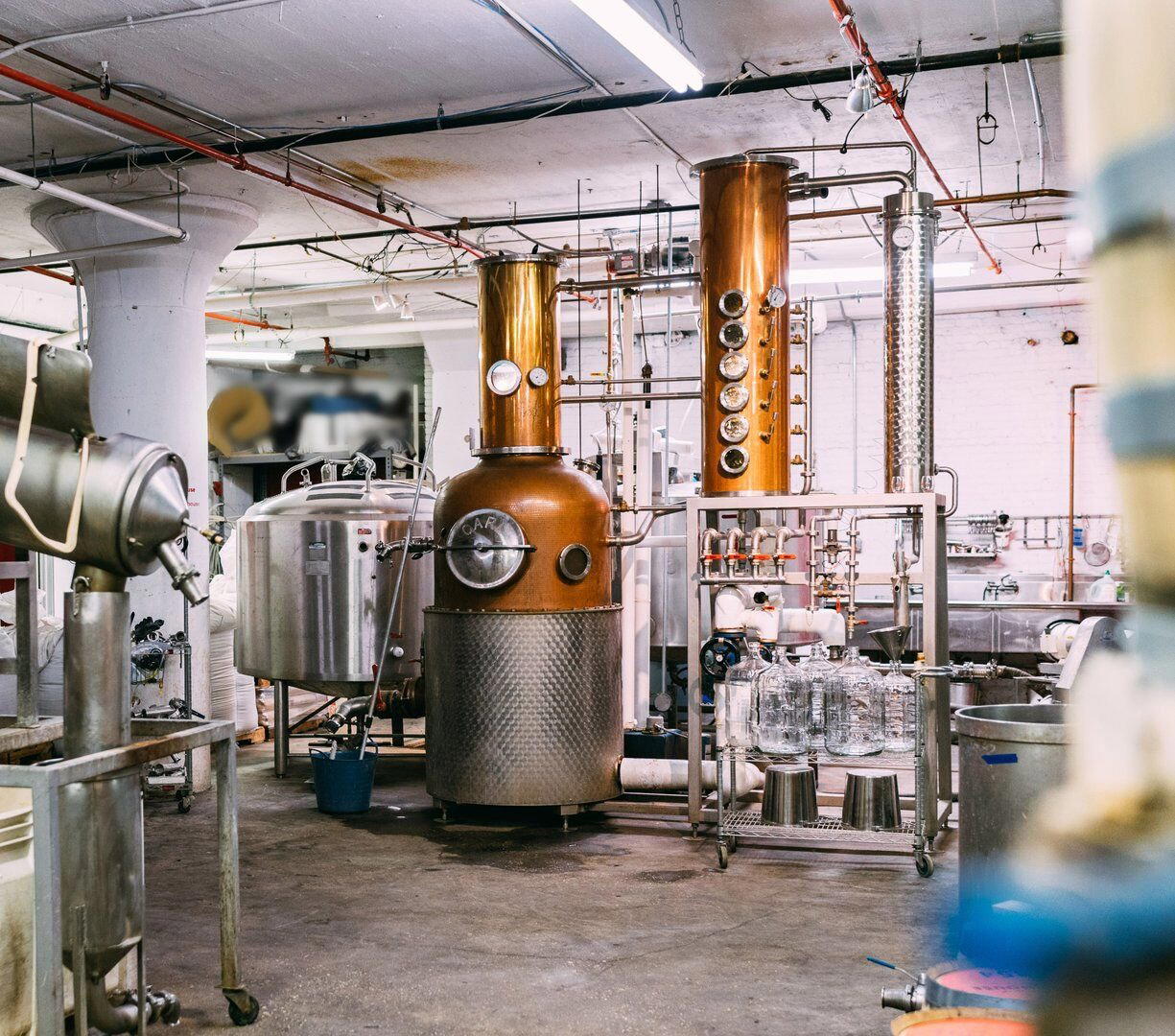
The visual anchor is the glass-walled creamery at the front of the shop. In a city where most food arrives pre-processed and the supply chain is invisible, watching cheese being made a few feet from the cash register carries genuine novelty. This is not decorative, the production is real and ongoing, and what comes out of those vats ends up in the cases and on the menu. That transparency is rarer than it sounds in Manhattan, where even farm-to-table restaurants typically abstract the sourcing behind narrative rather than showing the actual work.
The Flatiron Context: Casual Craft in a Neighbourhood of Contrasts
The Flatiron District is a useful lens for understanding what Beecher's is doing and for whom. The neighbourhood draws a broad daily population: office workers, tourists moving between Union Square and Midtown, students from nearby institutions, and the kind of New Yorker who shops at the Saturday greenmarket a few blocks away. It is not a neighbourhood defined by fine dining in the way that, say, Midtown's West 51st Street corridor is, where Le Bernardin anchors a concentration of multi-Michelin-starred rooms. Nor does it carry the destination-dining weight of the addresses where Eleven Madison Park or Atomix operate.
What Flatiron offers instead is accessibility and volume: a location that works for a quick lunch or an impromptu stop as well as a deliberate visit. Beecher's fits that cadence. The counter-service format keeps pace with the neighbourhood's energy, and the retail component means a visit can convert into a purchase, a wedge of flagship cheddar to take back to a hotel room or as a gift, without requiring a longer commitment.
That positioning matters when mapping the city's artisan food scene. New York has a well-developed specialty cheese retail sector: Murray's Cheese in the West Village has operated for decades and maintains a wholesale programme that supplies restaurants from Per Se to neighbourhood bistros. Di Palo's in Little Italy anchors a different tradition entirely. Beecher's distinguishes itself within that sector by making production visible and co-locating it with retail and dining, which is a format more associated with the Pacific Northwest food scene it came from than with Manhattan's typically compartmentalised food economy.
Artisan Cheesemaking in an Urban Setting
The operational model Beecher's runs is uncommon in large American cities. Urban creameries do exist, a handful operate in Brooklyn and in other major metros, but integrating the vat, the aging, and the retail counter into a single Manhattan address on a high-traffic commercial block is logistically demanding. The Seattle original, which opened in Pike Place Market, established the template: a transparent production process as a marketing and educational tool, with retail and counter dining as the revenue model.
This kind of vertically integrated artisan food business has a broader peer group across American specialty food culture. Operations like Single Thread Farm in Healdsburg, which controls its own agricultural supply chain, or Blue Hill at Stone Barns in Tarrytown, which situates fine dining within a working farm, occupy a different price tier and format entirely. But they share the underlying logic: showing the production process as part of the hospitality proposition, not hiding it. Beecher's does this at a counter-service price point, which makes it available to a wider audience than any tasting-menu property in the city.
The cheese itself draws from a cheddar-forward tradition, with the flagship curd style that the brand built its identity on in Seattle. Urban production adds a different layer of complexity: sourcing milk, managing aging space, and maintaining quality in a high-cost, high-footfall environment requires operational precision that rural creameries don't always face.
What This Means for the Visitor
For a traveller who has spent a week working through New York's tasting-menu circuit, stopping at Masa or navigating the reservation queues at the city's high-end rooms, Beecher's represents a different kind of stop. It is not a destination in the same sense that the rooms listed in our full New York City restaurants guide are destinations. But it sits in a category of its own: a place where the craft is the attraction, the format is genuinely casual, and the geography puts it within easy reach of anyone moving through central Manhattan.
The Broadway address also makes it a natural stop in the context of a broader Flatiron afternoon: the neighbourhood has enough density of food retail, coffee, and bookshops (the Strand is a few blocks south) to support a longer wander. That kind of layered visit is a different mode from the planned, booked, occasion-driven dining that characterises the upper tier of New York's food scene, or the destination meals associated with properties like The French Laundry in Napa or The Inn at Little Washington. Beecher's operates comfortably at the opposite end of that formality spectrum.
Across the country, the artisan food retail model has found traction in cities that have invested in specialty food culture: San Francisco, New Orleans, Chicago, and Los Angeles all have their own versions of this format. New York's version is complicated by real estate costs and the sheer volume of competing food options, which makes a long-running operation at a prominent Broadway address a meaningful signal of audience demand.
Know Before You Go
- Address: 900 Broadway, New York, NY 10003 (Flatiron District)
- Nearest Transit: The 14th Street–Union Square station (N/Q/R/W/4/5/6/L) is within walking distance; the 23rd Street stop on the N/R/W is closer still
- Format: Counter-service with retail cheese shop and visible creamery production
- Booking: Walk-in; no reservation required for counter dining or retail
- Leading Timing: Weekday visits outside the lunch rush tend to allow more time at the creamery window; weekends draw heavier tourist foot traffic from the nearby Flatiron building area
- Retail Option: Cheese and related products available for purchase; suitable as a food gift or hotel room addition
Frequently asked questions
Does Beecher's Handmade Cheese - New York work for a family meal?
Yes, the Flatiron location at 900 Broadway suits families well. The counter-service format and visible cheesemaking operation give younger visitors something concrete to watch, and the menu runs to crowd-friendly staples like mac and cheese alongside the retail cheese case. There is no formal sit-down booking process to manage.
Is Beecher's Handmade Cheese - New York formal or casual?
Entirely casual. The 900 Broadway space functions as a working creamery, retail shop, and eat-in counter simultaneously, so the atmosphere is closer to a market hall than a restaurant. Come in off Broadway in whatever you are wearing.
Can you watch cheese being made at Beecher's New York?
Yes. The 900 Broadway location operates as a functioning urban creamery with production visible from the retail floor, which separates it from the vast majority of cheese shops in New York City. Production schedules vary, so arriving earlier in the day improves the likelihood of catching active cheesemaking. The Seattle original pioneered this open-production model, and the New York outpost replicates it in a Flatiron setting.
What do people recommend at Beecher's Handmade Cheese - New York?
The cheese case is the anchor: Beecher's Flagship, the creamery's signature aged cheddar-style wheel, is consistently the reference point for first-time visitors. The made-on-site mac and cheese, built around that same Flagship, has developed a following among the Flatiron office crowd and out-of-town visitors alike. Fresh curds, available when the creamery is actively producing, are worth timing your visit around.
What's the address for Beecher's Handmade Cheese - New York?
Beecher's Handmade Cheese - New York is located at 900 Broadway, New York, NY 10003, New York City.
City Peers
A quick snapshot of similar venues for side-by-side context.
| Venue | Cuisine | Price | Awards | Notes |
|---|---|---|---|---|
| Beecher's Handmade Cheese - New YorkThis venue (the venue you are viewing) | American Cheese Cafe | Not listed | Not listed | Not listed |
| Le Bernardin | French Seafood Fine Dining | $300–500 | 3 Michelin Stars · World's 50 Best #13 | French, Seafood |
| Atomix | Modern Korean Tasting Menu | $300–500 | 2 Michelin Stars · World's 50 Best #7 | Modern Korean, Korean |
| Per Se | French Fine Dining Tasting Menu | $300–500 | 3 Michelin Stars · World's 50 Best #40 | French, Contemporary |
| Masa | Traditional Japanese Omakase | $500+ | 2 Michelin Stars · World's 50 Best #27 | Sushi, Japanese |
| Eleven Madison Park | Contemporary Plant-Based Fine Dining | $300–500 | 3 Michelin Stars · World's 50 Best #4 | French, Vegan |