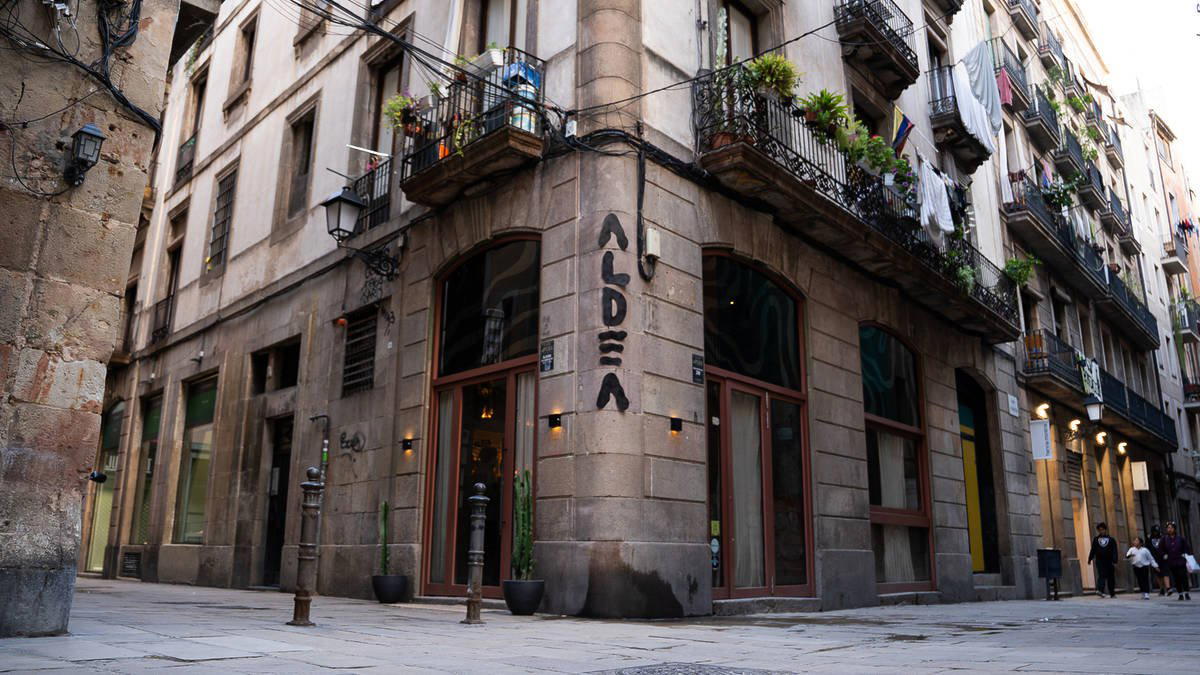
Barrio Santo occupies a narrow address on Carrer dels Templers in the Ciutat Vella, a neighbourhood where medieval stone and modern appetite have long competed for space. Positioned in a district that filters visitors by geography rather than reservation systems, it operates in a different register from Barcelona's Michelin-led creative circuit, drawing its identity from the older logic of place and product rather than tasting-menu theatre.
Pearl is the En Primeur Club membership app — saves, bookings, and concierge access live there. Same editors, same standards.
- Address
- Carrer dels Templers, 6, Ciutat Vella, 08002 Barcelona, Spain
- Phone
- +34607824472
- Website
- barriosantobcn.com
- Directions
- Get directions
 Saves & bookings on Pearl
A Street That Earns Its Reputation Through Proximity
Carrer dels Templers runs through one of the older cores of Ciutat Vella, the medieval quarter that pre-dates Barcelona's Eixample grid by several centuries. The streets here are narrow enough that two people with bags must pass single-file, and the stone underfoot carries the kind of uneven patina that resists renovation. Approaching from the Gothic Quarter side, the shift in scale is immediate: the grand thoroughfares drop away, and the neighbourhood reasserts itself in the smell of salt air from the port and the sound of voices through open windows. This is the physical register in which Barrio Santo operates, and it matters, because Barcelona's dining scene has increasingly split between two poles: the Michelin-addressed creative laboratories in the upper city, and the neighbourhood-anchored rooms that derive their authority from sourcing, tradition, and a different kind of editorial restraint.
Barcelona's upper-tier creative dining, represented by places like Disfrutar, Cocina Hermanos Torres, ABaC, Lasarte, and Enigma, operates at the €€€€ tier with tasting menus, advance booking windows measured in months, and culinary frameworks built around technique as spectacle. The addresses in Ciutat Vella are doing something different. They sit closer to the city's older mercantile identity: the fish market at La Barceloneta, the vegetable and meat stalls of the Boqueria, the wholesale networks that have fed this part of the Mediterranean coast for generations. A room that positions itself inside that tradition is making an argument about what authenticity looks like in 2024, and it is a harder argument to sustain than it might appear.
Where the Food Comes From
The ingredient-sourcing logic in this part of Barcelona traces back to physical geography. The city sits at the intersection of several distinct agricultural and maritime zones: the Catalan interior sends lamb, game, and legumes; the Maresme coast and the Ebro delta contribute rice, vegetables, and shellfish; the fishing grounds off the Costa Daurada and as far south as the Valencian coast feed the city's appetite for rockfish, cephalopods, and the kind of small, intense crustaceans that do not travel well and therefore only appear on plates within a short radius of their origin.
This sourcing geography is not incidental to Catalan cooking, it is its structural premise. The defining preparations of the tradition, from suquet de peix to fideuà to escudella, are built around what was available locally at the moment of cooking, not around a fixed canon of imported luxury. The leading rooms working in this tradition treat their suppliers as the real creative constraint: the menu changes because the catch changes, because the season changes, because what arrived from the market that morning was different from what arrived last week. This is a more demanding discipline than it looks, because it requires both kitchen confidence and genuine supplier relationships that go beyond a standing order.
For context on how other Spanish kitchens have taken this sourcing argument to its logical extreme, consider what Aponiente in El Puerto de Santa María does with marine byproducts, or how Ricard Camarena in València has built an entire culinary identity around Valencian producers. Further north, El Celler de Can Roca in Girona has long demonstrated how deep Catalan product knowledge can coexist with technical ambition. These are not peer venues for a Ciutat Vella address, but they illustrate the broader Spanish argument that geography and sourcing are the authentic starting point, not a marketing overlay applied after the fact.
The Ciutat Vella Dining Argument
Sitting inside Barrio Santo's neighbourhood means accepting certain conditions. Ciutat Vella is simultaneously one of Barcelona's most visited districts and one of its most lived-in, and the leading rooms here tend to operate without the infrastructure of luxury hotel dining or the advance press machine of destination restaurants.
The wider Spanish creative dining circuit, anchored by rooms like Quique Dacosta in Dénia, Arzak in San Sebastián, Azurmendi in Larrabetzu, Martin Berasategui in Lasarte-Oria, Mugaritz in Errenteria, DiverXO in Madrid, and Atrio in Cáceres, requires planning that most spontaneous city visits cannot accommodate. A room in Ciutat Vella, operating at a different pitch, fills a gap in the itinerary that those venues cannot. The international comparison is instructive: in cities like New York and San Francisco, the distinction between destination fine dining and serious neighbourhood cooking has become one of the more interesting fault lines in contemporary restaurant criticism. Le Bernardin in New York City and Lazy Bear in San Francisco both occupy clearly defined positions within their local hierarchies; neighbourhood rooms in those cities succeed precisely because they are not trying to compete on the same terms.
For a fuller map of where Barrio Santo sits relative to Barcelona's dining tier structure, the the guide Barcelona restaurants guide provides a comparative overview of the city's key addresses by category and price.
Know Before You Go
| Address | Carrer dels Templers, 6, Ciutat Vella, 08002 Barcelona, Spain |
| Neighbourhood | Ciutat Vella (Gothic Quarter / El Call adjacency) |
| Booking | |
| Hours | Verify directly; hours not confirmed |
| Price | Price range not confirmed; verify before visiting |
| Getting There | Closest metro stations are Liceu (L3) and Jaume I (L4); the address is walkable from both in under ten minutes |
A Lean Comparison
Comparable venues nearby, for context on price, style, and recognition.
| Venue | Cuisine | Price | Notes |
|---|---|---|---|
| Barrio SantoThis venue — the venue you are viewing | Barri Gotic, Authentic Peruvian | $$ | Not listed |
| Pueblo Libre | Not listed | $$ | Sant Antoni, Authentic Peruvian Tavern Cuisine |
| El Ñaño Balmes | Not listed | $$ | la Dreta de l'Eixample, Ecuadorian & Latin American |
| Thala | Sant Antoni, Authentic Peruvian | $$ | Not listed |
| TAPAS AVINYO | Barri Gotic, Authentic Spanish Tapas | $$ | Not listed |
| La Sosenga | Barri Gotic, Contemporary Catalan | $$ | Not listed |
Continue exploring
More in Barcelona
Restaurants in Barcelona
Browse all →
Bars in Barcelona
Browse all →
Hotels in Barcelona
Browse all →
At a Glance
- Lively
- Cozy
- Date Night
- Casual Hangout
- Group Dining
- Craft Cocktails
Current opening hours
- Monday
- 1–4 PM, 8–10:30 PM
- Tuesday
- Closed
- Wednesday
- Closed
- Thursday
- 1–4 PM, 8–10:30 PM
- Friday
- 1–11 PM
- Saturday
- 1–11:30 PM
- Sunday
- 1–8 PM
Hours can change for holidays and private events. Last verified .
Welcoming and colorful atmosphere with a buzzy vibe that evokes a trip to Peru.