Bar Miller

1 Michelin Star
Our verdict
Bar Miller earned a Michelin star in 2024 for its omakase counter on East 6th Street, where the kitchen behind Rosella applies a sustainable-sourcing ethos to Japanese technique. The menu draws heavily on local product, including New York state rice, and moves through courses that range from daikon vichyssoise to dry-aged nigiri and caviar-finished desserts. Open Wednesday through Saturday from 6 PM, with limited seats and corresponding demand.

Pearl is the En Primeur Club membership app, where members save venues, book tables and use the concierge.

The menu
What to order
- Corn ice cream with caviar
- Fatty tuna with white kimchi
- Dry-aged fluke with apple ice
- Uni nigiri
- Chawanmushi with dashi-butter poached sablefish
A Counter That Earns Its Star on East 6th
The East Village has long operated as a pressure valve for Manhattan dining, a neighbourhood where price points run lower and creative risk runs higher than in Midtown or the Upper West Side. That dynamic has made it fertile ground for the kind of small, chef-driven counters that New York's omakase tier increasingly depends on. Bar Miller, at 620 East 6th Street, sits squarely in that tradition: a compact room from the team behind Rosella, awarded a Michelin star in 2024, operating four nights a week with a format that leaves almost no room for filler.
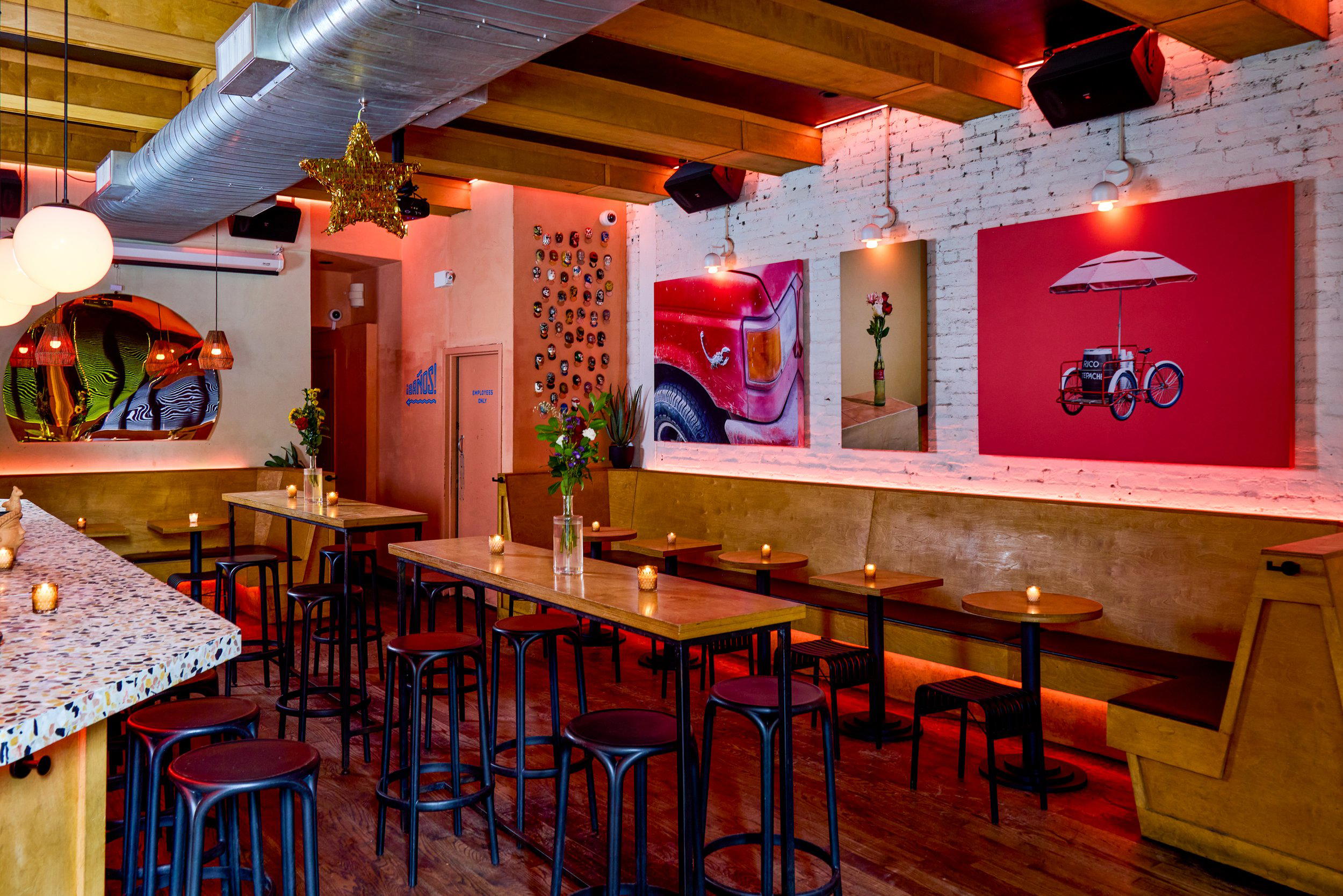
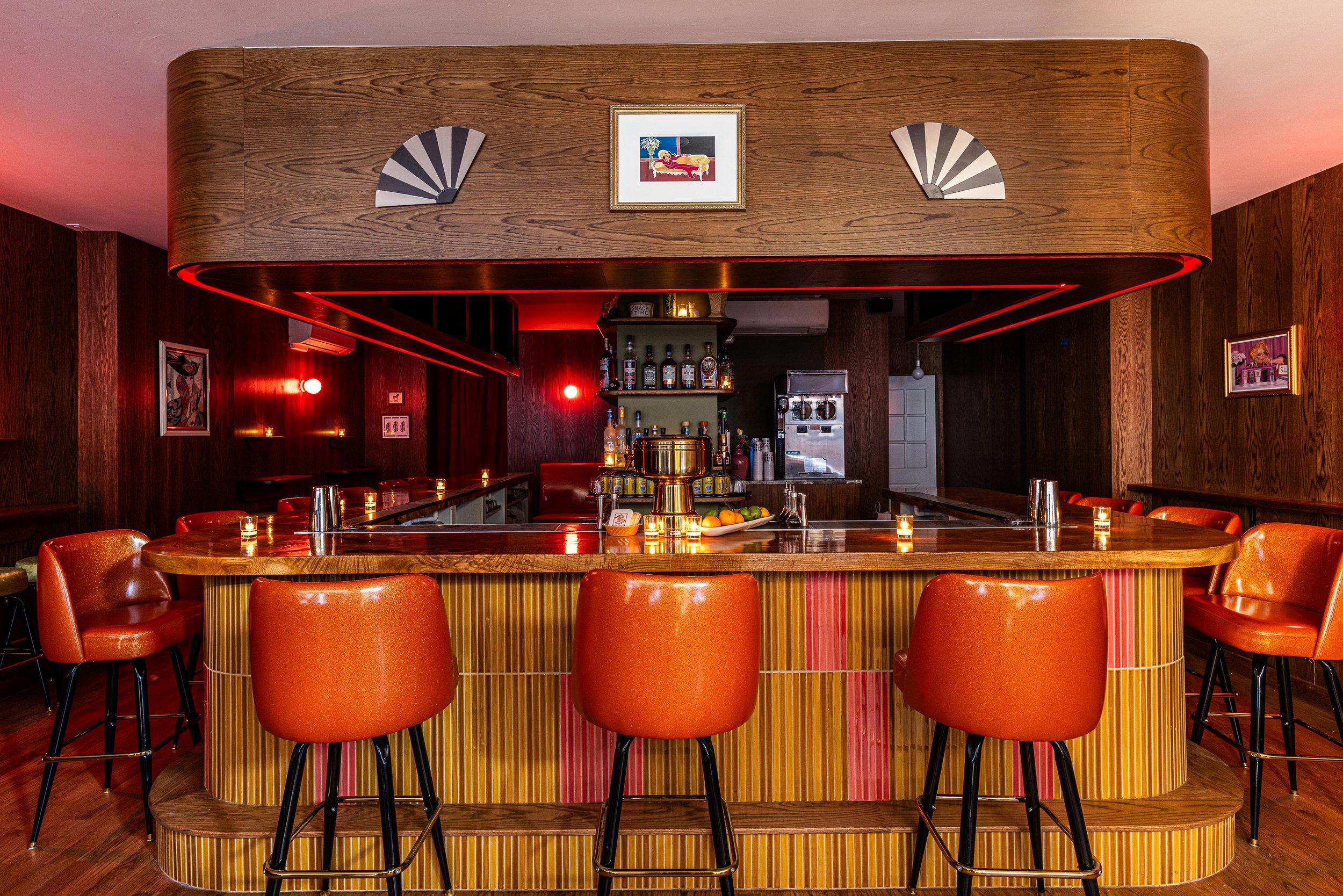
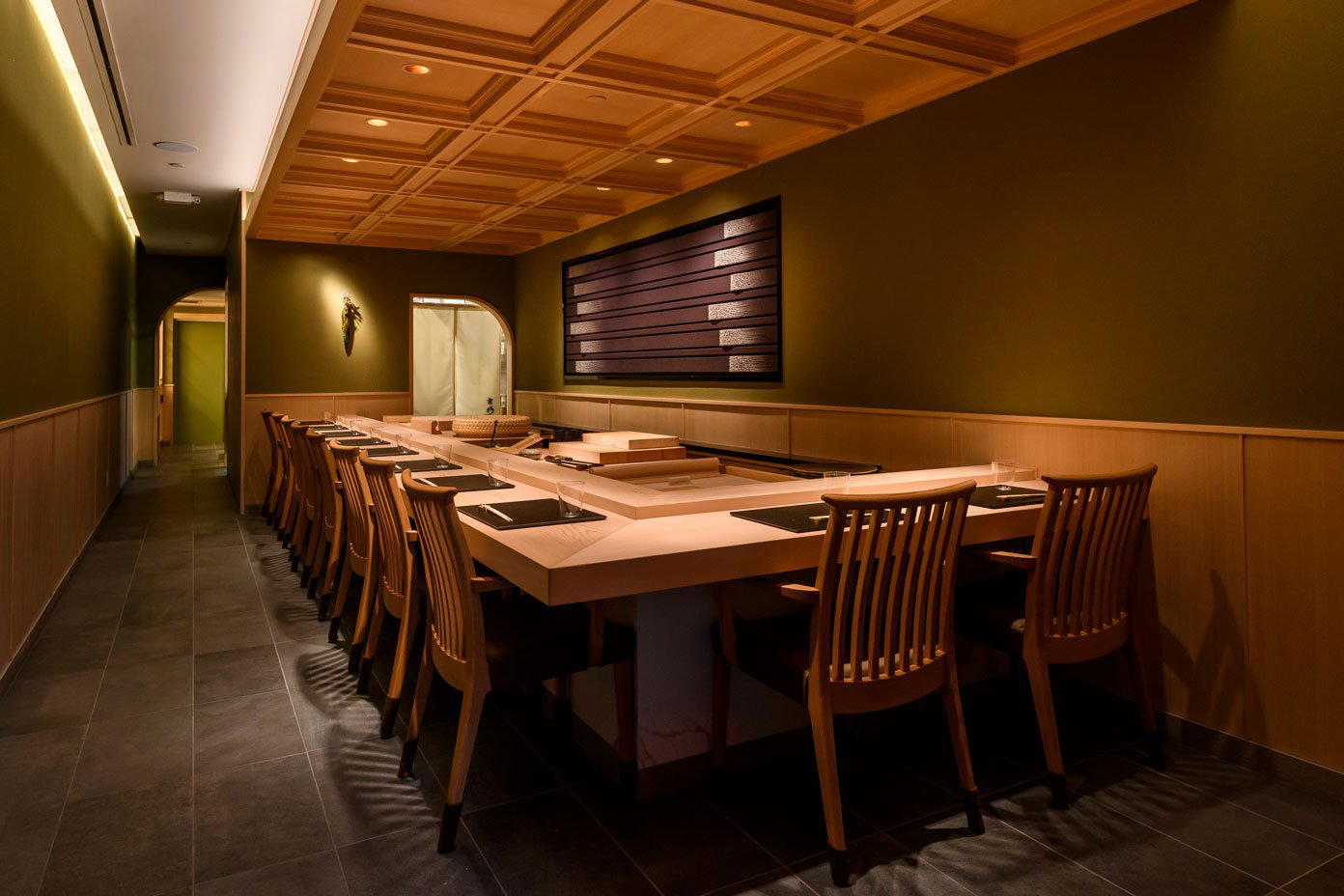
What the space signals immediately is a deliberate rejection of the aesthetic conventions that define most premium omakase in New York. Where the category defaults to pale wood, muted tones, and spare geometry, Bar Miller moves in the opposite direction, bold colours, custom pottery displayed behind the counter, eye-catching surface details that read less like a Japanese dining room and more like a room with a specific point of view. That choice sets an expectation before the first course arrives: this is not a venue interested in replicating a Tokyo template.
How the Menu Is Built
The architecture of an omakase menu is rarely neutral. The sequence of courses, the ratio of cooked dishes to nigiri, the moment dessert is introduced and how it is framed, these decisions collectively describe what a kitchen values and where it locates itself within the broader category. At Bar Miller, that architecture is legible and consistent with the room's visual personality: it is an omakase that moves through cooked preparations before arriving at nigiri, and it closes with desserts that are neither perfunctory nor conventionally Japanese.
The sourcing logic is built into the menu's structure rather than announced as a policy. The rice comes from New York state, an unusual choice in a category where Japanese-grown rice is treated as a near-inviolable standard. That decision positions the menu's foundation as explicitly local, and the produce and proteins that appear across the cooked courses follow the same logic. Sustainable sourcing at this level is not window dressing; it shapes what appears on the menu and, by extension, what does not.
Cooked preparations like the daikon vichyssoise with wakame butter-braised greens and gently poached salmon demonstrate how the kitchen uses Western technique as a structural framework without abandoning Japanese ingredient logic. Vichyssoise is a French form; wakame and the precision of the poach locate it somewhere more specific. Dry-aged fluke topped with apple ice in a sweet soy sauce is a similar construction: the aging technique, common across high-end New York sushi counters in recent years, is paired with a cold element and a sweet soy that give the dish a temperature contrast and flavour register that is distinctly the kitchen's own.
The nigiri course is where the menu's restraint and technique are most directly legible. The duo of uni and the dry-aged mackerel with yuzu kosho are noted as standouts, the mackerel's aging process moderating the fish's natural intensity, the yuzu kosho providing acidity and heat in a quantity precise enough to sharpen rather than dominate. Dry-aged nigiri has become a credentialing move across New York's leading counters, but the approach differs significantly by kitchen; here, the mackerel preparation suggests a preference for subtraction over addition.
The dessert course at Bar Miller is worth attention as a structural signal. Amazake, the fermented rice drink, used as a dessert component alongside corn gelato finished with caviar, indicates a kitchen that treats the final course as a genuine extension of the menu's logic rather than a concession to Western dining convention. The caviar finish on a gelato is a pairing that asks the diner to reconcile sweet, saline, and cold simultaneously, it is a confident close to a menu that has been making similar asks throughout.
Where Bar Miller Sits in New York's Omakase Tier
New York's omakase market has stratified sharply over the past decade. At the leading sit multi-starred counters where per-person spend reaches well into four figures; below that, a dense middle tier of one-starred or highly rated rooms operates at the $$$$ price point with significant variation in format, sourcing philosophy, and creative ambition.
The comparison set within New York is instructive. Counters like Noz 17 and Shota Omakase occupy the same starred tier, each with a distinct approach to what an omakase counter should prioritise. Across the wider New York fine dining scene, three-starred rooms like Le Bernardin, Eleven Madison Park, and Atomix define the upper bracket; Bar Miller's single star, East Village address, and limited weekly schedule place it in a different conversation, one about creative specificity rather than institutional scale.
For context across American fine dining more broadly, kitchens like Lazy Bear in San Francisco, Alinea in Chicago, Single Thread Farm in Healdsburg, The French Laundry in Napa, Providence in Los Angeles, and Emeril's in New Orleans demonstrate how starred tasting-menu formats operate across different culinary traditions at the $$$$ tier. Internationally, 8½ Otto e Mezzo Bombana in Hong Kong and Alain Ducasse at Louis XV in Monte Carlo represent the scale and formality that three-starred rooms in Europe and Asia can carry, a useful reminder of how deliberately Bar Miller has chosen compression and informality as its operating mode.
What the sustainable-sourcing model does for Bar Miller's competitive positioning is meaningful: it narrows the menu's ingredient range in some directions while sharpening its editorial identity. A kitchen committed to New York-grown rice and locally sourced produce is making a statement about what omakase can mean outside its Japanese context, and that argument distinguishes it from counters whose sourcing is more conventional.
Planning a Visit
Bar Miller operates Wednesday through Saturday, with seatings from 6 PM to 11 PM; the room is closed Sunday through Tuesday. The limited weekly schedule, small seat count, and Michelin recognition together create a booking window that rewards advance planning, reservations at counters of this type and recognition level in New York typically require booking several weeks ahead at minimum. The address is 620-622 East 6th Street in the East Village, accessible from multiple subway lines serving the Lower East Side and East Village corridors. The $$$$ price designation places it at the upper end of the neighbourhood's range and in line with starred omakase counters across Manhattan.
For a fuller picture of where to eat, drink, and stay in the city, see our full New York City restaurants guide, our full New York City bars guide, our full New York City hotels guide, our full New York City wineries guide, and our full New York City experiences guide.
Frequently asked questions
What's the must-try dish at Bar Miller?
The menu is structured as a single omakase sequence rather than an à la carte list, so individual dishes are not ordered separately. Within the nigiri course, the dry-aged mackerel with yuzu kosho has drawn particular attention for its precision: the aging moderates the fish's intensity, and the yuzu kosho is applied with enough restraint to function as an accent rather than a dominant flavour. The dessert course, which has included corn gelato with caviar, also registers as a compositionally specific close to the meal. Both give a clear sense of how the kitchen thinks about the relationship between restraint and contrast.
What makes Bar Miller worth seeking out?
Bar Miller's Michelin star, awarded in 2024 and earned within its first operational period, reflects a kitchen working at a level of technical and conceptual consistency that the Guide requires for recognition. Beyond the award, what distinguishes the counter from other one-starred omakase rooms in New York is the sourcing argument running through the entire menu, New York state rice as a foundation, local produce as the primary ingredient pool, and a room that deliberately refuses the aesthetic template the category defaults to. Counters like Noz 17 and Shota Omakase occupy a similar starred tier; what sets Bar Miller apart is the specificity of its local-sourcing commitment and the coherence of its menu architecture from cooked courses through to dessert. For a diner already familiar with New York's omakase tier, it offers a genuinely distinct editorial position.
Cost Snapshot
| Venue | Cuisine | Price | Awards | Notes |
|---|---|---|---|---|
| Bar MillerThis venue (the venue you are viewing) | Sustainable American Omakase | $200–300 | 1 Michelin Star | Not listed |
| Le Bernardin | French Seafood Fine Dining | $300–500 | 3 Michelin Stars · World's 50 Best #13 | French, Seafood |
| Atomix | Modern Korean Tasting Menu | $300–500 | 2 Michelin Stars · World's 50 Best #7 | Modern Korean, Korean |
| Masa | Seasonal Hokkaido Tempura Omakase | $150–200 | Tabelog 100 #34 | Sushi, Japanese |
| Per Se | French Fine Dining Tasting Menu | $300–500 | 3 Michelin Stars · World's 50 Best #40 | French, Contemporary |
| Eleven Madison Park | Contemporary Plant-Based Fine Dining | $300–500 | 3 Michelin Stars · World's 50 Best #4 | French, Vegan |
Recognition history
Dated appearances from independent guides and award organizations, with the underlying list record or original source where available.
Michelin 1 Star
Michelin
Full recognition history (2 entries)
Michelin 1 Star
Michelin
Continue exploring
More in New York City
Restaurants in New York City
All restaurants in New York City →
Bars in New York City
All bars in New York City →

Details
- Intimate
- Elegant
- Lively
- Sophisticated
- Modern
- Date Night
- Special Occasion
- Celebration
- Chefs Counter
- Open Kitchen
- Design Destination
- Sake Program
- Natural Wine
- Beer Program
- Local Sourcing
- Sustainable Seafood
- Farm To Table
- Omakase
- Counter Dining
- Tasting Menu
- Sake
- Wine
- Cider
- Pescatarian Friendly
- Allergy Accommodating
Current opening hours
- Monday
- Closed
- Tuesday
- Closed
- Wednesday
- 6–11 PM
- Thursday
- 6–11 PM
- Friday
- 6–11 PM
- Saturday
- 6–11 PM
- Sunday
- Closed
Hours can change for holidays and private events. Hours as of .
Sun-kissed room with custom jade green counter and handcrafted earthenware; candlelit, intimate space with bold colors and eye-catching details; conversational and playful with curated Frank Ocean soundtrack and friendly chef banter.