Tsukimi


1 Michelin Star
Our verdict
A Michelin-starred kaiseki counter on East 10th Street, Tsukimi has climbed from Opinionated About Dining's Highly Recommended list in 2023 to a top-205 North America ranking by 2025. Chef Takinori Akayama's seasonal progression reads as disciplined and precise, shaped by a moon-viewing aesthetic that extends from the menu structure to the ceramics lining the walls.

Pearl is the En Primeur Club membership app — saves, bookings, and concierge access live there. Same editors, same standards.
- Address
- 228 E 10th St, New York, NY 10003
- Phone
- 212-495-9024
- Hours
- Mon–Tue ClosedWed–Fri 5–8:30 PMSat–Sun 5–8 PM
- Website
- tsukimi.nyc
- Directions
- Get directions
- Booking
- Book on Tock
From East Village Counter to Critical Recognition
New York's kaiseki tier has never been large. The format demands a kitchen willing to rebuild its menu around seasonal logic rather than a fixed identity, and the city's dining economics make that commitment expensive to sustain. The counters that have endured in this space tend to accumulate critical recognition gradually, moving from specialist-press attention to broader industry acknowledgment over several years. Tsukimi, at 228 East 10th Street in the East Village, has followed that trajectory with uncommon speed. Opinionated About Dining placed it on its North America Highly Recommended list in 2023; by 2024 it held a Michelin star and a top-302 OAD ranking; by 2025 it had climbed to #205 in OAD's North America list. That kind of upward movement across three consecutive years, across two separate credentialing systems, is a meaningful signal in a city where critical attention is unevenly distributed and rarely linear.
The comparison set for a Michelin-starred kaiseki counter in Manhattan is narrower than the broader Japanese fine dining category. Venues like Odo and Noda occupy related territory, offering multi-course Japanese tasting formats at the $$$$ price tier. Tsukimi sits in that peer group but approaches the format through the kaiseki framework specifically, with its structured seasonal progression and its emphasis on restraint as a form of intelligence rather than absence.
The Moon-Viewing Aesthetic
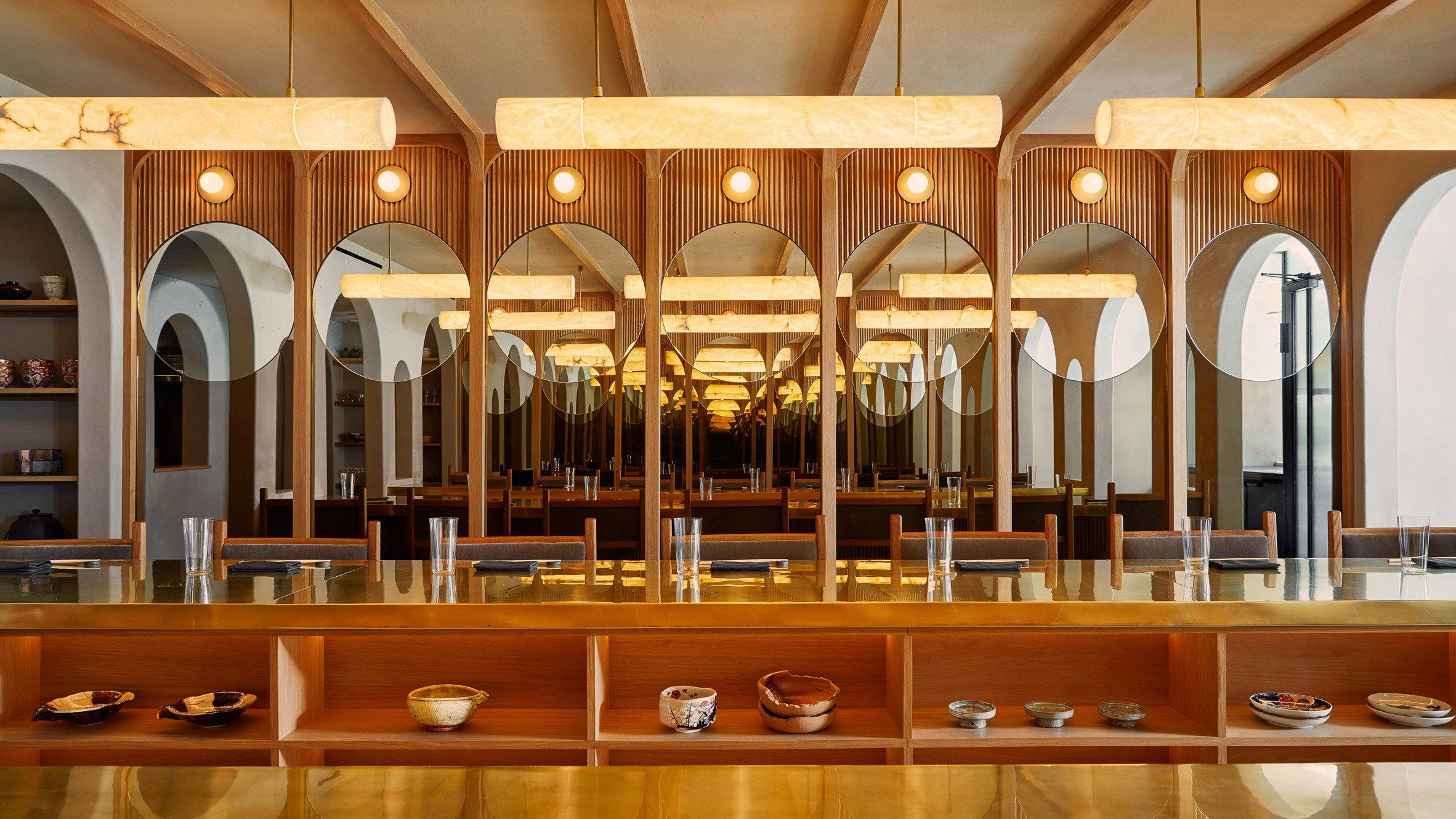
In Japanese, tsukimi refers to moon viewing, the harvest festival practice of honoring the moon at its fullest and brightest. The name functions as more than atmosphere at this address. Illuminated shelves of ceramics and mirrored panels carry the light-and-reflection motif through the physical space, and the moon appears as a central design reference throughout. This is not superficial theming; the aesthetic extends to the sensibility of the courses themselves, which OAD's own assessment describes as whimsical, seasonal, strategic, and imaginative.
That combination of discipline and playfulness is characteristic of kaiseki at its most considered. The format originates in the kaiseki ryori tradition of Kyoto, where the sequence of courses follows the season's produce and the meal's internal logic simultaneously. New York kaiseki counters that work at this level are in dialogue with that tradition, though they operate in a different ingredient context and serve a different dining culture. The OAD summary for Tsukimi quotes the adage simplicity is the peak of elegance, which positions the kitchen's approach as one of reduction rather than accumulation.
What the Awards Record Implies About the Kitchen
A Michelin star earned in 2024 and an OAD ranking that has improved year-over-year points to a kitchen that is not only executing at a high level but improving its output as it matures. OAD's methodology relies heavily on frequent-diner feedback from a self-selecting group of serious eaters, which means its rankings reflect repeat visits and comparative assessment rather than a single inspector's judgment. Moving from Highly Recommended to a top-205 North America placement in two years suggests the kitchen has built a consistent audience willing to return and advocate.
For context, the OAD North America list includes venues across every major dining city on the continent. Placing at #205 in that field, while holding a Michelin star, situates Tsukimi in a tier where the competition includes well-capitalized tasting-menu restaurants with national profiles. The East Village address and the kaiseki format both narrow the audience, which makes the ranking more pointed: this is a specialist counter earning generalist critical recognition.
Beyond that attribution, the available record speaks through the awards structure: a trajectory of accelerating recognition across independent credentialing systems is itself a form of evidence about the kitchen's direction.
Course Structure and Beverage
Both dishes reflect kaiseki's characteristic logic of pairing temperature, texture, and acidity within a single course rather than distributing those elements across the meal.
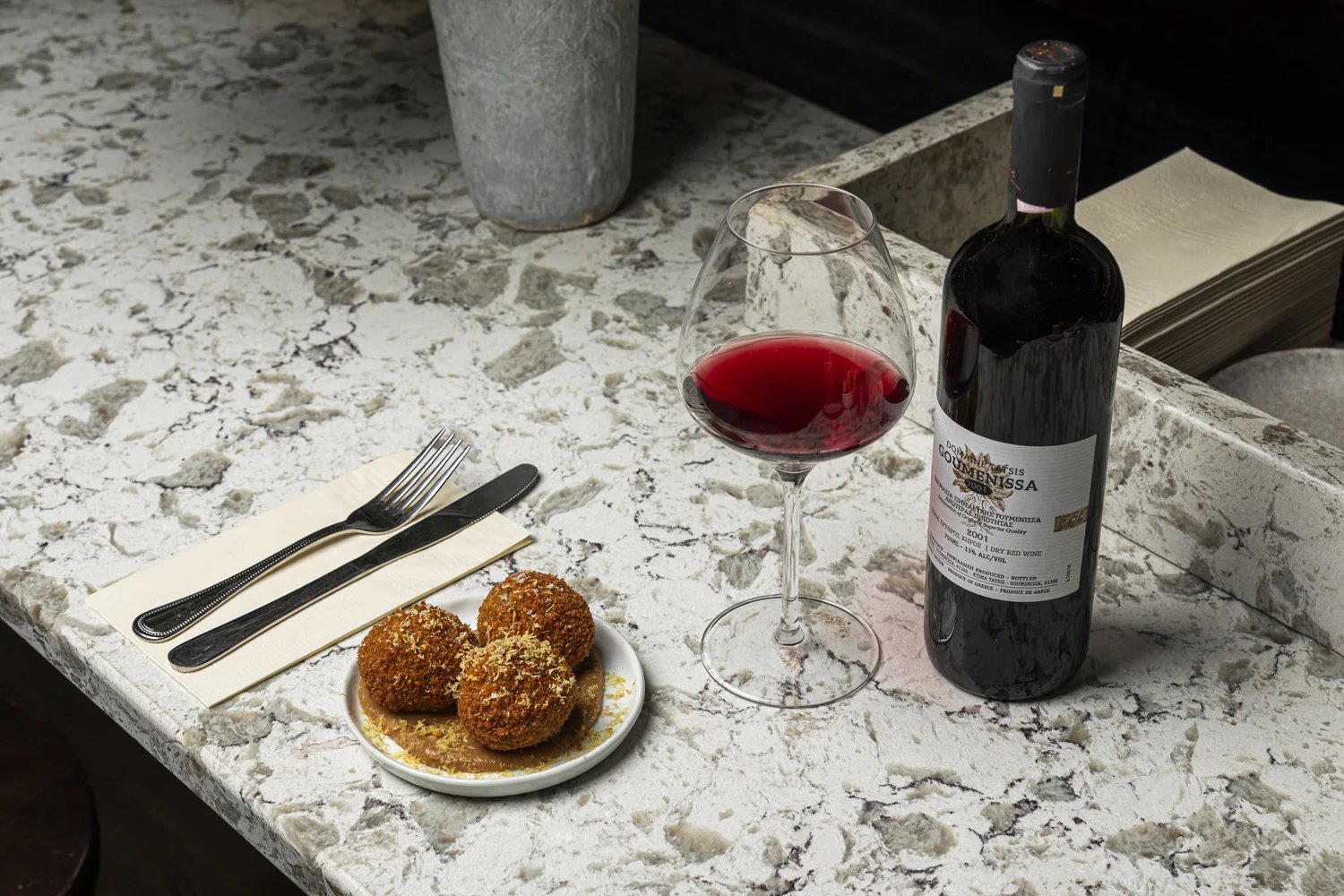
Beverage pairing is available. OAD's guidance recommends the à la carte sake selection over the pairing, which is a meaningful note for anyone planning the evening. An à la carte sake program at a Michelin-starred Japanese counter typically offers more flexibility for matching individual courses and exploring the range of the list, and OAD's recommendation signals the list is worth engaging with directly rather than delegating to a set pairing.
For Japanese dining elsewhere in the city at a different format and price point, Blue Ribbon Sushi Izakaya, Chikarashi, and Curry-ya cover other registers of the city's Japanese dining range. The kaiseki counter format, though, sits apart from all of them in terms of structure, commitment, and price.
Tsukimi in the Broader Tasting-Menu Context
The $$$$ tier in New York's tasting-menu market includes restaurants that operate in very different traditions. Masa approaches Japanese fine dining through sushi omakase. Per Se and Le Bernardin work in French and French-seafood registers. Eleven Madison Park has moved to a plant-based format. Atomix operates through modern Korean kaiseki. What distinguishes Tsukimi from most of its price-tier peers is the specific discipline of traditional kaiseki sequencing applied in an East Village room that seats a small number of covers.
Nationally, the kaiseki and Japanese-influence fine dining conversation extends to venues like Single Thread Farm in Healdsburg, which works in a Japanese-influenced multi-course format with deep seasonal specificity. At the more theatrical tasting-menu end of the American spectrum, Alinea in Chicago and Lazy Bear in San Francisco represent different formal traditions. The French Laundry in Napa, Providence in Los Angeles, and Emeril's in New Orleans represent the French and American fine dining categories that sit alongside kaiseki in the national tasting-menu tier. For kaiseki in its home context, Myojaku and Azabu Kadowaki in Tokyo show the format's range in Japan.
Service and the East Village Address
OAD's writeup specifically notes that service at Tsukimi is seamless and unaffected, which is a substantive description in the context of fine dining criticism. Affected service at a kaiseki counter, where the ritual of presentation is built into the format, is a common failure mode. The assessment suggests the room handles the ceremonial elements of the kaiseki sequence without tipping into performance, which matters for the overall calibration of the experience.
The East Village location at 228 East 10th Street places the counter in a neighbourhood more associated with casual dining and late-night eating than with Michelin-starred tasting menus. That positioning is not unusual for New York's smaller fine dining operations, which often occupy spaces in residential or mixed-use blocks rather than the Midtown hotel corridors where some of the city's most expensive restaurants operate. For the full range of New York City dining, drinking, and hospitality options, see our full New York City restaurants guide, our full New York City bars guide, our full New York City hotels guide, our full New York City wineries guide, and our full New York City experiences guide.
Planning Your Visit
Tsukimi operates Wednesday through Friday from 5 PM to 8:30 PM, Saturday from 5 PM to 8 PM, and Sunday from 5 PM to 8 PM. The kitchen is closed Monday and Tuesday. The compressed weekly schedule, combined with the counter format and accumulated critical recognition, makes advance booking advisable. The price tier is $$$$. The address is 228 East 10th Street, New York, NY 10003.
Quick reference: 228 E 10th St, East Village; Wed–Fri 5–8:30 PM, Sat–Sun 5–8 PM; closed Mon–Tue; $$$$ kaiseki counter; Michelin one star (2024); OAD #205 North America (2025).
Frequently asked questions
What should I order at Tsukimi?
Tsukimi operates as a kaiseki counter, meaning the menu is set and seasonal rather than à la carte. The progression of courses is structured by the kitchen, so the decision is less about individual dishes and more about how you approach the meal. On the beverage side, OAD's assessment specifically recommends the à la carte sake selection over the beverage pairing, citing it as a stronger option for the format. Among documented courses, the chilled caviar with warm scrambled eggs and potato purée and the chopped scallop with sea buckthorn and nori crisp have appeared in OAD's published evaluation of the restaurant. Chef Takinori Akayama's kitchen holds a Michelin star and has been recognized by OAD across three consecutive years, which provides context for the kitchen's standards without prescribing a specific order of preference.
Quick Comparison
| Venue | Cuisine | Price | Awards | Notes |
|---|---|---|---|---|
| TsukimiThis venue — the venue you are viewing | Modern Kaiseki | $200–300 | 1 Michelin Star | Not listed |
| Le Bernardin | French Seafood Fine Dining | $300–500 | 3 Michelin Stars · World's 50 Best #13 | French, Seafood |
| Atomix | Modern Korean Tasting Menu | $300–500 | 2 Michelin Stars · World's 50 Best #7 | Modern Korean, Korean |
| Masa | Seasonal Hokkaido Tempura Omakase | $150–200 | Tabelog 100 #34 | Sushi, Japanese |
| Per Se | French Fine Dining Tasting Menu | $300–500 | 3 Michelin Stars · World's 50 Best #40 | French, Contemporary |
| Eleven Madison Park | Contemporary Plant-Based Fine Dining | $300–500 | 3 Michelin Stars · World's 50 Best #4 | French, Vegan |
Recognition history
Dated appearances from independent guides and award organizations, with the underlying list record or original source where available.
Michelin 1 Star
Michelin
Opinionated About Dining Top Restaurants in North America Recommended
Opinionated About Dining
Full recognition history (6 entries)
Opinionated About Dining Top Restaurants in North America Ranked #205
Opinionated About Dining
Michelin 1 Star
Michelin
Opinionated About Dining Top Restaurants in North America Ranked #302
Opinionated About Dining
Opinionated About Dining Top Restaurants in North America Highly Recommended
Opinionated About Dining
Continue exploring
More in New York City
Restaurants in New York City
Browse all →
Bars in New York City
Browse all →
Hotels in New York City
Browse all →




Details
- Intimate
- Elegant
- Modern
- Sophisticated
- Date Night
- Special Occasion
- Chefs Counter
- Sake Program
- Tasting Menu
- Counter Dining
- Sake
Current opening hours
- Monday
- Closed
- Tuesday
- Closed
- Wednesday
- 5–8:30 PM
- Thursday
- 5–8:30 PM
- Friday
- 5–8:30 PM
- Saturday
- 5–8 PM
- Sunday
- 5–8 PM
Hours can change for holidays and private events. Last verified .
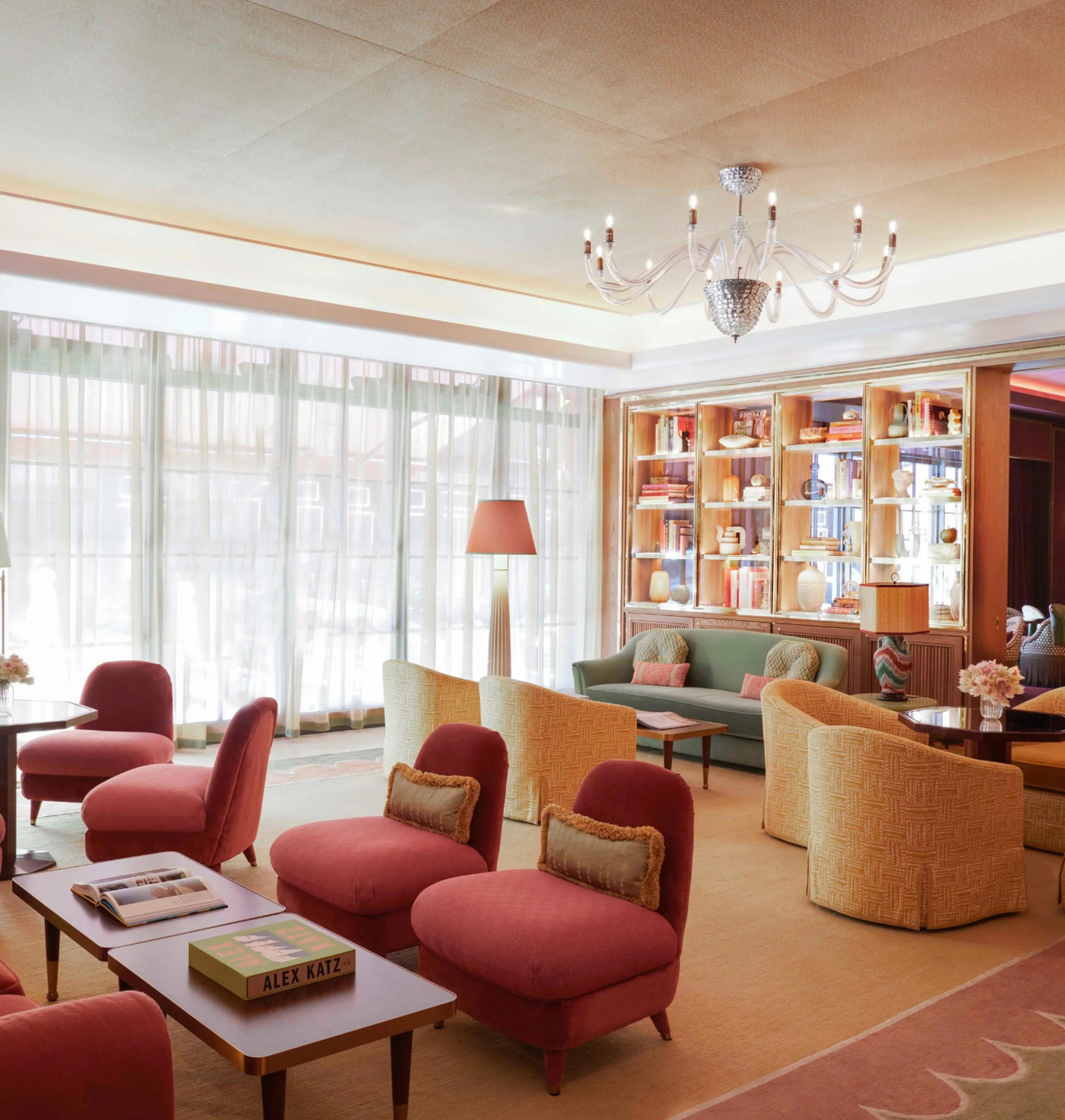
Light-bright aesthetic with illuminated ceramics, mirrored panels, and a serene, hushed atmosphere.