Bali Hai Seafood Market

A Michelin Plate-recognised seafood institution on Gurney Drive, Bali Hai Seafood Market has operated for over a decade on a direct premise: choose your catch from the live tanks at the entrance, then name your preparation. Teochew, Nyonya, and Thai cooking styles run alongside cereal prawns and salted egg yolk crab that have become reference points for the format in George Town.
Pearl is the En Primeur Club membership app — saves, bookings, and concierge access live there. Same editors, same standards.
- Address
- 90A, 90 B, 90C & 90 D, 90, Persiaran Gurney, 10250 George Town, Pulau Pinang, Malaysia
- Phone
- +60 4-228 1272
- Website
- facebook.com
- Directions
- Get directions
 Saves & bookings on Pearl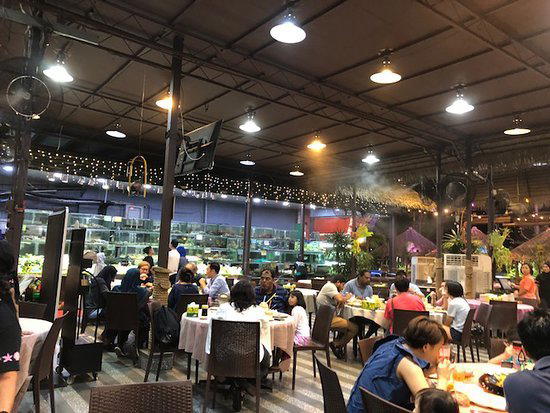
Gurney Drive and the Live-Tank Tradition
Along Gurney Drive, the relationship between diner and ingredient is unusually direct. The promenade-facing stretch of seafood restaurants operates on a model that predates contemporary farm-to-table language by decades: tanks of live fish and shellfish positioned at the entrance, priced by weight, cooked to order. Bali Hai Seafood Market, occupying four shophouse units at 90A–90D Persiaran Gurney, sits within this tradition and has refined it across more than ten years of operation. The Michelin Guide awarded it a Plate in 2024 and 2025.
The physical setup follows the logic of a market more than a restaurant. Tanks line the entrance, and the transaction happens before you sit down. That front-of-house architecture shapes the entire experience: the kitchen's role is to honour a choice already made, not to impose a fixed menu. It is a format that rewards knowing what you want and rewards the kitchen for having the technical range to execute across multiple culinary registers.
Three Cooking Traditions, One Kitchen
George Town's culinary identity is built on overlap. Hokkien, Teochew, Nyonya, Malay, and Indian influences have been compressing and recombining here for two centuries, and the seafood table is where those influences converge most visibly. At Bali Hai, a single catch can be steered toward Teochew clarity, Nyonya spice complexity, or Thai aromatics depending on the table's preference. That breadth is not novelty, it reflects the cooking inheritance of a port city where culinary borders have always been permeable.
Teochew preparations typically prioritise the ingredient: steaming, light broths, and restrained seasoning that keeps the focus on freshness. Nyonya cooking, the hybrid cuisine developed by the Straits Chinese community across Penang, Malacca, and Singapore, layers rempah spice pastes, tamarind, and coconut into more complex flavour structures. Thai preparation at a Malaysian Chinese seafood house often means lemongrass, galangal, and bird's eye chilli in configurations that read as Southern Thai rather than Central. Having all three available in one kitchen represents a serious commitment to range.
For context within George Town's broader dining spectrum, the Nyonya tradition is most rigorously explored at Auntie Gaik Lean's Old School Eatery, which holds a Michelin Star and operates from a narrower, more focused Peranakan menu. Richard Rivalee takes the Peranakan tradition in a more contemporary direction. Bali Hai sits differently in this ecosystem: less about preserving or reinterpreting a single heritage cuisine, more about the live-market model with multi-style execution.
The Dishes That Define the Format
Two preparations have become reference points at Bali Hai and illustrate the tradition-versus-technique tension that runs through the kitchen's approach. The cereal prawns involve tossing prawns in butter and a milky oat powder that forms a crispy, fragmented crust. The technique is associated with Malaysian Chinese cooking, where oat-crusted preparations became widespread from the 1990s onward, but the execution varies considerably. At its leading, the crust provides textural contrast without masking the prawn; the fat and the cereal form a coherent coating rather than a loose scatter. The dish sits in the zone where a thoroughly familiar preparation depends entirely on calibration.
The salted egg yolk crab represents a different kind of balancing act. Salted duck egg yolks, when cooked down with butter and curry leaf, produce a thick, sandy sauce that sits at the intersection of umami, salt, and fat. The challenge is that the yolk's intensity can overwhelm the crab if the ratio is misjudged; a well-executed version keeps the yolk as a complement rather than a coating. The Michelin Guide has noted this dish specifically.
These two dishes illustrate a broader point about George Town's seafood scene: particularly discussed preparations tend to involve techniques that transform or enhance rather than simply present. Even at the live-tank market end of the spectrum, the cooking is doing meaningful work.
Where Bali Hai Sits in the Price Tier
George Town's dining options span a compressed price range compared with Singapore or Kuala Lumpur's premium dining districts. At the $$ price tier, Bali Hai sits below Au Jardin, the European contemporary address at $$$. The live-tank pricing model means final costs depend on species selection and group size. Premium shellfish and large fish will push the bill toward the higher end of the tier.
For broader orientation across Malaysia's seafood restaurant landscape, Bee See Heong in Seberang Perai and The Planters at The Danna in Langkawi offer different points of comparison. Internationally, the live-tank market format connects to a wider tradition of market-style seafood houses found at addresses such as Gambero Rosso in Marina di Gioiosa Ionica, Alici on the Amalfi Coast, and more technique-forward seafood programmes like Angler in London, Aux Pesked in Saint-Brieuc, and Bistrot in Forte dei Marmi, each of which handles the fresh-catch imperative through different culinary frameworks.
Planning a Visit
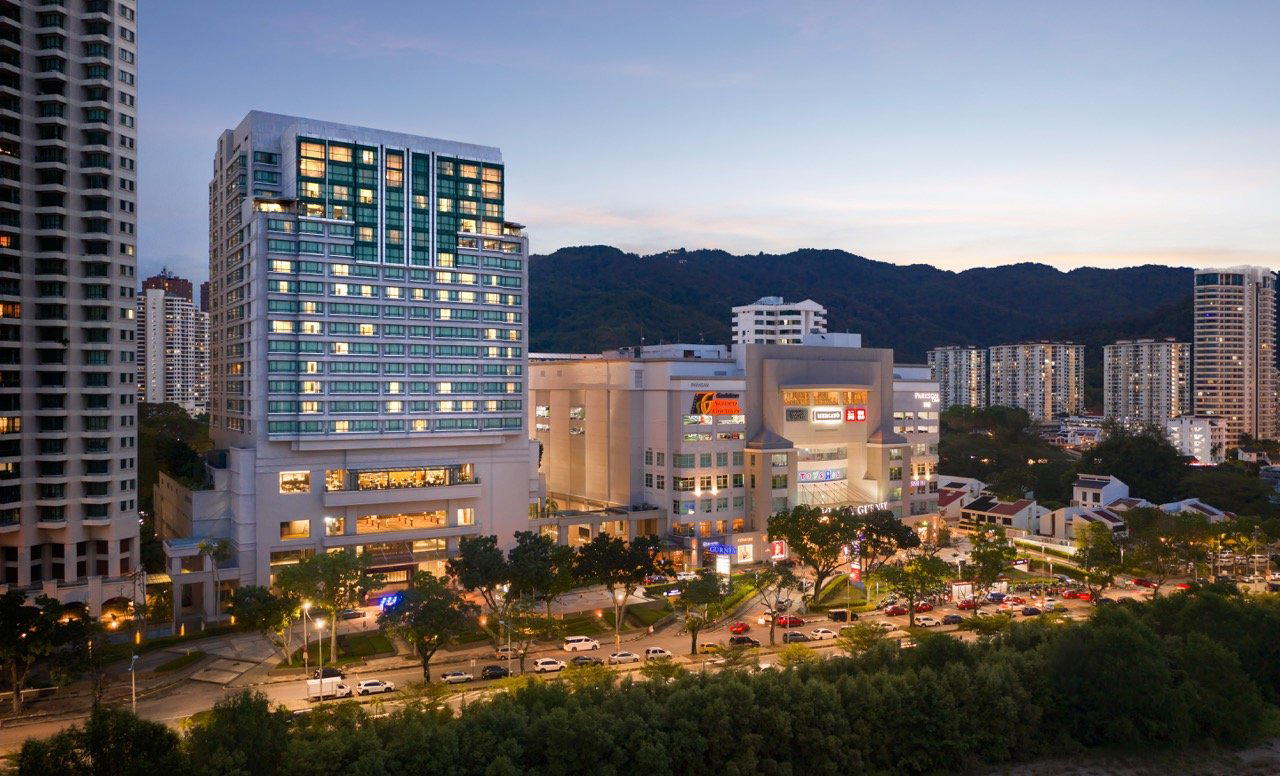
Bali Hai is at 90A–90D Persiaran Gurney, George Town, along the Gurney Drive waterfront promenade. The address is direct to reach from the heritage core of George Town, and the promenade location means evening arrivals get the seafront air that has made Gurney Drive a consistent dining draw for decades. The live-tank selection at the entrance is the first decision, so arriving with a clear preference for species and cooking style rather than browsing helps with the pace of the meal.
George Town's street food tradition runs in parallel with its sit-down scene; 888 Hokkien Mee on Lebuh Presgrave and Ah Boy Koay Teow Th'ng represent the hawker end of the city's noodle tradition. For context on Malaysia's fine dining direction more broadly, Dewakan in Kuala Lumpur sets a useful benchmark for how Malaysian ingredients are being handled at the progressive end of the national dining scene.
What do people recommend at Bali Hai Seafood Market?
The two most frequently cited dishes are the cereal prawns, tossed in butter and oat powder to form a crispy crust, and the stir-fried crab with salted egg yolks, where the sauce balances umami and saltiness. Both have been noted by the Michelin Guide alongside the restaurant's Plate recognition in 2024 and 2025. The broader appeal of the format is the live-tank selection at the entrance, which allows tables to choose their own catch and specify a cooking style from Teochew, Nyonya, or Thai preparations.
A Minimal comparable set
Comparable venues nearby, for context on price, style, and recognition.
| Venue | Cuisine | Price | Notes |
|---|---|---|---|
| Bali Hai Seafood MarketThis venue — the venue you are viewing | Seafood | $$ | Not listed |
| Bibik's Kitchen | George Town, Nyonya Peranakan | $$ | Not listed |
| Thara | George Town, Authentic Thai | $$ | Not listed |
| The Pinn | Not listed | $ | George Town, Malaysian-Chinese Small Eats |
| Rasa Rasa | George Town, Peranakan Malaysian | $ | Not listed |
| Peninsula House | George Town, Modern Australian | $$$ | Not listed |
Recognition history
Dated appearances from independent guides and award organizations, with the underlying list record or original source where available.
Michelin Plate
Michelin
Michelin Plate
Michelin
Michelin Plate
Michelin
Continue exploring
More in George Town
Restaurants in George Town
Browse all →
Bars in George Town
Browse all →
At a Glance
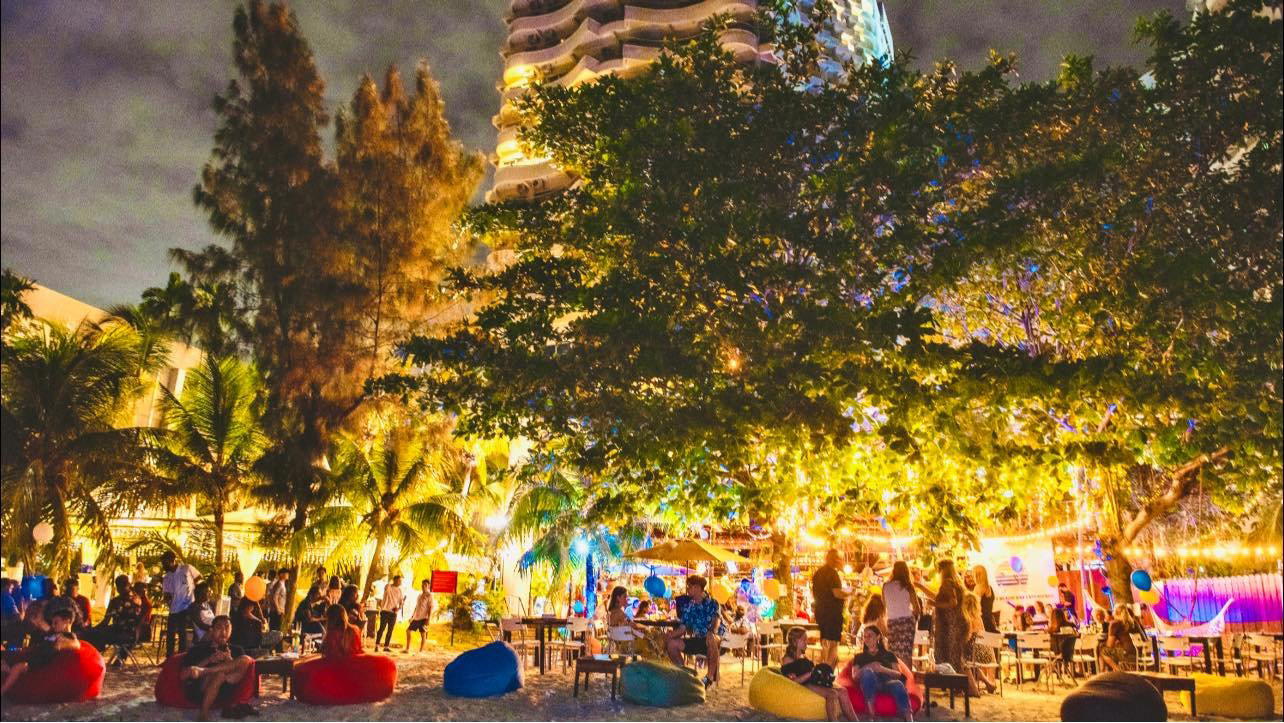
- Casual
- Lively
- Family
- Group Dining
- Casual Hangout
- Waterfront
- Standalone
- Beer Program
- Sustainable Seafood
- Waterfront
Current opening hours
- Monday
- 4 PM–12 AM
- Tuesday
- 8 AM–2:30 PM, 4 PM–12 AM
- Wednesday
- 8 AM–2:30 PM, 4 PM–12 AM
- Thursday
- 8 AM–2:30 PM, 4 PM–12 AM
- Friday
- 8 AM–2:30 PM, 4 PM–12 AM
- Saturday
- 8 AM–2:30 PM, 4 PM–12 AM
- Sunday
- 8 AM–2:30 PM, 4 PM–12 AM
Hours can change for holidays and private events. Last verified .
Warm, casual, open-air seafood-market atmosphere with live tanks and a lively, family-style dining feel.