Rasa Rasa

Michelin Bib Gourmand
Our verdict
A Michelin Bib Gourmand holder for consecutive years (2024–2025), Rasa Rasa on Gat Lebuh Chulia serves Peranakan cooking in a compact, brick-walled room where the pandan nasi lemak on banana leaf draws a loyal daytime crowd. At the budget end of George Town's Nyonya dining spectrum, it offers reliable Straits-Chinese flavours without the cover-charge ambition of the city's sit-down Peranakan restaurants.

Pearl is the En Primeur Club membership app, where members save venues, book tables and use the concierge.
Brick Walls, Banana Leaf, and the Case for Daytime Peranakan
George Town's Peranakan dining scene divides fairly cleanly along a price axis. At one end sit restaurants like Auntie Gaik Lean's Old School Eatery and Richard Rivalee, where the Nyonya tradition is served in fuller format, at mid-range prices, in rooms with a degree of ceremony. At the other end, places like Rasa Rasa operate on the logic of the kedai makan: short menus, honest prices, and an interior that signals function over occasion. The distinction matters for how you plan your day. A lunch at a Bib Gourmand-level spot like this one is a different proposition from an evening at a table-service Peranakan restaurant, and not a lesser one.
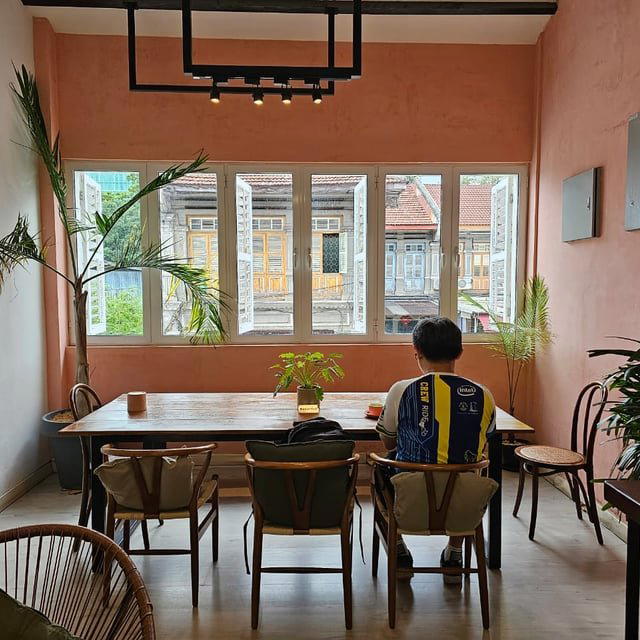
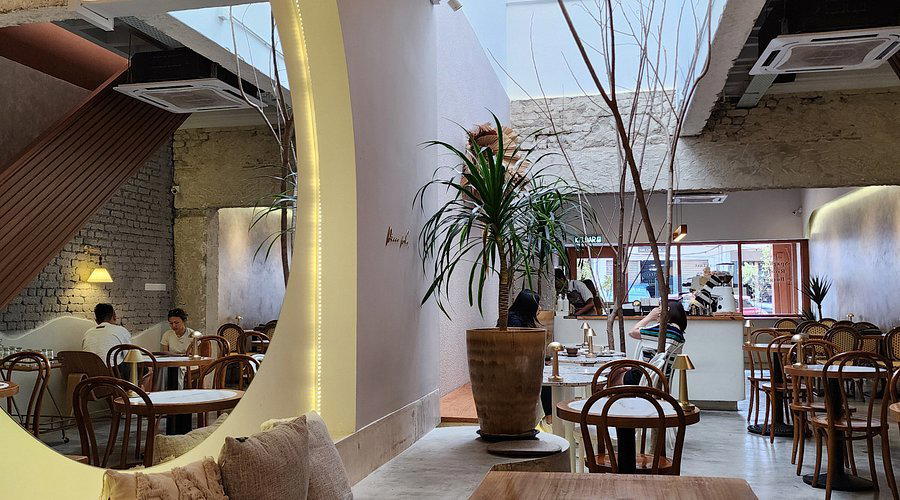
Rasa Rasa sits on Gat Lebuh Chulia, a short lane off the historic inner city grid in George Town. The room is compact, with exposed brick walls offset by potted plants and industrial accents, the kind of visual shorthand that communicates neighbourhood café without tipping into self-conscious design. It is the sort of space that reads differently at noon, when natural light fills it and the rhythm is quick, than it would in the evening. The Michelin Bib Gourmand recognition in both 2024 and 2025 confirms what repeat visitors already knew: the cooking here is consistent enough to hold attention across visits.
The Daytime Logic of the Nyonya Combo Set
Peranakan cooking in Penang traces its origins to the Straits Chinese communities that took root here over centuries, blending southern Chinese technique with Malay spicing and ingredients. The result is a cuisine built on complexity achieved through layering: rempah pastes, aromatics, and controlled heat. What distinguishes places like Rasa Rasa from the broader hawker circuit is that this Nyonya tradition is presented as a composed plate rather than individual hawker items, a meaningful difference in how the meal coheres.
The Nyonya combo set is the practical centre of the menu, structured around pandan nasi lemak with a choice of toppings. The rice arrives on a banana leaf, topped with a mildly hot homemade sambal. This is a daytime format: filling, focused, and priced to suit the lunch crowd rather than the dinner-out occasion. The sambal calibration, present without overwhelming, reflects the Penang Peranakan tendency to moderate heat compared with the sharper spicing of some Malay-origin versions of the same dish. The banana leaf presentation is not decorative; the leaf contributes a faint vegetal fragrance to the rice, which is part of the point.
Alongside the combo set, the Siam bihun, turmeric rice vermicelli served with shredded omelette and sauces, represents a slightly different register of Peranakan cooking, one that draws on the Thai-Malay border influence visible in northern Peninsular cuisine. Turmeric as a primary colouring and flavouring agent in noodle dishes connects this dish to a broader family of kerabu and turmeric-stained preparations found across the Straits. It is the kind of item that repays attention; the components look simple on arrival but the balance between the vermicelli, egg, and sauce requires precision to land correctly.
Tub tim krob, the traditional dessert of water chestnuts in sweetened coconut milk, rounds out the menu's Nyonya credentials. It is a standard-bearer of the cuisine and a reliable test of kitchen care: the chestnuts should retain snap, the coconut milk should be neither thin nor cloying, and the pandan-scented syrup should do its job quietly. Its presence here signals a kitchen operating within a defined traditional vocabulary rather than improvising around it.
Where Rasa Rasa Sits in the George Town Peranakan Map
George Town's Peranakan offering is wide enough to warrant its own internal map. Rasa Rasa occupies the accessible, single-dish end of that spectrum, where the Michelin recognition carries a specific meaning: value at a given quality level, not a position in the fine-dining hierarchy. The Bib Gourmand designation, by definition, marks restaurants offering good cooking at prices below the starred tier, which is exactly how this venue functions.
Comparison is useful here. Bibik's Kitchen and Ceki represent adjacent points on the George Town Peranakan spectrum, each with its own format and price positioning. Flower Mulan takes the cuisine in a different direction. For visitors building a multi-meal Peranakan itinerary across the city, Rasa Rasa makes most sense as a lunch anchor, the price point, the menu format, and the rhythm of the room all point to midday rather than evening. See our full George Town restaurants guide for broader context on how these places relate to each other across neighbourhood and price tier.
Beyond Penang, the Peranakan tradition has its most developed fine-dining expression in Singapore, where restaurants like Candlenut, Pangium, Chilli Padi (Joo Chiat), Indocafé, and 328 Katong Laksa represent the full range from hawker-adjacent to tasting menu. Penang Peranakan cooking sits in a distinct regional variant of that tradition, with its own Siamese and northern Malay inflections, apparent in dishes like the Siam bihun. The cuisines are related but not interchangeable. For Malaysian comparisons further afield, Dewakan in Kuala Lumpur, Bee See Heong in Seberang Perai, and The Planters at The Danna in Langkawi each represent different regional dining registers worth understanding alongside the George Town scene.
Planning Your Visit
Rasa Rasa is positioned at the budget end of the price scale, marked as a single-dollar venue, meaning that even with a dessert and drink, this is a low-cost meal by any regional standard. The address at 59 Gat Lebuh Chulia places it within walking distance of the UNESCO-listed George Town heritage core. Hours and booking policy are not listed, so arriving at off-peak lunch hours, before noon or after 1:30 pm, is the practical hedge against a wait. No advance reservation system is confirmed, which is consistent with the kedai makan format. For everything else George Town has on offer, our hotels guide, bars guide, wineries guide, and experiences guide cover the rest of the city's offer.
Frequently asked questions
What is the signature dish at Rasa Rasa?
The Nyonya combo set built around pandan nasi lemak is the dish that defines the menu. The rice is served on banana leaf with a homemade sambal and a choice of toppings. The Siam bihun, turmeric rice vermicelli with shredded omelette, is a second notable option, and tub tim krob is the recommended dessert to finish. All three appear in the Michelin Bib Gourmand recognition awarded in both 2024 and 2025. For broader context on Peranakan cooking in the city, see our George Town restaurants guide.
Is Rasa Rasa reservation-only?
No confirmed booking system is listed for Rasa Rasa, which is consistent with its kedai makan format and single-dollar price positioning. Bib Gourmand venues at this price tier in George Town typically operate on a walk-in basis. Given the 349-review Google presence and consecutive Michelin recognition in 2024 and 2025, arriving early or outside peak lunch hours is the practical approach. For reference, George Town's sit-down Peranakan restaurants in the mid-range tier are more likely to accept or require reservations.
What is the defining dish or idea at Rasa Rasa?
The pandan nasi lemak on banana leaf is the clearest expression of what this kitchen does: a traditional Peranakan-Malay preparation kept close to its source, with a homemade sambal calibrated for approachability rather than aggression. The cuisine here operates within the Penang Nyonya tradition, which carries distinct Thai-Malay border influences not found in the Singapore Peranakan canon. Two consecutive Michelin Bib Gourmand awards confirm the cooking's consistency within that tradition at a price point accessible to most visitors.
Comparable Spots, Quickly
| Venue | Cuisine | Price | Awards | Notes |
|---|---|---|---|---|
| Rasa RasaThis venue (the venue you are viewing) | Peranakan Malaysian | $10–20 | Michelin Bib Gourmand | Not listed |
| Au Jardin | Modern European with Local Accents | $200–300 | 1 Michelin Star · World's 50 Best #39 | European Contemporary |
| Auntie Gaik Lean's Old School Eatery | Peranakan (Nyonya) | $10–20 | 1 Michelin Star | Peranakan |
| Ah Boy Koay Teow Th'ng | Teochew Koay Teow Th'ng | $1–10 | Michelin Bib Gourmand | Street Food |
| Aria | Modern American | Not listed | Not listed | Not listed |
| Communal Table by Gēn | Modern Malaysian Fusion | $30–50 | Michelin Bib Gourmand · Star Wine List | Malaysian |
Recognition history
Dated appearances from independent guides and award organizations, with the underlying list record or original source where available.
Michelin Bib Gourmand
Michelin
Full recognition history (3 entries)
Michelin Bib Gourmand
Michelin
Michelin Bib Gourmand
Michelin
Continue exploring
More in George Town
Restaurants in George Town
All restaurants in George Town →
Bars in George Town
All bars in George Town →
Details
- Cozy
- Rustic
- Industrial
- Casual Hangout
- Family
- A La Carte
Current opening hours
- Monday
- 8:30 AM–3 PM
- Tuesday
- 9 AM–3:30 PM
- Wednesday
- Closed
- Thursday
- 8:30 AM–3 PM
- Friday
- 8:30 AM–3 PM
- Saturday
- 9 AM–3 PM
- Sunday
- 9 AM–3 PM
Hours can change for holidays and private events. Hours as of .
Cozy with potted plants, exposed brick walls, and industrial accents.