Hot Bowl White Curry Mee

Michelin Bib Gourmand
Our verdict
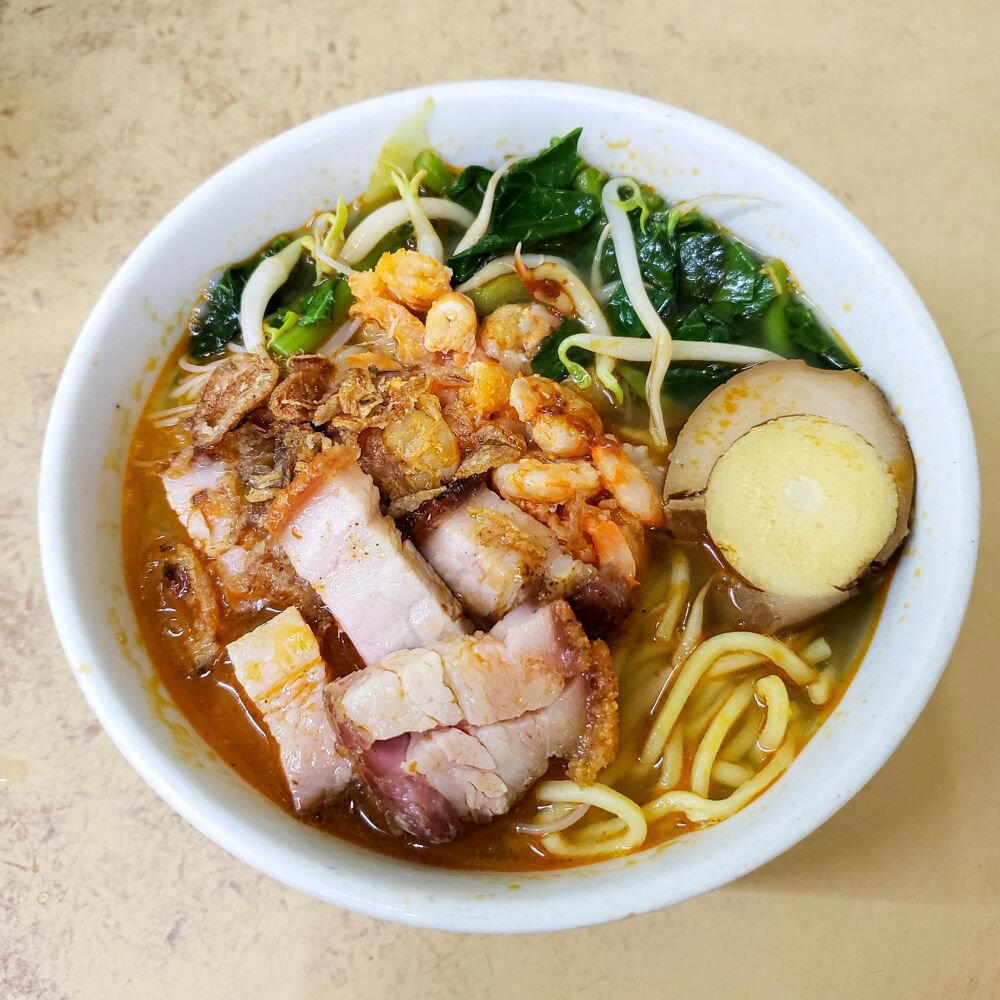
A Michelin Bib Gourmand recipient in 2024 and 2025, Hot Bowl at 58C Jalan Rangoon serves George Town's white curry mee in a coconut milk broth with adjustable heat via a side bowl of hand-stirred curry paste. The format is interactive and the price is firmly in hawker territory. Optional pairings include deboned steamed chicken, spiced loh bak, or Teochew guang jiang.

Pearl is the En Primeur Club membership app — saves, bookings, and concierge access live there. Same editors, same standards.
- Address
- 58C, Jalan Rangoon, 10400 George Town, Pulau Pinang, Malaysia
- Phone
- +60 4-227 3168
- Hours
- Mon ClosedTue–Sun 8 AM–2:30 PM
- Website
- wa.me
- Directions
- Get directions
Where the Broth Tells the Story
On Jalan Rangoon, a mid-century shophouse row that threads through one of George Town's older residential quarters, the queue outside Hot Bowl forms before the kitchen has fully warmed up. This is a neighbourhood in transition — walk far enough and you'll pass both heritage conservation zones and workaday provision shops — but the draw here is not gentrification or novelty. It is a bowl of white curry mee, a dish that belongs specifically to Penang in the way that laksa belongs to Penang, and that the city's hawker culture has refined across generations without ever needing to explain itself to outsiders.
White curry mee sits within a broader tradition of coconut milk-based noodle soups that runs through Southeast Asian cooking, but it occupies a narrower lane than its more internationally recognised cousin, curry laksa. The broth is paler, the spice profile more restrained on the surface, and the format here involves a deliberate structural choice: the curry paste arrives in a separate bowl rather than pre-incorporated into the soup. That decision has practical implications and an editorial one. The practical implication is heat control, you add as much or as little paste as your tolerance allows. The editorial one is that it foregrounds the paste itself, asking you to engage with the spice work rather than simply consume it.
The Paste Is the Point
The editorial angle that connects George Town's hawker traditions to broader culinary conversations is not fusion or modernisation, it is precision within indigenous technique. The curry paste at Hot Bowl takes two hours to hand-stir, combining dried shrimps, chillies, and spices through a process that resists mechanical shortcuts. That same paste is available for purchase by the bottle, which is a signal worth reading carefully: the kitchen is confident enough in the paste as a product in its own right to sell it outside the context of a meal.
This approach is consistent with how Penang's hawker economy has always operated. The distinction between restaurant cooking and home cooking here is permeable in a way that is less common in, say, the European fine dining tradition. Recipes travel between stalls, families, and home kitchens through sale, adaptation, and proximity. The bottled paste formalises something that has always been informal. It also positions the spice work as the technical core of the dish, the element around which everything else is organised. Compare this to the kind of indigenous-ingredient focus visible at Dewakan in Kuala Lumpur, where the approach is formal and tasting-menu-driven, and you see the same underlying principle expressed at opposite ends of the price spectrum.
What to Order and How to Think About It
The white curry mee with its coconut milk broth is the reason to come. The menu extends to optional proteins, deboned steamed chicken, spiced loh bak, and Teochew guang jiang, each of which adds a different register of flavour without redirecting the broth's role as the primary object of attention. The deboned steamed chicken in particular is worth noting: steaming preserves texture and moisture in a way that frying or braising would not, and its neutrality against the spiced broth is deliberate rather than default.
There is also a clear broth noodle soup with chicken meatballs for those who want a less assertive bowl. This is not a concession to timidity, clear broth soups require their own discipline, and George Town's noodle culture is as serious about clean stock as it is about spiced ones. For context on the city's breadth in this category, Pitt Street Koay Teow Soup and Bridge Street Prawn Noodle each approach noodle broth from distinct traditions within the same city. George Town's noodle scene is not monolithic.
Recognition and What It Means Here
Michelin awarded Hot Bowl its Bib Gourmand in both 2024 and 2025, a designation that the guide uses to mark places offering high quality at moderate prices. The Bib Gourmand category has, since Michelin's expansion into Southeast Asian hawker culture, become a useful signal for identifying the tier of hawker cooking where technique and consistency meet accessibility. It does not indicate ambition toward fine dining; it indicates that the kitchen is doing something well enough and consistently enough to warrant return visits from people who know the category.
The city has accumulated Michelin recognition faster than most Malaysian destinations, partly because its hawker traditions have always prioritised depth of execution over breadth of menu. George Town restaurants that carry Michelin weight tend to do one or two things with uncommon focus. This is the city's model, and it holds at every price point. For a different expression of that focus in a Peranakan register, Auntie Gaik Lean's Old School Eatery, which carries a Michelin star, shows what single-cuisine discipline looks like when it scales upward in formality.
George Town's Noodle Tradition in Wider Context
Noodle culture in Asia's hawker cities tends to be hyperlocal and resistant to standardisation, and George Town is a strong example of that pattern. Across Chinese-majority hawker cities in the region, you find similar structural principles, a few dominant broth styles, intense local loyalty, stalls that have operated for decades without menus, but the specific dishes and techniques diverge sharply. A Niang Mian Guan in Shanghai, A Bing Bao Shan Mian in Hangzhou, and Ajisai in Taichung each represent a distinct local noodle grammar. White curry mee is George Town's own contribution to that map, a dish that does not exist in the same form anywhere else.
Closer to home, Tok Tok Mee Bamboo Noodle and Fook Cheow Cafe each represent adjacent traditions in the city's noodle repertoire, and any serious engagement with George Town's hawker scene involves moving between these different registers rather than settling on a single stop. For a broader orientation, our full George Town restaurants guide maps the city's dining across cuisines and price points. Travellers planning a longer stay can also reference our George Town hotels guide, our bars guide, and our experiences guide for a fuller picture of the city.
Planning Your Visit
Hot Bowl White Curry Mee is at 58C, Jalan Rangoon, in the 10400 postal zone, a short distance from George Town's UNESCO-listed heritage core but outside the immediate tourist circuit, which affects footfall and queue composition. The price range is firmly single-dollar hawker territory, meaning a full meal with protein additions will not approach the cost of a coffee at most hotel lobbies. No website or booking is involved; this is a walk-in operation. Arriving early or between conventional meal times tends to reduce wait times at stalls of this profile. For a comparison point on the regional price tier, Bee See Heong in Seberang Perai and The Planters at The Danna in Langkawi illustrate the breadth of Malaysian dining at opposite ends of the formality scale.
Frequently asked questions
Is Hot Bowl White Curry Mee good for families?
The format suits families well. The white curry mee is served with the curry paste on the side, allowing each person to calibrate the heat independently — useful when dining with children or guests who prefer mild food. Protein options include deboned steamed chicken and clear broth noodle soup with chicken meatballs, which gives younger diners a gentler alternative to the spiced options. Pricing sits at the budget end of the scale, so feeding a group is not a concern.
What should I expect atmosphere-wise at Hot Bowl White Curry Mee?
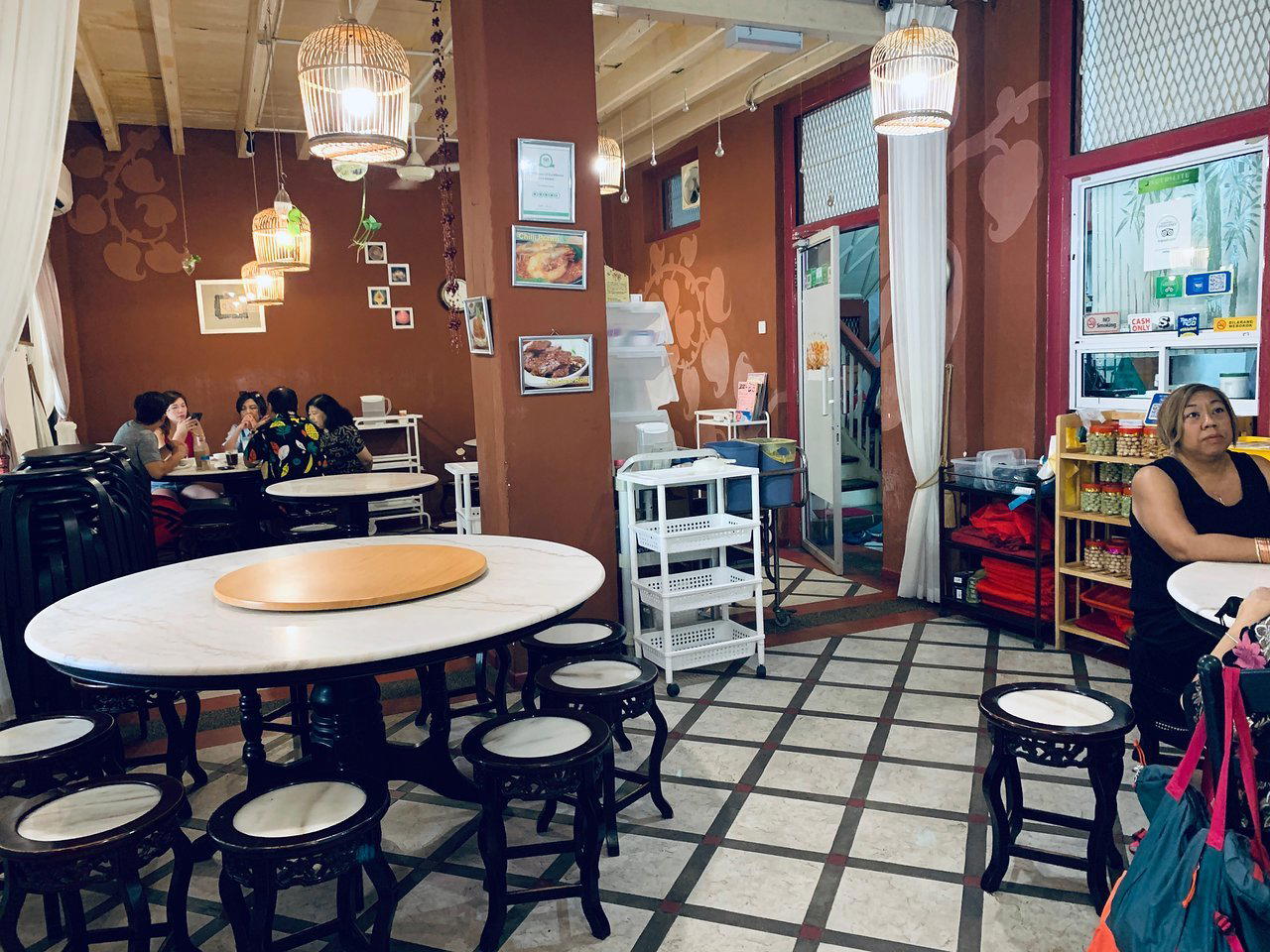
Hot Bowl operates from a shophouse on Jalan Rangoon, a residential street in one of George Town's older quarters, so the setting is functional hawker rather than designed dining room. Queues form before service — standard for a Michelin Bib Gourmand spot in this city — and the pace is brisk. Dress practically; this is street-level eating in a humid Malaysian morning.
What kind of recognition has Hot Bowl White Curry Mee received?
Hot Bowl White Curry Mee has received recognition including: White curry mee is served in a coconut milk-based broth with a bowl of curry paste on the side so that you can adjust the heat to your liking. The curry paste is available for sale by the bottle; it takes two hours to hand-stir the spices w….
What's the signature dish at Hot Bowl White Curry Mee?
The white curry mee is the reason the Michelin Bib Gourmand recognition came in both 2024 and 2025. It arrives in a coconut milk-based broth with a side bowl of curry paste that takes two hours to hand-stir from dried shrimps, spices, and chillies — and it is also sold by the bottle. Optional pairings include deboned steamed chicken, spiced loh bak, and Teochew guang jiang.
How would you describe the cuisine at Hot Bowl White Curry Mee?
What does dinner at Hot Bowl White Curry Mee typically cost?
Pricing at Hot Bowl White Curry Mee is listed as $.
What's Hot Bowl White Curry Mee's location?
Hot Bowl White Curry Mee is located at 58C, Jalan Rangoon, 10400 George Town, Pulau Pinang, Malaysia, George Town.
Cuisine Context
| Venue | Cuisine | Price | Awards | Notes |
|---|---|---|---|---|
| Hot Bowl White Curry MeeThis venue — the venue you are viewing | Penang White Curry Mee | $1–10 | Michelin Bib Gourmand | Not listed |
| Au Jardin | Modern European with Local Accents | $200–300 | 1 Michelin Star · World's 50 Best #39 | European Contemporary |
| Auntie Gaik Lean's Old School Eatery | Peranakan (Nyonya) | $10–20 | 1 Michelin Star | Peranakan |
| Ah Boy Koay Teow Th'ng | Teochew Koay Teow Th'ng | $1–10 | Michelin Bib Gourmand | Street Food |
| Aria | Modern American | Not listed | Not listed | Not listed |
| Communal Table by Gēn | Modern Malaysian Fusion | $30–50 | Michelin Bib Gourmand · Star Wine List | Malaysian |
Recognition history
Dated appearances from independent guides and award organizations, with the underlying list record or original source where available.
Michelin Bib Gourmand
Michelin
Full recognition history (3 entries)
Michelin Bib Gourmand
Michelin
Michelin Bib Gourmand
Michelin