Back A Yard Caribbean Grill
Our verdict
Back A Yard Caribbean Grill on East Capitol Expressway puts Caribbean cooking at the center of San Jose's most ethnically diverse dining corridor. The kitchen leans into the traditions of the islands, jerk seasoning, stewed meats, rice and peas, with a directness that distinguishes it from the fusion-softened versions of Caribbean food found elsewhere in the Bay Area. For a city still building out its Caribbean dining presence, this address matters.

Pearl is the En Primeur Club membership app, where members save venues, book tables and use the concierge.
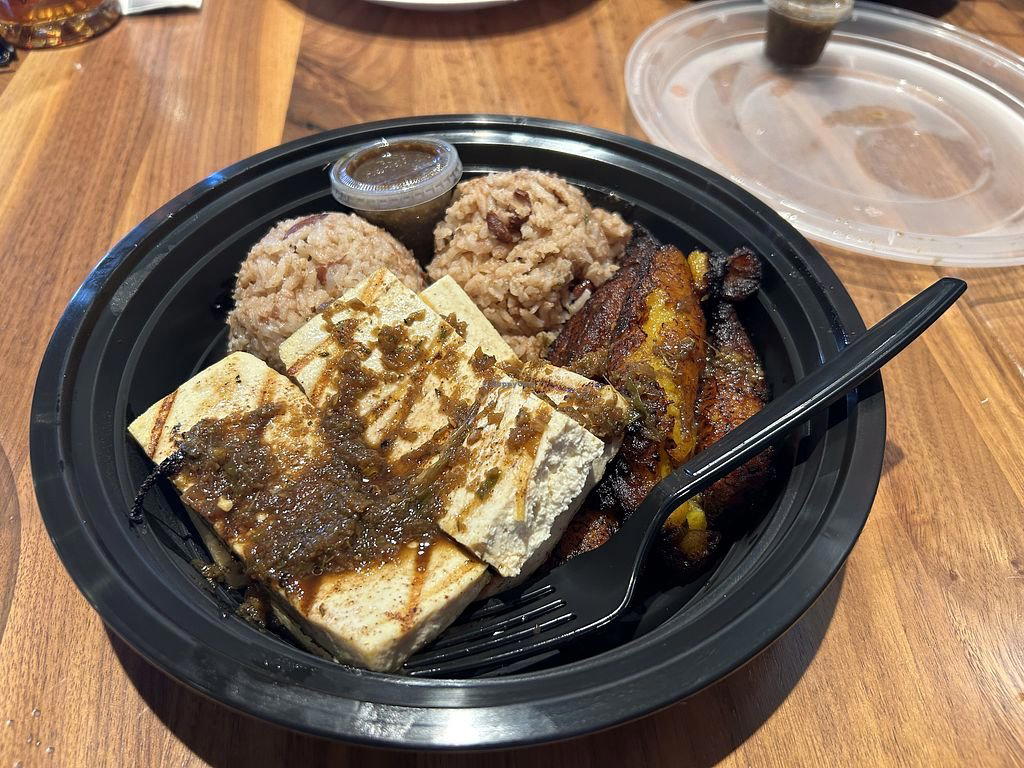
The menu
What to order
- Jerk Chicken & Beef Oxtail Plate
- Curried Goat
- Barbeque Spareribs
Where Caribbean Cooking Holds Its Ground in San Jose
East Capitol Expressway runs through one of San Jose's most genuinely diverse dining stretches, where Vietnamese pho houses, Ethiopian injera kitchens, and Mexican taquerias sit within blocks of each other. It is the kind of corridor where a cuisine either earns its place through cooking or disappears. Back A Yard Caribbean Grill, at 1011 E Capitol Expy, occupies that competitive environment and works within a tradition, Caribbean grilling and braising, that has not yet developed a strong institutional footprint in the South Bay. That relative scarcity gives the address more significance than its surroundings might immediately suggest.
Caribbean cuisine in the Bay Area tends to arrive pre-filtered: jerk chicken softened for broader palates, rice dishes stripped of their regional specificity, stewed proteins diluted into something easier to place on a fusion menu. The original forms, built around dark spice rubs, slow braise, Scotch bonnet heat, and the particular earthiness of pigeon peas cooked in coconut milk, survive better in neighborhoods where demand for authenticity outweighs demand for accessibility. East Capitol Expressway is one of those neighborhoods. Back A Yard operates in that context, which shapes what you can reasonably expect from the kitchen.
How the Meal Unfolds
Caribbean grilling traditions do not follow the European tasting-menu logic of delicate to rich, light to complex. The sequencing here runs differently: the meal tends to open with fried or grilled starters that establish the kitchen's relationship to heat and char, move into a central protein, jerk chicken, oxtail, curried goat, that carries the structural weight of the meal, and close with starches and sides that function less as accompaniments and more as essential delivery systems for sauce and braising liquid. Understanding that architecture changes how you order.
Jerk preparation, in its Caribbean original form, is a two-stage process: a marinade of allspice, thyme, Scotch bonnet, and aromatics penetrates the meat over hours or overnight, followed by cooking over wood or charcoal that adds a second layer of smokiness distinct from the spice profile. The result, when executed correctly, is a chicken or pork where the heat is present but not aggressive, the smoke is structural rather than decorative, and the char at the edges contrasts with meat that has retained moisture through the brining stage. This is the technical benchmark against which any Caribbean grill operation gets measured.
Oxtail, a staple of Jamaican and wider Caribbean home cooking, represents a different kind of skill test. The cut demands extended braising, typically three to four hours, to break down collagen into the gelatinous texture that defines a properly executed dish. The resulting sauce, reduced from the braising liquid with broad beans and aromatics, should coat rather than pool. Curried goat follows a parallel logic: the curry used in Jamaican cooking draws from South Asian traditions brought by indentured laborers in the nineteenth century, which means the spice profile sits in a different register from Indian or Thai curry, with more allspice and less fenugreek. These dishes carry historical depth that goes beyond recipe.
Rice and peas, the Jamaican name for rice cooked with kidney beans and coconut milk, functions as the structural base of the meal. In many Caribbean households and restaurants, the rice is cooked in the same liquid used to simmer the beans, which means it carries flavor rather than serving as a neutral substrate. Fried plantains, when they appear on the plate, add a caramelized sweetness that moderates heat and provides textural contrast to braised proteins. These are not sides in the European sense; they are part of the meal's internal logic.
Back A Yard in San Jose's Broader Dining Picture
San Jose's dining scene has diversified considerably over the past decade, with Portuguese cooking represented by the Michelin-recognized Adega (Portuguese) at the high end and more casual neighborhood options like Alma de Amón and Antipastos by DeRose filling the mid-market. Mexican-Japanese crossover has found space at Bar Tako (Temporary Mexican–Japanese (raw bar, robata grill, tequila/mezcal/Japanese whisky)), while Augustine represents the city's continued appetite for European-inflected fine dining. Caribbean cooking sits outside all of these categories and has not yet developed the kind of concentrated critical attention that Portuguese or Mexican cuisines have attracted in the Bay Area.
That gap is partly a function of geography: the Caribbean diaspora in California is smaller and more dispersed than on the East Coast, which means Caribbean restaurants in the Bay Area serve communities spread across a wide area rather than dense neighborhood anchors. It also means that the restaurants that do operate tend to do so without the institutional support, food media coverage, award infrastructure, investor interest, that other cuisines have accumulated. For diners who approach Caribbean cooking with the same seriousness they bring to, say, Lazy Bear in San Francisco or Providence in Los Angeles, the absence of that apparatus should read as an opportunity rather than a signal of lower quality.
The broader American fine-dining conversation, as represented by venues like Le Bernardin in New York City, The French Laundry in Napa, Smyth in Chicago, or Blue Hill at Stone Barns in Tarrytown, operates in a separate register entirely from neighborhood Caribbean grills. The comparison is less useful than setting Back A Yard against the actual peer group: casual-to-mid-market ethnically specific restaurants on the East Capitol corridor, where the evaluation criteria are execution, authenticity, and value rather than tasting-menu architecture or wine program depth. By those criteria, the address holds relevance. See our full San Jose restaurants guide for how it fits among the city's wider options, alongside other venues like Alma de Amón and Antipastos by DeRose.
Planning Your Visit
Back A Yard Caribbean Grill sits at 1011 E Capitol Expy in San Jose's southeastern corridor, accessible by car with parking typical of the expressway's commercial strip. The East Capitol corridor is leading approached as a destination in itself rather than a detour: the concentration of independent ethnic restaurants in the area rewards more than a single stop.
Frequently asked questions
Where is Back A Yard Caribbean Grill in San Jose?
Back A Yard Caribbean Grill is located at 1011 E Capitol Expy, San Jose, CA 95121, San Jose.
How does Back A Yard Caribbean Grill fit into San Jose's East Capitol dining corridor?
East Capitol Expressway is one of San Jose's most concentrated stretches of immigrant-rooted cooking, running Vietnamese, Ethiopian, and Latin kitchens within blocks of each other. Back A Yard represents Caribbean cooking in a corridor that gets comparatively little of it for a California city of San Jose's size. That positioning makes it a reference point for the city's Caribbean dining options rather than one of many competing spots.
What should I eat at Back A Yard Caribbean Grill?
The menu centers on grilled Caribbean traditions, where seasoned meats and bold spice blends are the throughline. The grill format is the draw at 1011 E Capitol Expy, so protein-forward plates are the logical starting point. Sides built around rice, beans, and plantains follow the cooking logic of the islands rather than continental plating conventions.
Is Back A Yard Caribbean Grill reservation-only?
Back A Yard operates on East Capitol Expressway in San Jose's southeastern corridor, a stretch defined by counter-service and casual walk-in dining rather than reservation-led rooms. No reservation system has been documented for this location. Arriving during off-peak hours is the practical approach for shorter waits.
What's the signature at Back A Yard Caribbean Grill?
The signature is the grill itself. Caribbean grilling traditions prioritize smoke, marinade depth, and direct heat over the refinement-first logic of European cooking, and Back A Yard on E Capitol Expy holds to that approach. The format gives the kitchen its identity in a San Jose dining corridor that spans pho houses to Ethiopian injera kitchens.
Is Back A Yard Caribbean Grill allergy-friendly?
Caribbean grilling relies heavily on marinades, spice blends, and cross-utilized proteins, which means allergy needs require direct confirmation with the kitchen. No documented allergen menu is available for this San Jose location. Guests with specific dietary restrictions should check the venue's official channels before visiting.
Is Back A Yard Caribbean Grill worth the price?
Back A Yard sits in a category where value is measured against the depth of flavor rather than formal plating or service choreography. East Capitol Expressway in San Jose runs comparably priced across its international dining stretch, and Caribbean grills in this format typically deliver generous portions relative to cost.
Reputation Context
Comparable venues nearby, for context on price, style, and recognition.
| Venue | Cuisine | Price | Notes |
|---|---|---|---|
| Back A Yard Caribbean GrillThis venue (the venue you are viewing) | Authentic Caribbean Grill | $10–20 | Not listed |
| Faz - San Jose | Modern Mediterranean with Persian Influences | $30–50 | Westwinds |
| Island Grill | Authentic Caribbean (Jamaican & Haitian) | $20–30 | Archer-4th Street |
| Curry Pizza House - San Jose | Indian Fusion Pizza | $20–30 | Mirassou Vineyards |
| Bill's Cafe | Classic American Breakfast Cafe | $10–20 | Broadway-Palmhaven |
| Mango Garden | Chinese-Malaysian | Not listed | Naglee Park |
Continue exploring
More in San Jose
Restaurants in San Jose
All restaurants in San Jose →
Bars in San Jose
All bars in San Jose →




Details
- Lively
- Casual
- Family
- Group Dining
- Casual Hangout
- A La Carte
- Vegetarian Friendly
Current opening hours
- Monday
- Closed
- Tuesday
- 11 AM–8 PM
- Wednesday
- 11 AM–8 PM
- Thursday
- 11 AM–8 PM
- Friday
- 11 AM–8 PM
- Saturday
- 11 AM–8 PM
- Sunday
- 11 AM–8 PM
Hours can change for holidays and private events. Hours as of .
Casual counter-service spot with a lively Caribbean vibe and welcoming family atmosphere.