
Ayutthaya gives Funabashi’s Thai and curry scene a rare independent anchor, with Tabelog 100 Asian cuisine / Ethnic cuisine EAST selections in 2022, 2023, and 2024. It is a compact, everyday-priced room rather than a trophy-dining address, which is exactly why its recognition matters in a city better known for commuter pragmatism than destination dining.
Pearl is the En Primeur Club membership app — saves, bookings, and concierge access live there. Same editors, same standards.
- Address
- 3 Chome-36-34 Honcho, Funabashi, Chiba 273-0005, Japan
- Phone
- +81 47-424-3139
- Website
- ayuthaya.info
 Saves & bookings on Pearl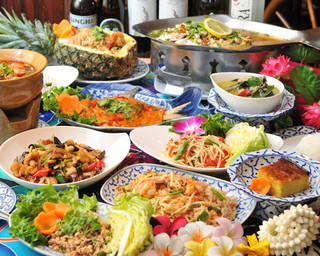
The approach is pure Funabashi: station traffic, office workers, shopping bags, and the practical rhythm of a Chiba rail hub, not central Tokyo dining stagecraft. In that setting, Thai food carries a different charge. It is not framed as luxury theatre or imported novelty; it sits in the city’s weeknight economy, where curry, rice, herbs, heat, and shared plates must work for regulars as well as list-chasers.
Ayutthaya is one of those suburban Japanese restaurants whose importance is easy to miss from outside and harder to dismiss once recognition is counted. Tabelog selected it for Asian cuisine / Ethnic cuisine EAST in 2022, 2023, and 2024, a three-year signal beyond casual local popularity. In Funabashi, where everyday budgets shape much of the dining map, that repeat selection says something about consistency in a field where Thai, South Asian, Nepalese, Chinese, and hybrid curry rooms compete for the same after-work and family tables.
Thai cooking in Funabashi works as daily food, not spectacle
Japan’s relationship with Thai cuisine has moved beyond the old shorthand of coconut curry and heat tolerance. In commuter cities around Tokyo, stronger Thai restaurants succeed by staying accessible for office lunches and group dinners while preserving enough regional identity to avoid generic pan-Asian comfort food. The category rewards balance: too polished and it loses the democratic appeal that helped Thai restaurants thrive in Japanese cities; too diluted and it becomes another curry option in a crowded field.
That tension helps explain Ayutthaya. Listed in Thai and curry categories, it sits near familiar Japanese dining instincts: rice-based meals, spice calibration, affordable lunch patterns, and casual dinner use. Yet repeated Tabelog 100 recognition places it in a more selective conversation than the usual station-area ethnic restaurant. It is not competing with Tokyo tasting menus; it is competing with the better casual Asian kitchens of eastern Japan, where reliability matters as much as novelty.
Funabashi’s restaurant culture is often stronger in the middle than at the extremes: quick meals, family use, drinking groups, and inexpensive specialist cravings, rather than a dense cluster of luxury counters. That makes neighbourhood comparison revealing. Gandhi and BHOYE CHHEN show local appetite for South Asian and Nepalese cooking at accessible prices, while Akasaka Ajiichi and Funakko show how firmly everyday Japanese formats hold the market’s centre. Ayutthaya’s role is different: it gives Thai cooking a recognised address within that same practical dining culture.
Recognition matters more when the room stays modest
Scale matters. A 33-seat suburban restaurant has less room for inconsistency than a larger dining room coasting on atmosphere. Small casual restaurants live on repeat business, seat turnover, and whether groups feel comfortable returning without ceremony. Recognition from Tabelog’s Asian and ethnic category, announced for the EAST region, gives external weight to what might otherwise seem only a neighbourhood preference.
That point matters because ethnic cuisine in Japan is judged through two lenses. Central Tokyo tends to reward rarity, chef narratives, and specialist sourcing; outer urban hubs reward usefulness. A Thai restaurant in Funabashi must be flexible enough for lunch, dinner, friends, and family use, yet specific enough not to vanish into the curry-and-rice background. In a value-driven dining scene, it has to earn attention without fine-dining props.
Price positioning reinforces this without turning the restaurant into a bargain story. Ayutthaya sits above the lowest everyday dinner bracket while remaining far below celebratory dining levels. Compared with Funabashi’s budget South Asian peers, it occupies a slightly more assertive casual-dinner position; compared with higher-spend city restaurants, it stays firmly accessible. That is the sweet spot for Thai food in many Japanese commuter cities: casual enough for repeat visits, serious enough to be judged against specialists.
The beverage note fits the local pattern. Shochu, wine, and cocktails are available, showing how Japanese restaurants built around another country’s cuisine still adapt to domestic drinking habits. That does not weaken the food’s cultural identity; it shows how Thai restaurants function inside Japanese social dining. A table can be about curry and herbs, but also a long evening with friends, as izakaya culture has shaped expectations around pacing and group comfort.
How to place it in a wider eating itinerary
For travellers using Funabashi as more than a transit point, Ayutthaya is a useful counterweight to the city’s Japanese staples. It suits an itinerary that treats the area as lived-in Chiba rather than a Tokyo detour. The broader local map is worth reading through Our full Funabashi restaurants guide, especially alongside bakery culture at Boulangerie Queue and the city’s lower-priced casual specialists. For planning beyond meals, the companion guides to Funabashi hotels, Funabashi bars, Funabashi wineries, and Funabashi experiences frame the city as a working base rather than a single-meal stop.
The wider Japanese context helps too. Regional and city-specific specialists increasingly define how travellers eat outside obvious centres: Vietnamese cooking at (Shoku) Vietnam in Kawasaki, curry focus at [Curry Senmon Ten] Maruyama Kyoju. in Sapporo, beef sukiyaki at -Grilled beef Sukiyaki- KAMAKURA TANUKIAN 鎌倉 たぬき庵 in Kamakura, and casual Tokyo drinking food at. 鮪と炭火焼き うお炭 秋葉原店 in Tokyo. Outside Japan, the same pattern appears in sharply defined formats such as Jōdo Saké Bar in Los Angeles and Onigiri Time in Pasadena. The lesson is not that every recognised casual restaurant becomes a standalone destination; it is that strong travel dining now often comes from stitching together specific, modest-format rooms with credible signals.
Ayutthaya is strongest as that kind of address: a Thai and curry restaurant valued for cultural continuity, repeat recognition, and fit with Funabashi’s practical dining habits. It needs no chef mythology to justify attention. The scene around it supplies the story: Thai cooking has become part of how Japanese commuter cities eat, and this is one of the clearer Funabashi examples with external recognition attached.
For broader browsing across Japanese and overseas casual formats, EP Club also tracks addresses such as.cafe in Osaka and.know in Kumamoto, underlining the same editorial point: the serious meal is not always the formal one.
Pricing, Compared
Nearby venues at a similar price tier for orientation.
| Venue | Cuisine | Price | Notes |
|---|---|---|---|
| AyutthayaThis venue — the venue you are viewing | Keisei Funabashi, Thai Restaurant | $$ | Not listed |
| Thai Restaurant Kinmedai | Not listed | $$ | Nishi-Funabashi, Authentic Thai Street‑Food & Curry |
| Tomonomoto | Higashi Kaijin, Ramen shop | $$ | Not listed |
| Shogetsu En | Not listed | $$ | Keisei Nishifuna, Traditional Yakiniku (Japanese BBQ) |
| Robin's Indian Kitchen | Shimousa-Nakayama, Indian Curry House | $$ | Not listed |
| Sarnath | Not listed | $$ | Miyamoto, Funabashi, North Indian curry house |
Recognition history
Dated appearances from independent guides and award organizations, with the underlying list record or original source where available.
Tabelog 100 #57 · No. 57
Tabelog · Tabelog 100 - Asian cuisine / Ethnic cuisine - EAST - 2024
Continue exploring
More in Funabashi
Restaurants in Funabashi
Browse all →


Bars in Funabashi
Browse all →




At a Glance
- Cozy
- Classic
- Casual Hangout
- Group Dining
- Family
- Solo
- Standalone
Current opening hours
- Monday
- Closed
- Tuesday
- 11:30 AM–2:30 PM, 5–11 PM
- Wednesday
- 11:30 AM–2:30 PM, 5–11 PM
- Thursday
- 11:30 AM–2:30 PM, 5–11 PM
- Friday
- 11:30 AM–2:30 PM, 5–11 PM
- Saturday
- 11:30 AM–2:30 PM, 5–11 PM
- Sunday
- 11:30 AM–2:30 PM, 5–11 PM
Hours can change for holidays and private events. Last verified .
A space with an exotic charm that feels like a typical Thai restaurant, creating a familiar and inviting casual dining atmosphere.