
Shogetsu En places Funabashi yakiniku in a sharper regional frame: a Chiba grill house selected for Tabelog 100 Yakiniku EAST 2025, with dinner pricing in the JPY 6,000 to JPY 7,999 tier. The appeal is less spectacle than sourcing discipline, smoke control, and the social rhythm of Japanese barbecue near Keisei Nishifuna.
Pearl is the En Primeur Club membership app — saves, bookings, and concierge access live there. Same editors, same standards.
- Address
- 千葉県船橋市西船4-16-1
- Phone
- +81474331504
- Website
- tabelog.com
 Saves & bookings on Pearl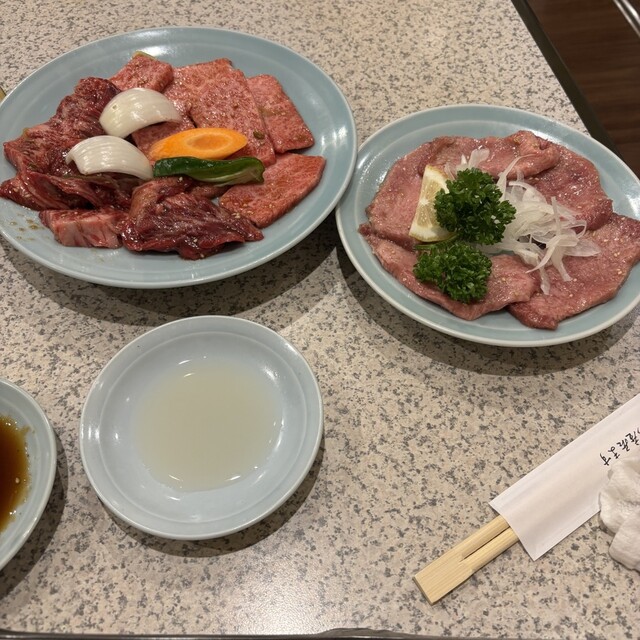
Approaching a serious yakiniku room in greater Tokyo differs from arriving at a formal counter restaurant. The theatre is the table itself: heat, timing, trimmed beef, sauces, rice, conversation, and the small decisions separating patient grilling from scorching. In Funabashi, that format has local character. The city sits within commuting distance of Tokyo, yet its stronger dining addresses often run lower-key than the capital’s trophy rooms. Shogetsu En is a Chiba yakiniku specialist whose selection for Tabelog 100 Yakiniku EAST 2025 places it in a serious regional bracket without turning dinner into ceremony.
Yakiniku is often discussed too casually abroad, as if Japanese barbecue were only marbling and flame. In Japan, better rooms are judged by procurement, cut management, ventilation, seasoning restraint, and how clearly different beef textures register. Sourcing matters because the format exposes shortcuts: thin cuts dry quickly, fatty cuts punish poor heat control, and heavy seasoning can mask quality. The attraction is a genre confident enough not to need elaborate plating.
Funabashi yakiniku with regional recognition, not Tokyo theatre
Funabashi’s restaurant culture rewards range. Casual specialists, bakeries, izakaya, regional Asian kitchens, and grill houses sit closer together than visitors might expect. Readers mapping the area can cross-reference the broader scene in Our full Funabashi restaurants guide, where Akasaka Ajiichi, Ayutthaya, BHOYE CHHEN, Boulangerie Queue, and Funakko show how little the city depends on one dining identity.
Within that spread, yakiniku occupies a useful middle ground: social rather than hushed, meat-led rather than course-led, technical without being fussy. Shogetsu En sits at a higher dinner spend than many everyday Funabashi meals, with pricing listed at JPY 6,000 to JPY 7,999, but remains far from the luxury omakase economy dominating much of Tokyo’s international dining conversation. That matters for travelers wanting a Japanese meal built around product quality and local demand rather than multilingual polish.
The Funabashi comparison is instructive. Teppanyaki Kuku is listed in a lower dinner band, while Thai Restaurant Kinmedai, Robin's Indian Kitchen, and Tomonomoto operate at more casual price points. La Bonta overlaps with Shogetsu En at dinner, though its category points to a different dining grammar. The point is not that one format outranks another; yakiniku at this level asks guests to value sourcing and table technique over tasting-menu progression.
Why beef sourcing is the story at the grill
Ingredient sourcing becomes especially visible in yakiniku because cooking time is short and correction margins are small. A serious kitchen thinks in cuts, thickness, fat distribution, and sequence. Leaner slices need pace; richer cuts need enough heat to render without turning greasy; offal, when present in the genre, depends on cleaning and freshness as much as seasoning. Even without a publicly named supplier or brand-beef claim, selection for Tabelog 100 Yakiniku EAST 2025 is a meaningful signal in a category where repeat local diners notice inconsistency quickly.
The EAST scope also matters. Tabelog’s yakiniku recognition is not confined to central Tokyo glamour; it pulls in strong suburban and regional rooms across eastern Japan. For a Funabashi address, that places the restaurant in conversation with specialists beyond its neighborhood. It also explains why the experience should be read through Japanese barbecue culture rather than generic steakhouse expectations. The guest participates in cooking; the restaurant’s work is embedded in preparation before the plate reaches the table.
That format suits groups and families more naturally than many fine-dining rooms. The venue is marked family friendly, with children welcome, and the occasion profile leans toward families and friends. In practical terms, the energy is closer to a communal grill dinner than a quiet anniversary counter. It rewards diners who enjoy managing the grill and sharing plates, less so those seeking a fully choreographed chef-led meal.
How to place it in a wider Japan itinerary
For travelers using Funabashi as part of a Chiba or Tokyo-adjacent itinerary, the restaurant works because it avoids treating every good meal near Tokyo as a Tokyo substitute. It is a local specialist with enough recognition to justify planning around it. The nearest station is Keisei Nishifuna, and the address places it in Nishifuna rather than the city’s waterfront or large retail zones, so the meal pairs more naturally with a rail-based evening than a destination-hopping restaurant crawl.
Those building a wider trip can use Funabashi as a base layer rather than a single stop. The city’s hospitality and drinking options are mapped separately in Our full Funabashi hotels guide, Our full Funabashi bars guide, Our full Funabashi wineries guide, and Our full Funabashi experiences guide. For a broader view of Japan’s meat and grill spectrum, compare it with -Grilled beef Sukiyaki- KAMAKURA TANUKIAN 鎌倉 たぬき庵 in Kamakura or a charcoal-led seafood address such as. 鮪と炭火焼き うお炭 秋葉原店 in Tokyo. The contrast clarifies the category: sukiyaki is sauce, pot, and sweetness; charcoal seafood is smoke and delicacy; yakiniku is beef, heat, and timing at the table.
Not every surrounding reference needs the same cuisine lane. Japan’s dining strength comes from abrupt shifts in format:.cafe in Osaka.know in Kumamoto, (Shoku) Vietnam in Kawasaki, and [Curry Senmon Ten] Maruyama Kyoju. in Sapporo all point to a country where specialization often matters more than scale. Even overseas Japan-adjacent addresses such as Jōdo Saké Bar in Los Angeles and Onigiri Time in Pasadena show how specific formats travel, though yakiniku remains especially tied to the shared grill and the meat supply chain behind it.
The editorial case is clear: choose the restaurant for a sourced-beef, table-grill meal in Funabashi with credible regional recognition, not for luxury staging or chef biography. At its price tier, value depends on how much the diner cares about yakiniku fundamentals: cut, fat, heat, and the pleasure of cooking carefully with others.
How It Stacks Up
Comparable venues by cuisine and price in the same metro.
| Venue | Cuisine | Price | Notes |
|---|---|---|---|
| Shogetsu EnThis venue — the venue you are viewing | Traditional Yakiniku (Japanese BBQ) | $$ | Not listed |
| Teppanyaki Kuku | Teppanyaki & Wagyu Steakhouse | $$$ | Nishi-Funabashi |
| Motsuyaki Doppo Honmachi ten | Standing bar for grilled offal (motsuyaki) | $ | Honmachi, Funabashi |
| Funakko | Sardine-focused Japanese Izakaya | $$ | Higashifunabashi |
| Taiwan Shokitsu Ten Chinron | Taiwanese-Chinese comfort food | $$ | Funabashi |
| Sakuma Ice Cream Kobo | Ice Cream & Gelato | $ | Takifudo |
Recognition history
Dated appearances from independent guides and award organizations, with the underlying list record or original source where available.
Tabelog 100 #13 · No. 13
Tabelog · Tabelog 100 - Yakiniku - EAST - 2025
Continue exploring
More in Funabashi
Restaurants in Funabashi
Browse all →


Bars in Funabashi
Browse all →




At a Glance
- Cozy
- Classic
- Lively
- Family
- Group Dining
- Casual Hangout
- After Work
- Solo
- Standalone
- Beer Program
- Sake Program
Casual and energetic yakiniku dining room with compact tables and built‑in grills, simple traditional decor, and a bustling atmosphere that suits families and small groups rather than quiet, lingering meals.