
Tomonomoto puts Funabashi into the serious ramen conversation rather than treating the city as a commuter stop between Tokyo and Chiba. The draw is a compact ramen format with Tabelog Ramen EAST 100 selections in 2024 and 2025, a small-room service style, and a local audience that makes the shop feel rooted in daily eating rather than destination theatre.
Pearl is the En Primeur Club membership app — saves, bookings, and concierge access live there. Same editors, same standards.
- Address
- Japan, 〒273-0005 Chiba, Funabashi, Honcho, 7 Chome−23−14 文平ビル 101
- Phone
- +81 47-779-4672
- Website
- mobile.twitter.com
 Saves & bookings on Pearl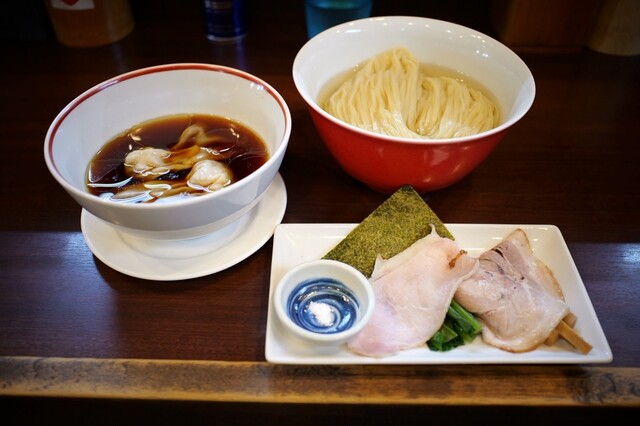
Approaching a suburban ramen shop in Funabashi is not the same ritual as arriving at a Ginza counter or a hotel dining room in central Tokyo. The cues are smaller: a low-rise building, a short frontage, the quick read of whether a seat has opened, the sound of tickets, bowls, and customers turning over with purpose. This is where ramen keeps its democratic edge. The format is compact, the meal is focused, and the judgment is immediate.
Tomonomoto belongs to that Chiba-side ramen culture, where recognition matters precisely because the setting is not built around ceremony. Its selections for Tabelog Ramen EAST 100 in 2024 and 2025 place it within a heavily contested field, one that stretches beyond Tokyo’s better-known ramen corridors into commuter cities with serious local followings. In Funabashi, that matters: the city’s dining identity is broad and practical, but ramen gives it a sharper claim on regional attention.
Funabashi ramen culture, judged by repetition rather than theatre
Ramen in Japan rewards repeatability. A luxury restaurant can trade on occasion; a ramen shop has to survive daily comparison. Diners measure broth, noodles, seasoning, pacing, and value against dozens of meals eaten under similar conditions. That is why a Tabelog 100 ramen selection carries a different kind of weight from a formal tasting-menu accolade. It signals that a shop has entered a category where regular diners, obsessives, and regional travelers all apply pressure.
Funabashi’s food scene is especially useful for reading that pressure. Around the station areas, casual and mid-priced restaurants compete for office workers, families, solo diners, and people changing lines across Chiba and Tokyo routes. In that context, ramen is not a side category; it is one of the city’s clearest tests of consistency. The same local map can include Thai cooking at Ayutthaya, Nepali cooking at BHOYE CHHEN, seafood izakaya energy at Funakko, and everyday bread culture at Boulangerie Queue. The city is not defined by a single prestige lane; it is defined by repeat-use restaurants with clear functions.
That is the useful frame for Tomonomoto. It is not competing with long-course dining or wine-driven rooms; it sits in the ramen bracket where speed, clarity, and seat turnover shape the experience. Compared with Funabashi peers such as La Bonta, Gandhi, Motsuyaki Doppo Honmachi ten, BHOYE CHHEN, and Ayutthaya, the ramen shop occupies the narrowest decision: come for a bowl, assess it quickly, and leave with a firm view. That directness is part of the culture, not a limitation.
A small-room format with national ramen signals
The room’s scale is part of the argument. With counter seating and tables in a compact layout, the experience follows the Japanese ramen-shop grammar: limited ceremony, close attention to the bowl, and minimal distance between kitchen rhythm and diner. Counter seats matter in this category because they compress the meal into a direct exchange between preparation and consumption. Tables broaden the audience, which helps explain why the shop also works for family and solo dining rather than only for ramen hunters.
The Tabelog score of 3.76 adds another data point, but the more telling signal is repeat selection for the Ramen EAST 100 list. Eastern Japan’s ramen field is dense, and recognition there places a suburban Chiba address into a conversation usually dominated by bigger city names. For a traveler who already understands ramen as one of Japan’s living regional forms, that is the reason to look past the obvious Tokyo itinerary.
There is also a broader cultural point here. Ramen’s modern prestige has not erased its low-barrier appeal. The category can support obsessive ranking, long waits, and technical specialization while remaining accessible in price and format. That tension is exactly what makes Japanese ramen compelling: it can be studied like craft and eaten like lunch. Tomonomoto sits in that zone, where external recognition sharpens the case without turning the meal into a formal performance.
How to place it in a Funabashi itinerary
Funabashi rewards a practical eating plan. The city works less like a single dining district and more like a network of station-adjacent choices, with ramen, izakaya cooking, bakeries, and South or Southeast Asian restaurants serving different parts of the day. A ramen stop here pairs naturally with a wider look at the area rather than a stand-alone detour built only around one counter.
For broader planning, start with Our full Funabashi restaurants guide, then use Our full Funabashi hotels guide, Our full Funabashi bars guide, Our full Funabashi wineries guide, and Our full Funabashi experiences guide to decide whether the city is a meal stop, a Chiba base, or part of a longer Tokyo-area itinerary. Nearby restaurant references such as Akasaka Ajiichi help map the local range rather than treating ramen as the only story.
Travelers building a wider Japan food route can also compare how everyday formats shift across cities: sukiyaki in Kamakura at -Grilled beef Sukiyaki- KAMAKURA TANUKIAN 鎌倉 たぬき庵 in Kamakura, grilled tuna and charcoal cooking at. 鮪と炭火焼き うお炭 秋葉原店 in Tokyo, café culture at.cafe in Osaka, and contemporary casual dining at.know in Kumamoto. Outside Japan, the same lens applies to neighborhood-format specificity at (Shoku) Vietnam in Kawasaki, [Curry Senmon Ten] Maruyama Kyoju. in Sapporo, Jōdo Saké Bar in Los Angeles, and Onigiri Time in Pasadena. The point is not to rank unlike places against one another; it is to read how focused food formats carry local identity.
The editorial case is clear: Tomonomoto is worth seeking out for readers who care about ramen as a regional discipline, not just as a convenient bowl. Its recognition, compact format, and Funabashi setting make it a useful counterpoint to the capital’s louder ramen circuits. The reward is not spectacle. It is seeing how a Chiba shop earns attention in a category where repetition, speed, and public scrutiny leave little room for softness.
Cost Snapshot
Side-by-side context: comparable cuisine and price.
| Venue | Cuisine | Price | Notes |
|---|---|---|---|
| TomonomotoThis venue — the venue you are viewing | Higashi Kaijin, Ramen shop | $$ | Not listed |
| Funakko | Not listed | $$ | Higashifunabashi, Sardine-focused Japanese Izakaya |
| Sakuma Ice Cream Kobo | Takifudo, Ice Cream & Gelato | $ | Not listed |
| Ramen Jiro Keisei ookubo ten | Funabashi, Jiro-style ramen and tsukemen | $ | Not listed |
| Ayutthaya | Keisei Funabashi, Thai Restaurant | $$ | Not listed |
| Akasaka Ajiichi | Not listed | $ | / Funabashi, Classic niboshi ramen shop |
Recognition history
Dated appearances from independent guides and award organizations, with the underlying list record or original source where available.
Tabelog 100 #46 · No. 46
Tabelog · Tabelog 100 - Ramen - EAST - 2025
Continue exploring
More in Funabashi
Restaurants in Funabashi
Browse all →


Bars in Funabashi
Browse all →



At a Glance
- Cozy
- Solo
- Casual Hangout
- After Work
- Standalone
Current opening hours
- Monday
- Closed
- Tuesday
- Closed
- Wednesday
- 10 AM–3 PM
- Thursday
- 10 AM–3 PM
- Friday
- 10 AM–3 PM
- Saturday
- 10 AM–3 PM
- Sunday
- 10 AM–3 PM
Hours can change for holidays and private events. Last verified .
A compact neighborhood ramen shop with counter seating and a couple of small tables, casual and functional in design, focused on quick, friendly service rather than decor.