Auteuil Brasserie at 78 Rue d'Auteuil sits in one of Paris's most residential and architecturally coherent arrondissements, the 16th, where the brasserie format persists as a working neighbourhood institution rather than a tourist set piece. Against the grand-room theatrics of the city's destination dining tier, the 16th favours a quieter register that rewards those who seek it out.
Pearl is the En Primeur Club membership app — saves, bookings, and concierge access live there. Same editors, same standards.
- Address
- 78 Rue d'Auteuil, 75016 Paris, France
- Phone
- +33 1 40 71 11 90
- Website
- auteuil-brasserie.com
- Directions
- Get directions
 Saves & bookings on Pearl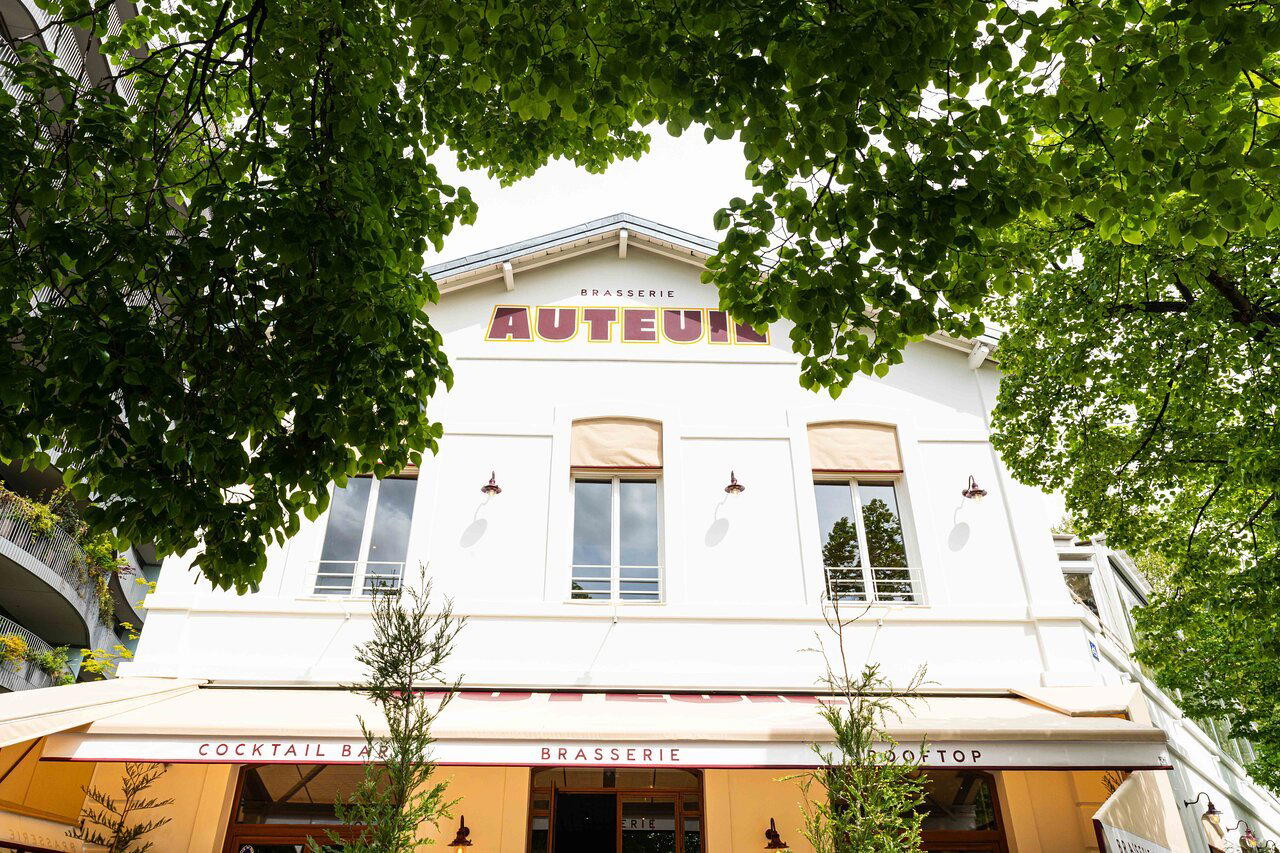
The 16th Arrondissement and the Brasserie That Belongs to It
Paris's 16th arrondissement operates on a different frequency from the restaurant districts that dominate most itineraries. The area around Rue d'Auteuil is residential in the fullest sense: Haussmann facades, tree-lined streets, and a clientele that tends to walk rather than taxi. The brasserie format, which elsewhere in Paris has been retrofitted into a vehicle for tourists or reconceived as neo-bistro theatre, survives here in something closer to its original social function. Auteuil Brasserie, at number 78, occupies that position in the neighbourhood's daily rhythm. It is a place that earns its standing through consistency and address rather than through the mechanics of press attention. For comparison, the high-intensity dining scene concentrated around the Champs-Élysées corridor, where Le Cinq at the Four Seasons Hôtel George V anchors the luxury tier, operates on entirely different terms.
A Street-Level Reading of the Space
Approaching from the Métro Michel d'Auteuil or along the rue itself, the building announces itself in the idiom of the neighbourhood rather than against it. Traditional brasserie interiors in Paris tend to work through accumulated layers: etched glass, brass fittings, banquette seating worn smooth by decades of use, and a noise level that reflects genuine occupation rather than engineered atmosphere. These are spaces where the physical environment communicates longevity before a single plate arrives. The architectural character of the 16th, which runs from Belle Époque apartment blocks to the rational geometries of early modernism, gives its ground-floor establishments a grounding that newer restaurant districts lack. Auteuil Brasserie reads as a product of that continuity. This is the kind of room that the destination-dining tier, including the creative formats represented by Alléno Paris au Pavillon Ledoyen and the classical rigor of L'Ambroisie on the Place des Vosges, is explicitly not trying to be.
The Brasserie Format and Sustainability in Paris's Dining Ecosystem
Across France, the question of which restaurant formats survive generationally has become inseparable from questions of sourcing, waste, and the economics of daily-volume cooking. The brasserie, when it functions well, is structurally better positioned than the tasting-menu format on several of these counts. High table-turn rates reduce per-cover food waste. Proximity sourcing, traditional in neighbourhood brasseries that serve a consistent local clientele rather than a rotating visitor base, creates shorter supply chains. The 16th's brasseries draw from Les Halles de Rungis, the vast wholesale market south of Paris that consolidates regional French producers, which means seasonal produce cycles are integrated into the menu cadence by economic logic as much as ethical intention. Restaurants operating at the highest French creative tier, like Arpège, have made proximity sourcing into an explicit philosophical position; in the brasserie register, the same principle operates more quietly, as operational practice rather than declared identity. Further afield, French chefs building around terroir sourcing, including the teams at Bras in Laguiole and Flocons de Sel in Megève, have demonstrated how environment-led sourcing decisions produce a recognisably regional character on the plate. The brasserie does not frame this as a program; it simply reflects what has always been true about French neighbourhood cooking at its functional leading.
Positioning Against the Paris Dining Tier
Paris's restaurant market has stratified sharply over the past decade. At the upper end, the Michelin three-star tier, represented by addresses like Kei with its Franco-Japanese synthesis, operates on extended menus, extended price points, and booking windows that can run to months. The brasserie occupies the functional middle tier: full meals at accessible prices, no reservation required for many sittings, and a format flexible enough to serve a solo diner at the bar and a table of eight at the same service. That breadth is, in itself, a design achievement, and one that the destination dining category has largely abandoned in favour of controlled, single-format experiences. Internationally, French-trained restaurants working a similarly accessible but serious register include Le Bernardin in New York, though that kitchen operates at considerably greater formality and price. The brasserie's position is less about prestige and more about the sustainability of a format that serves its community seven days a week over decades, an operational longevity that most concept-driven openings do not achieve. For a broader map of where Auteuil Brasserie sits relative to the Paris dining spectrum, the full Paris restaurants guide gives useful orientation.
What to Order and How to Think About the Menu
The brasserie menu in Paris follows conventions that reward a degree of literacy. Steak frites, sole meunière, onion soup gratinée, and plateau de fruits de mer are not defaults of imagination; they are formats that allow direct comparison across kitchens and expose exactly how much skill and sourcing quality a given address actually brings. In a neighbourhood brasserie with a stable regular clientele, these dishes tend to be calibrated rather than refined: a kitchen that overshoots on price or undershoots on quality loses its audience quickly, because the audience eats there repeatedly. Ordering the most structurally demanding version of a classic, whether that is a properly reduced sauce, accurately timed fish, or a correctly dressed salade niçoise, is as useful a calibration as any. Seasonal specials, where they appear, tend to reflect whatever arrived from Rungis that morning. The French regional canon is well-served by the brasserie format in a way that the tasting-menu circuit, which tends toward novelty signalling, is not always positioned to provide. For reference, the sustained regional integrity that characterises the best of France's destination addresses, including Troisgros in Ouches, Mirazur in Menton, and Auberge de l'Ill in Illhaeusern, is a tradition the brasserie connects to at ground level.
Planning Your Visit
Auteuil Brasserie is at 78 Rue d'Auteuil in the 16th arrondissement. The nearest Métro is Michel d'Auteuil on Line 10, which connects directly to the Left Bank and to Odéon. The 16th is not a late-night dining district; service patterns tend to track neighbourhood rhythms, with lunch and dinner services following conventional French hours. Walk-ins are typical for neighbourhood brasseries of this type, though larger groups benefit from calling ahead. The area is considerably quieter than central Paris tourist corridors, which is itself part of what the address offers: a meal in a working Paris neighbourhood rather than a performance of one. Those working through the broader French dining tradition in Paris will find useful counterpoint in the classical high-end tier, including Paul Bocuse's Auberge du Pont de Collonges, Les Prés d'Eugénie in Eugénie-les-Bains, and Georges Blanc in Vonnas, or the southern French register at La Table du Castellet and Auberge du Vieux Puits in Fontjoncouse. A similarly accessible but more concept-driven American parallel can be found at Lazy Bear in San Francisco, though the format and philosophy diverge sharply from what the Paris neighbourhood brasserie represents.
How Auteuil Brasserie Paris compares with similar nearby venues.
| Venue | Cuisine | Price |
|---|---|---|
| L'Auberge des Crus | Traditional Cuisine | €€ |
Continue exploring
More in Paris
Restaurants in Paris
Browse all →
Bars in Paris
Browse all →

Hotels in Paris
Browse all →



At a Glance
- Lively
- Elegant
- Cozy
- Modern
- Scenic
- Brunch
- Group Dining
- Casual Hangout
- Celebration
- Rooftop
- Terrace
- Historic Building
- Open Kitchen
- Craft Cocktails
- Extensive Wine List
- Garden
- Street Scene
Current opening hours
- Monday
- 9 AM–1:30 AM
- Tuesday
- 9 AM–1:30 AM
- Wednesday
- 9 AM–1:30 AM
- Thursday
- 9 AM–1:30 AM
- Friday
- 9 AM–1:30 AM
- Saturday
- 9 AM–1:30 AM
- Sunday
- 9 AM–1:30 AM
Hours can change for holidays and private events. Last verified .
Bright and sunny with southern colors, warm elegant spirit, cozy lighting from Christmas lights and candles, industrial yet inviting atmosphere.
Know Before You Go
- Getting there
- 78 Rue d'Auteuil, 75016 Paris, France