On a residential stretch of Harbord Village, Auntie Uncle occupies the kind of neighbourhood address that Toronto's dining scene has historically underestimated. The room draws a crowd that skews local and returning rather than tourist-driven, and the daytime and evening experience diverge enough to warrant separate visits. For the city's mid-tier dining circuit, it represents a particular kind of quiet confidence.
- Address
- 74 Lippincott St, Toronto, ON M5S 2P1, Canada
- Directions
- Get directions
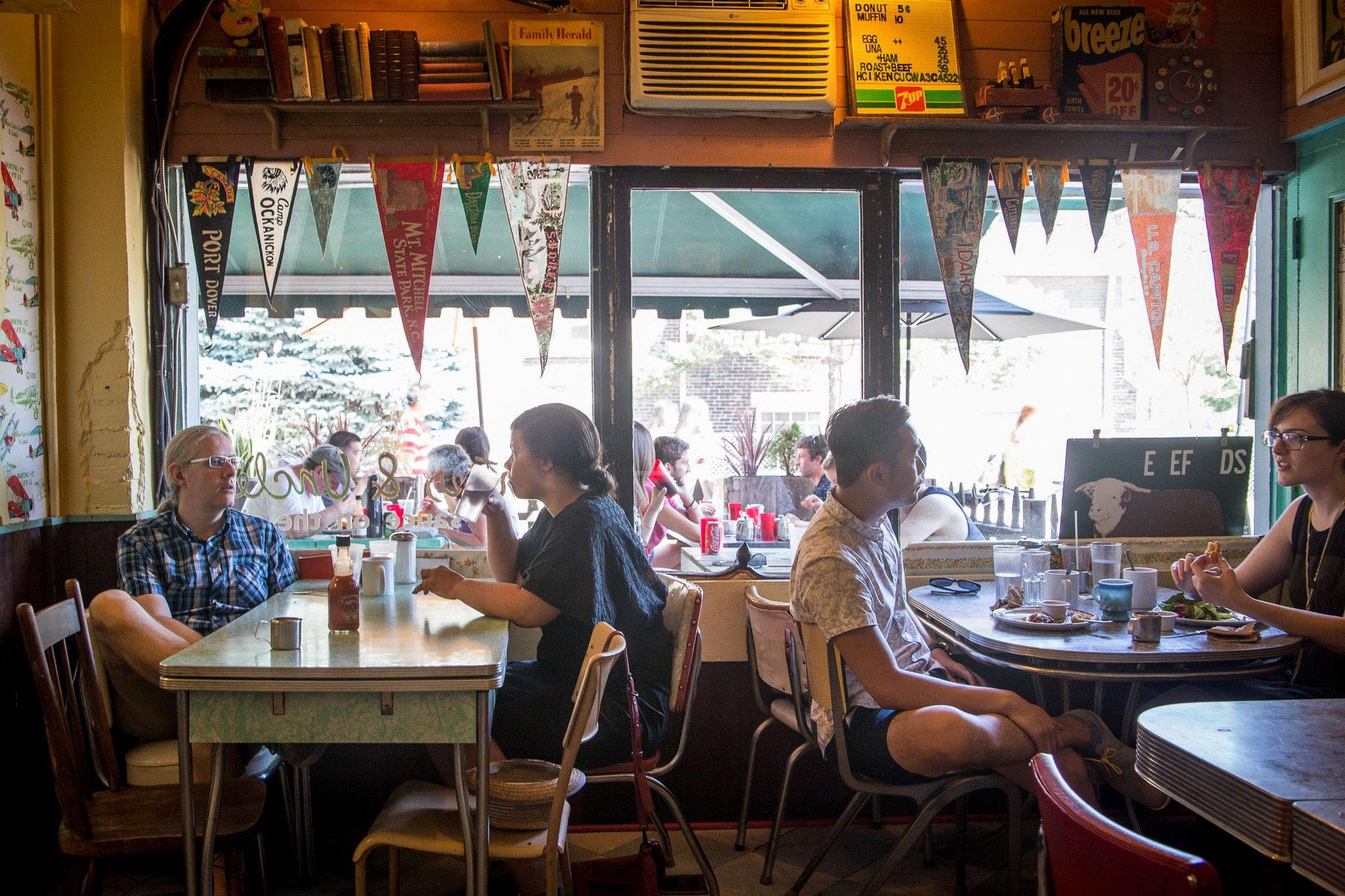
Harbord Village and the Quiet End of Toronto Dining
Toronto's most-discussed restaurant addresses tend to cluster around King West, Ossington, and the Financial District, where visibility and foot traffic reward ambitious openings. Harbord Village operates on different logic. The low-rise residential blocks between Spadina and Bathurst have long supported the kind of neighbourhood restaurants that fill without much fanfare, drawing regulars who live within walking distance and academics spilling out from the University of Toronto campus to the south. Auntie Uncle, at 74 Lippincott St, sits inside that geography and benefits from it. Auntie Uncle is a permanently closed restaurant in Toronto serving Classic Canadian Breakfast, with a casual dress code and walk-in-friendly service. The address is close enough to the university corridor to catch a lunchtime crowd, yet residential enough that evenings feel less performative than dining rooms a kilometre south on College Street.
That neighbourhood positioning matters when you read the room. The dining culture of Harbord Village has always rewarded places that do not need to explain themselves through design spectacle or tasting-menu architecture. Particularly durable spots here operate on familiarity and repetition: the same tables, the same faces, a menu that changes incrementally rather than seasonally with great fanfare. Auntie Uncle reads as a product of that local logic rather than an outlier within it.
The Lunch-to-Dinner Arc
The editorial angle that matters most here is how the experience shifts between the midday and evening service. At the higher end of the city's restaurant hierarchy, places like Alo (Contemporary) or Sushi Masaki Saito (Sushi, Japanese) run a single-format evening programme with no meaningful lunch equivalent. The lunch-versus-dinner question becomes irrelevant at that price tier because only one option exists. Further down the pricing ladder, the split is where real character often lives.
Daytime service at neighbourhood spots in Harbord Village tends toward the casual and expedient: faster pacing, lighter dishes, a crowd with somewhere to be afterward. Evening service slows, the room's acoustic character changes as it fills, and ordering patterns shift toward shared plates and longer commitments. This is not distinctive to any single address. It is the operating pattern across mid-tier Toronto neighbourhood dining, from the Annex across to Little Italy. What distinguishes individual venues within that pattern is how deliberately they manage the transition, and whether the kitchen adjusts its register or simply reduces portion size and calls it a lunch menu.
For context on how Canadian restaurants at various price points handle this divide, it is instructive to look at properties operating in more explicitly experiential formats. Tanière³ in Quebec City and Eigensinn Farm in Singhampton both operate evening-only formats with no daytime service, which sidesteps the divide entirely. Restaurant Pearl Morissette in Lincoln structures its lunch and dinner around the same local-produce philosophy but with meaningfully different formats. Auntie Uncle's position on Lippincott puts it in the category where the lunch-dinner arc is a real variable, not an abstraction.
Contextualising the Address
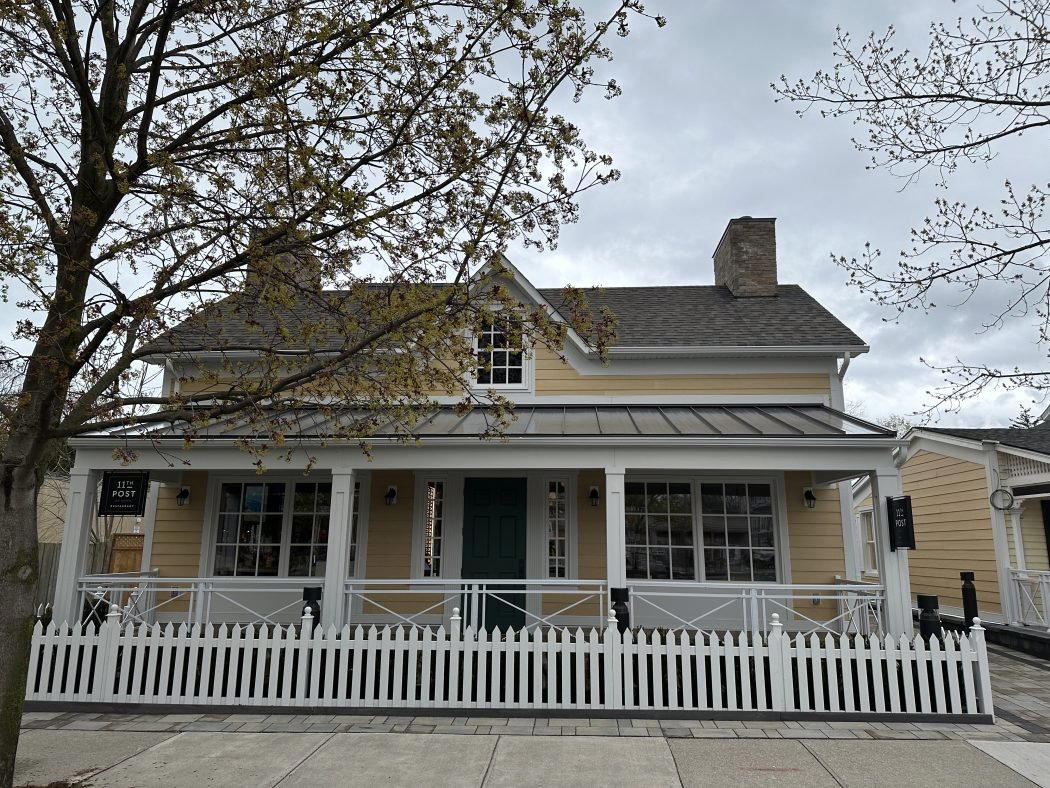
The physical environment on Lippincott Street sets certain expectations before you step inside. The street is narrow and residential, lined with Victorian semi-detached houses. There is no valet, no neon, no queuing infrastructure. This signals something useful to a visitor arriving for the first time: the atmosphere is shaped by proximity to other diners, and the interaction between front-of-house and tables is closer to the kind of exchange you get at a neighbourhood trattoria than at a hotel restaurant. Compare that to the studied formality of Aburi Hana (Kaiseki, Japanese) or the architectural confidence of DaNico (Italian), and the Lippincott address is clearly communicating something different about what the visit is supposed to feel like.
That physical smallness has implications for planning. Neighbourhood restaurants of this type in Toronto are often walk-in friendly, particularly at lunch, while evenings on weekends can run full without much notice to outsiders. The booking behaviour worth applying here is arriving early for dinner service or visiting at lunch when the room is less likely to be at capacity. This is the pattern across comparable Harbord Village addresses, not a claim specific to what the kitchen does at any given hour.
Toronto's Mid-Tier and Where This Sits
Toronto's restaurant coverage tends to focus on the top tier, the city's Michelin-adjacent establishments and the formal tasting menus that earn national press attention, or on accessible street-level eats that generate social media volume. The middle ground, occupying the space between a $20 lunch bowl and a $250 tasting counter, is less documented and more interesting for what it reveals about how a city actually eats. Harbord Village is dense with examples: places that have run for a decade or more on neighbourhood loyalty rather than awards cycles, cooking food that fits the rhythm of a working week rather than a special occasion calendar.
For those building a Toronto itinerary weighted toward that top tier, the full picture of the city's dining range is worth consulting through a Toronto restaurants guide. Venues like Don Alfonso 1890 (Contemporary Italian, Italian) operate in a formal register that sits at the opposite end of the register from a Lippincott Street neighbourhood spot. Both have value; they answer different questions about what a meal in Toronto can be.
Internationally, the pattern of neighbourhood restaurants sustaining themselves on local loyalty rather than tourist footfall is well-documented. AnnaLena in Vancouver has built a similar local-anchor reputation in Kitsilano. Cafe Brio in Victoria operates in comparable mid-tier neighbourhood mode. Further afield, Lazy Bear in San Francisco and Le Bernardin in New York City occupy different price points but illustrate how different cities structure their dining tiers around loyalty versus occasion-driven traffic. Jérôme Ferrer - Europea in Montreal, Narval in Rimouski, Fogo Island Inn Dining Room in Joe Batt's Arm, and Busters Barbeque in Kenora each anchor distinct regional dining cultures across Canada, reinforcing how much geography and local economy shape what a neighbourhood restaurant becomes.
The Pine in Creemore offers another instructive contrast: The Pine in Creemore operates as a destination venue in a small town, where the absence of alternatives concentrates local loyalty and visitor attention simultaneously. A Toronto address on Lippincott faces a different competitive reality, surrounded by dozens of similar-scale operators.
Planning a Visit
Lippincott Street is accessible on foot from Spadina station on the Bloor-Danforth line, roughly a ten-minute walk north through the Annex. Street parking on surrounding residential blocks is available but limited during peak evening hours. Given the absence of a confirmed website or phone number in current records, one reliable approach for confirming current hours and availability is to visit in person or check recent listings through Google Maps, where the address at 74 Lippincott St is confirmed.
Style and Standing
Comparable venues nearby, for context on price, style, and recognition.
| Venue | Cuisine | Price | Notes |
|---|---|---|---|
| Auntie UncleThis venue — the venue you are viewing | Classic Canadian Breakfast | $$ | Not listed |
| The Morning After | Late-Night Brunch & Comfort Food | $$ | CityPlace |
| 7 West Cafe | Comfort American Cafe | $$ | Bay Street Corridor |
| Goose Island Brewhouse Toronto | American Gastropub | $$ | Saint Lawrence |
| The Burger's Priest | Smashburgers | $$ | The Beaches |
| Almond Butterfly Bistro | Gluten-Free American Bistro | $$ | Little Italy |
Continue exploring
More in Toronto
Restaurants in Toronto
Browse all →

Bars in Toronto
Browse all →
Hotels in Toronto
Browse all →

At a Glance
- Cozy
- Casual
- Classic
- Brunch
- Family
- Casual Hangout
- Standalone
Grungy and charming with a carefully crafted casual atmosphere that draws lingering crowds.