Auberge de la Mine

A Michelin-starred address in rural Normandy that occupies the former canteen of a working iron ore mine, Auberge de la Mine has held its star for years under a classically trained chef with over three decades at the stove. The kitchen operates on seasonal produce and technique-led simplicity, placing it firmly in the tradition of serious French provincial cooking rather than the destination-dining circuit.
Pearl is the En Primeur Club membership app — saves, bookings, and concierge access live there. Same editors, same standards.
- Address
- 8 Rte de Champsecret, 61450 La Ferrière-aux-Étangs, France
- Phone
- +33 2 33 66 91 10
- Website
- aubergedelamine.com
- Directions
- Get directions
 Saves & bookings on Pearl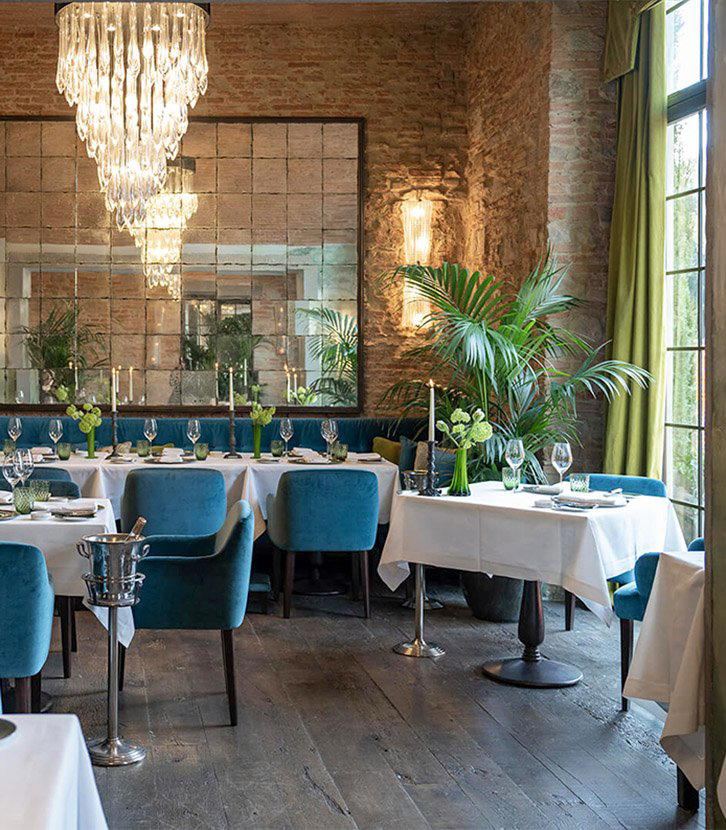
A Former Mine Canteen, Now a Michelin-Starred Table
The village of La Ferrière-aux-Étangs sits in the bocage country of the Orne département, a part of lower Normandy characterised by hedgerow farmland, small granite settlements, and an agricultural calendar that still shapes what ends up on local tables. The building that houses Auberge de la Mine was once the canteen for the local iron ore mine, which closed in April 1970. That industrial past gives the address a specificity you rarely encounter in French provincial dining: a room with genuine working-class roots, now holding a Michelin star. The two dining rooms have been refitted in a style that avoids the heavy drapes and formal stiffness common to starred restaurants in rural France, leaning instead toward something sleeker and less ceremony-laden.
Houses such as Alléno Paris au Pavillon Ledoyen in Paris or Mirazur in Menton operate at three stars with creative menus, four-figure price brackets, and an international clientele that books months in advance. Auberge de la Mine belongs to a different and more instructive tradition: the single-star auberge outside any major urban draw, where the credential is earned through consistency and craft rather than spectacle, and where the surrounding landscape does most of the sourcing work.
The Ingredient Logic Behind Classic Cuisine in the Orne
Classic French cuisine, in the sense used by Michelin's classifications, describes a cooking vocabulary built on traditional French preparations, regional produce, and established technique rather than the deconstructive or boundary-testing approaches associated with contemporary creative kitchens. In Normandy specifically, that vocabulary connects directly to the land: orchards producing apples and pears that feed both the table and the regional cider and calvados industries, livestock farms supplying dairy and meat of a quality that rarely needs improvement beyond careful handling, and a climate that produces ingredients with a reliable seasonal rhythm.
At Auberge de la Mine, that connection to the agricultural calendar is explicit. The menu is seasonal, meaning the sourcing decisions are made where they should be made: at the farm, the orchard, and the market, before the kitchen takes over. The award notes reference a preparation combining foie gras with a sparkling pear wine jelly and a spicy apple and pear chutney, a combination that draws directly from Norman orchard produce and frames it against rich duck liver with the kind of sweet-acid-fat balance that classic training makes look easy and is not. Pear wine is a live product of the local economy here, not an imported ingredient deployed for novelty. That matters in assessing what kind of cooking this is: the sourcing and the technique are inseparable, each giving the other meaning.
This approach to ingredient-driven classic cuisine has a long lineage in French provincial cooking. Houses like Auberge de l'Ill in Illhaeusern and Auberge du Vieux Puits in Fontjoncouse have built their reputations on exactly this model, where the restaurant's authority derives from a deep relationship with a specific territory's produce over many years. Bras in Laguiole takes a more contemporary interpretation, but the principle of sourcing from the immediate terrain remains central. What distinguishes Auberge de la Mine is that it pursues this without any of the destination-dining apparatus, no famous ridge-leading views, no hotel wing, no international press circuit.
Three Decades at the Same Stove
The chef has been working at the restaurant for over thirty years, a tenure that in French provincial cooking signals something specific. At this level of consistency, the cooking isn't being shaped by ambition toward a higher star bracket or a move to a larger city. The relationship between chef, kitchen, and local supply network deepens over that kind of timeline in ways that shorter tenures can't replicate: producers know what the kitchen needs before the season starts, and the kitchen knows how to work with each year's variation in ways that require institutional memory rather than improvisation. Classical training provides the foundation, but thirty-plus years in a specific region provides the depth that makes the sourcing decisions feel inevitable rather than constructed.
For comparison, the three-star establishments on France's more publicised dining circuit, including Troisgros - Le Bois sans Feuilles in Ouches and Flocons de Sel in Megève, have their own deep regional commitments, but they operate in contexts that attract significant travel spend and media coverage. The Orne is not a dining destination in that sense, which means the presence of a Michelin star here reflects kitchen merit almost entirely on its own terms, without the benefit of a fashionable address or a culinary tourism infrastructure.
Among the French starred addresses working in classic cuisine at comparable price points, the standard set by Maison Rostang in Paris and the precision of Assiette Champenoise in Reims represent one register of the tradition. The restaurant represents another: the same technical seriousness applied to a rural context where there is no safety net of urban footfall and where the guest often travels specifically to eat here.
Dining Rooms That Work in Context
French provincial restaurants at the starred level have historically struggled with a particular tension: the formal dining room aesthetic that signals quality to one generation of guest while reading as dated or uncomfortable to another. The two dining rooms at the restaurant have resolved this by moving toward a sleeker format that drops the heavier elements of traditional French dining room decor without attempting the kind of industrial or minimalist aesthetic more common to urban bistros. The result is a room that reads as contemporary without declaring itself modern, which suits the cooking: classically anchored but alive to current sensibility.
The service windows are tight. The restaurant opens Wednesday through Saturday for lunch (12:15 to 1:30 pm) and dinner (7:15 to 8:30 pm), with Sunday lunch (12:00 to 1:30 pm) as the fifth service. Monday and Tuesday are closed. Those narrow windows are not uncommon for this tier of rural French cooking, where a small kitchen brigade and a commitment to quality over volume dictates the pace. Anyone planning a visit should account for those constraints early: arriving in the area on a Monday or Tuesday leaves no opportunity to eat here, and the nearest alternatives with comparable ambition require considerably more travel.
The price range sits at €€€, placing it below the four-bracket price point of three-star houses like Paul Bocuse - L'Auberge du Pont de Collonges in Collonges-au-Mont-d'Or or Au Crocodile in Strasbourg, and is consistent with what single-star provincial auberges charge for menus of this ambition. Context from further afield in creative French cooking can be found at AM par Alexandre Mazzia in Marseille and KOMU in Munich, both working in different registers of technique-led cooking for useful comparison.
A Quick Peer Check
Comparable venues nearby, for context on price, style, and recognition.
| Venue | Cuisine | Price | Awards | Notes |
|---|---|---|---|---|
| Auberge de la Mine | Modern French Gastronomique | $$$ | Michelin 1 Star | La Ferrière-aux-Étangs |
| L'Éveil des Sens | Modern French Fine Dining | $$$$ | Michelin 1 Star | Mayenne |
| La Robe | Modern French Fine Dining | $$$ | Michelin 1 Star | Montaigu-Vendée |
| L'Essentiel | Modern French-Asian Fusion | $$$$ | Michelin 1 Star | downtown |
| Numéro 3 | Modern French Fine Dining | $$$ | Michelin 1 Star | Le Tremblay-sur-Mauldre |
| Les Cadets | Modern French Seafood | $$$ | Michelin 1 Star | Hauts Pavés |
Recognition history
Dated appearances from independent guides and award organizations, with the underlying list record or original source where available.
Michelin 1 Star
Michelin
Michelin 1 Star
Michelin
Michelin 1 Star
Michelin
Continue exploring
More in La Ferrière-aux-Étangs
Restaurants in La Ferrière-aux-Étangs
Browse all →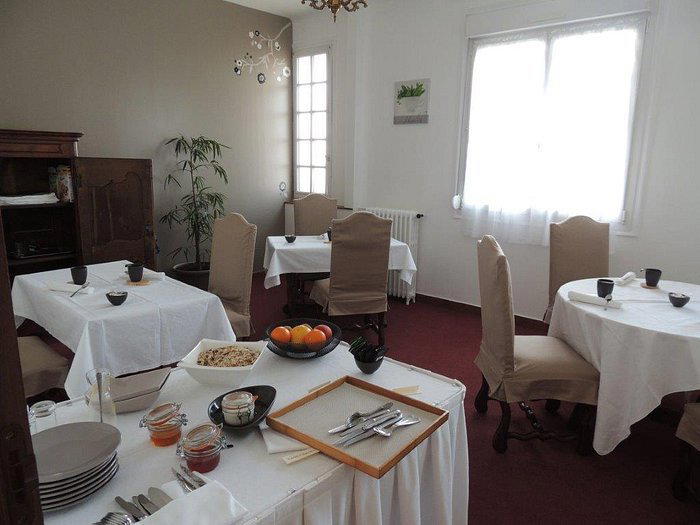
Hotels in La Ferrière-aux-Étangs
Browse all →
Wineries in La Ferrière-aux-Étangs
Browse all →
At a Glance
- Intimate
- Elegant
- Quiet
- Cozy
- Classic
- Date Night
- Special Occasion
- Celebration
- Business Dinner
- Private Dining
- Historic Building
- Standalone
- Sommelier Led
- Farm To Table
- Local Sourcing
- Organic
Current opening hours
- Monday
- Closed
- Tuesday
- Closed
- Wednesday
- 12:15–1:30 PM, 7:15–8:30 PM
- Thursday
- 12:15–1:30 PM, 7:15–8:30 PM
- Friday
- 12:15–1:30 PM, 7:15–8:30 PM
- Saturday
- 12:15–1:30 PM, 7:15–8:30 PM
- Sunday
- 12–1:30 PM
Hours can change for holidays and private events. Last verified .
Softly lit, understated elegance with refined décor honoring natural materials like wood and glass; intimate and peaceful with well-spaced tables creating a calm, sophisticated atmosphere.